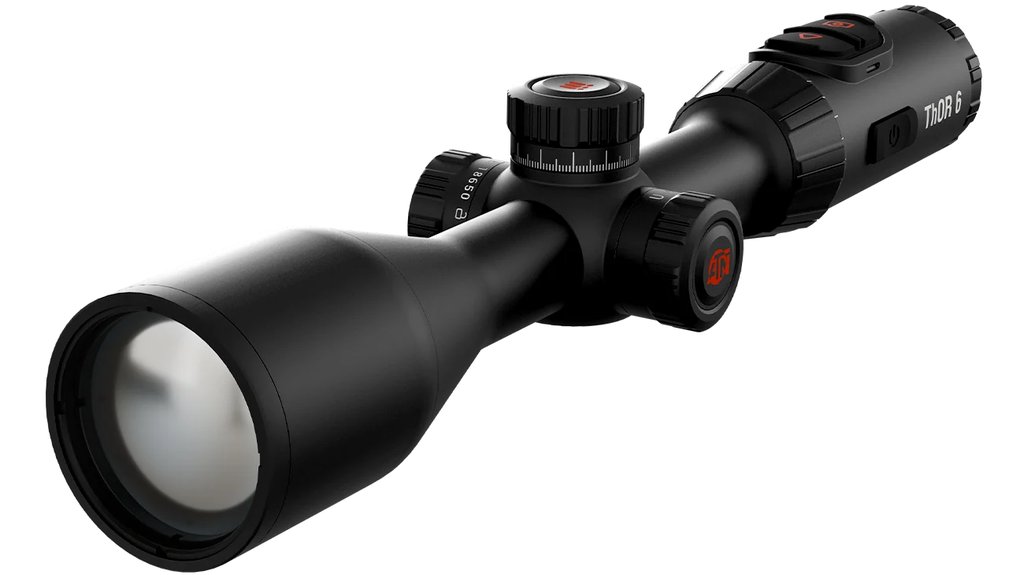
The right long range thermal scope for a first-season hunter is rarely the same tool a veteran reaches for, because what you can use well changes as you learn the dark. This roundup sorts ATN's 6th-generation thermal scopes by experience level — from a forgiving first long-range optic to a veteran's specialist rig. The balanced starting point is the ThOR 6 640x512 2-16x, and every pick is an ATN model.
Best for the veteran chasing reach: ThOR 6 640x512 3-24x — the longest 640 detection in the line.
Best light rig for a keen improver: ThOR 6 384x288 2.5-20x — lighter, value-priced, still full-featured.
Why experience level should steer the choice
Long-range thermal has a learning curve, and buying too much scope too soon can actually slow you down. A newcomer benefits from a wide, forgiving field of view and simple controls, so finding and holding a target is not a fight. An improving hunter can start using more reach and tighter magnification as their fieldcraft catches up. A veteran already knows their ground and their limits, and can extract every yard from a specialist optic. Every ThOR 6 here shares the same foundation — a 640-class sensor tech, SharpIR AI cleaning the image, a 50 Hz refresh, an <=15mK NETD and roughly 9 hours of runtime — so you are not sacrificing capability at any level, only matching the build to how far along you are.
Best to learn on: ThOR 6 640x512 2-16x
The ThOR 6 640x512 2-16x is our long range thermal scope for someone stepping into the discipline. Its 2x low end gives a wide, forgiving field of view so you can actually find a target before you zoom, and the full 640 sensor and 3100m detection mean you will not outgrow it as your skills climb.
Why it suits a newcomer
The wide bottom end is the quiet hero here — beginners lose targets by zooming too far too fast, and this optic lets you keep the whole scene in view while you build the habit of ranging first. Replaceable 18650 cells mean a dead battery never ends a learning session early, and Zeroing Freeze makes your first long-range zero far less fiddly.
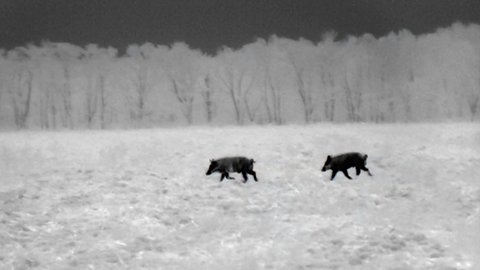
Best for the veteran chasing reach: ThOR 6 640x512 3-24x
A hunter who already reads the dark well can put the ThOR 6 640x512 3-24x and its 3650m detection range to full use. The tighter high-end zoom rewards someone who has the fieldcraft to identify and range a target far out and the discipline not to over-magnify.
Why it suits a veteran
The extra reach only pays off if you can exploit it — spotting an animal earlier is useless if you cannot read its behaviour and set up in time. That is veteran territory, and this scope gives that experience the longest runway. For a newcomer the same reach is mostly unused weight.
Best light rig for a keen improver: ThOR 6 384x288 2.5-20x
The improver who is past the basics but not ready to spend flagship money is well served by the ThOR 6 384x288 2.5-20x. At 790 g / 1.74 lbs and detecting to 2300m, it is the value step that still teaches good long-range habits, with six palettes to experiment with as you learn what your ground reads best in.
Why it suits an improver
By this stage you know what you want but may not need the top sensor to get it. The 384 keeps the outlay and weight down while giving you room to grow into longer shots. When you eventually want a 640, you will know exactly why — which is the best reason to buy one.
A first long-range night, and a hundredth
On a first outing with the 2-16x, the newcomer's instinct is to crank the zoom the moment anything glows. Left at that 2x low end, though, the wide field lets them catch the animal, breathe, and remember to range before magnifying — the single habit that separates a hit from a miss. A dead cell early in the evening would normally end the lesson, but the replaceable 18650 means a fresh battery keeps the session alive. Now picture the hundredth night, the same 640 sensor in far more practised hands: the veteran already reads the wind on the grass and the animal's body language, uses the 3100m detection to spot movement at the far edge, and only touches the zoom once the shot is genuinely on. Same scope, same <=15mK NETD and 50 Hz picture — but experience turns a busy, hopeful first night into a quiet, decided one. The glass grows with the shooter.
Why the 2-16x forgives a learner
It is worth being specific about why the 2-16x is the kinder scope to start on, because the reason is not that it is less capable — it carries the same 640x512 sensor and 3100m detection as a veteran would want. The forgiveness lives at the bottom of the zoom band. That wide 2x low end gives a big, calm field of view, and a big field of view hides the two mistakes beginners make most: losing the target and over-magnifying. When the whole scene is in front of you, an animal that moves does not vanish, and you are not forced to wind the zoom up before you have even ranged. As your hold steadies and your ranging gets honest, you climb into the higher magnification on your own terms rather than being thrown there by a narrow optic. The 50 Hz refresh keeps motion readable while you learn, SharpIR AI keeps the picture clean so you are not fighting noise on top of everything else, and the swappable 18650 power means a fumbled evening does not cost you the whole session. Capability you can grow into, wrapped in a field of view that forgives the early stumbles — that is the whole case for learning on this scope.
Skills that grow with the scope
The most useful long-range skills are the ones a forgiving optic lets you practise safely. Learn to range first: pick your target, judge the distance, and only then decide whether the shot is on — the wide 2x low end exists so you can do exactly that without losing the animal. Learn to read behaviour, because spotting a heat signature early with SharpIR AI is worthless if you cannot tell a settled animal from a spooked one about to bolt. Learn patience, letting the roughly 9-hour runtime and hot-swap 18650 cells buy you the long, still sits where reads come easier. These habits carry straight onto any 640 ThOR 6 you move up to later, so the time you invest on a forgiving scope is never wasted — it compounds.
Practising with the scope's own tools
A newcomer improves fastest when the scope helps them review their own mistakes, and the ThOR 6 gives you the means. Roll RAV — Recoil Activated Video — on your practice shots, then watch back where the reticle actually was when the round left; nothing teaches trigger control and hold faster than seeing your own wobble. Use Picture-in-Picture to keep a wide field while you test a higher zoom, so you learn the cost of over-magnifying without ever fully losing your target. Cycle through the display settings on quiet ground to learn how heat reads against grass, treeline and bare earth, so on a live night the picture is familiar rather than confusing. Because the 50 Hz refresh keeps motion smooth and the <=15mK NETD holds detail in damp air, the picture you are learning to read is honest — you are training on the same image the veteran trusts, just earlier in the journey.
When to step up to more scope
You have outgrown a first optic when its limits, not yours, start costing you shots. Signs to watch: you are consistently identifying and ranging targets right at the edge of the 2300m 384 detection and wishing for more; you find yourself at the top of the zoom band wanting tighter reach; and your reads are reliable enough that extra distance would actually turn into shots. That is the moment the 3-24x 640 and its 3650m range earns its keep — bought because you know why, not on hope.
How each level uses the same features differently
One of the quiet strengths of the ThOR 6 line is that the same feature set serves a beginner and a veteran in different ways, so the scope stays useful as you climb. Take Picture-in-Picture: a newcomer uses it as a safety net, keeping the wide field up so a high-zoom experiment never means losing the target, while a veteran uses it to hold a magnified aiming window on a far animal and watch the surrounding ground for a second one at the same time. RAV is a coaching tool early on — you watch your own hold and trigger break — and later becomes simple confirmation of a shot you already trusted. Hot Point Tracking helps a beginner find the warm object they might otherwise miss, and helps a veteran pick the right one out of several. The 640 sensor, SharpIR AI and <=15mK NETD deliver the same honest picture to everyone; what changes is how much of it you know how to use. That is why a 640 ThOR 6 does not become a bottleneck as you improve — you simply grow into the depth that was always there.
The same is true of the specs on the page. A beginner reads 3100m detection as reassurance that they will not run out of scope; a veteran reads it as a working budget of distance to spend carefully. A newcomer values the swappable 18650 because a dead cell would end a fragile learning session; an experienced hunter values it because a planned battery swap keeps a productive dusk-to-dawn stand alive. Roughly 9 hours of runtime, a 50 Hz refresh, six selectable settings on the 384 — none of that changes with skill, but what you ask of it does. Buy at your level, and the numbers you barely use today become the ones you rely on tomorrow.
Mistakes every level can avoid
Some errors trip up hunters at every stage, and knowing them shortens the learning curve. The first is over-magnifying: pushing to the top of the zoom band before ranging means a target that fills the frame but sits outside your ability to hold it steady. The second is ignoring the zero — a scope sighted at one distance and used at another quietly costs you, which is why revisiting Zeroing Freeze at your true working range matters at every level. The third is trusting reach over reads; the 640's 3100m or 3650m detection lets you spot an animal early, but a spot is not a shot until you have read its behaviour and set up. The fourth is running the battery flat mid-sit — carry a spare 18650 for the swappable 2-16x, or manage the roughly 9-hour runtime so a dead cell never ends a good stand. None of these are about the glass; they are about the shooter, and every one of them fades with honest practice.
- Range before you zoom — a target you cannot hold steady is not a shot, however close it looks.
- Re-check your zero at your true working distance with Zeroing Freeze, not just at the bench.
- Read behaviour before committing — an early spot with SharpIR AI only helps if you act on what you see.
- Carry a spare 18650 for the 2-16x so power never ends a promising sit early.
- Grow into reach — move to the 3-24x 640 when your reads, not your optic, are the limit.
A season-by-season path to long range
It helps to picture the climb across a couple of seasons rather than a single night. Early on, the 2-16x 640x512 is a patient teacher: you spend nights learning to find heat at that forgiving 2x low end, ranging before you zoom, and letting the hot-swap 18650 power keep the sessions long enough to actually improve. By mid-journey — perhaps on the lighter, value 384 build — you are past finding targets and into placing them, using the 2.5-20x band and 2300m detection to stretch your shots as your reads firm up, experimenting with the six settings to learn what your ground looks like in each. Only when the optic, not you, is the limit does the veteran's 3-24x and its 3650m detection make sense; by then you know exactly why you want it. The point is not to rush the ladder but to make sure each rung is a scope you can use fully, so nothing on it is wasted.
Nothing on that path forces you to abandon what you learned, because the ThOR 6 line keeps a common language. Zeroing Freeze sights every model the same way, SharpIR AI cleans every picture the same way, and the Connect 6 app behaves the same across the range, so moving up a scope is a change of reach and weight, not a whole new learning curve. That continuity is the real argument for buying at your level: you are not just getting a scope you can use today, you are getting a step on a path where every skill you build carries forward to the next one.
How to pick by your experience level
- New to thermal? Favour a wide low end and simple controls over raw reach — the 2-16x.
- Improving? A lighter, value 384 lets you build long-range habits without overspending.
- Experienced? The 3-24x's extra reach only pays off with the fieldcraft to use it.
- At every level lean on Zeroing Freeze for sighting in and RAV to review your shots.
- Do not over-buy — more magnification than you can steady is a hindrance, not a help.
How we picked these ATN thermal scopes
This is an in-house comparison of ATN's own thermal scopes sorted by experience level, not an independent lab review, so treat it as guidance and match the specs to where you honestly are. We weighed field of view and magnification band, detection range, sensor resolution, weight, battery and NETD against the needs of a newcomer, an improver and a veteran. Only the current 6th-generation ThOR 6 line was considered. The honest trade-off: the most capable long-range scope is also the least forgiving to learn on, and the easiest to learn on is not the longest-reaching. Who it is not for: a buyer who assumes the priciest, farthest-reaching optic is automatically the right first purchase — experience is exactly what changes that.
Frequently Asked Questions
What is the best long range thermal scope for a beginner?
The ThOR 6 640x512 2-16x. Its wide 2x low end makes finding and holding a target forgiving, while the full 640 sensor means you will not outgrow it as your skills improve.
Should a first-timer buy the highest magnification?
No. New shooters lose targets by over-magnifying. A wider field of view like the 2-16x's low end teaches you to range first and zoom second, which is the habit that actually makes long-range work.
When does the 3-24x make sense?
When your fieldcraft can use its 3650m reach — spotting and reading an animal early enough to set up. That is veteran territory; for a newcomer the extra reach mostly goes unused.
Is the 384 a good scope to improve on?
Yes. The ThOR 6 384x288 2.5-20x keeps weight and cost down while teaching solid long-range habits, and its six palettes let you experiment as you learn your ground.
Do these scopes help a beginner zero at distance?
Yes. Every ThOR 6 here includes Zeroing Freeze, which holds the reticle while you adjust, making a first long-range zero far less fiddly.
Will I outgrow a 640 ThOR 6?
Unlikely. The 640 sensor, SharpIR AI and roughly 9-hour runtime give a beginner years of headroom, so it grows with you rather than becoming a bottleneck.
Ready to buy at the right level? Start with the forgiving ThOR 6 640x512 2-16x, or compare the full range of ATN thermal scopes to find the reach and build that fits your experience. Every model runs SharpIR AI, Zeroing Freeze and the Connect 6 app, so you can grow into long range without ever outgrowing the glass.
Created: August 5, 2026 · 19:53:43 UTC