A long range thermal rifle scope lives or dies on one question: can it hand you a clean, identifiable target at the distance you actually shoot? Our top ATN pick is the ATN ThOR 6 640x512 2-16x, the all-round anchor of ATN's current 6th-generation thermal scope line. This roundup is organized by rifle setup — how you build and carry the gun — so you can match the optic to the platform instead of chasing spec-sheet numbers. Every pick is an ATN 6th-gen model, judged on what it does after dark.
Best for maximum reach: ThOR 6 640 3-24x — the 50 mm, high-magnification setup for the longest shots.
Best lighter build: ThOR 6 384 2.5-20x — a trimmer 384 option that still reaches well past most legal ranges.
Why setup matters more than raw range
Two shooters can quote the same detection distance and end up with wildly different results, because a rifle scope has to work as part of a system: the rifle, the load, the tripod or bipod, and the way you scan before you settle in for the shot. Detection range is where a scope first shows you that something warm is out there; identification — reading whether it is a hog, a coyote or a stray dog — happens at a much shorter distance and depends on sensor resolution and image processing far more than on the headline number. The ThOR 6 line pairs a 640x512 or 384x288 thermal sensor with SharpIR, ATN's on-board AI image enhancement, which cleans up edges in real time so a shape stays a recognizable animal as you push magnification. A 50 Hz refresh keeps a moving target smooth rather than smeared, and a NETD rated at 15 mK or better tells you how the picture holds up when the air turns damp, humid or foggy — the lower that millikelvin figure, the more contrast survives on a bad night. Those three things — resolution, refresh and NETD — are what separate a scope that merely spots game from one that lets you make an ethical long shot.
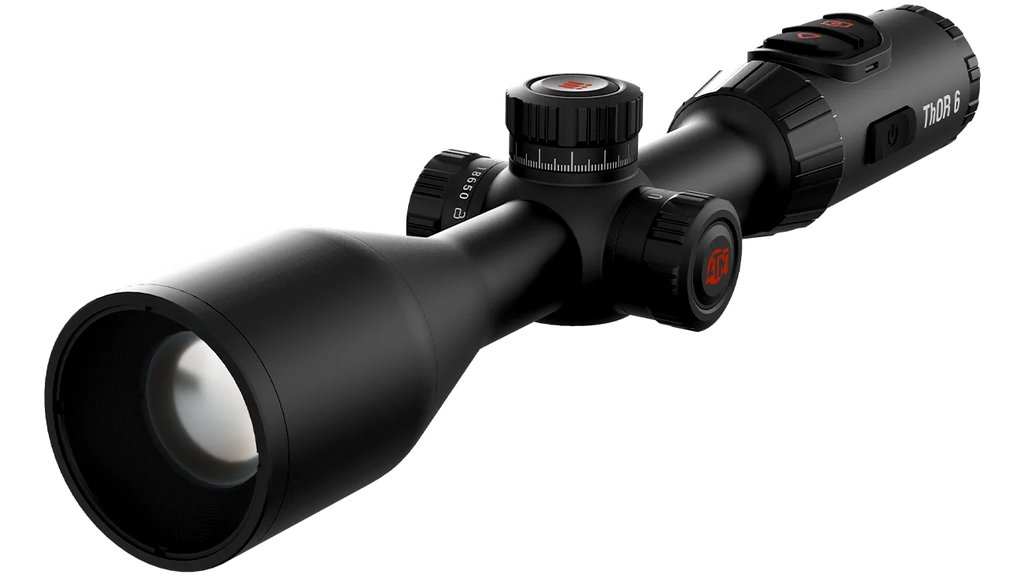
Best overall for a long-range setup: ThOR 6 640 2-16x
The 2-16x 640 is the scope we reach for first when a rifle has to do a bit of everything and still stretch out. The 640x512 sensor gives you the pixel density to identify a target well past the point where a lower-resolution optic turns everything into a warm blob, and the 35 mm lens keeps the field of view wide enough at the bottom of the zoom range that scanning a field feels natural rather than claustrophobic. On a semi-auto or a bolt gun set up for versatile hunting, this is the sweet spot: a detection range around 3100 m means the animal is almost always visible long before it is in range, so you spend your time confirming the target and building a stable position instead of hunting for a heat signature. The replaceable 18650 battery system matters here too — a long-range sit can run for hours, and being able to drop in a fresh cell rather than nurse a fixed battery is the difference between staying out and packing up.
Recoil Activated Video captures the shot automatically, and Zeroing Freeze plus Picture-in-Picture make dialing the scope in on a new rifle genuinely quick. Picture-in-Picture is worth dwelling on for a long-range setup: it floats a magnified inset over your normal field of view, so you can hold a wide scanning image while a small window shows the aiming point at full zoom. That means you keep situational awareness of the whole field while still placing a precise shot, instead of tunnel-visioning through a narrow high-power image and losing track of everything around your target. Hot Point Tracking, which flags the hottest signature in the frame, is a genuine help when you are trying to pick one animal out of a group at the far edge of detection. For most people building a long-range thermal rig, this is the one that earns its keep.
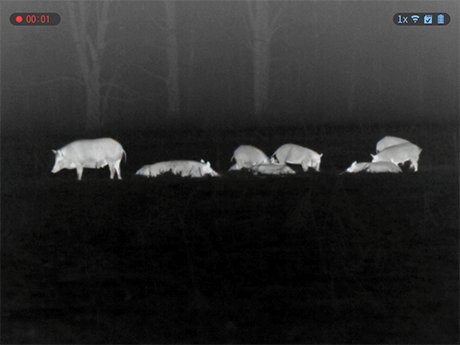
Best for maximum reach: ThOR 6 640 3-24x
When the whole point of the build is distance — a heavy-barrel rifle on a tripod, shooting across open ground where targets show up far out — the 3-24x 640 is the pick. It keeps the same 640x512 sensor and 15 mK NETD but wraps them around a 50 mm lens and a higher zoom ceiling, pushing detection out toward 3650 m and giving you the magnification to actually study a target at the far edge of your range. The larger objective lens is doing quiet work here: a 50 mm front end gathers more of the scene's thermal energy than the 35 mm on the all-rounder, which is part of why the far-distance image holds together rather than degrading into mush. There is a trade-off, and it is worth naming: the narrower field of view at higher power makes fast, close scanning less comfortable, so this is not the scope for tight timber or run-and-gun coyote work, and the added glass adds a little length to the rifle. On a dedicated long-range setup, though, that extra reach and detail is exactly what you are paying for, and the eight-plus hours of runtime from the twin 18650 cells means a long, patient sit across open country will not out-last the scope.
Best lighter build: ThOR 6 384 2.5-20x
Not every long-range rig needs to be heavy. The 384x288 2.5-20x carries the same 6th-gen brain — SharpIR, 50 Hz refresh, RAV, the ATN Connect 6 app — in a lighter, more affordable package with a 25 mm lens. Its 2300 m detection range still puts it well beyond any legal shooting distance most hunters will ever use, and the trimmer body suits a rifle you carry a lot and shoot from field positions rather than a fixed rest. That weight difference sounds small on paper — roughly 790 g against 830 g — but over a night of walking, glassing and re-shouldering the rifle, a lighter optic changes how fresh you feel by the end of the hunt, and it shifts the balance of the gun less. You give up some of the raw identification distance of the 640 sensors, and on the very worst nights the slightly higher 18 mK NETD is fractionally less forgiving than the 15 mK sensors, but for a walking, scanning, moderate-range setup it is a genuinely capable long-range thermal scope that does not weigh the rifle down. It is also the friendliest of the three on the wallet, which matters if the long-range rig is one of several you are feeding.
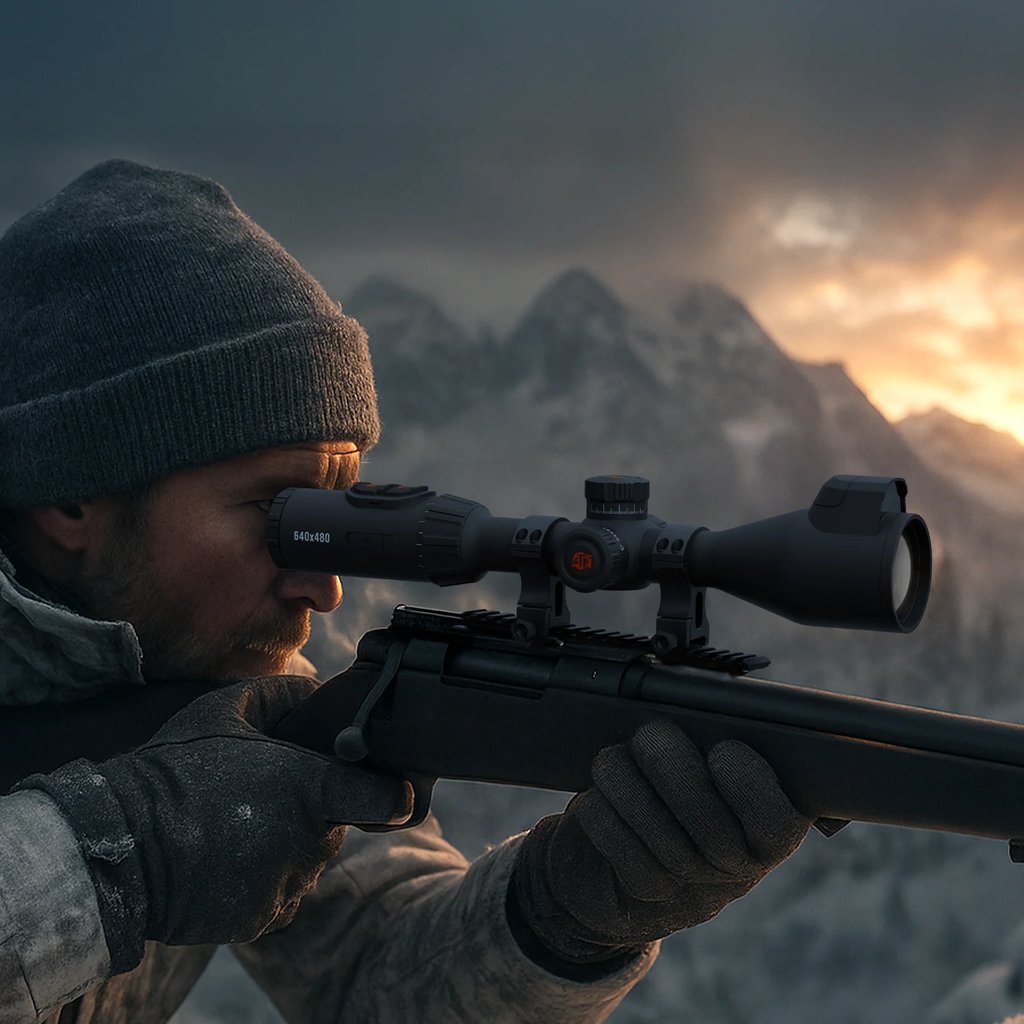
Matching the scope to your rifle setup
- Tripod / bench long-range rig: the 3-24x 640 — maximum magnification and reach, and the narrower FOV is a non-issue when the gun is on a stable rest.
- General-purpose semi-auto or bolt gun: the 2-16x 640 — the widest usable range of situations, from field-edge scanning to a deliberate long shot.
- Lightweight walk-and-stalk build: the 384 2.5-20x — less weight on the rifle, plenty of range for most shots, easier on the wallet.
- Whatever the setup: zero carefully at the distance you actually shoot, and confirm you can identify — not just detect — your target before pressing the trigger.
How we picked these ATN long range thermal rifle scopes
We judged each scope against the job a long-range rifle setup actually asks of it: sensor resolution and SharpIR processing for identifying targets at distance, NETD for how the image survives bad air, refresh rate for tracking movement, detection range for how early you see game, and weight for how the optic changes the balance of the rifle. Only ATN's current 6th-generation ThOR 6 line was considered. This is an in-house comparison of our own range, not an independent lab test — so treat it as a starting point and check the specs against your rifle, your legal ranges and your terrain. Honest caveat: none of these are the lightest or cheapest thermal on the market, and if your longest realistic shot is short and in thick cover, a big long-range optic is more than you need. For a rifle genuinely set up to reach out after dark, though, this is where we would start.
Frequently Asked Questions
What magnification does a long range thermal rifle scope need?
It depends on your setup and legal ranges. A general-purpose long-range rig is well served by the ThOR 6 640 2-16x, while a dedicated tripod build benefits from the higher ceiling of the 3-24x. More magnification narrows your field of view, so match it to how far you actually shoot rather than buying the highest number.
Is a 640 sensor worth it over a 384 for long range?
For identifying a target at distance, yes — the extra resolution of the ThOR 6 640 models keeps a shape readable further out. The 384 2.5-20x is still capable well past most legal ranges and saves weight and outlay, so it comes down to how far you realistically engage.
How far can the ATN ThOR 6 detect a target?
Detection range runs from about 2300 m on the 384 2.5-20x up to roughly 3650 m on the 640 3-24x. Remember detection is spotting a heat signature; identification and an ethical shot happen at a much shorter distance and lean on resolution and SharpIR processing.
Does refresh rate matter on a long range setup?
Yes. The 50 Hz refresh on the ThOR 6 line keeps a moving animal smooth in the display rather than smeared, which matters when you are tracking a walking target across open ground before settling into your position.
Will a long range thermal scope work in fog or humidity?
Thermal handles haze and light fog far better than optical or digital night vision because it reads heat, not visible light. The ThOR 6 line is rated at 15 mK NETD or better, and the lower that figure, the more contrast the image keeps when the air turns damp.
Can I mount these on a lightweight rifle?
You can. The 384 2.5-20x is the lightest of the three at about 790 g, making it the friendliest for a walk-and-stalk build, while the 640 models add a little weight in exchange for extra resolution and reach.
Ready to build your long-range thermal rig? Compare the ThOR 6 640 2-16x against its siblings in ATN's current 6th-generation thermal scope lineup and match the optic to your rifle.
Created: August 5, 2026 · 19:53:43 UTC