The most useful way to choose a long range thermal rifle scope is to be honest about the distance band you actually shoot in. A scope built for the far edge is wasted if your shots live inside three hundred yards, and one built for close work runs out of resolution when you stretch it. This roundup sorts ATN's 6th-generation thermal scopes by range band. The far-band anchor is the ThOR 6 640x512 3-24x, and every pick is an ATN model.
Short answer: for the longest range band, the ThOR 6 640x512 3-24x rifle scope is our top pick. Its 640 sensor, tight high-end zoom and 3650m detection range give you identification and shot placement at the far edge of what thermal allows.
Quick answer: top ATN picksBest for the far band: ThOR 6 640x512 3-24x — the longest 640 detection and tightest zoom.
Best for the mid band: ThOR 6 640x512 2-16x — full 640 clarity with a scan-friendly low end.
Best for the near-long band: ThOR 6 384x288 2.5-20x — light and value-priced for closer long shots.
Why range band beats a single 'long range' label
"Long range" means different things to different rifles. For one hunter it is a coyote at the far end of a bean field; for another it is a hog inside two hundred yards that still counts as a long poke on a thermal rig. Matching the scope to your real band keeps you from over-buying reach you cannot use or under-buying resolution you need. Every ThOR 6 rifle scope here shares the long-range fundamentals — a 640-class sensor tech, SharpIR AI cleaning the picture, a 50 Hz refresh, an <=15mK NETD, roughly 9 hours of runtime and Zeroing Freeze for a clean distant zero. The band you shoot decides which one is right.
Best for the far band: ThOR 6 640x512 3-24x
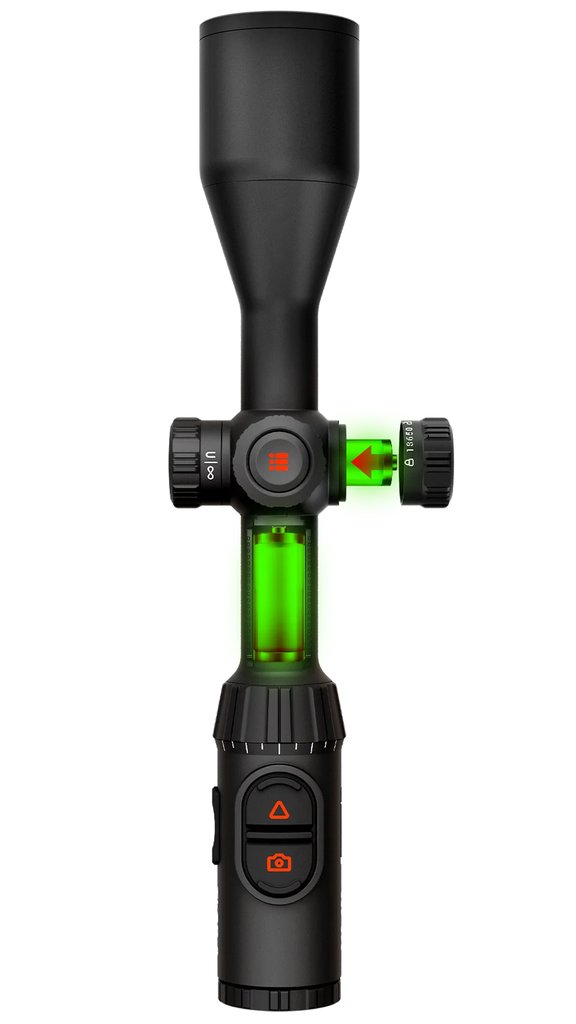
For shooters who genuinely stretch to the far band, the ThOR 6 640x512 3-24x is the rifle scope built for it. The 50mm objective and 640 sensor reach a 3650m detection range, and the tight 24x top end gives you the magnification to place a shot when the target is a long way out.
How it fits the band
At the far edge, identification is the whole game — you must be certain of the target before the shot. The 640 sensor holds detail deep into the zoom, and Zeroing Freeze makes the long-distance zero this band demands far less painful. For shorter bands the reach simply goes unused.
Best for the mid band: ThOR 6 640x512 2-16x
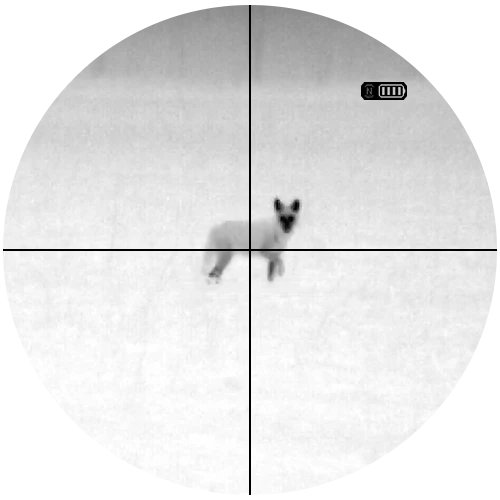
Most long-range thermal shooting lives in the mid band, and the ThOR 6 640x512 2-16x rifle scope owns it. The full 640 sensor identifies cleanly to a 3100m detection range, the 2x low end makes finding a target across a field easy, and the replaceable 18650 battery system keeps you shooting the band all night.
How it fits the band
The mid band is where reach and scanning both matter, and this scope balances them best. You do not need the flagship's last stretch of range, and you would miss the wide low end if you bought it. This is the rifle scope most long-range hunters settle on.
Best for the near-long band: ThOR 6 384x288 2.5-20x
If your long shots are really at the near-long band, the ThOR 6 384x288 2.5-20x is the right-sized rifle scope. Its 2300m detection comfortably covers the band, the 790 g / 1.74 lbs body keeps a carbine balanced, and six palettes let you tune the picture for your ground.
How it fits the band
At the near-long band a 384 sensor gives up nothing you would actually use, and the weight saving keeps a lightweight rifle pointing quickly. It is the sensible choice when the band does not demand a 640 sensor or flagship reach.
A shot at each band
Start in the near-long band, the closest of the three: the target is well inside your comfortable reach, the picture is already large, and the job is simply a clean, confident placement. The 384 sensor and 2300m detection cover this with room to spare, and the lighter 790 g / 1.74 lbs body keeps the rifle pointing quickly for a shot that comes without much warning. Step out to the mid band and the character changes — the animal is small enough in the frame that you lean on the 640 sensor to hold detail as you add zoom, and the 2-16x's wide low end still lets you scan across to it before you settle in. The 3100m detection range means you have identified the target long before it is in play. Push to the far band and everything tightens: the 3-24x's top-end zoom brings a distant animal up to a size you can read, the 3650m detection range gives you the earliest possible warning, and the margin for a rushed call disappears. Same three bands, three genuinely different asks of the glass.
Ballistics and holdover at range
The farther the band, the more the shot becomes a thinking problem rather than a reflex. Picture-in-Picture is built for exactly this: a small magnified inset floats above the main image so you can hold a precise aim point while still watching the wider scene, which matters when a distant animal is moving and your holdover is not dead-on the vitals. As distance grows your point of aim rises off the target, and reading that holdover confidently depends on a picture that stays sharp deep into the zoom — which is where the 640 sensor over the 384 pays off at the mid and far bands. Ranging the target first, then committing to a hold, is the whole discipline of the far band; the scope's job is to keep the animal readable and the reticle steady while you do the math your load and distance demand.
Zeroing for the band you shoot
A zero set for a close band drifts off as you stretch out, so match your zero to where you actually live. Zeroing Freeze makes this far less fiddly: it holds the reticle steady on the last frame while you dial your adjustment, so you are not chasing a live, shifting image at distance. Confirm it at a range that represents your band rather than the bench-friendly close shot, and re-check it whenever your load or the temperature changes. A clean, band-appropriate zero is what turns the sensor's reach into a shot you can trust.
How resolution stretches across the bands
The single biggest reason range band should drive the choice is what happens to detail as you add magnification. A sensor has a fixed number of pixels on the target, and the farther the animal, the fewer of them land on it — so at the far band a 640-class sensor keeps a usable, readable shape long after a lower-resolution sensor has turned the target into a soft smear. That is why the far and mid bands lean on the 640 variants: the 3-24x and 2-16x hold identification-grade detail deep into the zoom where it counts. At the near-long band the target is already large in the frame, plenty of pixels sit on it, and the 384 sensor gives up nothing you would actually use. SharpIR AI cleans the picture across all three so the image stays coherent as you push it, but no processing invents detail the sensor never captured — which is precisely why the honest band you shoot, not the farthest you can dream, should set the resolution you buy.
Reading a moving target at distance
The far band is not only about seeing a static animal clearly — quarry moves, and at distance small movements are magnified into a target that drifts across your reticle. The 50 Hz refresh is what keeps that motion smooth rather than stuttering, so you can track a walking animal and time the shot instead of chasing a jerky image. Combined with the 640 sensor holding shape at zoom, it means the far band stays a shooting proposition rather than a spot-and-hope one. The steadier the picture, the more honest the shot you can take at the edge of your band.
How to pick a long range thermal rifle scope by your band
- Measure your real band — log your actual shot distances before you shop, not your best-ever poke.
- Far band rewards the 3-24x's reach and tight zoom for certain identification.
- Mid band is the 2-16x's home — 640 clarity plus a scan-friendly low end.
- Near-long band is well served by the light, affordable 384.
- Zero for your band — use Zeroing Freeze to lock a clean zero at the distance you actually shoot.
How we picked these ATN thermal rifle scopes
This is an in-house comparison of ATN's own thermal rifle scopes sorted by range band, not an independent lab review, so use it to match glass to your real shooting distances and confirm the specs against your rifle. We judged detection range, magnification band, sensor resolution, weight, battery and NETD against three honest bands — far, mid and near-long. Only the current 6th-generation ThOR 6 line was considered. The honest trade-off: the far-band scope carries reach and a little weight most shooters will not use, while the near-long pick gives up resolution and range you might want as your distances grow. Who it is not for: a shooter who buys for the longest shot they can imagine rather than the band they actually live in.
Frequently Asked Questions
How do I know which range band I shoot?
Log your real shot distances over a season rather than your single farthest attempt. Most hunters find they live in the mid band, which is why the ThOR 6 640x512 2-16x suits so many rifles.
What is the best long range thermal rifle scope for the far band?
The ThOR 6 640x512 3-24x, whose 3650m detection range, tight high-end zoom and 640 sensor deliver the certain identification and shot placement far shots demand.
Is a 640 sensor necessary for long-range shooting?
For the far and mid bands, yes — it holds detail as you zoom so you can identify at distance. At the near-long band the 384 sensor gives up nothing you would actually use.
Does the ThOR 6 make zeroing at distance easier?
Yes. Every ThOR 6 rifle scope here includes Zeroing Freeze, which holds the reticle while you adjust, so a clean zero at your chosen band is far less fiddly.
Why not just buy the farthest-reaching scope?
Because reach you never use is weight and cost you did not need. Buy the band you actually shoot; the 3650m flagship only earns its keep if your ground genuinely opens up that far.
Which rifle scope keeps a light rifle balanced?
The ThOR 6 384x288 2.5-20x at 790 g / 1.74 lbs, about forty grams lighter than the 640 variants, so a carbine or lightweight build still points quickly.
Ready to buy for your band? Start with the far-reaching ThOR 6 640x512 3-24x, or compare the full range of ATN thermal scopes to match reach, resolution and weight to the distances you actually shoot. Every model runs SharpIR AI, Zeroing Freeze and the Connect 6 app, so whatever band you live in, you are set up to identify and place the shot.
Created: August 5, 2026 · 19:53:43 UTC