How do thermal binoculars work? In short, they see heat instead of light. Every object gives off infrared energy, and warm things like animals, engines, and people give off more than the cool ground around them. A thermal binocular gathers that heat, turns it into a live picture, and shows it through two eyepieces so you can find warm targets in total darkness, fog, or heavy cover. Nothing about it needs a flashlight or moonlight. The ATN Binox-6 is a clean example, so this guide uses it to walk through each step, from the lens to the image you actually see.
Thermal binoculars work by detecting infrared heat, not visible light. A germanium lens focuses heat onto a sensor, a processor turns each hot spot into brightness, and you view the live image through two eyepieces. Warm animals glow against a cool background, so you see them in full dark, fog, and brush. The ATN Binox-6 shows this with a 384x288 sensor and up to 44x zoom.
What are thermal binoculars?
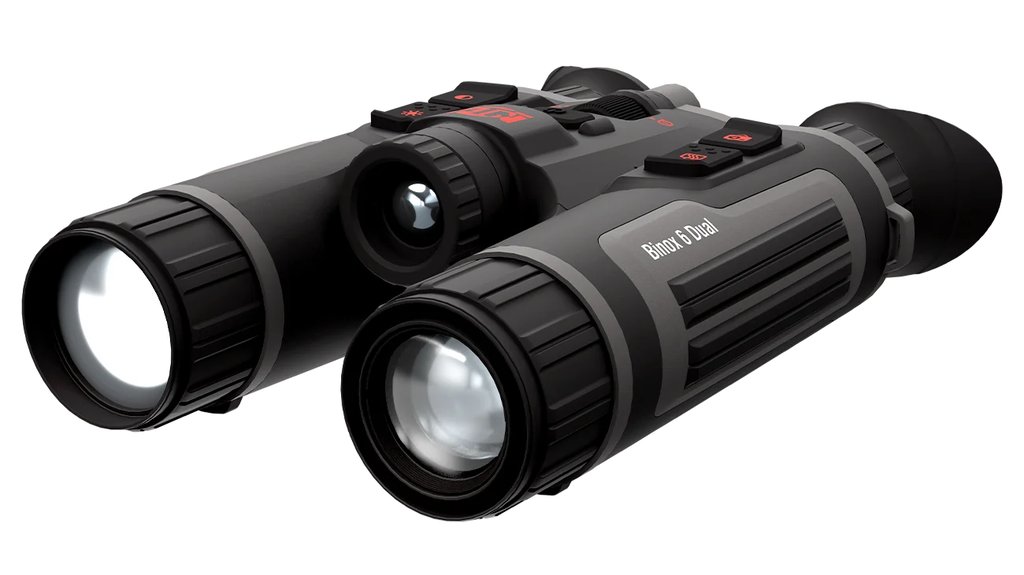
Thermal binoculars are a two-eyed handheld optic that builds its picture from heat rather than light. Instead of the glass lenses in normal binoculars, they use a special germanium lens that lets infrared energy pass through, plus a heat sensor and a small screen behind each eyepiece. The result is a live image where warmer objects look bright and cooler ones look dark, no matter how black the night is. On the ATN Binox-6, that thermal system is bundled with a day camera, night vision, and a rangefinder, but the core job is simple: show you the heat in a scene through two comfortable eyepieces so you can find and identify game.
How does the thermal image get made, step by step?
- Heat leaves the target. A warm animal radiates more infrared energy than the cool grass, rocks, and air around it.
- The germanium objective lens gathers and focuses that infrared energy. Ordinary glass blocks heat, so thermal optics use germanium instead.
- The heat lands on the thermal sensor, a grid of tiny detectors. On this Binox-6 the grid is 384x288, and each detector measures how much heat hits it.
- The processor reads every detector and assigns it a brightness, then stitches them into one live picture at a 50 Hz refresh rate, so movement stays smooth.
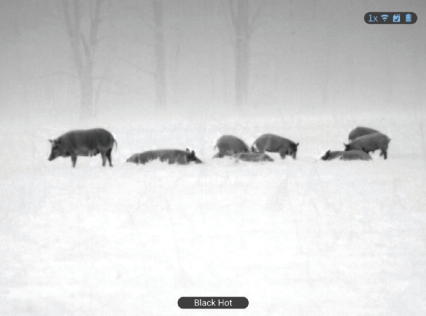
- You pick a color palette. White Hot shows heat as white, Black Hot flips it dark, and Iron Red paints the warmest spots in warm colors for easy reading.
- The finished image appears on the two internal displays, one per eyepiece, and you glass the scene with both eyes open, zooming and ranging as you go.
What can you use thermal binoculars for?
- Finding game in the dark — warm animals glow against the cool ground, so you spot them with no light at all.
- Seeing through fog, smoke, and light brush — thermal reads the heat that leaks through where visible light cannot.
- Long-range glassing — high magnification like the Binox-6's 44x lets you study distant animals from far off.
- Confirming a target — zoom in to identify what you are looking at before you decide anything.
- Ranging — the built-in laser rangefinder tells you exactly how far the animal is.
- Around-the-clock use — with a day channel and night vision on board, the Binox-6 works in daylight too.
Thermal binoculars vs regular binoculars
Regular binoculars magnify visible light, so they only work when there is light to gather and they cannot see a warm animal hidden in shadow or brush. Thermal binoculars build their picture from heat, so they work in total darkness and cut through fog and light cover that would defeat normal glass. The trade is that thermal shows heat shapes rather than fine daytime color and texture. That is why the Binox-6 carries both: a 4K day channel for detailed daylight glassing and a thermal channel for the dark. You get the strengths of each without carrying two devices.
Key features to understand
- Germanium lens — the special objective that lets infrared heat pass through, since ordinary glass blocks it.
- Sensor resolution (384x288) — more dots in the picture means cleaner detail as you zoom before it turns blocky.
- NETD (sensitivity) — a low 15mK or under means the picture stays clean when heat differences are faint, as in fog or rain.
- Magnification (5.5-44x) — base zoom sets your view, and high max zoom reaches out to study distant animals.
- Refresh rate (50 Hz) — keeps a running animal smooth instead of smeared.
- Color palettes — White Hot, Black Hot, and Iron Red change how heat is drawn so you can pick what your eye reads fastest.
What to look for before buying
- Resolution matched to your range — more dots let you zoom and still identify the target.
- Low NETD — for clean images in humid, foggy weather when game moves.
- Detection range — how far off you can pick up heat; the Binox-6 reaches 2750 m at this sensor.
- Battery life — enough runtime for a full night, ideally with swappable cells.
- Weatherproofing — an IP67 rating handles dew, rain, and rough handling.
- Useful extras — a rangefinder, day channel, and recording cut down the gear you carry.
Common mistakes people make understanding thermal
- Thinking it sees through walls — thermal reads surface heat and cannot see through solid objects like tree trunks or hills.
- Confusing it with night vision — night vision amplifies faint light, while thermal reads heat and needs no light at all.
- Expecting daytime detail — thermal shows heat shapes, not fine color and texture.
- Ignoring weather — heavy rain and dense foliage cut range, so a low NETD sensor helps.
- Overlooking resolution — a small sensor blurs out just when you need to identify a target.
- Forgetting the batteries — a long night uses power, so carry spares.
Example: the ATN Binox-6
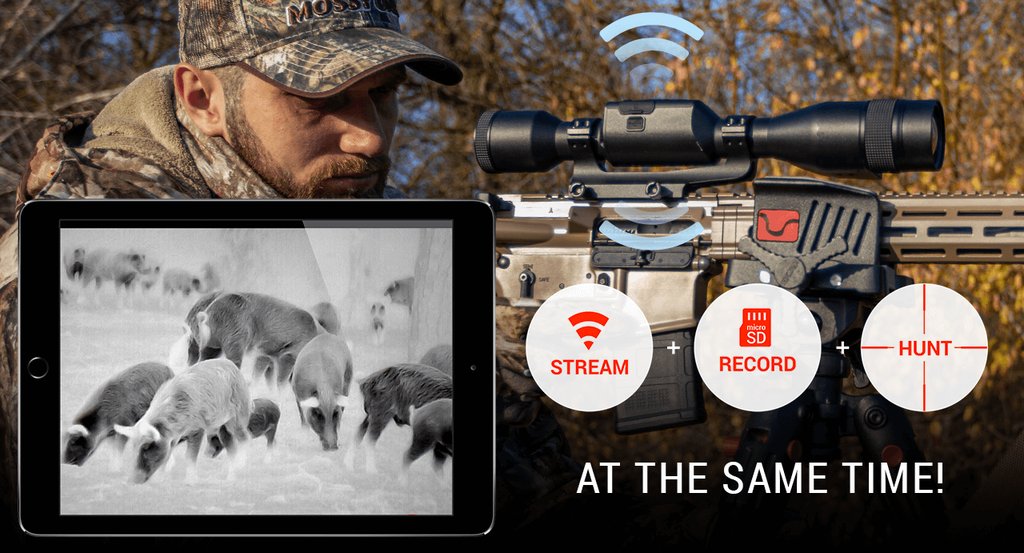
The ATN Binox-6 Dual 384x288 shows all of this in one tool. Its 384x288 sensor with 15mK or lower NETD delivers a clean, high-contrast picture even in damp air, and 5.5-44x magnification makes it a genuine long-range glassing binocular, reaching a detection range of 2750 m. The 50 Hz refresh keeps runners smooth, and the built-in laser rangefinder reads distance to about 1000 yards so you always know how far an animal is. It is 4-in-1, adding a 4K day sensor, night vision, and twilight modes, so it works around the clock. Dual replaceable 18650 batteries give roughly eight hours and swap fast, it is IP67 waterproof, records to 64 GB, and streams over Wi-Fi through the ATN Connect 6 app. That is the whole heat-to-image process, packaged for a full night in the field.
Are thermal binoculars worth understanding before you buy?
Yes, because knowing how they work tells you which specs actually matter for your hunting. Once you understand that resolution controls how far you can zoom and still identify game, that low NETD keeps the picture clean in bad weather, and that a germanium lens and heat sensor do the real work, you can choose the right unit instead of chasing numbers. A high-magnification model like the Binox-6 384 makes sense for long-range glassing, while a wider, lower-power model suits close scanning. Match the tool to your ground. Browse the full range of thermal binoculars to see how the sensors and zoom ranges line up with how you hunt.
How this guide was put together
This guide is built on ATN's published 6th-generation specifications and real field use, not marketing copy. Every spec is explained in plain terms with its practical meaning for how do thermal binoculars work, and the honest limits are flagged as clearly as the strengths. The example device is ATN's own current-line model, shown to make the numbers concrete — treat it as an in-house reference, and compare the specs against your own needs before buying.
Frequently Asked Questions
How do thermal binoculars work in simple terms?
They detect the infrared heat given off by objects instead of visible light. A germanium lens focuses that heat onto a sensor, a processor turns it into a live picture, and warm things like animals appear bright against a cooler background. You view it through two eyepieces.
Do thermal binoculars need any light to work?
No. Because they read heat and not light, they work in complete darkness, at midnight under no moon, just as well as at dusk. That is the core difference from night vision, which needs at least faint light to amplify.
Can thermal binoculars see through walls or trees?
No. Thermal reads the heat on the surface facing you and cannot see through solid objects like walls, tree trunks, or hills. It can pick up heat that leaks through gaps in light brush, which is why animals in cover often still show up.
What does resolution do on thermal binoculars?
Resolution is the number of dots in the picture. More dots, like 384x288 or 640x512, let you zoom in further before the image turns blocky, which makes identifying a distant animal easier. The Binox-6 384 pairs its sensor with strong magnification for that reason.
What is NETD and why does it matter?
NETD measures how small a heat difference the sensor can detect. A low number like 15mK means it renders faint heat differences clearly, so the picture stays clean in humid, foggy, or rainy air when game is moving. Lower is better.
Why do the ATN Binox-6 palettes change the colors?
Color palettes are just different ways of drawing the same heat data. White Hot shows heat as white, Black Hot flips it, and Iron Red paints the hottest spots in warm colors. You pick whichever your eye reads fastest for the scene you are in.
Quick reference specsQuick reference — ATN Binox-6 Dual 384x288 5.5-44x: 384x288 sensor; <=15mK NETD; 5.5-44x (up to 8x digital zoom); 2750m detection; ~8 hours battery. Best for high-magnification long-range glassing.
Now that you know how the heat-to-image process works, see it in action. The ATN Binox-6 packs a 384x288 sensor, up to 44x zoom, a laser rangefinder, and a 4K day channel into one comfortable two-eye unit, so you can find and identify game in full dark and glass in daylight with the same tool. Explore the full thermal binoculars lineup, match the sensor and magnification to the ranges you hunt, and turn the theory here into warm shapes glowing across a dark field.
Created: July 7, 2026 · 08:31:01 UTC