If you are new to heat vision, this guide to the thermal monocular walks you through the whole thing from the ground up. A thermal monocular is a single-eye handheld device that turns body heat into a picture, so you can spot a hog, coyote, or deer in total darkness. No moonlight needed. In this guide you will learn what a thermal monocular actually does, how it forms an image, what the numbers on the spec sheet mean for you in the field, and the mistakes that trip up first-time buyers. We will use the ATN BlazeTrek 6 640x512 as a real-world example throughout, because it is a good, well-rounded starting point that shows what a modern unit can do.
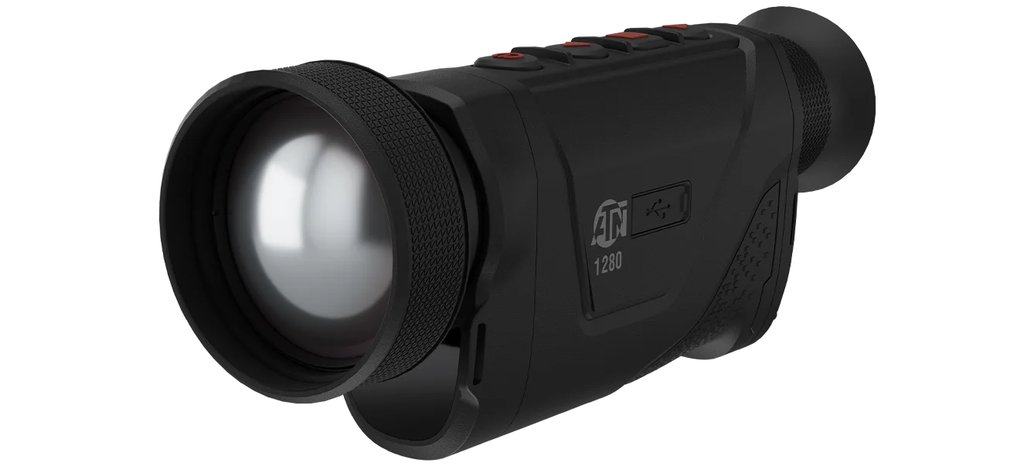
A thermal monocular is a compact, single-eye camera that sees heat instead of light. It builds a live picture from the temperature differences between an animal and its cool surroundings, so warm bodies glow against the background even in pitch dark. The ATN BlazeTrek 6 640x512 is a solid first choice: sharp sensor, wide view, and easy handheld scanning.
What is a thermal monocular?
A thermal monocular is a single-eyepiece device that detects infrared heat and displays it as a live picture you look at through one eye. Every object gives off heat, and a thermal sensor reads those tiny temperature differences and paints them on a small screen inside the unit. A warm animal shows up bright against a cooler field or treeline. Because it reads heat and not light, it works in complete darkness, through light fog, and even through brush that would hide an animal from your naked eye. The BlazeTrek 6 is a monocular in this classic sense: you hold it up to one eye, scan, and the heat picture appears instantly.
How does a thermal monocular work?
- Heat comes in. The germanium objective lens gathers infrared energy from everything in front of you and focuses it onto the sensor.
- The sensor reads temperatures. A grid of tiny detectors measures how warm each point is. On the BlazeTrek 6 that grid is 640x512, meaning it maps the scene as more than three hundred thousand heat readings at once.
- Software cleans it up. ATN's SharpIR AI enhancement sharpens edges and pulls detail out of the raw heat data so animals look crisper.
- You get a picture. The result is shown on the 800x600 OLED display in your chosen palette, refreshing 50 times a second so moving animals stay smooth, not smeared.
- You scan and track. Pan the monocular across the field; warm bodies pop out. Hot Point Tracking can lock onto the hottest spot to help you follow it.
What can you use a thermal monocular for?
- Predator and hog hunting — scan fields and field edges to find coyotes and pigs long before they hear you.
- Scouting and recovery — locate deer bedding areas, count animals at dusk, or find downed game after the shot by its lingering heat.
- Property and livestock checks — walk a fence line at night and spot intruders, strays, or predators near the herd.
- Search and general observation — a warm human or animal stands out clearly, which makes a monocular handy for after-dark awareness.
Thermal monocular vs a thermal scope: which fits your use?
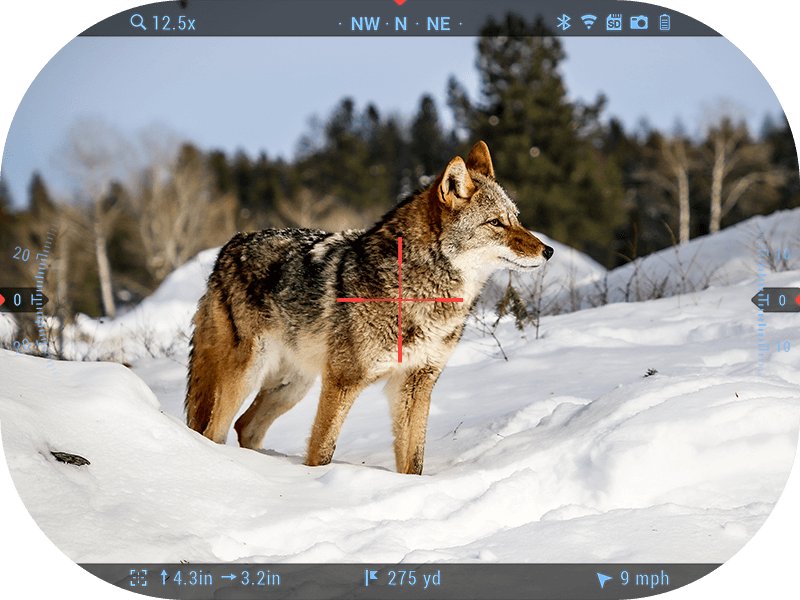
A monocular is for finding and watching; a scope is for aiming. A handheld unit like the BlazeTrek 6 lets you scan wide and move fast without shouldering a rifle, which is exactly what you want while detecting and tracking. A rifle-mounted thermal scope, by contrast, is built to put a reticle on the animal and take the shot. Many hunters carry both: the monocular in a pocket for scanning, the scope on the gun. If you only buy one thing first, a monocular is the more flexible starting point because you can use it anywhere, not just on a firearm. To compare the wider handheld lineup, browse ATN's thermal monoculars.
Key features to understand
- Sensor resolution — more dots in the picture. The BlazeTrek 6's 640x512 sensor is like the difference between HD and standard TV: you can push the zoom further before the image turns blocky.
- NETD (thermal sensitivity) — a lower number means a cleaner picture in humid or foggy air. The BlazeTrek 6 sits at 18mK or lower, so weather bothers it less.
- Magnification and field of view — base magnification sets how wide you see; the BlazeTrek 6 runs 1.5-12x with a wide 22.8 by 18.3 degree field of view, which makes finding and following animals easier.
- Refresh rate — a 50 Hz refresh keeps running animals smooth instead of choppy.
- Detection range — how far off you can pick up heat. The BlazeTrek 6 reaches out to about 1000m for large heat sources.
- Color palettes — White Hot, Black Hot, Iron Red and more let you switch to whatever contrast reads best for the conditions.
- Battery and storage — the internal rechargeable battery runs about 6.5 hours, and 32 GB stores your video and photos.
What to look for before buying
- Match resolution to your range. If you scan open fields, a higher-resolution sensor like 640x512 pays off; for short brushy work you can step down.
- Prioritize field of view for scanning. A wide view finds animals faster than a narrow, high-zoom one.
- Check the weather rating. Look for IP67 waterproofing so a rainy night does not end your hunt.
- Think about recording and the app. Wi-Fi and the ATN Connect 6 app let you stream and save footage, which is great for reviewing or sharing.
- Weight and grip. A light unit around 0.7 lb, like the BlazeTrek 6, is easy to hold up for long scanning sessions.
Common mistakes to avoid
- Buying only on zoom. Cranking magnification narrows your view and makes scanning harder; a wide field finds more game.
- Ignoring NETD. A cheap sensor with high NETD washes out on humid nights; sensitivity matters as much as pixels.
- Expecting a monocular to aim. It is for detection and tracking, not for taking the shot — pair it with a scope for that.
- Skipping practice. Learn the palettes and controls in daylight so you are not fumbling in the dark.
- Forgetting battery limits. Know your runtime and carry a way to recharge over USB-C on long nights.
Example: the ATN BlazeTrek 6
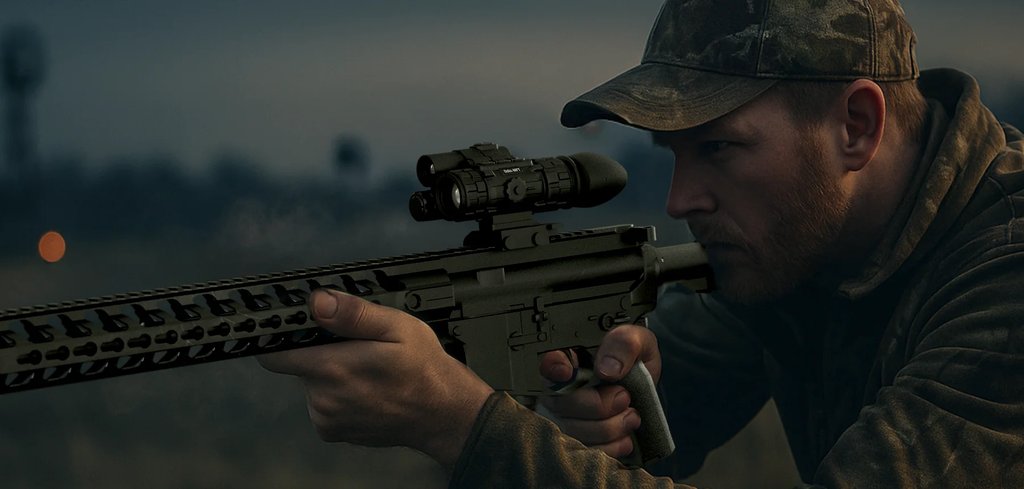
The ATN BlazeTrek 6 640x512 1.5-12x is a clean example of a modern, do-it-all monocular. The 640x512 sensor gives you plenty of detail to zoom into, and the wide 22.8 by 18.3 degree field of view makes scanning and following a running coyote much easier than a narrow optic would. SharpIR AI cleans up the image, Hot Point Tracking helps you keep a lock on a warm target, and six color palettes let you dial in contrast for snow, brush, or open ground. It records video and stills to 32 GB, connects to the ATN Connect 6 app over Wi-Fi with an AI assistant, and shrugs off rain thanks to IP67 sealing. At about 0.7 lb it is easy to carry all night. It sits in the mid tier of the lineup, which is a comfortable place to start.
Is a thermal monocular worth it?
For most hunters and land owners, yes. A thermal monocular turns dark, unproductive hours into real hunting time and helps you find and recover game you would otherwise miss. It is more flexible than a rifle-mounted optic because you can carry and use it anywhere, and a well-rounded unit like the BlazeTrek 6 covers detection, tracking, and recording in one hand-sized package. If you spend time outdoors after dark, it earns its place fast.
How this guide was put together
This guide is built on ATN's published 6th-generation specifications and real field use, not marketing copy. Every spec is explained in plain terms with its practical meaning for guide thermal monocular, and the honest limits are flagged as clearly as the strengths. The example device is ATN's own current-line model, shown to make the numbers concrete — treat it as an in-house reference, and compare the specs against your own needs before buying.
Frequently Asked Questions
Does a thermal monocular work in total darkness?
Yes. It reads heat, not light, so it works in complete darkness with no moon or ambient light at all. It also sees through light fog and can pick out warm animals partly hidden in brush.
What is the difference between a thermal monocular and thermal binoculars?
A monocular uses one eyepiece and is lighter and more pocketable, while binoculars use two eyepieces for a more relaxed, immersive view over long sessions. For quick scanning on the move, a monocular like the BlazeTrek 6 is easy to carry and fast to bring up.
Can I hunt with just a thermal monocular?
You can use it to detect, identify, and track game, but a monocular is not an aiming device. To take a shot you pair it with a rifle-mounted thermal scope. Many hunters scan with the monocular, then switch to the scope to shoot.
What does resolution mean on a thermal monocular?
Resolution is how many heat-reading dots make up the picture. A 640x512 sensor like the one on the BlazeTrek 6 has far more dots than a 256 or 384 sensor, so you can zoom in further before the image gets blocky and details stay clearer.
How long does the battery last?
The ATN BlazeTrek 6 runs on an internal rechargeable battery for roughly 6.5 hours per charge and recharges over USB-C. That covers a typical night, and you can top it up from a power bank on longer outings.
Will rain or fog ruin the image?
The BlazeTrek 6 is IP67 waterproof, so rain will not hurt it. Heavy fog reduces range for any thermal, but its low NETD of 18mK or better keeps the picture usable in humid and misty conditions.
Quick reference specsQuick reference — ATN BlazeTrek 6 640x512 1.5-12x: 640x512 sensor; <=18mK NETD; 1.5-12x (up to 8x digital zoom); 1000m detection; ~6.5 hours battery. Best for wide field-of-view handheld scanning and tracking.
Ready to start seeing in the dark? The ATN BlazeTrek 6 640x512 is an easy, well-rounded first thermal monocular: a sharp sensor, a wide scanning view, smart AI image tools, and rugged waterproof build in a light, one-hand package. If you want to see how it stacks up against the rest of the range, or find a variant that fits your ground and budget tier, explore ATN's full lineup of thermal monoculars and pick the one that matches how and where you hunt.
Created: July 7, 2026 · 08:31:01 UTC