The hardest thing about picking outdoor thermal binoculars is that the outdoors changes every few months. A pair that glasses beautifully across a frosty January field can feel underwhelming in the flat heat of an August evening, because the thermal contrast your optic reads shifts with the season. This guide compares two current ATN units and matches each to the time of year it earns its keep.
Why season decides which thermal binoculars you want
Thermal optics do not "see" light — they read the temperature difference between an animal and its surroundings. That difference is a moving target across the calendar. On a cold winter dawn a coyote glows against frozen ground and the picture almost draws itself, so magnification and reach matter more than raw sensitivity. In summer, sun-baked rocks, warm brush and lingering ground heat shrink the gap between animal and background, and now thermal sensitivity — measured as NETD, where a lower number is better — does the heavy lifting. Both ATN Binox-6 units share a class-leading NETD of 15 mK or lower, but the way you lean on that number changes with the weather.
That is the core of this comparison. Rather than crown one "best" pair of thermal binoculars, it is more honest to ask which Binox-6 you would reach for in July versus January. Below, we walk each season and name the model that fits — then lay the two side by side.
Summer: heat, haze, and long glassing sessions
Summer is the toughest season for any thermal optic because the whole landscape is warm. Late-evening ground heat, sun-loaded logs and warm foliage all compete with the animal you are trying to spot, so the temperature signature is subtle. This is where you want reach and the ability to reach out and study a distant blob until it resolves into a hog or a deer.
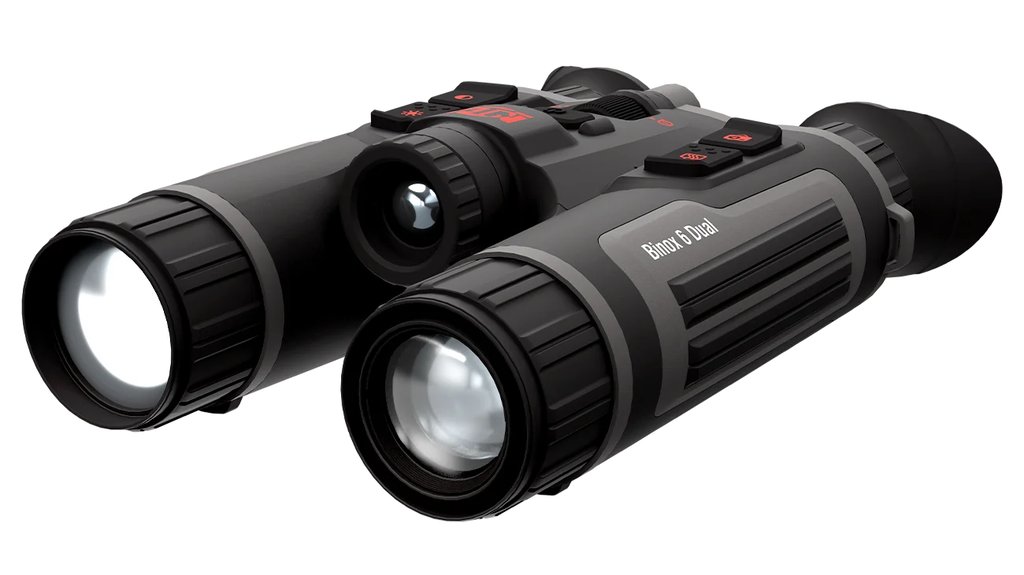
The Binox-6 Dual 384x288 5.5-44x is the summer workhorse. Its magnification climbs all the way to 44x, so a warm smudge on a far tree line can be zoomed in on and identified without walking closer and spooking game. The 2750 m detection range is plenty for open summer country, and the built-in 1000 m laser rangefinder (accurate to about ±1 m) lets you settle the endless summer argument of "how far is that?" before you commit to a stalk. Long summer evenings mean long sessions, and the two replaceable 18650 cells give roughly 8 hours of runtime — swap a pair and keep glassing.
Summer is also when the 4K UHD day sensor pays off. In the last hour of usable light you can flip the same unit into day or twilight mode to confirm what the thermal channel found, and SharpIR image enhancement plus Wide Dynamic Range keep a heat-hazy scene from turning into mush. For summer scouting where you are covering ground and confirming targets at distance, the high-magnification 384 is the pick.
Fall: the rut, ranging, and mixed conditions
Autumn is the season of variety. Mornings are cold enough to give you crisp thermal contrast, afternoons warm back up, and the rut has animals moving at every hour. Fall rewards a versatile setup, and again the Binox-6 Dual 384x288 5.5-44x leads here because ranging matters so much during the rut. When a buck steps out across a cut field, the on-board laser rangefinder gives you the exact distance instantly, and the GPS and compass help you mark and re-find a travel corridor you want to sit again.
That said, fall is also when the flagship starts to make its case. As cold fronts push through and contrast improves, the sharper Binox-6 Dual 640x512 3-24x resolves antler tips, legs and body outline more cleanly at distance, which matters when you are trying to age an animal or count points at last light. If your fall is more "identify and judge" than "cover miles," the 640 is worth the step up. Its wider low end of 3x also gives a roomier field of view for catching movement on the edges as the woods come alive during the rut.
Winter: cold contrast and maximum reach
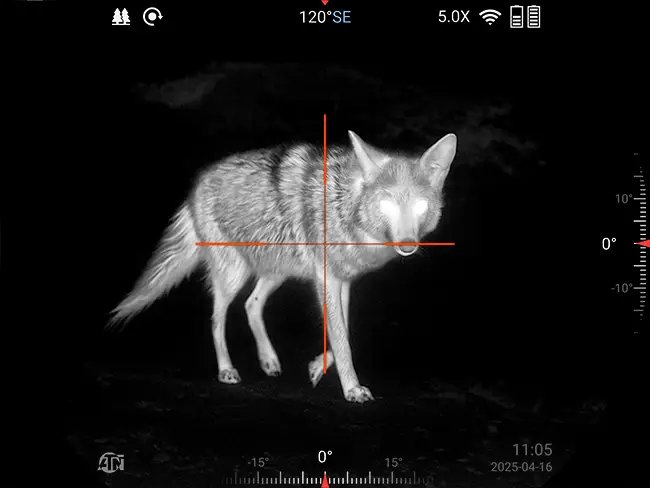
Winter is thermal's home field. Frozen ground and cold air make even a bedded animal light up, so the picture is easy — the challenge becomes seeing far enough across bare, open country. This is the season to bring out the Binox-6 Dual 640x512 3-24x. Its 640x512 thermal sensor delivers the finest detail of the two, and its 3100 m detection range is the longest in the pair, so a coyote crossing a distant snow line is not just a dot but a readable shape.
Winter nights are long, which is where the 4-in-1 design shines: switch between thermal for detection and the IR-illuminated night channel (850/940 nm) to confirm before you move. DeFog helps when your breath and the cold conspire against clean glass, and the roughly 8-hour battery on two 18650 cells keeps you scanning through a long, dark sit. The flagship 640 costs more than the 384 and gives a lower top magnification, but in cold high-contrast conditions raw sensor detail beats extra zoom — you rarely need 44x when the animal already glows. For serious winter predator work, this is the model.
Spring: green-up, thermal crossover, and shorter reach
Spring sits between the two extremes. Nights can still be cold enough for good contrast, but as green-up arrives and daytime sun warms the ground, you drift back toward summer's low-contrast challenge. Ranges are often shorter too — spring foliage closes down long sightlines, so extreme detection distance matters less than clean detail up close and a usable field of view.
Either Binox-6 handles spring well, and the choice comes down to your ground. In tight, brushy spring country the Binox-6 Dual 640x512 3-24x and its wider 3x low end let you sweep a close tree line quickly and pick out a warm shape against warming brush. On more open spring ground where you are still ranging across fields, the 384x288 5.5-44x and its rangefinder keep the edge. Both share the same 4K day sensor, GPS, compass and SharpIR enhancement, so the seasonal decision is really about resolution versus reach, not features.
The two Binox-6 units side by side
Read the table by what changes with weather. When contrast is scarce and you need to reach and range — summer and open fall — the high-magnification 384 is the value pick that does more than its tier suggests. When contrast is generous and you want to read fine detail across distance — deep winter and brushy spring — the 640 flagship steps up and earns the premium. You can see both, along with the rest of the line, on the ATN Binox-6 Dual 384 page and the broader thermal binoculars category.
Which one, in one line
- Pick the Binox-6 Dual 384 5.5-44x if you glass across open summer and fall country, do a lot of ranging, and want the most magnification per tier.
- Pick the Binox-6 Dual 640 3-24x if you hunt cold winters, judge animals at distance, or work tight spring cover where fine thermal detail beats extra zoom.
- Either way you get a 4-in-1 day / night / thermal / twilight ATN unit with a built-in laser rangefinder, 4K day sensor, GPS and compass.
How we compared them
We judged these two against the things that actually shift with the outdoor calendar: thermal sensor resolution and NETD sensitivity (how readable an animal is when summer heat flattens contrast), detection range and magnification versus field of view (open winter reach against tight spring cover), how useful the built-in laser rangefinder is when you are settling distances during the rut, and real runtime for long summer evenings and longer winter nights. Only the current 6th-generation Binox-6 line was in scope — we did not weigh older or discontinued models. Be clear-eyed about what this is: an in-house comparison of ATN's own range, not an independent lab test, so treat the seasonal calls as informed guidance and check the published specs against your own ground and quarry. Who is this not for? If you never leave open, cold-weather country, the extra magnification of the 384 may go unused and the 640's detail is the better spend; and if your budget rules out the flagship tier, the 384 already covers most of the year comfortably. Neither is a rifle-mounted sight — these are handheld observation binoculars, so a dedicated scope shooter needs a different tool.
Frequently Asked Questions
Are outdoor thermal binoculars worse in summer heat?
They work year-round, but summer is harder because warm ground and brush shrink the temperature gap between an animal and its background. That is why a low NETD (15 mK or lower on both Binox-6 units) matters most in hot weather, and why the high-magnification 384 helps you study and confirm a faint summer signature at distance.
Do I need the 640 flagship, or is the 384 enough?
The 384 Dual 5.5-44x covers most of the year and most terrain, especially summer and fall glassing where reach and ranging matter. The 640 Dual 3-24x steps up for cold-weather detail work and judging animals at distance. If your hunting is mostly open and warm, the 384 is the value pick; if it is cold and detail-critical, the 640 earns the premium.
Which Binox-6 has the longer range?
The Binox-6 Dual 640 3-24x has the longer detection range at 3100 m, versus 2750 m for the 384. Both, however, share the same built-in 1000 m laser rangefinder with about ±1 m accuracy, so ranging capability is identical — the difference is how far you can detect and resolve a target.
Do both models work at night as well as in daylight?
Yes. Both are 4-in-1 units offering day, night, thermal and twilight modes, with a 4K UHD day sensor and an IR illuminator (850/940 nm) for the night channel. Thermal handles detection in the dark; you can switch to the IR-lit night or 4K day view to confirm what you found.
How long do the batteries last for a full outdoor session?
Both run roughly 8 hours on two 18650 cells, and because the cells are replaceable you can carry a spare pair and effectively double your time in the field — useful for long summer evenings and long winter nights alike.
Can these thermal binoculars help with ranging distance in the field?
Yes. Both Binox-6 units include a built-in laser rangefinder good to about 1000 m with roughly ±1 m accuracy, plus GPS and a compass. That combination is especially handy in fall, when the rut has animals stepping out across fields and you want an exact number before committing to a shot or stalk.
Are these binoculars or a rifle scope?
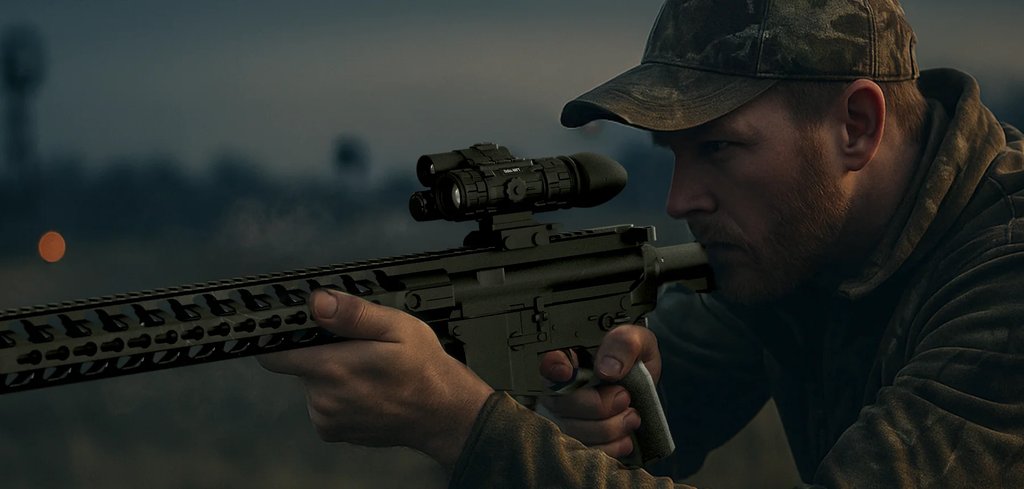
They are handheld observation binoculars for scanning, scouting and ranging — not a weapon-mounted sight. If you need an aiming optic on a rifle, look at ATN's scope lines instead; the Binox-6 is built for finding and studying game, not aiming.
Ready to match a Binox-6 to your season? Compare the versatile ATN Binox-6 Dual 384 hero against the flagship 640, or browse the full ATN thermal binoculars lineup to find the right reach and resolution for the way you hunt all year.
Created: August 5, 2026 · 19:53:43 UTC