This is a plain-English guide to outdoor thermal binoculars, organized around the one feature that changes how you use them in the field: what the device can actually do beyond seeing heat. The example throughout is the ATN Binox-6 Dual 640x512 3-24x, the flagship of ATN's 6th-generation thermal binoculars, because its 4-in-1 vision and built-in laser rangefinder show what modern outdoor glass is capable of. No shopping-list of picks here — just how these things work and how to choose.
What outdoor thermal binoculars actually are
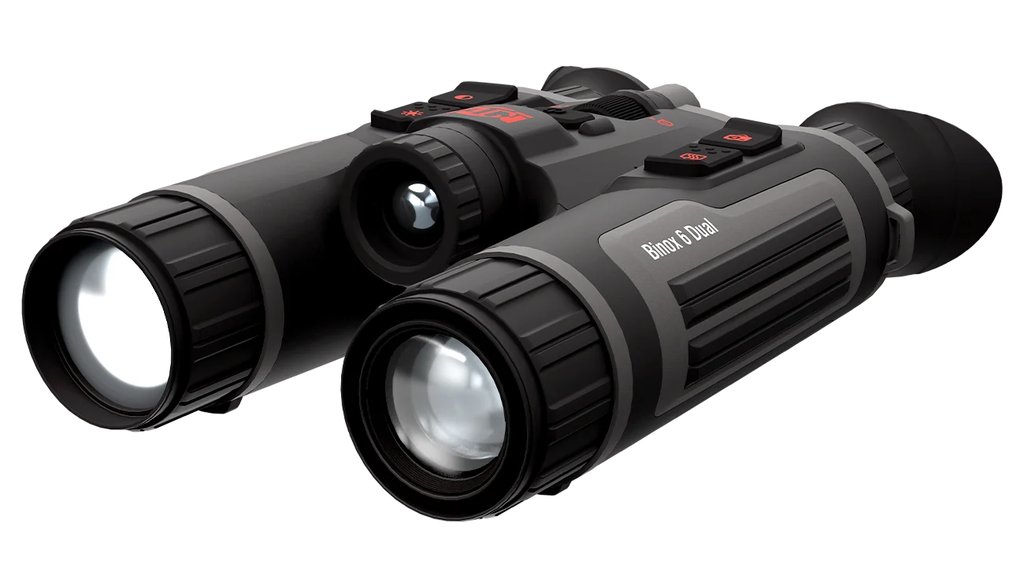
Thermal binoculars are handheld optics that build a picture from heat instead of visible light, presented to both eyes at once. That two-eyed design is the whole point of the format: your eyes are not fighting to keep one shut, so you can scan a treeline or a field for long stretches without the fatigue a monocular causes. The Binox-6 Dual takes the idea further by being a 4-in-1 device — it carries both a 640x512 thermal sensor and a 4K CMOS day sensor, and it can present a thermal, daylight, night or twilight image depending on conditions. In practice that means one tool covers a dawn glassing session, a midday scout and a full-dark scan, which is why it belongs at the center of an outdoor thermal binoculars guide.
How thermal binoculars work, step by step
- The sensor reads heat. A thermal detector measures tiny differences in temperature across the scene — a warm animal against cooler ground — and turns them into an image. On the Binox-6 Dual that sensor is 640x512, so the picture has the pixel density to stay detailed as you zoom.
- NETD sets the sensitivity. The 15 mK NETD rating describes the smallest temperature difference the sensor can resolve; a lower number means cleaner contrast when the air is damp or foggy.
- Processing sharpens it. SharpIR, ATN's on-board AI enhancement, refines edges in real time, plus DeFog and Wide Dynamic Range help the image survive difficult light and moisture.
- You choose a palette and mode. White-hot, black-hot or a color palette, and on the Binox-6 Dual a switch between thermal, day, night and twilight views.
- The rangefinder measures distance. A built-in laser rangefinder reads out to about 1000 m with roughly ±1 m accuracy, so you know how far the animal actually is.
What you actually use them for outdoors
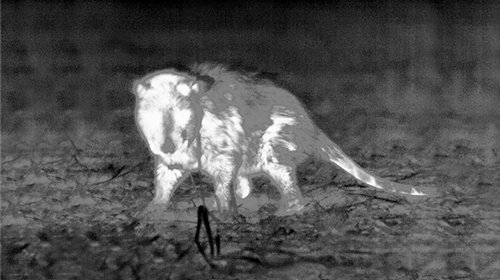
Outdoor thermal binoculars are, first and foremost, scanning and observation tools — they are not weapon sights, and that changes how you use them. Hunters glass open ground with them before committing to a stalk, because heat cuts straight through the low light and light cover that hide game from ordinary binoculars. Land managers and property owners use them to check fence lines and outbuildings after dark. Wildlife watchers and search teams lean on them for the same reason: a warm body glows against a cold background whether it is a deer bedded in brush or a person off a trail. The GPS and compass on the Binox-6 Dual add a layer of situational awareness, so you can mark where you spotted something and navigate back to it.
The key features that separate good outdoor glass
- Sensor resolution: a 640x512 thermal sensor, as on the Binox-6 Dual 640, keeps targets identifiable further out than a lower-resolution detector.
- 4-in-1 vision: switching between thermal, day, night and twilight modes means one device works from dawn through full dark.
- Built-in rangefinder: a laser rangefinder reading to ~1000 m removes the guesswork of estimating distance in the field.
- Thermal sensitivity (NETD): a 15 mK rating holds contrast when conditions turn foggy or humid.
- Runtime you can extend: a replaceable twin-18650 battery system means a long glassing session does not end when a fixed battery would.
What to look for before you buy
Start with how far you need to observe. If you glass wide-open country and want to identify game at distance, prioritize the 640x512 sensor and a strong detection range; the Binox-6 Dual 640 reaches around 3100 m of detection with its 35 mm thermal lens. If your priority is picking apart a distant target rather than covering vast ground, the higher-magnification Binox-6 Dual 384 5.5-44x trades some resolution for reach in magnification. Weigh the extras honestly: the built-in rangefinder and 4-in-1 vision are genuinely useful outdoors, but if you only ever scan in full dark, a simpler thermal-only device would do. And think about comfort — a two-eyed binocular is far easier on the eyes over a long sit than a monocular, which is the whole reason to choose the format.
Common mistakes to avoid
- Confusing detection with identification. Spotting a heat blob far off is not the same as knowing what it is — resolution and getting closer do that.
- Ignoring NETD. Two devices can quote the same range but perform very differently on a damp night; the millikelvin figure is the tell.
- Over-zooming. Digital zoom past the optical range magnifies noise as well as the target; scan low, confirm high.
- Treating binoculars like a sight. Thermal binoculars are for observing and scanning, not for aiming a rifle.
A worked example: an evening scan with the Binox-6 Dual 640
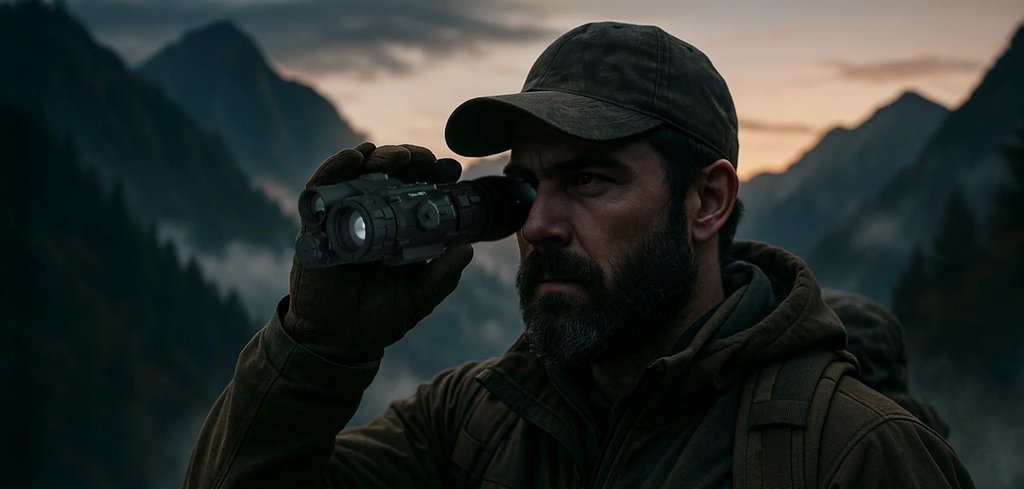
Picture a summer evening at the edge of a field. In the last of the daylight you glass in day mode using the 4K CMOS sensor, picking out fence lines and cover. As the light drops you switch to thermal and the field lights up with heat signatures — a couple of warm shapes at the far treeline. SharpIR sharpens their outlines as you zoom in with the 3-24x range, and the 640x512 sensor is detailed enough to read them as deer rather than something to be concerned about. You laser them with the built-in rangefinder: a clean number tells you they are well out. You mark the spot with GPS, note the compass bearing, and you have your plan for the morning — all from one pair of binoculars, in changing light, without ever swapping devices.
Is a device like this worth it?
For anyone who spends real time outdoors after dark — hunting, managing land or observing wildlife — a capable pair of thermal binoculars changes what you can do once the sun sets. The Binox-6 Dual 640 sits at the flagship end of ATN's range because of its 640 sensor, 4-in-1 vision and built-in rangefinder; if those features map onto how you actually use the outdoors, it is a lot of tool in one device. If you only need a simple full-dark scanner, you can step down and spend less — the point of this guide is to help you decide which features you will genuinely use.
How this guide was put together
We built this guide around the real criteria that matter for outdoor thermal binoculars — sensor resolution, thermal sensitivity (NETD), detection range, the usefulness of a built-in rangefinder and multi-mode vision, and runtime — judged against how people actually use binoculars outdoors: scanning, observing and ranging rather than aiming. Only ATN's current 6th-generation Binox-6 line was considered. This is an in-house explainer from the brand, not an independent lab review, so treat the specs as a starting point and check them against your own terrain and needs. Honest note: a full 4-in-1 device with a rangefinder is more than a pure full-dark scanner requires, so if your use is narrow, a simpler tool may serve you better.
Magnification: 3-24x. Detection range: ~3100 m.
Extras: 4-in-1 day/night/thermal/twilight, built-in laser rangefinder (~1000 m, ±1 m), 4K day sensor, GPS + compass, replaceable twin-18650 batteries (~8 hrs).
Frequently Asked Questions
What are outdoor thermal binoculars used for?
They are two-eyed thermal optics for scanning and observing in the field — glassing for game, checking property lines after dark, or watching wildlife. Heat cuts through low light and light cover, so a warm animal shows up against a cold background. They are observation tools, not weapon sights.
How are thermal binoculars different from a thermal monocular?
Binoculars present the image to both eyes, which is far more comfortable over a long glassing session than a monocular you hold to one eye. The Binox-6 Dual also adds 4-in-1 vision and a built-in rangefinder, making it a full observation platform rather than a simple scanner.
What does the 4-in-1 vision on the Binox-6 Dual mean?
It means one device switches between thermal, day (via a 4K CMOS sensor), night and twilight modes, so a single pair of binoculars works from a dawn scout through midday into full dark without swapping tools.
Do I need the built-in rangefinder?
If you observe or hunt at distance, yes — knowing an animal is out to about 1000 m with roughly one-meter accuracy removes the guesswork of estimating range by eye. If you only ever scan close cover, it is a nice-to-have rather than essential.
How far can these binoculars see outdoors?
The Binox-6 Dual 640 has a detection range around 3100 m, while the higher-magnification 384 model trades some resolution for reach in zoom. Detection is spotting a heat signature; identifying exactly what it is happens at a shorter distance and depends on resolution.
Will thermal binoculars work in fog or rain?
Thermal handles haze and light fog far better than ordinary optics because it reads heat, not visible light, and features like DeFog help. The 15 mK NETD rating on the Binox-6 line means the image keeps contrast when the air turns damp.
How long do they run on a charge?
The Binox-6 Dual uses a replaceable twin-18650 system good for roughly eight hours, and because the cells are swappable you can carry spares to extend a long outdoor session rather than being limited by a fixed battery.
Want to see the 4-in-1 vision and rangefinder in action? Explore the Binox-6 Dual in ATN's 6th-generation thermal binoculars range.
Created: August 5, 2026 · 19:53:42 UTC