Glassing a ridgeline at last light is where outdoor thermal binoculars earn their keep. If you like to sit, scan, and read country slowly rather than rush, this guide to outdoor thermal binoculars is written for the way you observe. Outdoor thermal binoculars are a two-eyepiece optic that turns heat into a picture you watch with both eyes, so a warm elk, coyote or hog stands out against a cool hillside long before it knows you are there. This guide is built around observation: how a two-eyed heat picture is formed, why both eyes matter on an hour-long sit, what the spec numbers change when you are actually parked behind the glass, and the habits that separate a good scout from a frustrated one. The ATN Binox-6 640x512 is our worked example, because it is the kind of do-it-all glass a serious observer reaches for.
Outdoor thermal binoculars are a two-eyepiece observation optic that reads heat instead of light, so warm animals glow against cool terrain in full dark, fog and light brush. Because you glass with both eyes, they stay comfortable through hours of scouting and wildlife watching. The ATN Binox-6 640x512 is a strong all-round choice: a sharp sensor, four viewing modes, a built-in rangefinder and a rugged waterproof build.
What are outdoor thermal binoculars?
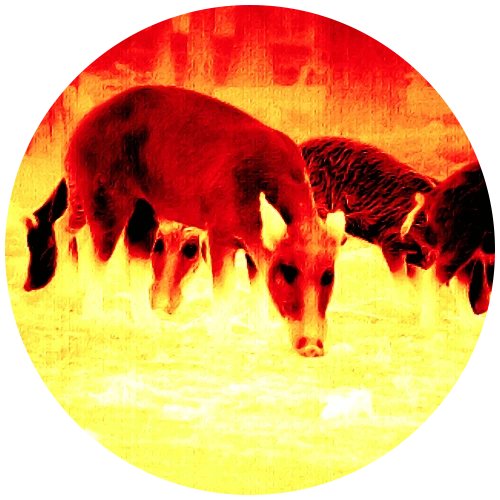
Outdoor thermal binoculars are a two-eyepiece observation optic that reads infrared heat and shows it as a live image through both eyes. Nothing you look at is truly dark to them: every rock, tree and animal radiates heat, and the sensor measures those temperature gaps and paints them on twin internal screens, so a bedded deer glows softly and a moving coyote burns bright against a cooler field. Because the picture is built from heat and not reflected light, you can sit and watch a hillside in total blackness, pick warm bodies out of drifting fog, and spot game half-tucked into thin brush. The two-eyepiece layout is what makes them observation tools rather than quick-check gadgets: both eyes share the load, depth reads more naturally, and you can hold a steady watch far longer than you could squinting through one lens. The Binox-6 is a binocular in exactly that sense — you settle in, glass wide, and let the heat picture do the finding.
How do outdoor thermal binoculars work?
- The lens collects heat off the landscape. A germanium objective gathers infrared energy from the whole scene in front of you — ground, timber, animals — and focuses it onto the thermal sensor.
- The sensor grades warm from cool. A grid of tiny detectors reads the temperature of every point. On the Binox-6 that grid is 640x512, so the terrain you are glassing is mapped as more than three hundred thousand separate heat readings at once.
- The image is cleaned for observation. ATN's SharpIR AI sharpens edges so a distant animal reads as a shape you can name, while DeFog mode helps the picture cut through humid, misty valley air.
- Both eyes see the same steady picture. The result appears in your chosen palette and refreshes 50 times a second, so a walking animal stays smooth as you track it and the two-eyed view stays relaxed on a long watch.
- You scan, range and follow. Sweep a ridgeline and warm bodies surface; the built-in laser rangefinder tells you how far off the animal you spotted is, and Hot Point Tracking keeps a lock on the hottest object as it drifts across the slope.
What can you use outdoor thermal binoculars for?
- Glassing ridgelines and field edges — settle in above a basin or along a fence line and let warm bodies rise out of the cool ground, spotting game long before it winds you.
- Scouting and patterning game — watch where animals feed, bed and cross at dusk, so you learn the ground before you ever set up to hunt it.
- Wildlife watching and counts — observe deer, hogs or predators moving at night, count what is really out there, and study behaviour without a spotlight spooking anything.
- Land and stock awareness — scan a pasture at night from one comfortable position and pick out strays, predators or people well beyond flashlight range.
Outdoor thermal binoculars vs a thermal monocular: which fits?
For sustained observation, binoculars win; for a quick pocket check, a monocular is fine. When your plan is to sit and study country — watching a basin for the hour after sunset, patterning a field, counting a herd — a two-eyed pair like the Binox-6 keeps you comfortable and lets you hold a lock on movement without one eye tiring out. A single-eye monocular is lighter and quicker to stow, which suits fast walking and spot-checks, but it is not built for a long watch. If observation is your main job outdoors, the binocular is the tool that keeps you glassing long after the monocular user has put the optic down. To see the wider two-eyed lineup, browse ATN's thermal binoculars.
Key features to understand
- Sensor resolution — more dots in the picture. The Binox-6's 640x512 sensor is like the difference between HD and standard TV: you can push the zoom further before the image turns blocky when studying a distant animal.
- NETD (thermal sensitivity) — a lower number means a cleaner picture in humid or foggy air. The Binox-6 sits at 15mK or lower, so damp evening conditions over water or in a valley bother it less.
- Magnification and field of view — base magnification sets how wide you can glass; the Binox-6 runs 3-24x, a broad search view that zooms in to study game far across a basin.
- Four viewing modes — Day, Night, Thermal and Twilight, plus a 4K day sensor, so one pair carries you from bright afternoon glassing right through into black-dark observation.
- Built-in rangefinder — a laser rangefinder reads distance out to 1000 yards to within about a meter, so you know exactly how far off the animal you are watching really is.
- Detection range — how far you can pick up heat. The Binox-6 reaches out to about 3100m for large heat sources, which is real reach for glassing open country.
- Battery and build — dual replaceable 18650 batteries run about 8 hours of watching, and IP67 waterproofing shrugs off dew and rain on a long sit.
What to look for before buying
- Match resolution to how far you glass. For studying animals across open basins and ridgelines, a higher-resolution 640x512 sensor pays off; for shorter brushy watching you can step down a tier.
- Favour a wide field for finding game. A wide low-end view surfaces animals faster on a scan than a narrow, high-zoom one, which matters when you are covering a whole slope.
- Check the weather rating. Look for IP67 waterproofing so a dewy, rainy night of observation doesn't end early.
- Value the rangefinder for scouting. Knowing exact distance turns a spotted animal into real ground knowledge for later.
- Think about battery swaps. Replaceable 18650 cells like the Binox-6's let you carry spares and keep watching all night.
- Comfort over a long watch. A pair around 1.6 lb is comfortable to hold up for the extended two-eyed sessions observation demands.
Common mistakes to avoid
- Glassing on high zoom. Cranking magnification narrows your view and makes you miss animals at the edges; scan wide first, then zoom to study what you find.
- Ignoring NETD. A cheap sensor with high NETD washes out on humid evenings over water; sensitivity matters as much as pixels for clean observation.
- Expecting binoculars to aim. They are observation glass — for finding, ranging and watching, not for the shot — pair them with a scope when it is time to hunt.
- Skipping practice. Learn the palettes, modes and controls in daylight so you are not fumbling on a hillside in the dark.
- Forgetting spare power. Know your runtime and carry charged 18650 cells for the long watches good scouting takes.
Example: the ATN Binox-6 640x512
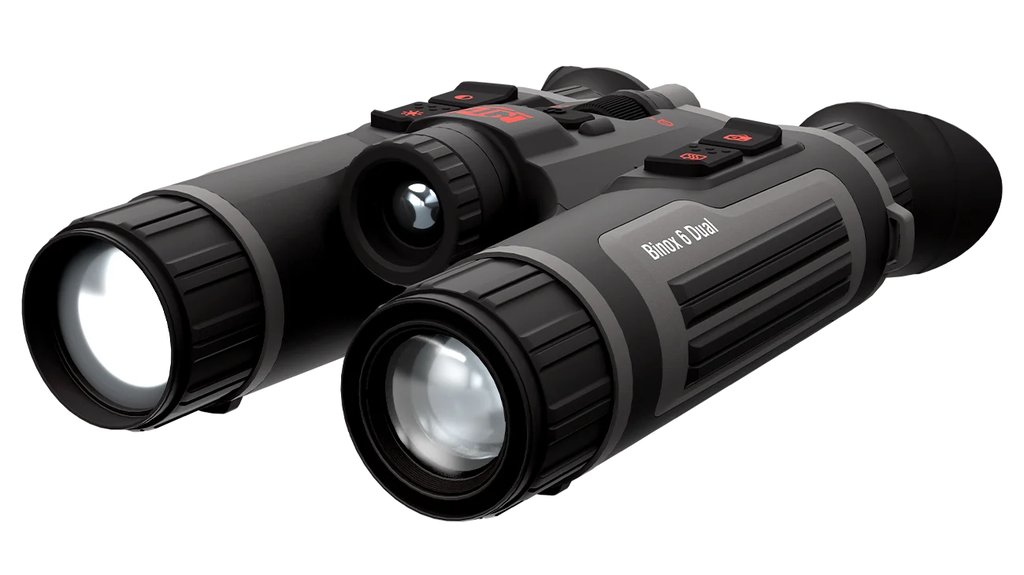
The ATN Binox-6 640x512 3-24x is a clean example of a modern all-round observation pair. The 640x512 sensor holds detail as you zoom in to study a distant animal, and the 3-24x range opens a broad search view that reaches across a basin. What sets it apart for outdoor watching is its four-in-one design: Day, Night, Thermal and Twilight modes plus a 4K Ultra HD day sensor, so a single pair carries you from an afternoon scouting sit into pitch-dark thermal glassing on the same evening. A built-in laser rangefinder reads distance out to 1000 yards to within about a meter, SharpIR AI and DeFog mode keep the picture clean in valley haze, and Hot Point Tracking helps you stay locked on a moving animal. Dual replaceable 18650 batteries run about 8 hours, 64 GB stores footage of what you watched, and IP67 sealing shrugs off dew. At about 1.6 lb it stays comfortable through the long two-eyed sits that scouting rewards.
Are outdoor thermal binoculars worth it?
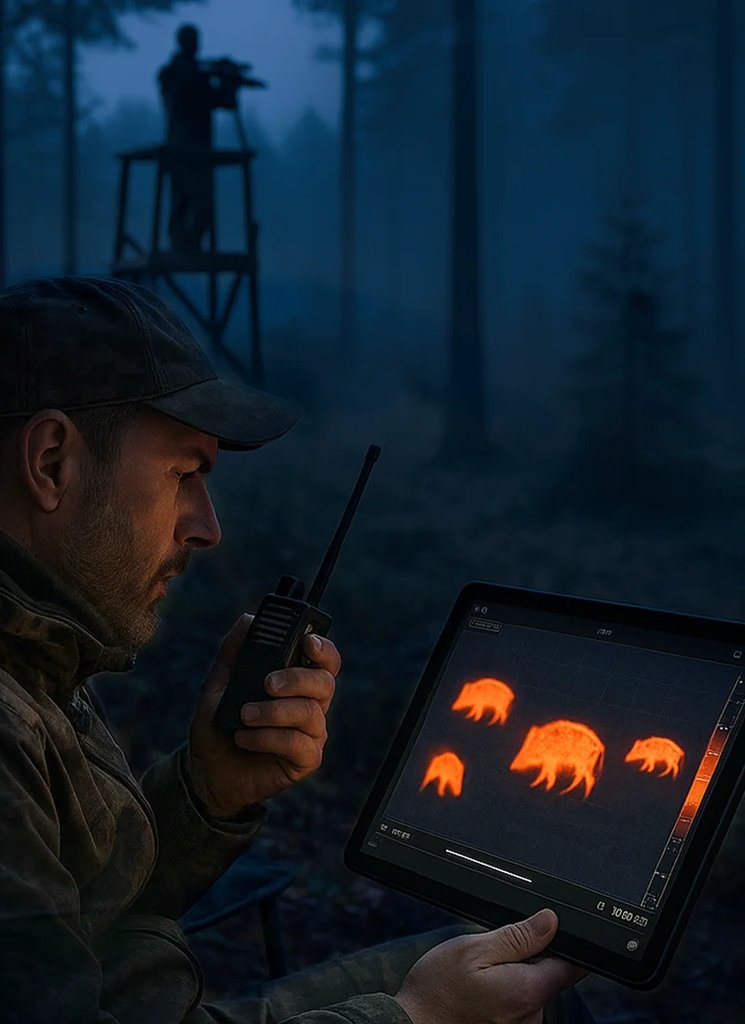
For anyone who scouts, patterns game or simply likes to watch wildlife move, yes. Outdoor thermal binoculars turn the dark hours — when animals are most active and least wary — into productive observation time, and the two-eyed view means you can hold a comfortable watch instead of giving up when one eye tires. A well-rounded pair like the Binox-6 handles finding, ranging, tracking and recording, and its four viewing modes mean it keeps working from a bright afternoon sit into full dark. If you spend real time behind the glass reading country, it pays for itself in the animals you learn to find.
How this guide was put together
This guide is built on ATN's published 6th-generation specifications and real field use, not marketing copy. Every spec is explained in plain terms with its practical meaning for guide outdoor thermal binoculars, and the honest limits are flagged as clearly as the strengths. The example device is ATN's own current-line model, shown to make the numbers concrete — treat it as an in-house reference, and compare the specs against your own needs before buying.
Frequently Asked Questions
Do outdoor thermal binoculars work in total darkness?
Yes. They read heat, not light, so you can glass a hillside in complete darkness with no moon at all. They also cut through light fog and can reveal warm animals half-hidden in thin brush while you observe.
What's the difference between thermal binoculars and a thermal monocular?
Binoculars use two eyepieces for a relaxed, two-eyed picture that suits long observation sits, while a monocular uses one eyepiece and is lighter and more pocketable. For sustained glassing and scouting, a pair like the Binox-6 keeps you comfortable; for quick pocket checks on the move, a monocular is handier.
Can I hunt with just outdoor thermal binoculars?
They are for detecting, identifying, ranging and watching game, not for taking the shot — binoculars are not an aiming device. Many hunters glass and scout with the binoculars, then switch to a rifle-mounted optic when it is time to shoot.
What does resolution mean on thermal binoculars?
Resolution is how many heat-reading dots make up the picture. A 640x512 sensor like the Binox-6's has far more dots than a 384 or 256 sensor, so you can zoom in to study a distant animal before the image turns blocky.
Will rain or fog ruin the image while I'm glassing?
The Binox-6 is IP67 waterproof, so rain and dew won't hurt it. Heavy fog reduces range for any thermal, but its low NETD of 15mK or better, plus DeFog mode, keeps the picture usable for observation in humid and misty conditions.
How long can I watch on one charge?
The ATN Binox-6 runs about 8 hours of observation on its dual replaceable 18650 batteries. Because the cells swap out, you can carry charged spares and keep glassing through the longest night watch.
Quick reference specsQuick reference — ATN Binox-6 Dual 640x512 3-24x: 640x512 sensor; <=15mK NETD; 3-24x (up to 8x digital zoom); 3100m detection; ~8 hours battery. Best for dusk-to-dark scouting and long-range wildlife observation.
Ready to read the country after dark? The ATN Binox-6 640x512 is an easy, well-rounded pair of outdoor thermal binoculars built for observation: a sharp sensor, four viewing modes, a built-in rangefinder, and a rugged waterproof build for relaxed two-eyed glassing hour after hour. To see how it stacks up against the rest of the range or find a variant that fits your ground and budget tier, explore ATN's full lineup of thermal binoculars and pick the pair that matches the country you like to watch.
Created: July 7, 2026 · 08:31:01 UTC