Short answer: yes, thermal binoculars work in daylight, and often better than people expect. A common myth is that thermal only works in the dark like night vision. It doesn't. Thermal reads heat, not light, so it runs in bright sun, at high noon, in shade, and in the dark all the same. The one thing that changes by day is contrast: when the ground has been baked by the sun, warm animals stand out a little less against warm terrain. The ATN Binox-6 handles this well because it pairs a real thermal sensor with a 4K day camera, so you can glass in true daylight or flip to heat in the same unit. This guide explains why daylight is not a problem, when it actually helps, and what to expect.
Thermal binoculars work perfectly fine in daylight. Thermal sensors detect infrared heat radiated by objects, not visible light, so bright sun does not overload or blind them the way it can with night vision. Daytime performance is strong; the only real change is reduced heat contrast once the sun warms the surrounding ground.
What are thermal binoculars, and what do they actually see?
Thermal binoculars are dual-eyepiece optics that build a picture from heat instead of light. Every object above absolute zero gives off infrared energy, and warmer things give off more of it. The sensor turns those tiny heat differences into a visible image, so a warm deer glows against cooler brush whether it is midnight or midday. Because they read radiated heat rather than reflected light, they do not need any ambient light to form an image, and they are not fooled by darkness, shadow, or glare in the same way your eyes are. The Binox-6 shows this as a live view you scan through with both eyes, which is more comfortable for long glassing sessions than a single-eye monocular.
How does thermal imaging work in daylight?
- Every warm object radiates infrared energy all day long. Sunlight does not switch that off; a living animal is still warmer than the air and ground around it.
- The thermal sensor collects that long-wave infrared through the germanium objective lens. Regular sunlight (visible and near-infrared) is a different, shorter wavelength, so it does not flood or wash out the thermal sensor.
- The processor maps hot-to-cool as bright-to-dark (or a color palette) and builds the live image you see.
- On the Binox-6, the SharpIR AI enhancement sharpens edges so a warm target still pops even when daytime contrast is lower.
- If you want a normal daylight picture instead, you switch to the 4K day camera in the same unit and glass in full color.
The key idea: daylight adds visible light, but thermal never used visible light in the first place. So adding sun changes very little about whether the sensor can see.
So why do people think thermal only works at night?
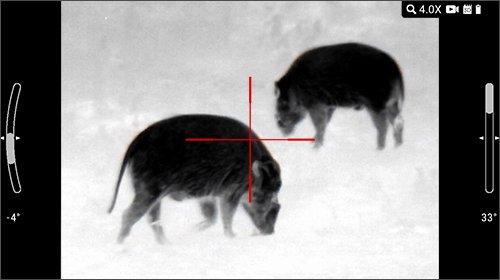
Two reasons. First, thermal gets confused with night vision, which amplifies faint visible light and genuinely can be overwhelmed by bright light. Thermal works on a totally different principle and has no such limit. Second, thermal often looks its most dramatic at night, because after sundown the ground cools quickly while animals stay warm, so heat contrast is huge and targets glow like light bulbs. That is a contrast advantage at night, not a daylight failure. In the middle of a hot afternoon the same field has soaked up solar heat, so a warm hog stands out a bit less, but the Binox-6 still detects it, and the day camera is there when you simply want to look.
What can you use daytime thermal binoculars for?
- Spotting animals hidden in cover — a bedded deer or hog tucked in shade or tall grass is invisible to your eyes but still glows with heat by day.
- Finding downed or wounded game — recovering an animal that dropped in thick brush is far faster when its body heat shows up against the surroundings.
- Counting and scouting during legal daylight hours — glass a field at dawn or dusk and see through the low light and shadow that fool the naked eye.
- Property and livestock checks — scan a treeline or pasture in daylight and pick out warm bodies you would otherwise walk right past.
- Search work — a warm person or animal shows against cooler shaded ground even at midday.
Key features to understand for daytime use
- Sensor resolution — the Binox-6's 640x512 thermal sensor means more dots in the picture, so a warm shape reads as a clear animal instead of a blob, which matters more when daytime contrast is lower.
- NETD (thermal sensitivity) — a low NETD of 15mK lets the sensor separate small heat differences, exactly what you need when the sun has narrowed the gap between animal and ground.
- The 4-in-1 day camera — a 4K Ultra HD day sensor lets you glass in true color when you just want a normal daytime view, then switch to heat instantly.
- SharpIR AI enhancement — cleans up edges so targets stay defined even in flatter daytime scenes.
- Color palettes — White Hot, Black Hot, and Iron Red each pull detail out differently; Iron Red often helps when daytime contrast is soft.
- DeFog and Wide Dynamic Range — hold detail in humid or high-glare daytime conditions.
What to look for before buying for daytime work
- A genuine thermal sensor, not just a low-light camera — only a true thermal core sees heat by day; the Binox-6 has one plus a separate day camera.
- Enough resolution — 640x512 gives you room to zoom in on a distant warm shape before it turns blocky.
- Low NETD — the smaller the number, the better it copes with the reduced contrast of a sun-warmed landscape.
- Comfort for long sessions — two eyepieces reduce eye strain when you glass for hours, day or night.
- All-weather build — IP67 waterproofing so bright, hot, dusty days do not end the outing.
Common mistakes people make with daytime thermal
- Expecting night-level contrast at noon — targets are still visible, just less glaring; scan slowly instead of assuming the unit failed.
- Pointing straight at the sun — you will not damage the thermal core with heat, but avoid it as a habit and let the optic settle.
- Staying on one palette — if a warm animal is hard to pick out midday, switch palettes; Iron Red or Black Hot can reveal it.
- Forgetting the day camera exists — when you only want a plain daylight look, flip to the 4K day mode instead of fighting the thermal view.
- Confusing thermal with night vision — thermal has no bright-light limit; do not baby it as if sun will blind it.
Example: the ATN Binox-6 by day
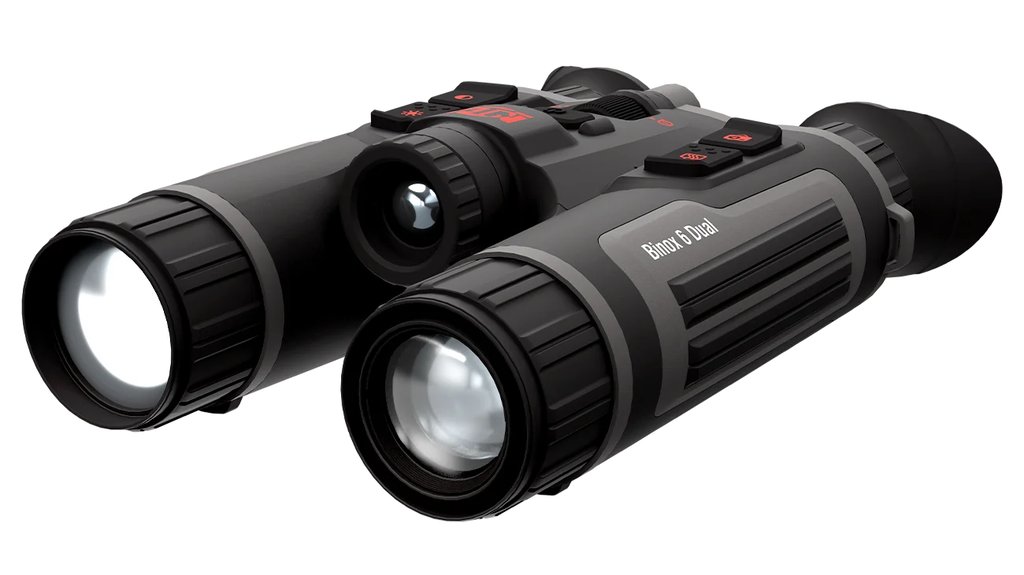
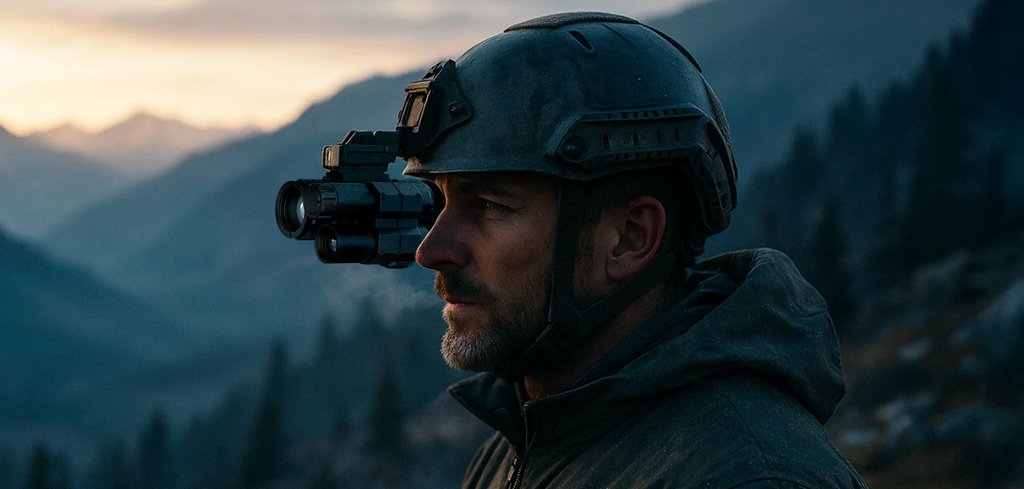
The ATN Binox-6 Dual 640x512 3-24x is a good worked example because it is built for exactly this day-and-night mix. Its 640x512 thermal sensor packs enough dots that a warm animal reads clearly even when daylight softens the contrast, and a 15mK NETD keeps small heat differences visible. Base magnification runs 3-24x with up to 8x digital zoom, and detection range reaches out past 3,000m for the heat of a large animal. Alongside the thermal core sits a 4K Ultra HD day camera, so you truly get four modes in one: Day, Night, Thermal, and Twilight. A built-in laser rangefinder ranges out to 1000 yards, and dual replaceable 18650 batteries give roughly 8 hours per session. In practice, that means you glass a field in color at dawn, flip to thermal to pull a hog out of the shade, and range it before the light even changes. It sits in the flagship tier of ATN's thermal binoculars lineup.
Is a day-and-night thermal binocular worth it?
If you only ever glass in perfect daylight and never care about heat, plain optics are cheaper. But most people who ask whether thermal works in daylight actually want one tool that covers everything: color detail when the light is good, heat when it is not, and the ability to pull a hidden or downed animal out of cover any hour of the day. That is where a dual-sensor unit like the Binox-6 earns its keep. You are not buying a night-only gadget; you are buying an all-hours pair of eyes. For anyone who scouts, recovers game, or checks property across changing light, it is worth it. For someone who genuinely never leaves broad daylight and never needs heat, it is more than they need.
How this guide was put together
This explainer is an in-house look at ATN's own current 6th-generation lineup, not an independent lab test. We wrote it around the real question daytime buyers ask, then judged the Binox-6 against the specs that actually matter for day use: thermal sensor resolution, NETD (thermal sensitivity), the presence of a true 4K day camera, detection range, refresh rate, and battery life. Only the current 6th-gen line is considered here; older discontinued models are left out. Honest trade-off: daytime heat contrast really is lower than at night, so a warm animal on sun-baked ground is less glaring, and no thermal optic changes that physics. Who it is not for: if you only need plain color viewing in good light and never care about detecting heat, a standard optic covers you for less. We would encourage you to weigh these specs against how and when you actually plan to glass.
Frequently Asked Questions
Do thermal binoculars work in daylight?
Yes. Thermal sensors detect infrared heat, not visible light, so they work fine in bright sun, shade, or full dark. Daylight does not blind or overload a thermal core. The only change is reduced heat contrast once the sun warms the ground, but warm animals are still clearly detectable.
Will bright sunlight damage a thermal binocular?
No. A thermal sensor reads long-wave infrared, a different wavelength than sunlight, so it is not overloaded the way a night vision tube can be. Pointing directly at the sun is a poor habit for any optic, but normal daytime use is exactly what a unit like the Binox-6 is built for.
Is thermal better at night than in the daytime?
Thermal usually looks sharper at night because the ground cools while animals stay warm, giving huge heat contrast. In daytime the sun-warmed landscape narrows that gap, so targets are less glaring but still visible. A higher-resolution, low-NETD sensor like the Binox-6's holds detail best when daytime contrast drops.
What is the difference between thermal and night vision in daylight?
Night vision amplifies faint visible light and can be overwhelmed by bright light, so it is a poor daytime tool. Thermal reads heat and ignores visible light entirely, so it runs all day. The Binox-6 also adds a 4K day camera, so you get real daylight color plus thermal in one unit.
Can thermal binoculars see through walls or glass in daylight?
No. Thermal cannot see through solid walls, and glass blocks long-wave infrared, so you cannot read heat through a window. In daylight, thermal sees the heat radiating from surfaces and living things in open view, which is what makes it great for spotting animals hidden in brush or shade.
Do I need the day camera if the thermal already works by day?
The thermal works alone by day, but the 4K day camera gives you normal color detail when the light is good, which is handy for identifying and recording. On the Binox-6 you switch between them instantly, so you get heat detection and true daylight viewing without carrying two devices.
Are thermal binoculars legal to use during the day?
Thermal binoculars themselves are legal to own and use for observation, scouting, and game recovery in most places. Rules that restrict thermal usually concern hunting specific species at night, not daytime viewing. Always check your local regulations before hunting with any thermal device, day or night.
Quick reference specsATN Binox-6 Dual 640x512 3-24x
Thermal sensor: 640x512, 15mK NETD
Day camera: 4K Ultra HD (3840x2160)
Magnification: 3-24x, up to 8x digital zoom
Detection range: about 3,100m
Built-in laser rangefinder: 1000 yd
Refresh rate: 50 Hz
Battery: dual replaceable 18650, about 8 hours
Build: IP67 waterproof, 4-in-1 Day/Night/Thermal/Twilight
Want one pair of optics that reads heat at high noon and glows at midnight? The ATN Binox-6 pairs a true 640x512 thermal core with a 4K day camera, so you glass in color when the light is good and flip to heat to pull an animal out of shade or brush. Add a built-in rangefinder and all-day battery, and it covers scouting, recovery, and property checks around the clock. Browse the full range of ATN thermal binoculars and match the sensor to how you hunt and glass.
Created: July 7, 2026 · 11:11:27 UTC