The question behind every search for the cheapest clip on thermal is really this: will the entry model do everything I need, or will I regret not buying more sensor? It is a fair worry, because a clip-on is a real investment and nobody wants to pay twice. This comparison puts the entry ATN TICO 6 options head to head against the flagship ATN TICO 6 640x512 1-15x on the one feature that actually separates them — how much heat detail the sensor delivers — so you can decide whether to save or to step up.
Buy the cheapest clip on thermal if your shots stay inside close-to-medium range and you value getting into thermal for less. Step up to the ATN TICO 6 640x512 1-15x if you identify and shoot at long range, because its higher resolution and 3500 m detection range are the deciding feature the entry sensors cannot match.
How the entry TICO 6 clip-ons work
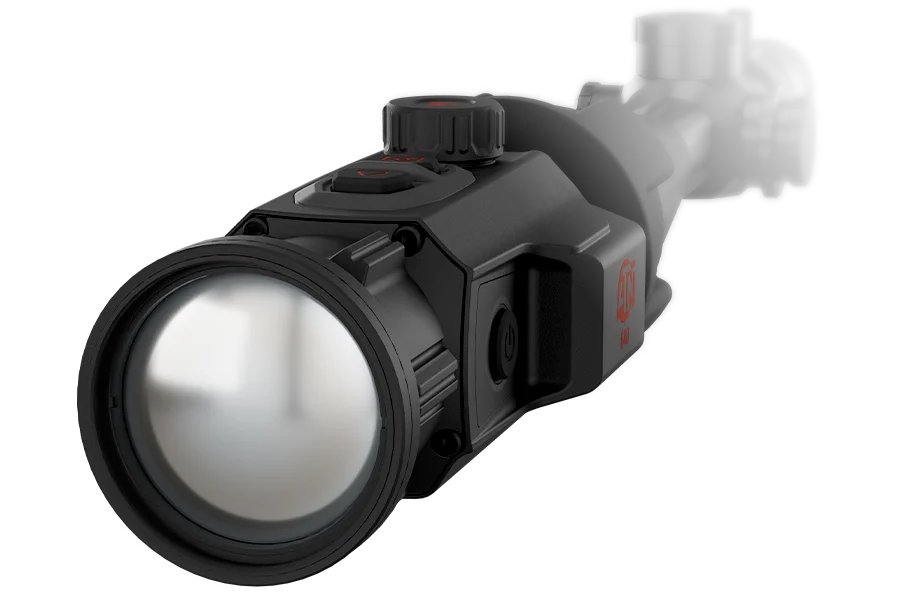
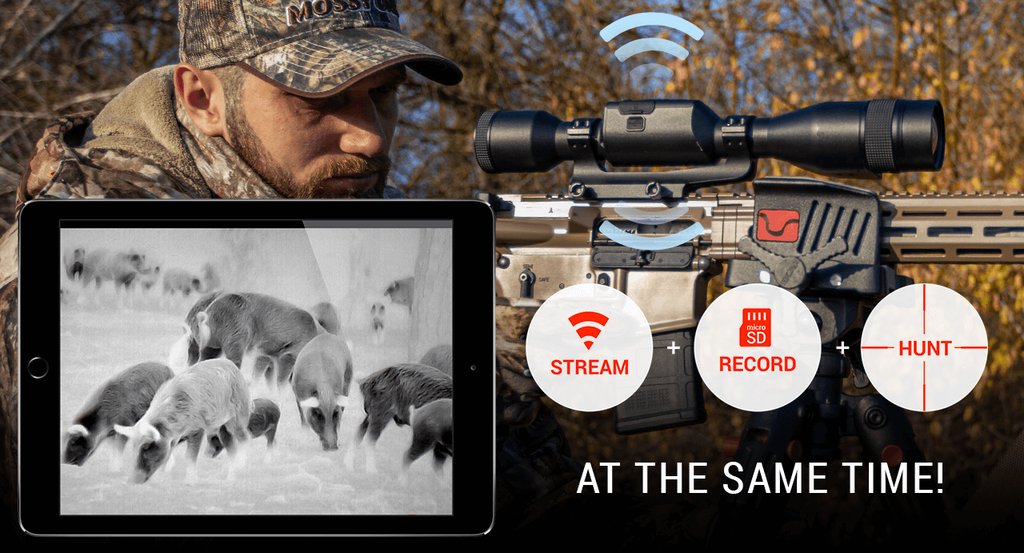
The cheaper TICO 6 clip-ons — the 256x192 and 384x288 — turn a day scope thermal by mounting in front of it and feeding it a heat image, and they do it at a price that lowers the barrier to entry. The 256 sensor carries about 49,000 pixels and reaches 1500 m; the 384 carries about 110,000 and reaches 2710 m. Both keep your zero because the clip-on sits ahead of the optic you already sighted in, and both fold down into a handheld monocular. For close cover and medium fields, either one delivers a usable, honest thermal picture without flagship spend. Their limit is resolution: the fewer pixels a sensor has, the sooner a distant animal stops looking like an animal and starts looking like a warm blob.
How the ATN TICO 6 640x512 works
The ATN TICO 6 640x512 1-15x works the same way as its cheaper siblings, but the sensor is in a different class. At 640x512 it packs over 327,000 pixels — roughly three times the 384 and nearly seven times the 256 — behind a larger 50 mm lens. More pixels on the same scene is like moving from standard definition to HD: the picture holds its detail as the target gets farther away. Combined with a 3500 m detection range, that resolution is what lets you positively identify what is standing at the far edge of an open field, not just notice that something warm is out there. That single feature — usable detail at distance — is the whole reason to consider the step up.
When to choose the cheapest clip-on
Choose an entry TICO 6 when your shots realistically stay inside close-to-medium range and the priority is getting quality thermal onto your rifle for less. The 384x288 in particular is a smart value pick: at ≤18 mK it matches the flagship's thermal sensitivity, so on a damp, low-contrast night it separates a warm animal from cool ground just as cleanly — you simply give up some reach and fine detail at long distance. If most of your hunting happens in timber, brush or fields you can cover on foot, the money saved is real and the picture is more than enough.
When to choose the ATN TICO 6 640x512
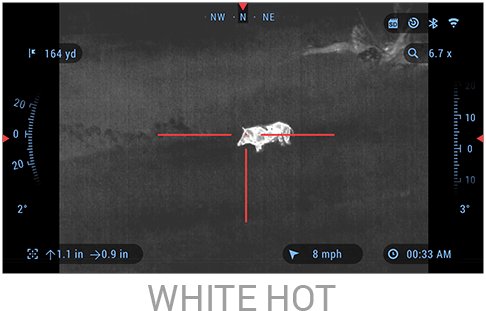
Choose the 640 when the ranges you actually shoot exceed what a smaller sensor can resolve. Wide agricultural fields, river bottoms and open desert routinely put a target 250 yards out or more, and at those distances the entry sensors give you a heat signature you can see but cannot confidently read. The 640's extra pixels and longer detection range turn that guesswork into a clear identification. It steps up in price and adds a little weight on the muzzle, and that is the honest cost of the reach.
Our recommendation
For a hunter who genuinely works long, open ground, the ATN TICO 6 640x512 1-15x is the one to buy — its resolution is the feature that solves the problem the cheaper models cannot, and buying it once beats outgrowing an entry sensor and upgrading later. But if your shots stay close to medium, do not talk yourself into range you will never use; the 384 is the better value and keeps thermal affordable. Weigh both against your typical shot distance on the ATN thermal clip-on category page before you decide.
How we compared them
We compared these clip-ons on the single axis that a value-versus-flagship decision turns on: usable resolution at range, supported by NETD, detection range, weight and battery life. We held everything else equal — all three share the clip-on-plus-monocular design, the quick-detach mount that preserves your zero, and the same 6th-gen image processing — so the comparison isolates what your money actually buys as you move up the line.
Only current 6th-gen TICO 6 models were considered. The honest trade-off cuts both ways: the entry sensors give up long-range detail, and the 640 gives up some budget and adds weight. This is an in-house comparison of ATN's own clip-on range rather than an independent lab review, so measure the verdict against your real shot distances before buying.
Frequently Asked Questions
Is the cheapest clip on thermal good enough, or should I step up?
It depends on distance. For close-to-medium shots the entry 256 or 384 TICO 6 is genuinely enough and saves money. If you identify targets at long range in open country, the 640x512's higher resolution is worth the step up.
What is the real difference between the 384 and the 640?
Mainly resolution and reach. The 640x512 carries roughly three times the pixels of the 384x288 and detects heat to 3500 m versus 2710 m, so it keeps distant targets readable. Both share the same ≤18 mK thermal sensitivity.
Do the cheaper clip-ons give a noisy image?
Not necessarily. The 384x288 shares the flagship's ≤18 mK NETD, so its image is just as clean on low-contrast nights. The main thing you trade for the lower price is fine detail at long range, not image noise up close.
Will stepping up to the 640 change how I mount it?
No. All TICO 6 models mount ahead of your day scope with the included quick-detach mount and preserve your existing zero. The 640 is slightly heavier and uses a larger lens, but the mounting method is the same.
Can either clip-on double as a scanner?
Yes. Every TICO 6 has a removable eyepiece so it works as a handheld thermal monocular. You can scan a field first, then reattach the unit to your rifle without losing zero.
Does the 640 have worse battery life because it is more powerful?
Only slightly. The 640 runs about 7 hours on an 18650 versus about 8 for the entry models. In practice both cover a normal night of hunting, and you can carry a charged spare cell.
Buy the sensor your shots demand, not the one that looks impressive on paper. If your ground is genuinely open and long, the ATN TICO 6 640x512 1-15x gives you detail at distance you will not outgrow. If your hunting stays closer, the value models keep more in your pocket. Line them up on the ATN thermal clip-on collection, match a model to your longest realistic shot, and buy it once.
Created: August 10, 2026 · 09:39:32 UTC