The land you hunt should decide how much clip-on you actually need. A tight timber stand where a hog crosses at 60 yards asks less of a thermal sensor than an open cut cornfield where you are trying to pick a coyote out of the tree line at 300. That is the honest way to find the cheapest clip on thermal that still works for you: match the terrain, not the spec sheet. This roundup sorts the current ATN TICO 6 clip-ons by the ground you cover, so you spend on range and resolution only where the land demands it.
For most hunters, the cheapest clip on thermal that still does the job across mixed terrain is the ATN TICO 6 384x288 1-12x. The 256x192 model is the most affordable way into thermal for close, wooded ground, while the 640x512 is the long-range pick for wide-open country. All three clip onto the day scope you already own.
Quick answerBest overall value (mixed terrain): ATN TICO 6 384x288 1-12x — the balanced middle child, enough resolution for fields and enough reach for timber, at a sensible tier.
Most affordable entry (close, wooded ground): ATN TICO 6 256x192 1-8x — the true budget-tier way to make a day scope thermal-capable at brush ranges.
Long-range pick (open country): ATN TICO 6 640x512 1-15x — the flagship, highest resolution and longest detection range for big fields and river bottoms.
Why ATN's 6th-gen clip-ons keep the price honest
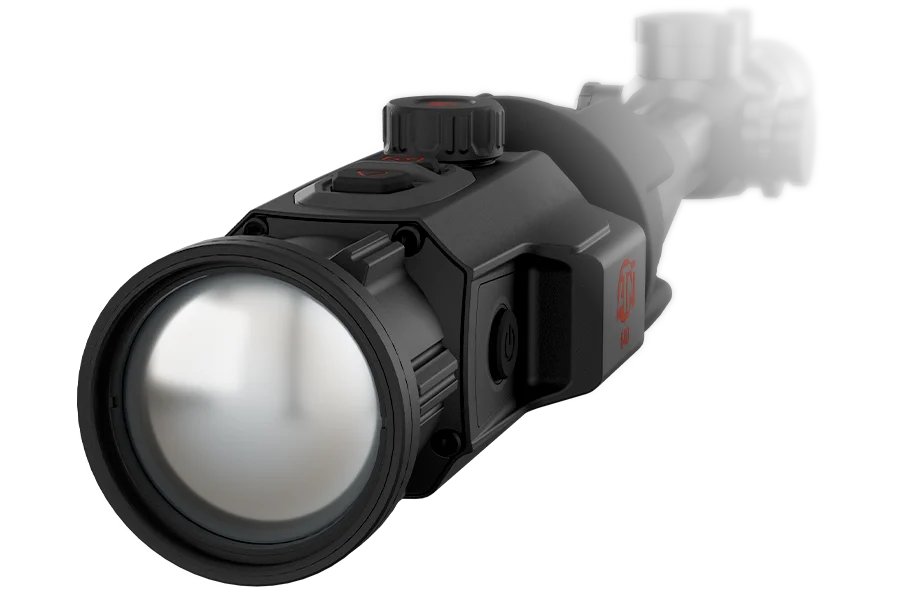
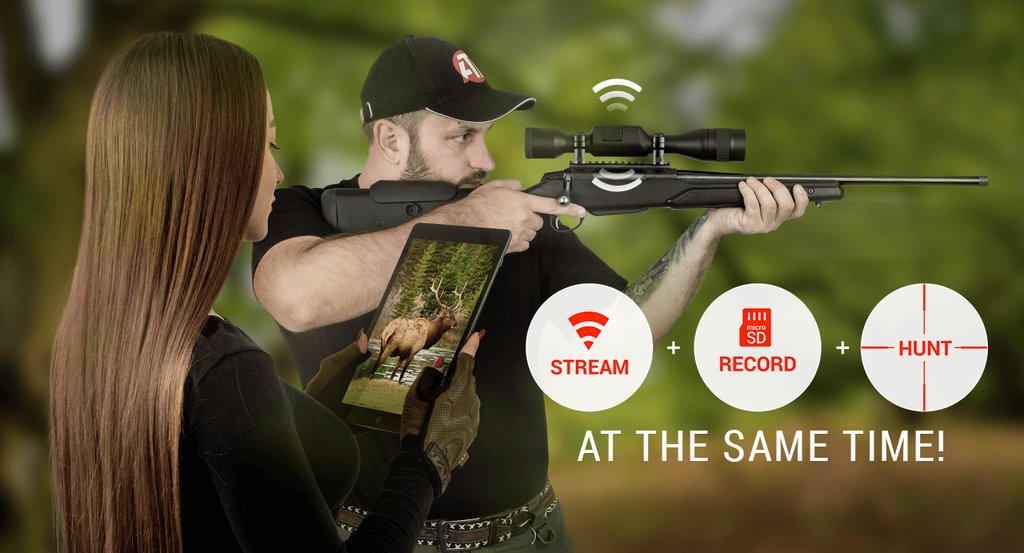
A clip-on is the cheapest route into thermal because you are not buying a whole second rifle setup. The ATN TICO 6 mounts in front of the day scope you already zeroed, so your reticle, your glass and your muscle memory stay exactly the same, and the thermal sensor simply hands your scope a heat picture instead of a daylight one. Every 6th-gen TICO also drops its rear eyepiece back on to become a handheld monocular, so the same unit scouts a field and then rides the rifle. That dual role is what lets a lower-priced model earn its keep, and it is why the whole family fits the way you actually hunt across different ground. You can see the full lineup on ATN's thermal clip-on category page.
ATN TICO 6 384x288 1-12x — best value for mixed terrain
The ATN TICO 6 384x288 1-12x is the model most hunters should look at first, because most of us do not hunt one single kind of ground. One week it is a brushy creek bottom, the next it is a picked bean field, and the 384 sensor covers both without forcing you up into flagship money.
Enough detail for the field, enough reach for the timber
The 384x288 detector packs roughly 110,000 pixels onto the heat picture. Think of it like the jump from a blocky old phone photo to a clean one: more dots means edges you can read, so a hog at 150 yards in a cut field looks like a hog and not a warm smudge. Paired with a 2710 m detection range, it spots heat far past any ethical shot distance, giving you time to identify the animal before you ever settle the reticle.
Clean image where it counts
Its ≤18 mK NETD is the quiet hero here. NETD measures the smallest temperature difference the sensor can pick out, and a lower millikelvin number means a more sensitive sensor and a cleaner, higher-contrast picture. At ≤18 mK the 384 separates a bedded coyote from cool damp grass on a marginal night, which is exactly when a cheaper, noisier sensor would leave you guessing.
Who it's for: the hunter who works woods and fields in the same season and wants one clip-on for all of it. Who it's not for: someone who only ever shoots wide-open country past 300 yards and wants every last pixel of reach.
ATN TICO 6 256x192 1-8x — the most affordable way in
The ATN TICO 6 256x192 1-8x is the true budget-tier entry point, and it is the honest answer when someone asks for the cheapest clip on thermal outright. It exists to make a day scope thermal-capable at the ranges where most whitetail and hog encounters actually happen — inside the trees.
Right-sized for close, wooded ground
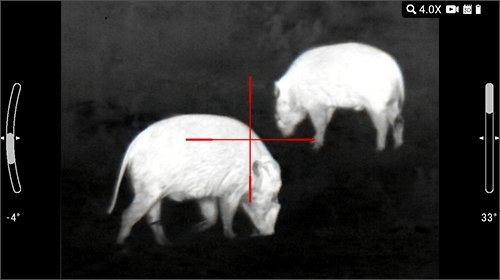
With a 1500 m detection range and a 256x192 sensor, this model is built for the brush, not the back forty. In thick timber you are rarely reading heat past 100 yards anyway, so the smaller sensor is not a handicap there — it is a sensible match. You still get the same clip-on-plus-monocular design, so it scouts the tree line and then rides the rifle.
Where the budget tier shows its limits
Be straight with yourself about the trade: at ≤20 mK and a lower pixel count, the image gets softer and shorter than the 384 the moment you open onto a big field. That is the cost of the entry price. For dense cover it is plenty; for wide country it will leave you wanting more.
Who it's for: the timber and swamp hunter on the tightest budget who shoots close. Who it's not for: long-range field shooters.
ATN TICO 6 640x512 1-15x — the open-country flagship
The ATN TICO 6 640x512 1-15x is the range-topper, and terrain is exactly why you would pay up for it. Big agricultural fields, river bottoms and open desert ask a sensor to identify heat far out, and that is where the 640 pulls away from its cheaper siblings.
Resolution that reaches
A 640x512 sensor carries over 327,000 pixels — roughly three times the 384 — so a target holds its shape far downrange instead of dissolving into a blob. Backed by a 3500 m detection range, it lets you glass the far side of a cut field and know what you are looking at before you move. On open ground, that extra resolution is the difference between a confident stalk and a wasted one.
Why it costs more
The bigger 50 mm lens and higher-count sensor are why this steps up in price to the flagship tier. If your ground is genuinely open and your shots stretch out, that spend buys performance you will use every night. If it does not, the 384 gives you most of the picture for a lot less.
Who it's for: open-country hunters taking longer, deliberate shots. Who it's not for: close-cover hunters who would never use the reach.
How to choose the cheapest clip-on for your ground
Start with the longest realistic shot your terrain gives you, then buy just enough sensor to identify an animal at that distance with margin to spare. Paying for range you will never use is the most common way hunters overspend on thermal.
- Thick timber and swamp (under ~125 yards) — the 256x192 is the most affordable match; the extra resolution of larger sensors is wasted in cover.
- Mixed woods and fields — the 384x288 is the sweet spot, covering both without flagship cost.
- Wide-open fields and bottoms (past ~250 yards) — the 640x512 earns its price with reach and detail.
- Check your day scope's rail and eye relief — a clip-on sits ahead of the optic, so confirm there is room on the Picatinny rail before you buy.
- Weight on the muzzle end matters — all three are close, but a lighter rifle notices the difference over a long night of scanning.
How we picked these ATN thermal clip-ons
We ranked the current 6th-gen TICO 6 line against the one thing the keyword implies — getting into thermal for the least money that still does honest work — and then sorted the picks by terrain rather than by price alone. The criteria that mattered were sensor resolution (how far you can identify, not just detect), NETD or thermal sensitivity, real detection range, weight on the rifle, battery runtime and the quick-detach mounting that lets you pull the unit and keep your zero.
We only considered 6th-gen models, and we were blunt about trade-offs: the 256 is genuinely limited past close range, and the 640's price is real. This is an in-house comparison of ATN's own clip-on family, not an independent lab test, so treat it as a starting point and check each model's specs against the ground you actually hunt.
Frequently Asked Questions
What is the cheapest clip on thermal in the ATN TICO 6 line?
The ATN TICO 6 256x192 1-8x is the most affordable, entry-tier clip-on in the current 6th-gen family. It is built for close, wooded ground where a smaller sensor is a sensible match rather than a compromise.
Will a cheaper clip-on still work with my day scope?
Yes. Every TICO 6 mounts ahead of your existing day scope on a Picatinny rail using the included quick-detach mount, so you keep your own reticle and zero. The clip-on simply feeds your scope a thermal image instead of a daylight one.
Is the budget 256 model good enough for hog hunting?
For timber and swamp hogs inside about 125 yards, the 256x192 is enough. If you regularly hunt open fields and take longer shots, step up to the 384 or 640 for the resolution and range those distances demand.
What does NETD mean and why should I care?
NETD is the smallest temperature difference the sensor can detect, measured in millikelvin. A lower number means a more sensitive sensor and a cleaner, higher-contrast image, which helps you tell an animal from cool background on damp or marginal nights.
Can I use a TICO 6 clip-on as a handheld scanner?
Yes. Each TICO 6 has a removable eyepiece that turns the clip-on into a handheld monocular. That lets you scout a field or tree line first, then reattach the unit to your rifle for the shot.
Do I need the 640 model or is the 384 enough?
The 384 is enough for most mixed-terrain hunting and saves you money. Choose the 640 only if your ground is genuinely open and you identify and shoot at longer ranges where its higher resolution and 3500 m detection range pay off.
The smartest thermal buy is the one that matches your ground, not the one with the biggest number on the box. If you hunt mixed woods and fields, start with the ATN TICO 6 384x288 1-12x and let it ride the day scope you already trust. Want to weigh the whole family side by side, from the budget entry to the long-range flagship? Browse the full ATN thermal clip-on lineup and pick the sensor that fits your terrain and your budget.
Created: August 10, 2026 · 09:39:32 UTC