Most cheap thermal monoculars make you pay for the low price with almost no zoom - fine for the backyard, useless past the near fence line. If you want a cheap thermal monocular that still reaches out and lets you read a shape at distance, the ATN BlazeSeeker 6 1.7-13.6x is the answer: ATN's most affordable current monocular, but the higher-zoom variant, so you get budget-tier pricing with magnification you can actually use.
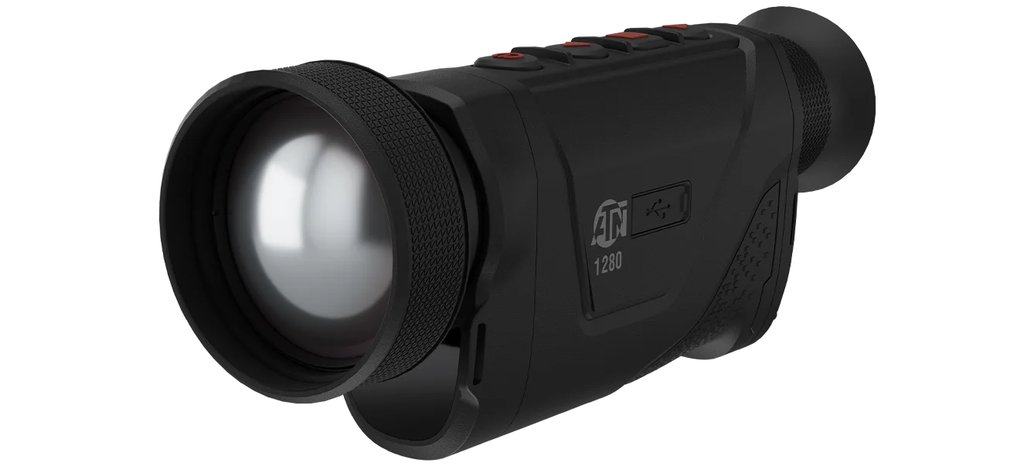
Best if you can stretch up a tier: ATN BlazeTrek 6 384x288 - more sensor and detection for the hunter who scans farther and more often.
Best for pure pocket carry: ATN BlazeSeeker 6 - light, simple, and the easiest ATN thermal to keep on you at all times.
Why ATN's 6th-gen delivers value at the budget tier
ATN's 6th-generation Blaze line delivers real value at the budget tier because it doesn't gut the fundamentals to hit a low price. Even the entry BlazeSeeker 6 carries a genuine thermal core with usable NETD - the measure of how small a temperature difference it can detect - so a warm animal still separates from cool ground. It reads heat in any light, runs on a rechargeable battery for hours, and fits in a jacket pocket. The higher-zoom 1.7-13.6x variant adds the one thing budget monoculars usually skimp on: enough magnification to confirm what you found instead of just noticing that something is warm out there.
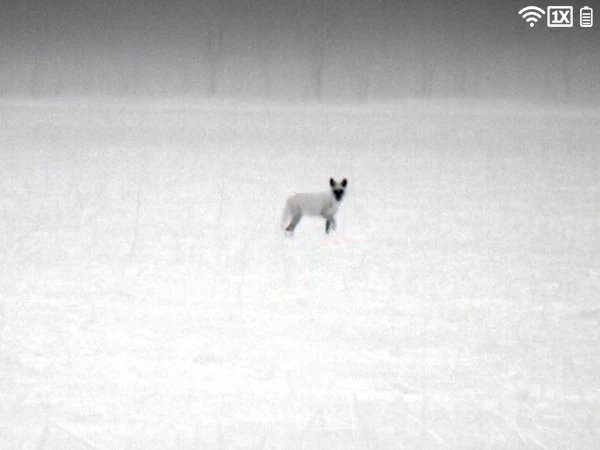
That is the whole point of this pick. A cheap monocular with no zoom tells you 'something's alive.' A cheap monocular that reaches tells you 'that's a coyote at the field edge.' The difference is the zoom range, and the BlazeSeeker 6 1.7-13.6x is built to give you the second answer without moving up in price.
Best cheap monocular with reach: ATN BlazeSeeker 6 1.7-13.6x
The ATN BlazeSeeker 6 1.7-13.6x is the value champion for anyone who wants a real thermal spotter without stepping up in price. Its 256x192 sensor is honest budget-tier resolution, but the 1.7-13.6x zoom is what sets this variant apart: you can scan wide at the bottom end and then push in to read a shape at the top end. Detection out to around 460 meters covers the distances most cheap monoculars are actually used at, and at 270 grams it disappears into a pocket.
Why the higher zoom matters on a budget
Zoom is what turns a heat blob into an identifiable animal. On the standard low-zoom budget units, a warm shape at 150 yards stays a mystery. The BlazeSeeker 6's 13.6x top end lets you lean in and decide whether that's a deer, a hog, or a house cat - the single most useful thing a spotter can do.
Who it's for - and who it's not
It's for the hunter or landowner who wants an affordable, pocketable scanner with enough magnification to confirm what they see. It's not for someone who needs to read game across big open fields at long range - that's a job for a higher-resolution monocular with more detection distance.
Best step-up: ATN BlazeTrek 6 384x288
The ATN BlazeTrek 6 384x288 is the pick if you can stretch one tier up. Its 384 sensor shows more detail, its detection roughly doubles to around 1,000 meters, and its 2.25-18x zoom reaches slightly further. For the hunter who scans bigger country and wants to read animals farther out, the extra sensor and range are worth the step up in price. If your scanning stays close and your budget is firm, the BlazeSeeker 6 still does the job.
How to choose a cheap thermal monocular
Choose by how far you actually need to see, not by the lowest sticker. A budget monocular is a smart buy when it matches your real distances; it's a waste when it can't reach them.
- Zoom range - a higher top end lets you confirm what you spotted; skip the no-zoom bargain units.
- Sensor resolution - 256 is fine for close scanning; 384 reads game farther and clearer.
- Detection range - match it to your ground; ~460 m covers most yard-to-field-edge use.
- Weight and size - a light, pocketable body is one you'll actually carry every time.
- Battery life - look for a full evening of runtime on a charge so you're not cut short.
Getting the most reach from a budget monocular
A budget monocular reaches farther when you use it well, and small habits make a real difference. Let the unit run for a minute or two after you power it on so the sensor settles and the picture sharpens, then trigger a manual image calibration whenever the scene starts to look grainy - it only takes a second and it resets the clarity you paid for. Scan at the low end of the zoom to cover ground quickly, and only climb toward the 13.6x top end once a warm shape catches your eye. Pushing straight to maximum zoom narrows your view to a soda straw and makes it easy to lose the very animal you're trying to read.
Conditions shape how far a cheap thermal sees. On a cool, dry night after the ground has given up its heat, contrast is high and a coyote or hog pops against the background at surprising distance. On a warm, humid evening the background is nearly as warm as the animal, so reach drops and you'll need to slow down, switch color palettes, and look for movement rather than a bright glow. Learn to read those nights and you'll wring every yard of usable range out of the BlazeSeeker 6.
- Calibrate often - a quick manual refresh keeps the budget sensor's picture crisp.
- Scan low, confirm high - cover ground at low zoom, then push in only to identify.
- Hunt the cool hours - contrast and reach are best once the ground has cooled.
- Steady your hold - brace against a post or your knee at high zoom so the image doesn't shake.
Finally, set realistic expectations and the BlazeSeeker 6 will impress you rather than disappoint you. A budget monocular is a detection and identification tool for close-to-mid distances, not a long-range spotting scope, so judge it by whether it finds and confirms animals at the ranges you actually hunt - and at that job it punches well above its tier. Keep the lens clean, run it with a topped-up battery, and give the picture a moment to settle, and you'll routinely pick up coyotes and hogs that you'd have walked right past with the naked eye. Used within its strengths, an affordable monocular that reaches is one of the highest-return pieces of gear a night hunter can carry.
How we picked these ATN monoculars
We considered only ATN's current 6th-generation monocular line and judged the budget options against one practical question: can a cheap monocular still reach far enough to be useful? The criteria were magnification range, sensor resolution and NETD, detection distance, weight for everyday carry, and battery life - all weighed against realistic budget-tier use, not a long-range spec chase. The honest trade-off is resolution and range for price: the BlazeSeeker 6 gives you usable zoom and pocketability but not the far-field clarity of a pricier 384 or 640 unit. It is not the tool for reading game across wide open fields. This is an in-house comparison of ATN's own monoculars, not an independent lab test, so match the pick to the distances you truly scan.
Frequently Asked Questions
What is the best cheap thermal monocular that still has zoom?
The ATN BlazeSeeker 6 256x192 1.7-13.6x is the value pick with real reach. It sits in the budget tier but climbs to 13.6x, so you can confirm a warm shape at distance instead of just noticing heat nearby.
Is a 256x192 sensor good enough for a monocular?
For close and mid-range scanning, yes. A 256 sensor spots and, with the BlazeSeeker 6's higher zoom, identifies animals at practical distances. For reading game across big fields, step up to a 384 sensor.
How far can the ATN BlazeSeeker 6 detect animals?
Around 460 meters for detecting heat, which covers most yard-to-field-edge use. Identifying the animal happens closer, which is where the 13.6x zoom earns its keep.
Why not just buy the cheapest monocular available?
The cheapest units usually have little or no zoom, so a distant warm shape stays a mystery. The BlazeSeeker 6 stays budget-priced but adds the magnification you need to actually identify what you spot.
Is the BlazeSeeker 6 small enough to carry every day?
Yes. At 270 grams it fits in a jacket pocket and rides easily on a lanyard, so it's the kind of thermal you keep on you rather than leave in the truck.
BlazeSeeker 6 or BlazeTrek 6 - which should I get?
Choose the BlazeSeeker 6 if price and pocketability lead your decision. Step up to the BlazeTrek 6 384 if you scan bigger country and want more sensor detail and roughly double the detection range.
Can I record or share what I see through the BlazeSeeker 6?
The 6th-gen Blaze line is built around ATN's connected features, so you can capture your scans and manage settings through the ATN app. It turns a budget spotter into a tool you can also learn from after the hunt. That makes it easy to review your scans, dial in your settings, and get more out of every night in the field.
You don't have to spend big to get a thermal that actually reaches. See the ATN BlazeSeeker 6 1.7-13.6x and browse the full ATN thermal monocular lineup to find the reach-versus-price balance that fits you. Pick the zoom range that matches how far you scan, and keep it in your pocket - the animals you've been walking past are easier to find than you think.
Created: July 8, 2026 · 08:43:46 UTC