A handheld thermal monocular is the most affordable way to put thermal in your pocket. You do not have to mount it, zero it, or build a whole rig around it. You pull it out, raise it to your eye, and a warm animal lights up against a cold field. That is why so many people start here. And the good news is that a cheap thermal monocular does not have to mean a compromised one. The trick is matching the device to the job you actually do, whether that is scanning a food plot at dusk, walking up a bedded animal, or checking a fence line before you turn in. This roundup looks at ATN's 6th-generation BlazeTrek 6 handhelds and where each one earns its keep, so "cheap" reads as smart entry value and not corners cut.
For a cheap thermal monocular that still does the job well, the ATN BlazeTrek 6 640x512 1.5-12x is the best overall pick. Its high-resolution 640x512 sensor and wide field of view make scanning fast and easy, while the more affordable BlazeTrek 6 384x288 covers the value tier and the BlazeHunter XD is the long-range flagship step-up.
Quick answer: our top ATN thermal monocular picksBest overall value: ATN BlazeTrek 6 640x512 1.5-12x. A crisp, high-resolution image and a wide view make it the easiest handheld to scan with, and it lands at a sensible mid tier.
Most affordable pick: ATN BlazeTrek 6 384x288 2.25-18x. The true value buy, pocket-sized with strong magnification, ideal for a first thermal or a lightweight second unit.
Flagship step-up: ATN BlazeHunter XD 1280x1024 2-16x LRF. The extreme-resolution, long-range option with a built-in rangefinder for anyone who wants the most capability.
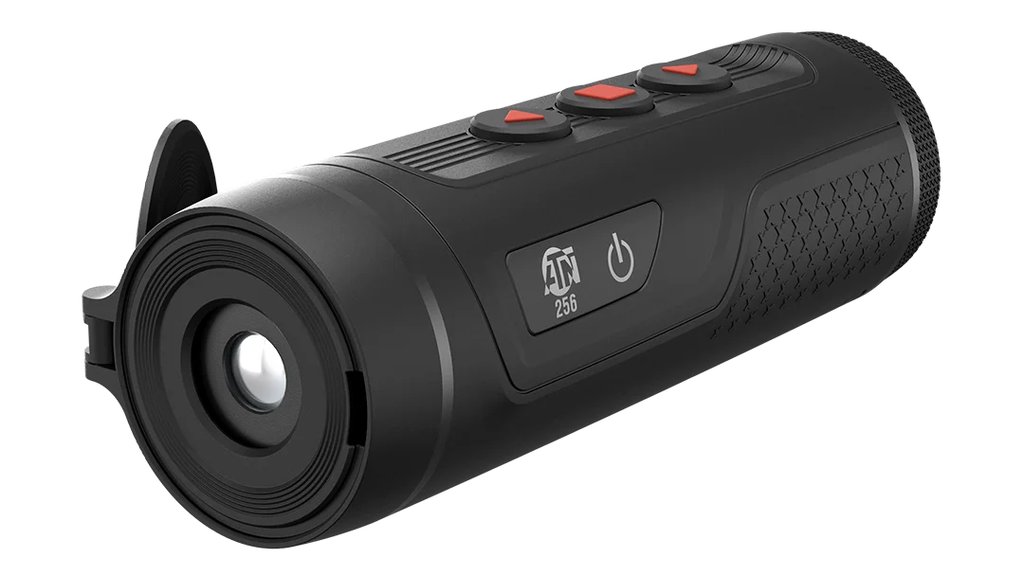
Why ATN's 6th-gen thermal monoculars are worth it
ATN's 6th-generation BlazeTrek 6 line was built to give you a lot of real thermal capability without a heavy price tag. Three things drive that value. First, sensor resolution: more pixels means a finer, clearer image, the same way a photo with more dots looks sharper when you zoom in. A 640x512 sensor carries roughly four times the pixels of a 384x288 one, so a warm shape stays readable further out. Second, thermal sensitivity, measured in millikelvin (mK) NETD, which is the smallest temperature difference the sensor can separate. A sub-18 mK reading pulls faint heat away from ground that has barely cooled, so a bedded animal reads as a shape rather than a smudge. Third, the practical stuff that makes a handheld pleasant to carry all night: a wide field of view for fast scanning, a light body, rechargeable power, six color palettes and Wi-Fi so you can share what you saw. The BlazeTrek 6 family scores well on all three, which is why an affordable ATN monocular still hands you an honest picture.
ATN BlazeTrek 6 640x512 1.5-12x: the best overall value
The ATN BlazeTrek 6 640x512 1.5-12x is the sweet-spot pick for most people looking for a cheap thermal monocular that punches above its price. It pairs a high-resolution 640x512 sensor with a low 1.5x base magnification and a wide 22.8° field of view, so it is fast and easy to scan with. For general night work — sweeping a plot, walking a tree line, glassing a pasture — this is the one that just gets out of your way.
A 640 image that reads clearly across the field
The 640x512 sensor carries roughly four times the pixels of a 384 sensor, and you feel that extra detail every time a warm shape appears out in the dark. Think of it like the difference between a big photo file and a small one: the big one still looks like something when you enlarge it, the small one turns to mush. Out to the 1000 m detection range, a coyote or a hog stays an identifiable shape instead of a fuzzy blob, so you can tell what you are looking at rather than guessing at a bright lump. SharpIR image processing keeps the edges clean, which matters most at the far end of what you can see.
Wide field of view for fast, easy scanning
The 1.5x base magnification opens up a 22.8° by 18.3° field of view, and a wide view is exactly what you want in a scanning monocular. The more of the world you take in at once, the faster you catch movement and the less time you spend hunting around a tight window. When something does show up, you can push in toward 12x to confirm it. That wide-to-tight range is the whole reason this handheld feels effortless on a long walk, and why it is the easiest of the three to actually use scene to scene.
Light, rechargeable and quick to grab
At just 320 g / 0.7 lb the BlazeTrek 6 640 rides easy in a pocket or a pack, so you carry it without thinking about it. The internal rechargeable battery runs roughly 6.5 hours, enough for most sits, and six color palettes plus Hot Point Tracking let you tune the picture and mark the warmest spot in frame. Wi-Fi and ATN Connect 6 mean you can stream or save what you saw to your phone, and 32GB of onboard storage holds the clips. It is a grab-and-go tool that asks nothing of you before it works.
Who it is for: anyone who wants one affordable, high-resolution handheld that scans fast and reads clearly at normal working ranges. Who it is not for: if you glass truly wide-open country and want to spot and range heat far past 1000 m, step up to the BlazeHunter XD.
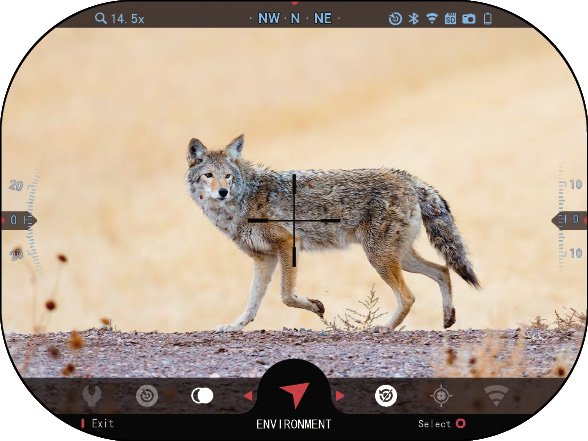
ATN BlazeTrek 6 384x288 2.25-18x: the most affordable pick
The ATN BlazeTrek 6 384x288 2.25-18x is the true value buy in this roundup and the one to reach for when you want thermal at the lowest step-in. Its 384x288 sensor shows fewer dots than a 640, but it keeps the same sub-18 mK sensitivity and reaches a higher 18x magnification, so it stays a capable little handheld well beyond what its price suggests.
Strong contrast that keeps the picture sharp
A 384 sensor has fewer pixels than a 640, so the finest detail at extreme zoom is not quite there. But the same 18 mK sensitivity means the contrast between a warm animal and a cool background stays strong, and strong contrast is most of what makes a thermal image feel sharp to your eye. At normal working ranges the picture is bright, stable and easy to read. For the value tier, that is a lot of usable image, and it is the reason this is such an honest first thermal.
Higher magnification and true pocket carry
The 2.25-18x range gives you more reach at the top end than the 640 model, which helps when you want to study a distant shape without walking closer. It is genuinely pocket-sized at 320 g / 0.7 lb, so it is the natural choice for a lightweight second unit or a backup you leave in the truck. The internal battery stretches to roughly 8 hours, six palettes and Hot Point Tracking come along, and Wi-Fi with 32GB storage rounds it out. Nothing feels stripped out to hit the price.
Who it is for: the buyer who wants the most affordable way into ATN thermal, a first monocular, or a light backup with strong zoom. Who it is not for: anyone who wants the finest detail at distance, where the 640 sensor and the XD pull clearly ahead.
ATN BlazeHunter XD 1280x1024 2-16x LRF: the flagship step-up
The ATN BlazeHunter XD 1280x1024 2-16x LRF is the flagship of ATN's handheld thermal line and the answer when "cheap" is not the whole story and capability is. Its extreme-definition 1280x1024 sensor carries over a million more pixels than a 640 image, its detection range stretches to 3400 m, and it packs a built-in laser rangefinder. It costs more than the BlazeTrek pair, but for wide-open glassing it earns every bit of it.
Extreme resolution for long-range detail
The 1280x1024 sensor is the sharpest picture here by a wide margin — over a million more pixels than a 640 sensor, which is the difference between reading a shape and merely spotting a warm smudge at the far end of a field. Paired with a sub-15 mK NETD and a Full-HD OLED display, faint heat separates cleanly from a barely-cooled background, so a distant animal holds together as you push in toward the 3400 m detection range. If you glass big country and want to know exactly what you are looking at, this is the tool.
Built-in rangefinder and all-night power
The built-in laser rangefinder reads distance out to 1000 m with about a meter of accuracy, so you are not guessing how far off that heat signature sits. That matters when you are deciding whether to move in or keep glassing. Two replaceable 18650 batteries run 10-plus hours and hot-swap in the dark, so the picture never has to go out mid-session. Add SharpIR, six palettes, Hot Point Tracking and Wi-Fi and you have a handheld that keeps working through a full night in open terrain.
Who it is for: the glasser who wants the highest resolution, the longest reach and built-in ranging, and treats price as secondary to capability. Who it is not for: anyone who mainly scans at normal ranges and wants the lightest, most affordable grab-and-go handheld — the BlazeTrek pair is the smarter spend there.

How to choose a cheap thermal monocular that fits the job
Match the monocular to how you actually use it. A wide, high-resolution view points you to the BlazeTrek 6 640; the lowest step-in with strong zoom points you to the 384; the highest resolution, longest reach and built-in ranging point you to the BlazeHunter XD. Walk through these before you decide:
- Sensor resolution — more pixels means a finer image that reads clearly further out. A 640 is the value sweet spot; a 384 is plenty at normal ranges; 1280x1024 is for the longest, most detailed glassing.
- NETD sensitivity — lower mK separates faint heat from a lukewarm background, keeping the picture solid instead of grainy. The BlazeTrek pair sits at 18 mK; the XD steps down to 15 mK.
- Field of view and magnification — a wide, low base view is easier to scan with; higher top-end zoom is about studying distant shapes, not everyday ease.
- Detection range — the BlazeTrek pair covers normal working distances to 1000 m; the XD reaches out to 3400 m for open country.
- Weight and battery — a lighter handheld carries better; internal rechargeable power suits shorter sits, while the XD's replaceable dual cells run all night.
You can compare all of these side by side on the ATN thermal monoculars category page, which lists the full 6th-generation handheld lineup and their specs.
How we picked these ATN thermal monoculars
Our yardstick here was value: what makes an inexpensive handheld genuinely worth owning instead of just low-priced. We leaned hardest on sensor pixel count, since that decides whether a warm shape reads as an animal or a blur, then on thermal sensitivity for a low-noise picture, then on how quick and forgiving the scanning feels day to day. Runtime and how light the unit rides in a pocket rounded out the scoring, because an affordable optic only pays off if you reach for it. Everything ranked is from the living 6th-generation catalog, never a retired model. Being straight about the give-and-take: the 384 trades fine faraway detail for its low entry point, the 640 tops out around a kilometer, and the flagship XD asks for more money and grams than either BlazeTrek. Treat this as ATN grading its own shelf, not a third-party lab test, and hold each figure up against your own budget and typical distances.
Frequently Asked Questions
Is a cheap thermal monocular actually any good?
Yes, when it is the right one. An affordable handheld like the ATN BlazeTrek 6 still gives you a high-resolution sensor, sub-18 mK sensitivity and a wide scanning view, which is everything you need to pick a warm animal out of a dark field. "Cheap" only becomes a problem when a device cuts sensor quality or thermal sensitivity, and these do not. Match the monocular to your ranges and you get real capability for a sensible price.
Which ATN thermal monocular is the best value overall?
The ATN BlazeTrek 6 640x512 1.5-12x. It pairs a high-resolution 640 sensor with a wide field of view, so it scans fast and reads clearly at normal ranges, and it lands at a sensible mid tier rather than flagship pricing. For most people who want one affordable, do-everything handheld, it is the sweet spot.
What is the most affordable ATN thermal monocular?
The ATN BlazeTrek 6 384x288 2.25-18x is the lowest step-in of the group. It uses a 384x288 sensor with the same sub-18 mK sensitivity as its 640 sibling and reaches 18x magnification, so it stays capable well beyond its price. It is the natural choice for a first thermal or a light backup unit.
Can I use a thermal monocular for hunting?
Yes. A thermal monocular is a scanning and spotting tool, so you use it to locate and identify warm animals before and during a stalk, not to aim a rifle. All three ATN handhelds here let you sweep a field, mark the warmest point with Hot Point Tracking and record clips over Wi-Fi. Pair one with a separate weapon optic when it is time to take a shot.
How far can these ATN monoculars detect an animal?
The BlazeTrek 6 640 and 384 both detect heat out to about 1000 m, which covers most fields and pastures. The BlazeHunter XD reaches much further, to 3400 m, and adds a built-in laser rangefinder that reads distance to 1000 m. Detection means spotting heat; identifying exactly what it is happens closer, and higher resolution helps you read the shape sooner.
Do I need a rangefinder in a thermal monocular?
Only if you regularly work distances where knowing the exact range changes your decision. The BlazeTrek 6 pair skips the rangefinder to stay affordable and light, which is fine for close and mid scanning. The BlazeHunter XD builds one in for open-country glassing, so you can confirm how far off a heat signature sits before you commit to a move.
How long does the battery last on these monoculars?
The BlazeTrek 6 640 runs about 6.5 hours and the 384 about 8 hours on internal rechargeable batteries, which covers most sits. The BlazeHunter XD uses two replaceable 18650 cells for 10-plus hours and lets you hot-swap a fresh pair in the dark, so the picture never has to go out during a long night.
Ready to put thermal in your pocket without overpaying? If you want the best all-around value, start with the ATN BlazeTrek 6 640x512 1.5-12x and its wide, high-resolution view. If you want the most affordable step-in or the long-range flagship instead, compare the full current lineup on the ATN thermal monoculars page. Look at the sensor, the sensitivity and the field of view side by side, match them to the ranges and terrain you actually work, and pick the handheld that reads clearest for you. Your next night out is a lot easier with one in hand.
Created: August 5, 2026 · 19:53:42 UTC