Feral hogs are a numbers problem: you have to remove a lot of them, over many nights, before the damage stops. That makes cost-per-pig the metric that matters, and a clip-on wins it by adding thermal to a rifle you already own instead of a whole new dedicated scope. For cheap thermal clip on hog hunting, the ATN TICO 6 256x192 is the value pick - the least you can spend to turn a day rifle loose on a herd after dark.
Sharper for mixed shots: ATN TICO 6 384x288 - more detail and reach when the herd spreads out.
Longest reach: ATN TICO 6 640x512 - the flagship when pigs stay out at distance.
Cost-per-pig: why control hogs with a clip-on
Clearing hogs is repetitive, high-round-count work, so the tool that costs the least to field wins. A clip-on removes the biggest expense entirely: instead of buying a second, dedicated thermal optic, you keep the day scope you already bought and zeroed and simply add heat vision in front of it. The TICO 6 projects its thermal image through your existing scope, so your reticle, your holds, and your zero all stay exactly where they are. For a landowner or manager grinding through a herd over a season, that reuse is the difference between an affordable program and an expensive one.
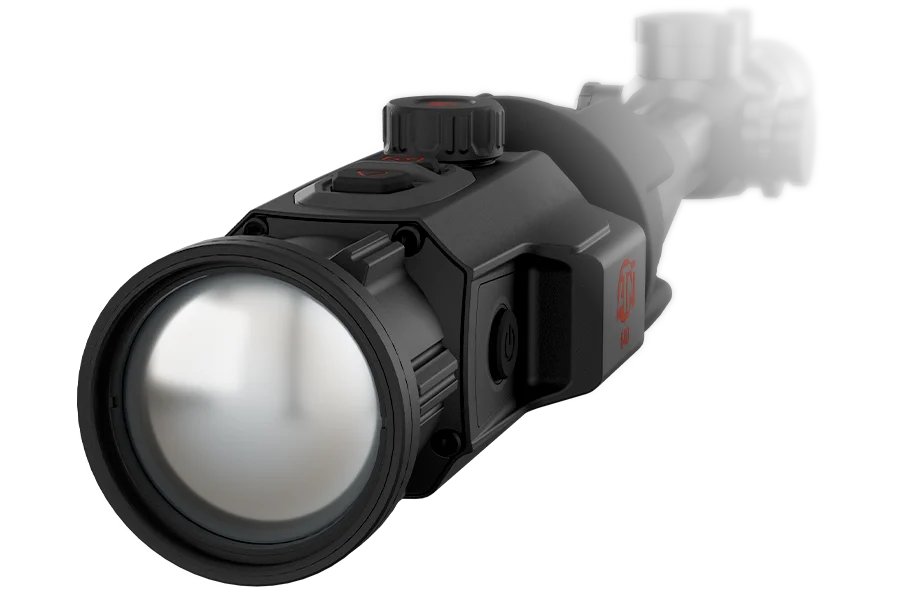
The value 256 keeps everything nuisance control needs and nothing it doesn't. Its 256 sensor picks warm pigs out of cool ground with a NETD of 20mK or better - how faint a temperature difference it can register - out to roughly 1,500 meters, which comfortably covers the field-edge and feeder ranges where most control shots happen. It clamps to standard mounts, runs about eight hours, and weighs only around 511 grams, so it converts a familiar rifle in seconds without wrecking its balance. You skip the flagship resolution you would only need at extreme range, and you pocket the savings.
Cheapest control tool: ATN TICO 6 256x192
The ATN TICO 6 256x192 is built for the hunter who has to remove pigs, not admire specs. It turns your day rifle into a night hog gun for the least money, detects a sounder at the practical ranges control happens, and stays light enough to carry on foot for hours. When the goal is more pigs down for fewer money, the lowest-cost clip-on that keeps your zero is usually the right answer.
Where the savings really land
The money you don't spend on a second optic goes further on the things that actually clear hogs: ammunition, fuel, and time in the field. A dedicated thermal scope is a large single expense; a value clip-on is a fraction of it, and it rides on gear you already trust.
Who it's for - and who it's not
It's for the landowner or working hunter running a high-volume control program on a budget. It's not for someone taking rare, extreme-range precision shots, where the resolution of the 384 or 640 pays off.
Sharper for spread-out herds: ATN TICO 6 384x288
The ATN TICO 6 384x288 is the step up when pigs scatter across bigger ground and your shots stretch. Its 384 sensor renders a cleaner picture, pairs with day optics up to 12x, and detects to around 2,710 meters, so you can read and reach a spread herd more confidently. It costs more than the 256 but still leans on your existing day scope, so it's a controlled step up rather than a whole new system.
Longest reach: ATN TICO 6 640x512
The ATN TICO 6 640x512 is the flagship for control on wide-open properties where pigs hang far out. Its 640 sensor holds detail at high magnification and detects to around 3,500 meters. It's the priciest and heaviest option, but on ground where shots regularly run long, the reach and clarity earn their cost even in a control context.
A control-focused clip-on routine
On a control program, efficiency is everything. Mount the TICO 6 on a repeatable QD adapter so you can move it between rifles as needed, keep your day scope at a modest power so the value 256's picture stays crisp, and confirm zero on paper once so you can trust it for the season. When you find a sounder, take the whole group into account before the first shot - the pig that drops is only worth it if you can also connect on the ones that bolt.
Cover ground on foot and let thermal do the finding. Walk field edges and travel routes downwind, glass with the clip-on's picture or a handheld scanner, and close only when you can shoot the most animals from one position. Carry spare batteries because a night of control burns runtime, keep the lenses clean, and rest the rifle whenever you can for steady hits. Run this way, a cheap clip-on clears more pigs per outing than a pricier optic used casually.
How to choose a clip-on for hog control
Choose the tool that lowers your cost-per-pig without giving up the ranges you actually shoot. Reuse and reliability come first for control work.
- Cost of entry - a value 256 reuses your day scope and keeps the program affordable.
- Detection at control ranges - ~1,500 m covers field-edge and feeder work.
- Day-scope pairing - match the clip-on to a modest magnification for a sharp picture.
- Portability - a light unit you can carry on foot all night keeps you covering ground.
- Battery and mounting - long runtime plus a repeatable mount for moving between rifles.
There is also a practical durability angle to a control clip-on. Because it rides on your existing rifle and slips off when you are done, you are not exposing an expensive dedicated optic to the constant recoil, mud, and rough handling of a hard control season - the day scope you already own takes that wear, and the TICO 6 simply adds the night when you need it. For a program that runs many nights a year in real conditions, spreading the wear across gear you already maintain is one more way a value clip-on keeps the cost of clearing hogs low.
Think of the whole rig as a control system rather than a single gadget. A handheld thermal scanner to locate sounders, a rested or slung rifle wearing the clip-on to make the shots, and a plan to remove multiple pigs per setup together clear far more hogs than any one piece of gear alone. The cheap clip-on is the affordable engine of that system, letting you put your budget into the ammunition, fuel, and field time that actually reduce the herd.
In the end, the case for the cheapest clip-on is ruthless practicality: it removes the most pigs for the least outlay, on gear you already own and trust, and it converts back to a plain day rifle the instant you take it off. For a control program measured in acres saved and numbers reduced, that combination of low cost and high flexibility is exactly what keeps you in the field night after night.
How we picked these ATN clip-ons
We compared only ATN's current TICO 6 clip-ons and ranked them for high-volume hog control, where cost-per-pig and reliability outweigh a spec race. We weighed cost of entry, detection at realistic control ranges, day-scope pairing, portability on foot, battery, and mounting. The honest trade-off is resolution and reach for price: the 256 keeps a control program cheap but gives up the detail the 384 and 640 provide at long distance, so it isn't the pick for rare extreme-range shots. This is an in-house comparison of ATN's own clip-ons, not an independent lab test, so weigh it against the size of your hog problem and your ground.
Frequently Asked Questions
What is the cheapest thermal clip on for hog control?
The ATN TICO 6 256x192. It reuses the day rifle you already own, adding thermal for the lowest cost-per-pig, and keeps your reticle and, in most setups, your zero - ideal for clearing a herd over many nights on a budget.
Is a 256 clip-on enough to clear a hog problem?
For the field-edge and feeder ranges most control shots happen at, yes. The 256 detects sounders reliably at those distances. Only rare, extreme-range shots call for the resolution of the 384 or 640.
Can I move the clip-on between rifles?
Yes. On a repeatable QD mount you can shift the TICO 6 between hosts as your control work demands, and confirm zero quickly on each. That flexibility keeps one thermal serving several day rifles.
Does a control clip-on keep my zero?
In most setups, yes, because you still aim through your own day scope. Confirm your point of impact on paper once so you can trust it through the season.
How long does it run for a night of control?
About eight hours per battery. A hard night of control burns runtime, so carry spare cells to keep going without a gap.
Why not just buy a dedicated thermal scope?
A dedicated thermal is a large single expense; a value clip-on is a fraction of it and reuses gear you already trust. For high-volume control on a budget, the clip-on's lower cost-per-pig usually wins.
Can the same rifle still hunt in daylight?
Yes. Remove the clip-on and your day scope works normally, so one rifle covers daytime stalks and night control alike.
Can I share the clip-on across several control rifles?
Yes. On a repeatable QD mount you can move the TICO 6 between day rifles as your control work demands, confirming zero quickly on each, so one thermal serves your whole hog program.
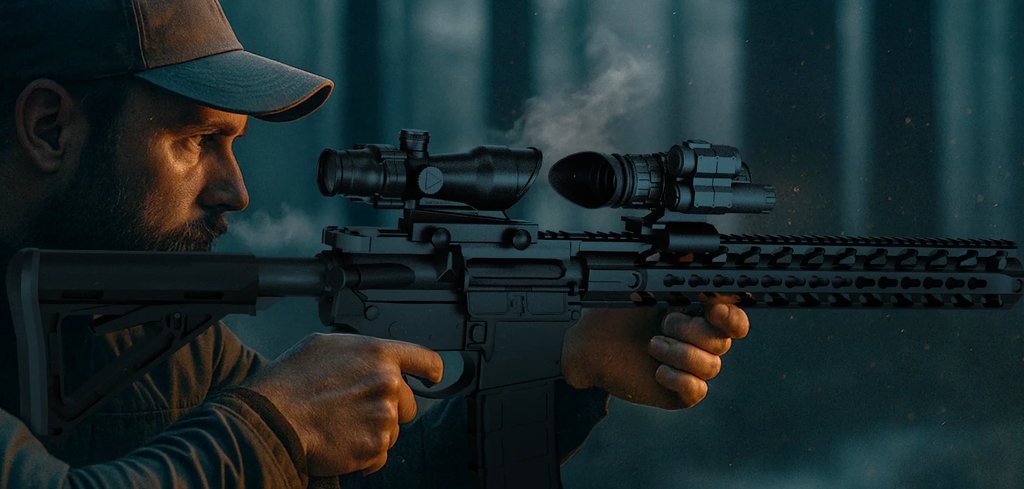
Clear hogs for the lowest cost-per-pig. See the ATN TICO 6 256x192 and compare it across the ATN thermal clip-on lineup to match resolution to your ground. Reuse the rifle you already trust, cover ground on foot, and put more pigs down for fewer money.
Created: July 8, 2026 · 10:49:39 UTC