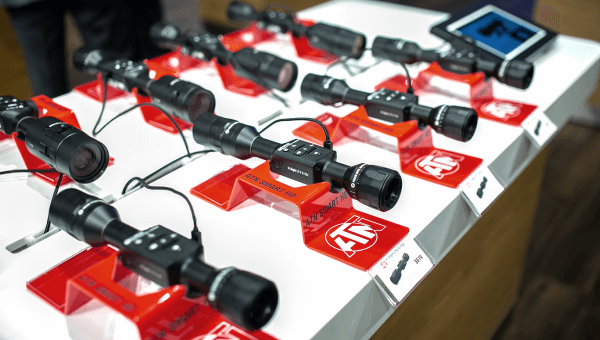
Shopping for a cheap thermal clip on for hog hunting is really about understanding tiers — where a clip-on sits from entry to flagship, and what each step up actually buys you on a pig. "Cheap" should mean the best value for what you need, not the lowest sticker with the least capability. Spend at the wrong tier and you either overpay for a sensor you never stretch or under-buy and leave pigs standing. This roundup lines up the current ATN thermal clip-on line by tier so you can see exactly where your budget goes and stop one tier before you overspend.
For a cheap thermal clip on for hog hunting with real value, the ATN TICO 6 384x288 is the sweet-spot mid tier: it out-resolves the entry model without the flagship price, and it covers the distances most hog hunters shoot. The TICO 6 256x192 is the true budget tier for close cover, while the TICO 6 640x512 is the flagship for reach. All keep your day-scope zero.
Quick answerBest value (mid tier): ATN TICO 6 384x288 1-12x — the smart middle ground, more resolution than entry, well below flagship cost.
Cheapest capable (entry tier): ATN TICO 6 256x192 1-8x — the lowest-cost way into thermal for close-cover pigs.
Top capability (flagship tier): ATN TICO 6 640x512 1-15x — the most resolution and reach when your ground demands it.
Why ATN's 6th-gen TICO 6 gives cheap hog hunters real value
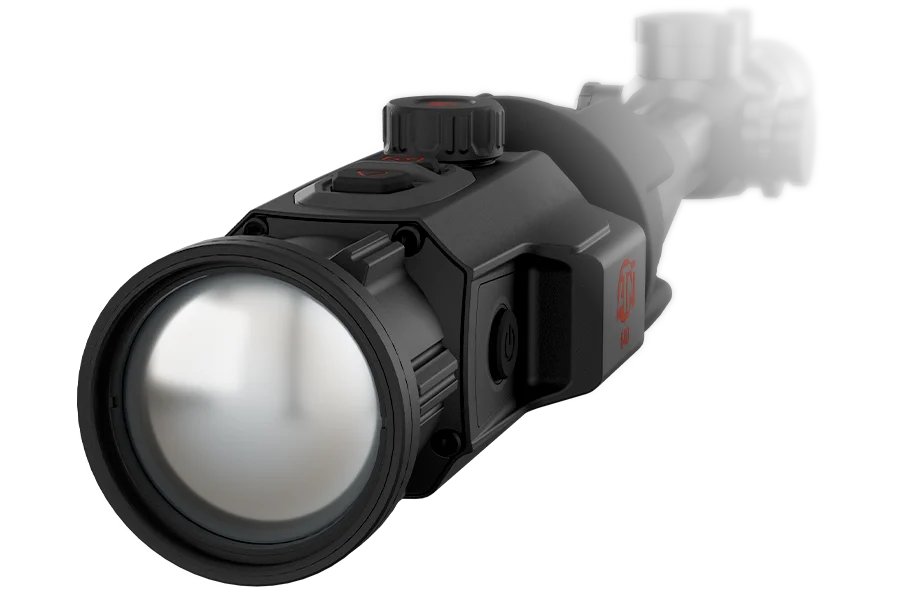
The TICO 6 line gives value-minded hog hunters real value because even the entry tier carries the whole feature set — the cheaper models are not stripped, just lower-resolution. Every tier includes SharpIR image cleanup, Recoil Activated Video, Hot Point Tracking, a Quick Detach Mount that protects your day-scope zero, and a removable eyepiece for handheld scanning. That means the money you save at a lower tier costs you sensor resolution and detection range, not core capability. Knowing that lets you buy exactly the tier your hunting needs and pocket the difference.
This is the single most useful thing to understand before you spend. In a lot of gear, the cheap option is cheap because it cuts corners everywhere. In the TICO 6 line, the tiers differ almost entirely in sensor and lens. So the question is not "can I afford to skip features" — you are not skipping any — it is simply "how much sensor does my ground call for." Answer that honestly and the cheapest right tier reveals itself.
ATN TICO 6 384x288: the value mid tier
The tier where price and capability meet
The ATN TICO 6 384x288 is the best-value tier because it out-resolves the entry model without climbing to flagship money. The 384x288 sensor packs meaningfully more heat-reading dots than the 256, so pigs identify sooner, and ≤18 mK sensitivity sharpens the picture. For the distances most hog hunters actually shoot, this tier hits the point where paying more stops adding much.
Where the value curve flattens
Every product line has a point where each extra budget buys less real-world benefit, and for hog hunting the 384 sits right at that knee. Below it, the entry tier saves money but gives up range you might actually use; above it, the flagship adds reach most hunters rarely need. Landing on the mid tier means you paid for capability you will use and skipped the part you would not — the definition of a smart cheap buy.
Who it's for, who it's not
It is for the value hunter who wants the smart middle and shoots close-to-mid range. It is not for the hunter who only takes close shots (save with the entry tier) or who regularly reaches across open fields (step to flagship).
ATN TICO 6 256x192: the entry tier
The cheapest capable way in
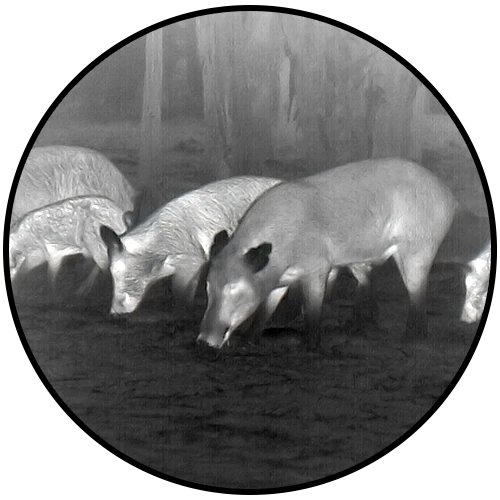
The TICO 6 256x192 is the true entry tier and the cheapest capable choice. It carries the same features as its pricier siblings, just with a 256x192 sensor and a shorter 1500 m detection range. For close cover inside about 100 yards, that is enough to spot and confirm a hog, and at 1.12 lbs it is the lightest of the three.
When cheapest is also correct
The entry tier stops being a compromise the moment your shots are genuinely close. A pig at 60 yards fills the frame; you do not need flagship resolution to see it clearly, drop the hammer, and let RAV capture the result. For the close-cover hunter, the 256 is not the budget backup — it is the tool that matches the job, and spending more would be spending for nothing.
Who it's for, who it's not
It is for the hunter who wants the lowest cost of entry and shoots close. It is not for anyone reaching past close cover, where the entry tier's resolution and range run out.
ATN TICO 6 640x512: the flagship tier
When paying up actually pays off
The TICO 6 640x512 is the flagship tier, and it is only "cheap" in the sense of value-per-capability when your ground demands reach. Its 640x512 sensor and 50 mm lens resolve pigs across open fields with a 3500 m detection range. If you routinely shoot far, this is the tier where the extra money buys shots you could not otherwise take.
The one case that justifies the top tier
If you hunt big open country — cut grain, pasture, river bottoms where 200-plus-yard shots are normal — the flagship stops being a luxury and becomes the only tier that does the job. There, the 640's resolution is what confirms the animal and its orientation before you fire. Paying up is value, not extravagance, when the shot literally cannot be made cleanly on a smaller sensor.
Who it's for, who it's not
It is for the open-field hunter who needs long-range identification. It is not for the value shopper or close-cover hunter, who would be paying for reach they will not use.
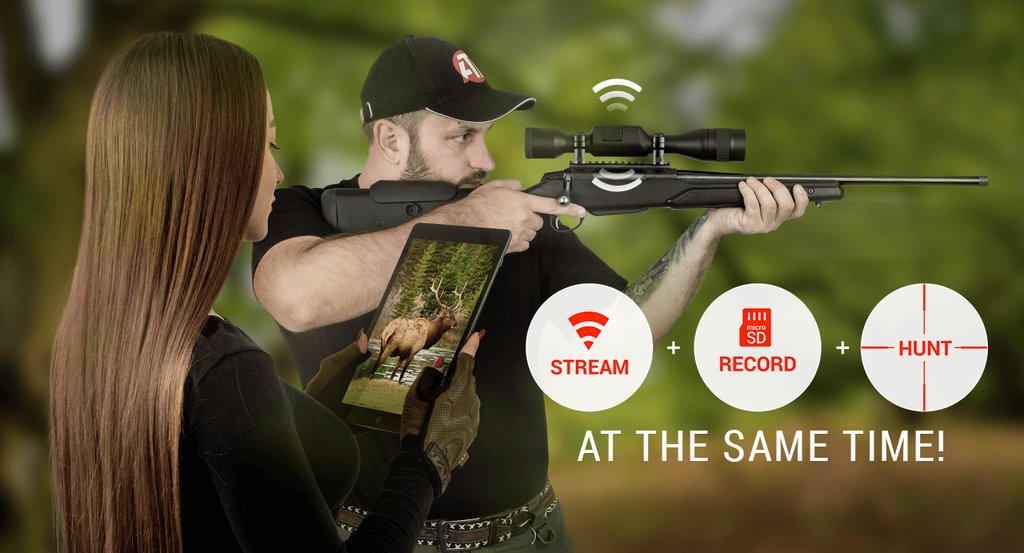
There is also a cost angle that has nothing to do with the clip-on's price: the tier you pick decides whether you keep your existing day scope or need to rethink your rig. Because all three ride ahead of a day optic and preserve its zero, the true cost of adding thermal is just the unit itself — no new scope, no new rings, no re-sight. That is a big reason the value math favors buying the right tier rather than the flashiest one: the money you save at a sensible tier stays in your pocket instead of chasing capability the rest of your setup will never call on. Think of it as buying the sensor you need and reinvesting the rest into spare batteries, a better rest, or simply more nights in the field. Those are the things that actually put more hogs on the ground, and a right-sized tier is what frees up the budget to spend on them.
How to choose your tier without overspending
- Entry tier — pick the 256x192 if every hog shot is close cover; it is the cheapest capable option.
- Mid tier — pick the 384x288 for the best all-around value at close-to-mid range; the sweet spot for most.
- Flagship tier — pick the 640x512 only if you regularly shoot open fields and need long-range ID.
- Same core features everywhere — every tier keeps RAV, Hot Point Tracking, and a zero-safe Quick Detach Mount, so cheaper does not mean crippled.
- Buy the tier, not the sticker — the right tier for your ground is the true cheapest choice over the life of the optic.
How we picked these ATN thermal clip-ons
This is an in-house comparison of ATN's own 6th-generation TICO 6 clip-ons, not an independent lab review. We ranked them by tier to show where value lives: resolution and detection range climb with price, ≤18-20 mK sensitivity sets image cleanliness, refresh rate keeps a moving pig smooth, and weight shifts slightly across the line, while the core features stay constant. We considered current models only. The honest trade-off is that a lower tier saves money by giving up sensor resolution and reach, not core capability. Who these are not for: hunters wanting a standalone thermal scope rather than a clip-on. Buy the tier your hunting needs and no higher.
Frequently Asked Questions
What is the best cheap thermal clip on for hog hunting?
For the best value, the ATN TICO 6 384x288 mid tier: it out-resolves the entry model without the flagship price and covers the distances most hog hunters shoot. If every shot is close cover, the TICO 6 256x192 entry tier is cheaper; if you shoot open fields, the 640x512 flagship earns its cost.
Does a cheaper clip-on mean fewer features?
No. Across the TICO 6 line, the cheaper models keep the same core features — Recoil Activated Video, Hot Point Tracking, SharpIR, a Quick Detach Mount, and a removable eyepiece. Moving down a tier costs you sensor resolution and detection range, not capability, so a cheap TICO 6 is not a crippled one.
Is the mid-tier 384 worth more than the entry 256?
For most hunters, yes. The 384x288 packs more heat-reading dots than the 256, so pigs identify sooner and the picture is sharper, and it reaches farther. It costs more than the entry tier but hits the point where value peaks for close-to-mid range hog hunting.
When is the flagship 640 the smarter buy?
When you regularly shoot open fields and need to identify hogs at distance. The 640x512 sensor and 3500 m detection range buy shots the cheaper tiers cannot support. If your hunting stays close, that extra capability is money you will not use.
Will the cheapest TICO 6 keep my rifle's zero?
Yes. Even the entry 256x192 clips in front of your day scope and uses the same Quick Detach Mount, so your reticle and zero stay put. Buying the cheaper tier does not cost you the zero-preserving design that makes clip-ons worth running.
How far can I shoot with a cheap TICO 6?
The entry 256x192 is best kept to close cover, roughly inside 100 yards, given its 1500 m detection range. The mid 384x288 comfortably covers close-to-mid range, and the flagship 640x512 reaches across open fields. Match the tier to your typical shot distance.
Cheap should mean smart, not stripped. The ATN TICO 6 384x288 is the value tier that gives most hog hunters the resolution they need without paying for the flagship. Only shoot close? The 256x192 entry tier costs less. Reaching across fields? The 640x512 flagship is worth it. Every tier keeps the core features and protects your zero. Compare them on the ATN thermal clip-on page and buy exactly the tier your hunt needs.
Created: August 5, 2026 · 19:53:42 UTC