Shopping cheap thermal binoculars hog hunting is really a question of tier: how far up ATN's Binox-6 ladder you need to climb before the extra money stops buying you anything on a hog field. This comparison puts the flagship-tier Binox-6 Dual 640x512 3-24x against the value-tier Binox-6 Dual 384x288 5.5-44x so you can see exactly what each tier adds and decide where 'cheap enough' sits for you.
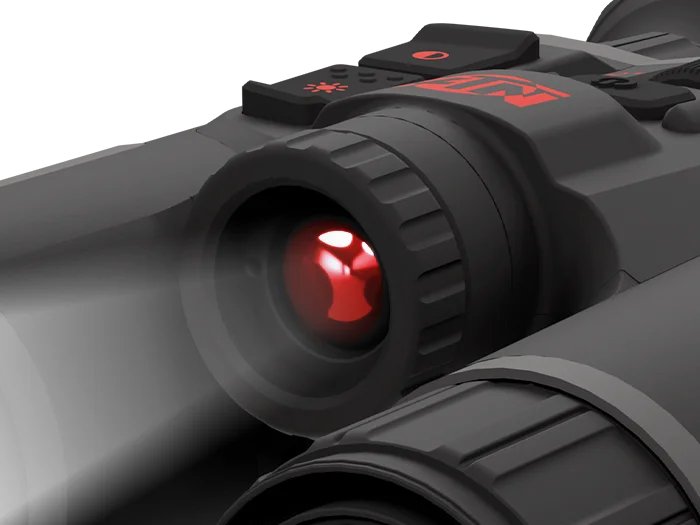
How the flagship tier works
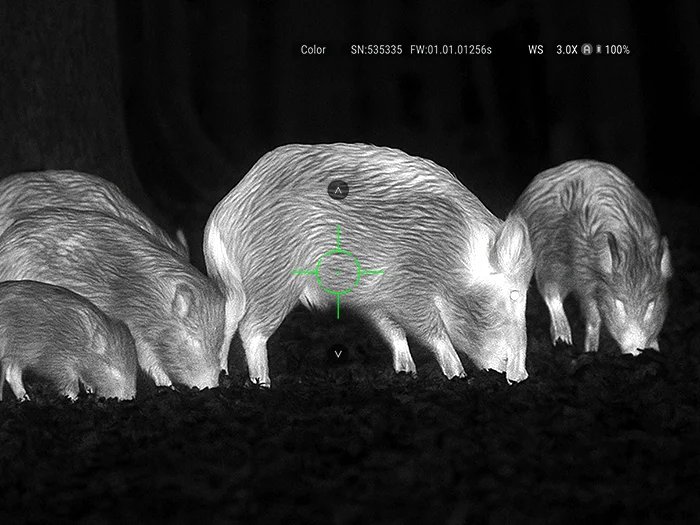
The flagship-tier 640x512 3-24x spends its extra cost almost entirely on the sensor. Think of it like the jump from a standard-definition screen to HD. A 640x512 detector has more pixels to paint each hog, so the animal holds its shape farther out and deeper into the zoom. Where a smaller sensor turns a distant pig into a soft blob, this one still shows you legs, ears and the line of the back. That tells you it is a hog and not a deer before you ever commit to a stalk. The <=15 mK sensitivity helps here too. It reads tiny heat differences off cool ground, so a bedded pig that is barely warmer than the dirt still stands out. Pair that with 3100 m detection and a wide 3x scanning low end, and the flagship tier is built for the hunter who genuinely needs clarity at distance. One thing worth understanding: its top zoom is 24x, lower than the value tier. But zoom is not the same as sensor power. Digital zoom only enlarges the pixels the sensor already captured. A sharp 640 sensor at moderate zoom often looks cleaner than a smaller sensor pushed to its limit. Everything else the flagship does, the value tier also does.
How the value tier works
The value-tier 384x288 5.5-44x is the cheap tier that still covers the whole hog job at realistic range. Its 384x288 sensor carries the same <=15 mK sensitivity as the flagship, so it reads pigs just as cleanly off cool ground. That number matters more than people think. A sensitivity that low means the optic can tell the small heat difference between a resting pig and the dirt under it. Even a cold, still animal glows against the background. On top of that, the value tier posts a 44x top-end zoom, higher than the flagship's 24x. That lets you dwell on a sounder and count heads before you decide which pig to take. Detection runs to 2750 m, which is more open field than most hunters ever shoot across. The only place it gives ground is fine detail at extreme distance. Because it has fewer pixels than the 640, a pig that is a tiny speck far out softens sooner, and pushing that 44x zoom just enlarges those fewer pixels rather than adding real detail. But at the ranges hog hunters actually work, the picture is plenty sharp to identify and act. For most hog nights, that extreme-range ceiling never comes into play.
When to choose the flagship tier
Climb to the flagship 640 when your hog ground demands sensor sharpness at range — big open leases, cut ag fields, pigs that appear as distant specks you must identify before committing to a stalk. Picture a cut corn field a quarter mile across. You glass a warm shape at the far tree line. On the value tier it might read as a soft blob you cannot call. On the flagship, the sharper sensor shows you a boar-shaped body with a clear back line, so you know it is a pig and roughly how big before you burn twenty minutes closing the gap. That is the moment the extra money pays for itself. If most of your nights look like that — long glassing over open country — the flagship tier's clarity is what you are legitimately buying. Below that distance, you are paying for headroom you will not use.
When to choose the value tier
Stop at the value 384 when your hogs live at typical range — field edges, plots, timber openings inside a few hundred yards. Say you hunt a small food plot backed by timber. Pigs slip out at last light forty to a hundred yards away. At that range the value tier reads them clean, and you can crank the 44x zoom to count the sounder and pick the biggest one. You never need extreme-distance sensor power because the hogs are right there. It identifies pigs cleanly, out-zooms the flagship at the top end, and carries the identical rangefinder and 4-in-1 vision for less money. For the hunter who wants cheap without cutting real capability, the value tier is the honest stop.
Our recommendation
For most hunters chasing cheap, the value-tier 384x288 5.5-44x is the right stop — it does the whole job at realistic hog range and keeps money in your pocket. Be honest with yourself about how far you actually shoot and glass. If you cannot remember the last time you tried to call a pig past a couple hundred yards, the value tier is all the optic you need, and paying up for a bigger sensor is money that stays parked on your ground unused. Climb to the flagship 640x512 3-24x only if you truly work extreme distance, where its sharper sensor pays off night after night, not just once a season. Either way you stay in ATN's thermal binoculars line, sharing the rangefinder, GPS and app across both tiers, so nothing about the core experience changes. The decision is purely how far up the ladder your ground pushes you — and for most hog fields, that is not very far.
How we compared them
This is an in-house, ATN-vs-ATN comparison of two Binox-6 tiers, not an independent lab review, so read it as a map of where each budget goes and confirm the figures against your own fields. We compared the tiers on the specs that decide a hog night — sensor resolution, zoom band, detection range, the rangefinder, battery and weight — within only the current 6th-gen line. The honest trade-off: the flagship tier buys sensor sharpness and reach you only cash in at long distance, while the value tier gives up that extreme-range detail to keep the price down without losing the core job. Who this is not for: a buyer who wants the absolute cheapest possible box regardless of capability, since even the value tier is a real 4-in-1 optic, not a bargain-bin spotter.
Frequently Asked Questions
Is the value-tier 384 cheap enough to do the job?
Yes, for typical hog range. It reads pigs cleanly with a <=15 mK sensor, out-zooms the flagship at the top end, and carries the same rangefinder, so it does the whole job at field-edge and plot distances for less money.
What does the flagship tier actually add?
Mostly sensor sharpness and a bit more reach — a 640x512 detector and 3100 m detection versus the 384's 2750 m. That extra clarity only cashes in when you identify pigs at extreme distance.
Which tier zooms higher?
The value tier, at 44x versus the flagship's 24x. But zoom only enlarges captured pixels, so the flagship's sharper sensor often looks cleaner at moderate zoom than the value tier does at maximum zoom.
Do both tiers have the rangefinder?
Yes. The built-in laser rangefinder, good to 1000 m with about a meter of accuracy, is identical on both tiers, so ranging a sounder is the same whichever you buy.
Will the value tier last a full night?
Yes. Both tiers run about 8 hours on two 18650 cells, and the cells swap out, so spares cover an all-night hog sit on either.
For most hog hunters, which tier is smarter?
The value tier, unless you regularly identify pigs at long range on open ground. Climbing to the flagship only pays off for genuine extreme-distance work.
Does the value tier's higher zoom make it better than the flagship?
Not really. The value tier does reach 44x versus the flagship's 24x, but zoom only enlarges the pixels the sensor already captured. Pushing a smaller 384 sensor to 44x can look grainier than the sharper 640 sensor at a lower zoom. Higher zoom is handy for counting a sounder up close, but it does not add real detail at distance.
Will cold weather or wet hogs hurt the picture on the cheaper tier?
No, thermal does not care about visible light or color, and both tiers share the same <=15 mK sensitivity that reads small heat differences. A pig always runs warmer than cool ground, so it stands out in fog, rain or full dark. The value tier sees hogs in those conditions just as well as the flagship — the only gap is fine detail at extreme range.
Decided where 'cheap enough' sits for you? The value-tier ATN Binox-6 Dual 384x288 5.5-44x does the whole hog job at realistic range, while the flagship 640x512 3-24x waits for extreme distance. Compare both tiers across ATN's thermal binoculars range and stop climbing the moment the extra money stops buying you anything on your ground.
Created: August 5, 2026 · 19:53:42 UTC