The smartest read on cheap thermal binoculars hog hunting starts with where you are on the learning curve. A first-season hog hunter and a decade-deep predator caller want very different things from the same budget. This roundup sorts the ATN Binox-6 line by experience level, with the Binox-6 Dual 384x288 5.5-44x leading as the smart first thermal and the 640 waiting as the upgrade for seasoned hunters.
Upgrade for pros: ATN Binox-6 Dual 640x512 3-24x — sharper sensor and reach for hunters who have outgrown a smaller detector.
Where you are matters: if hog hunting with thermal is new, the 384 gets you competent for less; if you already push range hard, the 640 removes the ceiling.
Why ATN's 6th-gen Binox-6 works at every experience level
ATN's 6th-gen Binox-6 works at every experience level because the interface and toolkit stay the same as you grow — you never relearn the device when you upgrade. Both variants are 4-in-1 with a 1000 m laser rangefinder, GPS, compass and a 4K day sensor, run through the same ATN app. A beginner learns one system and a veteran keeps it; only the sensor and zoom band change. That continuity is part of why starting cheap here does not lock you into a dead end.
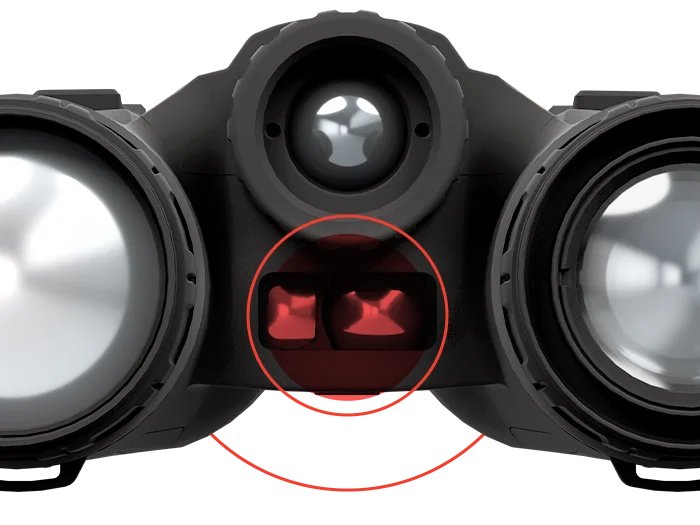
Best for newer hunters: ATN Binox-6 Dual 384x288 5.5-44x
The ATN Binox-6 Dual 384x288 5.5-44x is the cheap thermal binocular that makes the most sense for someone new to hog hunting after dark. Its 384x288 sensor and <=15 mK sensitivity — a low millikelvin figure meaning it reads small heat differences — pull a warm pig cleanly off cool ground, which is exactly the confidence a newer hunter needs to trust what they are seeing.
Learning to read thermal
Early on, the skill is telling a hog from a stump, a deer or a stray dog. The 384's high 44x zoom lets a beginner push in and study the shape, gait and size until the read becomes second nature. Learning that on the cheaper variant means you build the skill before you spend on the flagship sensor.
Your first season, on the 44x zoom
Picture your first season. A warm blob shows up at moderate range across a cut field. New eyes see heat and freeze. This is where the 384's high 44x zoom earns its keep. You push in and the blob turns into an animal with a shape you can judge. A hog sits low and blocky with a heavy front end and a stiff, rooting walk. A deer stands tall on thin legs and moves in clean bounds. A stray dog is smaller, lighter on its feet, and its tail gives it away. On the cheaper variant you get to make that call over and over until it stops being a guess. The zoom lets you study gait and size before you ever think about a shot, and that patience is the whole skill. Learn it here and you carry it to any thermal you own later. Miss a read and it costs you nothing but a walk-back, which is exactly how a newer hunter should be learning it — on the affordable body, not the flagship.
One honest note. At the far end of that 44x, a 384 sensor gets grainy, so the picture you zoom into is soft, not crisp. For learning to tell a pig from a deer at moderate range that is fine — shape and movement carry the read, not fine detail. Just know the grain is the sensor's ceiling talking, and it is the same ceiling the 640 lifts later if you ever need it.
Who it is for: the hunter in their first seasons of thermal hog work who wants a capable, affordable start. Who it is not for: the veteran who already identifies pigs instantly and is bumping the limits of a 384 sensor at range.
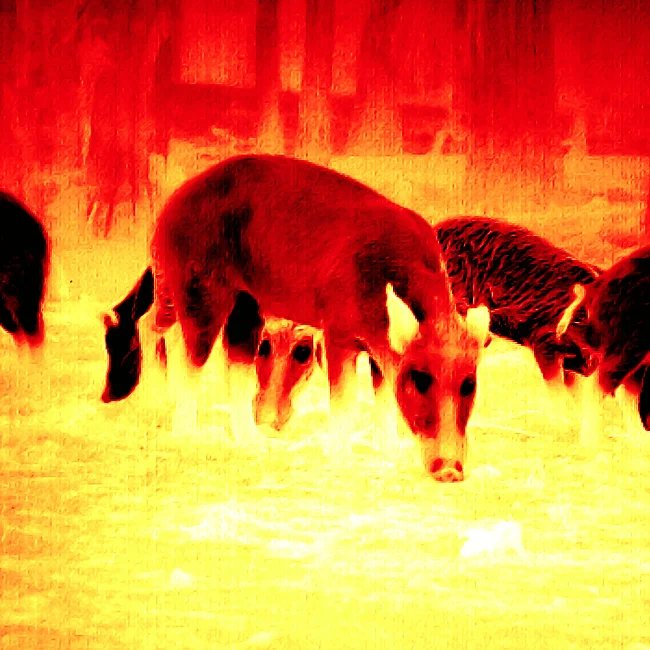
Upgrade for pros: ATN Binox-6 Dual 640x512 3-24x
The ATN Binox-6 Dual 640x512 3-24x is the natural upgrade once experience outgrows a 384 sensor. Its 640x512 detector holds detail farther out and its 3100 m detection catches heat sooner — the things a seasoned hunter notices when a smaller sensor starts to feel limiting on big ground.
Pushing the limits
Experienced hunters read pigs fast and want to do it farther, faster and in worse conditions. The 640's sharper image and wide scanning low end give them that headroom, so the binocular keeps up with skill instead of capping it. For a pro, that is where the extra money is not a splurge but a fix.
Open ground, at the far end of the field
Now picture the seasoned side of it. You are set up on a big open field, wind in your face, and a sounder is working the far tree line. That is the exact spot where a 384 starts to feel small. The pigs read as warm smudges but you cannot count heads or pick the boar until they close the distance. The 640 changes that. Its extra pixels hold shape farther out, so you can tell six pigs from a dozen, watch how the group is moving, and plan the stalk before they know you are there. The wider 3x low end lets you sweep the whole field fast, then zoom to confirm a single animal without losing the group. On open ground the sharper detector is not about a prettier picture. It is about making a decision earlier, from farther away, when a smart old boar will not give you a second chance.
The 3100 m detection matters here too. It means heat shows up in your view sooner as animals step out, so you get more seconds to set up instead of scrambling. A 384 will eventually see the same pigs, just later and softer. For a pro who is measuring the night in first-look advantages, those seconds are the whole reason to step up.
Who it is for: the experienced hog hunter who has hit a 384's ceiling and wants more sensor. Who it is not for: the newcomer, who will learn everything they need on the cheaper 384 first.
The specs that grow with you
A few specs decide how far each variant carries you, so it helps to know what they actually mean in the field. None of them change how the binocular is operated — they only change the picture and the reach.
Sensor resolution is the big one. Think of it like the old jump from standard-definition to high-definition TV. The 384x288 sensor is the SD picture — plenty to see a hog and read its shape at moderate range, which is all a learning hunter needs. The 640x512 is the HD picture, with more than double the pixels, so the same pig holds crisp shape much farther out. You do not need HD to learn. You want it once you are pushing distance.
NETD is thermal sensitivity, and here both variants match at <=15 mK. Lower is better — it is how small a heat difference the sensor can pick out. Both sit low, so a pig separates cleanly from cool grass on either body. That is a spec you get in full from day one, even on the cheaper variant, so a newer hunter is not shorted on the part that builds confidence.
Detection range is how far off heat first shows in your view — 2750 m on the 384, 3100 m on the 640. Both are far more than most hog fields need, so for close and moderate work you will not feel the difference. It only starts to matter when you hunt big open ground and want the earliest possible first look. That is the seasoned-hunter reason to reach for the 640, not a beginner one.
The shared app and controls tie it all together. Both run the same ATN app, the same menu, the same rangefinder and the same 4-in-1 vision. So the specs grow but the operation does not change. Upgrade from the 384 to the 640 down the road and every button, every setting and every habit carries straight over. You are buying a sharper picture, not a new device to relearn — which is the whole reason starting cheap here is not a dead end.
How to choose by your experience level
Be honest about where you are on the curve, and buy for that rather than the hunter you hope to become overnight.
- First seasons — the 384's value and high zoom teach you to read thermal without overspending.
- Comfortable but growing — the 384 still has room; upgrade only when its sensor limits you.
- Seasoned at range — the 640's sharper detector removes the ceiling you have started to feel.
- Shared foundation — both use the same app, rangefinder and 4-in-1 vision, so upgrading later means no relearning.
How we picked these ATN thermal binoculars
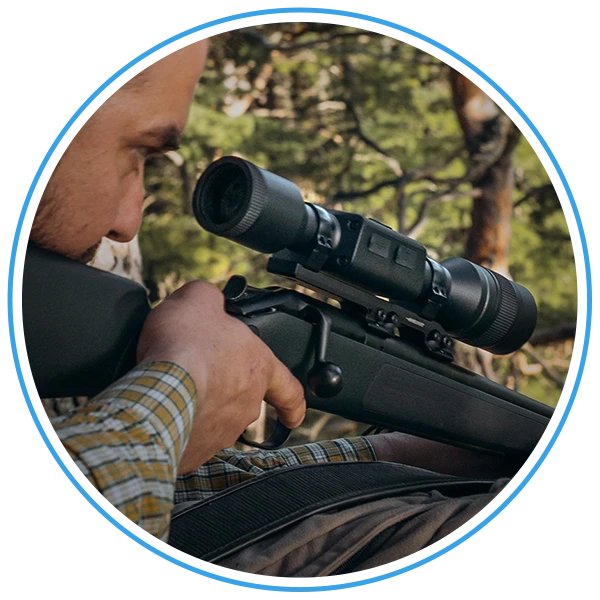
We sorted these by experience level, weighing the specs that matter as a hunter grows — sensor resolution, NETD, detection range, magnification band, weight and battery — against the real learning curve of thermal hog hunting, and only within ATN's current 6th-gen Binox-6 line. The honest trade-off: the 384 is cheaper and forgiving to learn on but has a sensor ceiling a pro will eventually feel, while the 640 removes that ceiling at a higher cost a beginner does not yet need. This is an in-house comparison of ATN's own range, not an independent lab test, so match it to your own experience. Who neither is for: a hunter who wants a throwaway pocket spotter and has no interest in growing into thermal scanning at all.
Frequently Asked Questions
What is the best cheap thermal binocular for a beginner hog hunter?
The Binox-6 384x288 5.5-44x. It is the value variant, reads pigs cleanly with a <=15 mK sensor, and its high zoom helps a newcomer learn to identify animals, all at a friendlier price than the flagship.
Will I outgrow the 384 sensor?
Maybe, if you start hunting big open ground at long range. Many hunters never do. Because both variants share the same app and controls, upgrading to the 640 later means no relearning if you do.
Is the cheaper model harder to use?
No. The 384 uses the exact same interface, rangefinder and 4-in-1 vision as the 640 — only the sensor and zoom band differ. It is just as easy to operate, which is ideal for learning.
When should an experienced hunter step up to the 640?
When a 384 sensor starts limiting your long-range calls on open ground. If you already read pigs fast and want to do it farther and cleaner, the 640's sharper detector is the fix.
Do both carry the rangefinder?
Yes. Both have the same built-in laser rangefinder good to 1000 m, so ranging a sounder is identical whether you are new or seasoned.
How long will either last in the field?
About 8 hours per charge on two 18650 cells, and the cells swap out, so spares cover an all-night hog sit on either variant.
What does the difference between 384 and 640 look like in the field?
At close and moderate range both read a hog cleanly, so you may not notice a difference at all. The gap shows at distance: the 640 holds a crisp shape where the 384 goes soft and grainy at the top of its zoom. So the sensor matters most for long open-ground work, not for learning.
Is a cheaper thermal binocular good enough for real hog hunting?
Yes. The 384 variant is a real hunting tool, not a toy — it carries the same <=15 mK sensitivity, rangefinder and 4-in-1 vision as the flagship. It reads pigs, ranges them and records the hunt. The only ceiling is long-range detail, which most hog hunting never hits.
Honest about where you are on the curve? If thermal hog hunting is new, start cheap and capable with the ATN Binox-6 Dual 384x288 5.5-44x, or step up to the 640 when you have outgrown it by comparing both across ATN's thermal binoculars range. Either way the controls stay familiar, so your skill carries straight across.
Created: August 5, 2026 · 19:53:42 UTC