Hogs do not read the calendar, and neither should your glass. The same sounder that trots across a warm, humid food plot in July will hug a cedar thicket in a January cold snap and behave differently again during the spring green-up. That is why we built this roundup of value-minded ATN thermal binoculars around the hunting season itself — early-season warm nights, the fall pressure of the rut window, the dead-of-winter freeze, and the wet, patchy spring — rather than around a single spec sheet. The idea is simple: pick the ATN Binox-6 body and magnification that fits the conditions you actually hunt in, and stop paying for capability the weather never lets you use.
Best for dead-of-winter cold and the longest hedgerows: the ATN Binox-6 Dual 640x512 3-24x, the flagship, when a frozen field turns hogs into distant, low-contrast blobs and you need the extra resolution and reach.
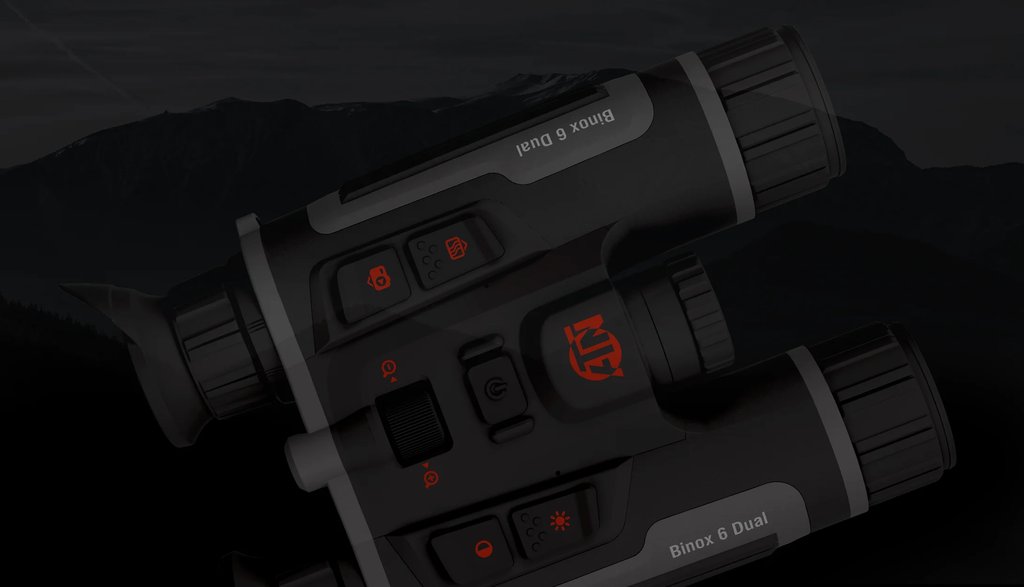
Both picks are ATN Binox-6 4-in-1 units, so you get thermal and 4K day channels, a built-in laser rangefinder, IR illumination, GPS with a compass, and ATN's SharpIR AI processing in one handheld body. What changes season to season is which sensor and which zoom band earns its keep. Below we walk the calendar and match the hardware to the weather, then lay everything out in a side-by-side table.
Early season: warm, humid nights
Late summer and early fall are the forgiving months. Hogs carry a lot of heat, the ground has cooled after dark, and thermal contrast is easy — a rooting sounder practically glows. The catch is distance: on a warm, still night hogs will bed and feed well out in open plots, and heat shimmer off sun-baked dirt can soften edges at range. This is exactly where the Binox-6 Dual 384x288 5.5-44x shines. Its class-leading top magnification lets you reach out and count animals, confirm a shooter, and read behavior across a big field without a separate spotter, while the strong early-season contrast means the 384 sensor has plenty to work with. For most warm-weather hog nights it is all the glass you need, and it is the more affordable of the two.
- Season traits: high animal heat, easy contrast, hogs feeding far out in the open.
- Pick: Binox-6 Dual 384x288 5.5-44x — lean on the 5.5-44x zoom to identify and count at distance.
- Why it works: contrast is generous, so the value-friendly 384 sensor gives a clean, confident image.
The fall rut and pressure window
As the season deepens, hogs get hunted and get smart. They shift to shorter movement windows, use cover, and slip along edges instead of parading across the middle of a field. Now the job is less about maximum reach and more about quickly acquiring a target, ranging it, and settling the shot before the sounder melts back into the brush. The Binox-6 Dual 384x288 still leads here: dial back off the top zoom to hold a wider slice of the tree line, use the built-in 1000 m rangefinder to lock a distance the instant a hog steps out, and let SharpIR clean up the edges of a half-hidden animal. Its lighter, budget-conscious package also means less fatigue on long, patient sits waiting for pressured hogs to commit.
- Glass the edges at moderate zoom to catch hogs slipping along cover.
- Range instantly with the built-in laser as an animal clears the brush.
- Confirm the shooter with SharpIR-sharpened edges before committing.
Dead of winter: hard cold and long shots
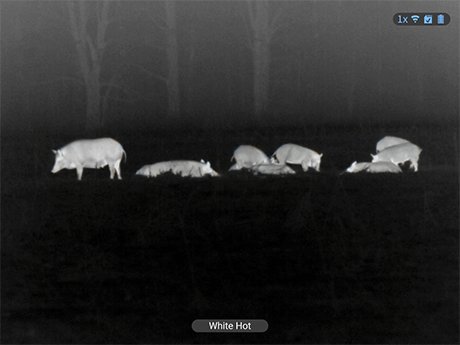
Deep winter is where thermal gear is tested. When the whole landscape drops to the same frigid temperature, a hog's heat signature still stands out — but distant animals across a frozen field can read as faint, low-contrast smudges, and you often want to reach farther because hogs bunch up and travel between scarce food sources. This is the case for stepping up to the flagship Binox-6 Dual 640x512 3-24x. Its higher-resolution 640 sensor resolves those cold, weak signatures into a crisper picture, and its longer detection reach gives you the confidence to work the biggest hedgerows and open bottoms on a bitter night. If your winter hunting means long looks across empty, frozen ground, the extra resolution is worth the step up in price.
- Season traits: uniform cold, low background contrast, hogs ranging far between food.
- Pick: Binox-6 Dual 640x512 3-24x — the 640 sensor and longer reach cut through weak winter signatures.
- Why it works: more pixels on a faint, distant hog means a cleaner, more certain image in the cold.
Wet spring green-up
Spring brings rain, fog, and fast-growing cover. Hogs disperse into new green food, and moisture in the air can wash out a lesser image. The good news is both bodies carry ATN's DeFog and WDR processing, so a damp, misty morning does not blind you. For most spring nights the Binox-6 Dual 384x288 handles the job well — the ranges are usually shorter as hogs work fresh, close cover, and DeFog keeps the picture usable through drizzle. Reach for the 640 only if your spring ground is genuinely wide open and you still need long-range certainty through the damp. This keeps the season honest: buy the reach you use, not the reach you might imagine.
ATN Binox-6 for hog hunting: side by side
Read the table by your season, not top to bottom. If most of your hog nights are warm-to-mild and you value the widest zoom range for a friendlier price, the 384 is the sensible buy. If you routinely hunt hard winter cold across wide, frozen ground, the 640's resolution and reach justify the step up. Explore the full lineup on the ATN thermal binoculars category page.
What carries across every season
Seasons decide which Binox-6 leads, but a few things make either one worth the money on any night of the year, and they are why a cheap single-eye viewer never truly competes. Both binoculars are the same 4-in-1 platform — thermal, day, night and twilight in one housing — so the tool that hunts hogs in July darkness also scouts sign in October daylight. Both carry a laser rangefinder good to 1000 m, so you confirm a distance before a shot instead of guessing, whatever the weather. Both run ATN's SharpIR AI to clean the image live, both add DeFog and Wide Dynamic Range for the fogged river bottoms that show up in every season, and both run on swappable 18650 cells for roughly 8 hours, so a spare pair in a pocket covers dusk-to-dawn year round.
- 4-in-1 modes — one binocular for night hunting and daytime scouting in every season.
- Rangefinder to 1000 m — ranged shots, not guesses, whether it is a humid August night or a frozen January field.
- Swappable batteries — ~8 hrs per pair; a spare set turns any all-night sit into a quick change.
- DeFog + Wide Dynamic Range — a usable picture when spring rain or winter fog rolls in.
How we picked these ATN thermal binoculars
We judged these binoculars against the one thing that actually changes hog behavior night to night: the weather of the season you are hunting. Rather than chase spec-sheet bragging rights, we weighed sensor resolution and thermal sensitivity (NETD) against how much contrast each season gives you for free, detection range against how far hogs really travel that time of year, and zoom band against whether you are counting animals in an open plot or catching one slipping an edge. We also kept an eye on the practical stuff — weight for long sits, swappable battery runtime for cold nights, and the built-in rangefinder for quick shot decisions. Honest trade-off: the more affordable 384 gives up resolution and outright reach to the flagship 640, so it is not the pick for someone whose hunting is mostly long shots across hard-frozen winter ground. And this is an in-house comparison of ATN's own current Binox-6 range, not an independent lab review — check these specs against the seasons and distances you personally hunt before you decide.
Frequently Asked Questions
Which ATN Binox-6 is the best value for hog hunting?
For most hog hunters the ATN Binox-6 Dual 384x288 5.5-44x is the value pick. Its 384 sensor handles the strong contrast of warm early-season and fall nights easily, and its class-leading 5.5-44x zoom lets you identify and count hogs at distance — all in the more affordable of the two bodies.
Do I really need the 640 sensor for hogs?
Not usually. The 640x512 Binox-6 earns its step-up in price mainly in the dead of winter, when a uniformly cold landscape flattens contrast and you need extra resolution and reach on faint, distant animals. For warm and mild seasons the 384 is plenty of thermal binocular for hogs.
Can these thermal binoculars range a hog before the shot?
Yes. Both the Binox-6 384 and 640 carry a built-in laser rangefinder good to 1000 m, so you can lock the distance to a hog the instant it clears cover and make a confident shot decision without a separate device.
Will thermal binoculars still work in fog or spring rain?
Yes. Both Binox-6 bodies include ATN's DeFog and WDR processing, which keep the thermal image usable through the damp, misty conditions common in a wet spring green-up. Thermal sees heat, not visible light, so moisture degrades it far less than day optics.
How long does the battery last on a night hunt?
Each Binox-6 runs roughly 8 hours on its two swappable 18650 cells, and because the batteries pop out you can carry charged spares. That matters most on long, cold winter sits where runtime drops and you do not want to end the night early.
Are these binoculars heavy to carry all night?
No. The 384 body comes in around 720 g (1.59 lbs) and the 640 around 730 g (1.61 lbs), so both are manageable handhelds for extended scanning. The lighter, budget-friendly 384 is the easier companion on long, patient waits for pressured hogs.
Match the glass to the season and go hunt. Start with the value-leading ATN Binox-6 Dual 384x288 for all-around hog nights, step up to the ATN Binox-6 Dual 640x512 for hard-winter reach, or browse the full ATN thermal binoculars range.
Created: August 5, 2026 · 19:53:42 UTC