Feral hogs move in the dark, travel in groups, and vanish the second they hear you. Chasing them down with your eyes alone is a losing game - which is why smart-money hunters reach for thermal binoculars. But "cheap" should mean value, not a stripped-down optic that dies on the first cold night. The real question is which features actually earn their keep on a hog stand, and which ATN Binox-6 delivers them without you paying for anything you won't use.
Instead of ranking these by price or terrain, we've organized this roundup around the key features that make a cheap thermal binocular genuinely worth it for hogs: sensor resolution, a built-in laser rangefinder, 4-in-1 multispectral modes, refresh and image quality, and swappable battery runtime. For each feature we name the Binox-6 that leads on it - so you can match the optic to the capability you care about most.
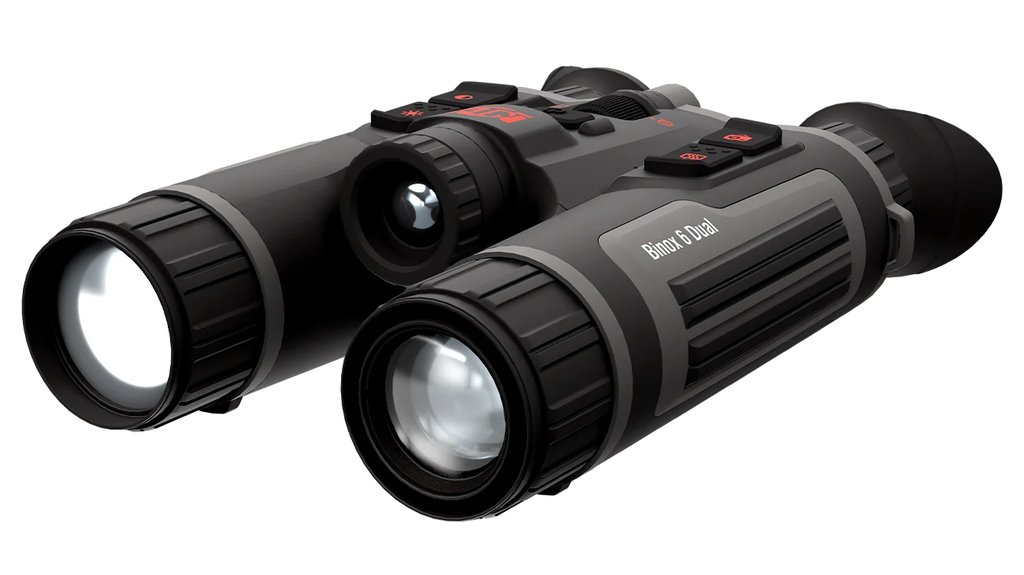
Best for reach on a budget - ATN Binox-6 Dual 384x288 5.5-44x. A more affordable step-down that trades sensor pixels for the highest zoom in the line, ideal if you glass long lanes and want to stretch every bit of value.
Key feature 1: sensor resolution - the ATN Binox-6 640x512 leads
Resolution is the feature that decides whether a heat blob 200 yards out is a hog, a coyote, or a stump. More thermal pixels mean a cleaner outline, so you identify the target and count the sounder before you ever commit. The ATN Binox-6 Dual 640x512 3-24x leads here with a full 640x512 thermal sensor - roughly four times the pixel count of a 384 core - paired with a NETD of 15 mK or better so faint temperature differences still show up as crisp detail.
For hog hunting that clarity pays off twice: you spot animals sooner in thick brush, and the extra pixels hold their shape as you push the 3-24x magnification. The Binox-6 384x288 5.5-44x uses a smaller 384x288 core, which keeps it lighter on the wallet; it's still plenty of resolution for confident identification, just with a coarser image than the 640 when things get busy. If crisp identification at distance is your priority, resolution points straight at the 640.
Key feature 2: built-in laser rangefinder - only on the ATN Binox-6 640x512
A laser rangefinder is the single feature most often left off a "cheap" thermal, and its absence hurts most on hogs. When a sounder feeds across an uneven field at last light, guessing the range is how you miss. The Binox-6 640x512 3-24x builds in a laser rangefinder good to 1000 m with roughly +/-1 m accuracy, so you range the lead hog, know your holdover, and act before the group scatters - all without a second device on your neck.
The 384x288 model skips the integrated rangefinder to hold its more affordable position, which is a fair trade if you hunt fixed distances you already know cold. But if your hog ground is open, rolling, or unfamiliar, the rangefinder alone can justify stepping up to the 640 - it turns a guess into a number.
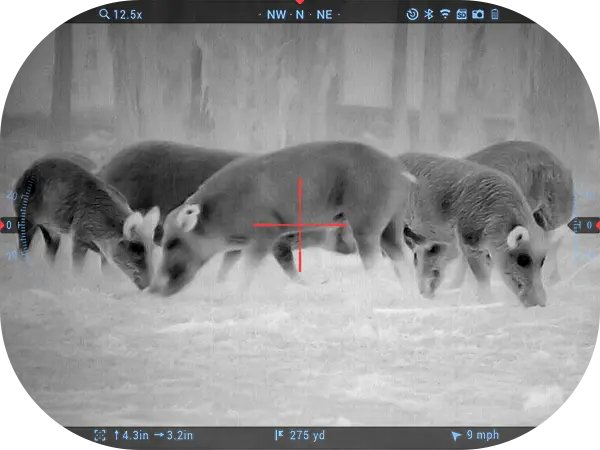
Key feature 3: 4-in-1 multispectral modes - shared strength across the Binox-6 line
One overlooked way to get real value from a thermal binocular is versatility - an optic you can use around the clock earns its keep far better than a thermal-only unit. Every Binox-6 covered here carries the same 4-in-1 mode set: Day, Night, Thermal, and Twilight. You glass the tree line at dusk in Twilight, flip to Thermal to pull hogs out of the shadows, and confirm the shot in a high-detail day channel.
- Thermal - the core hog-finding mode, pulling body heat out of brush and shadow.
- Night - digital night vision backed by built-in 850/940 nm IR for close, detailed work in full dark.
- Twilight - tuned for the low-light dawn and dusk windows when hogs are most active.
- Day - a 4K day sensor for scouting, confirming, and glassing in full light.
Because both the 640 and the 384 share this feature, multispectral flexibility isn't the axis that separates them - it's a baseline both deliver. It's the clearest sign these are value optics rather than one-trick thermals: dual view switching lets you flip between channels on the fly, so a single binocular covers the whole hog-hunting day.
Key feature 4: refresh and SharpIR image quality - the 640x512 sets the standard
A thermal image that smears when you pan is useless on running hogs. Image quality here is more than raw resolution: it's the processing that keeps the picture clean and steady. Both Binox-6 models run ATN's SharpIR AI image boost plus DeFog and WDR, which sharpen edges, cut through humidity and mist, and balance a scene where a hot hog stands against a cold field.
The Binox-6 640x512 3-24x leads on delivered image quality because its denser sensor gives SharpIR more real detail to work with - the difference is most obvious when you track a moving sounder or zoom in on a distant animal. The 384x288 model runs the same processing suite and looks excellent for the money; the 640 simply renders a finer picture when the scene gets demanding. For hog hunters who pan a lot and shoot at movement, that steadier, sharper image is worth prioritizing.
Key feature 5: swappable battery runtime - both Binox-6 models keep you in the field
The cheapest-feeling moment in any hunt is when your optic dies mid-stand. Runtime is a value feature in disguise: an optic you have to babysit costs you hogs. Both the 640x512 and the 384x288 run about 8 hours on a pair of swappable 18650 batteries - so a spare set in your pocket effectively doubles your night with a 30-second change-out, no sitting by a charger.
Weight ties into this too, since you're holding these up to glass for hours. The 640 comes in around 730 g (1.61 lbs) and the 384 around 720 g (1.59 lbs) - close enough that runtime, not ounces, is the deciding feature here. Neither model asks you to choose between a full night and a manageable optic.
ATN Binox-6 feature comparison for hog hunting
Reading the table by feature makes the choice simple. If resolution, the rangefinder, and delivered image quality top your list, the ATN Binox-6 Dual 640x512 3-24x is the feature leader and the value pick for most hog hunters. If your priority is stretching zoom over long lanes at a friendlier price, the Binox-6 Dual 384x288 5.5-44x leads on magnification. Both live in ATN's thermal binoculars lineup.
How we picked these ATN thermal binoculars
We built this roundup by scoring each optic on the features that actually decide a hog hunt rather than by chasing the lowest sticker: thermal sensor resolution, NETD thermal sensitivity, detection range, magnification, weight, and battery runtime - each weighed against real hog work like identifying a sounder in brush and ranging a moving target at last light. We only considered ATN's current 6th-generation Binox-6 line, and this is an in-house comparison of ATN's own range, not an independent lab test - so treat it as a feature-by-feature guide and check the numbers against your own ground. Honest trade-off: the 640 leads on resolution, rangefinder, and image quality, while the 384 gives up those to hit a more affordable price and a higher top-end zoom. Neither is the right call for a hunter who wants a weapon-mounted sighting system - these are handheld scanning binoculars for finding and confirming, not for aiming a shot.
Frequently Asked Questions
What is the best cheap thermal binocular for hog hunting?
For most hog hunters the best-value pick is the ATN Binox-6 Dual 640x512 3-24x. It leads the Binox-6 line on the features that matter for hogs - 640x512 resolution, a built-in laser rangefinder, and SharpIR image quality - so you get the capability you'll actually use without paying for extras you won't. If you want smart-money reach instead, the Binox-6 384x288 5.5-44x is the more affordable step-down.
Do I really need a laser rangefinder for hogs?
If you hunt open or unfamiliar ground, yes - ranging the lead hog before the group scatters is the difference between a clean shot and a guess. The ATN Binox-6 640x512 builds in a 1000 m laser rangefinder with about +/-1 m accuracy. The 384x288 skips it to stay more affordable, which is fine only if you hunt distances you already know cold.
How is resolution different between the two Binox-6 models?
The ATN Binox-6 640x512 uses a 640x512 thermal core - roughly four times the pixels of the 384x288 model. In practice that means a crisper hog outline, earlier identification in brush, and detail that holds up as you zoom. The 384 is still sharp enough for confident work; it simply renders a coarser image when the scene gets busy.
Can I use these ATN thermal binoculars in daylight too?
Yes. Both Binox-6 models carry ATN's 4-in-1 mode set - Day, Night, Thermal, and Twilight - with a 4K day sensor. That versatility is a big part of their value: you scout in daylight, glass the tree line at dusk in Twilight, and switch to Thermal to pull hogs out of the shadows, all with one optic.
How long will the battery last on a hog hunt?
Both the ATN Binox-6 640x512 and the 384x288 run about 8 hours on a pair of swappable 18650 batteries. Because the cells swap out in seconds, carrying a spare set effectively doubles your night without waiting on a charger - a real advantage for all-night hog sits.
Is the higher-zoom 384x288 model better for hogs?
Not necessarily better - just different. The Binox-6 384x288 5.5-44x offers the highest zoom in the line, which helps on long, open shooting lanes, and it comes at a more affordable price. But it gives up resolution, the built-in rangefinder, and some image quality versus the 640. Pick it if reach and value are your top features; pick the 640 if identification and ranging matter more.
Ready to glass more hogs for the money? Compare the ATN Binox-6 Dual 640x512 3-24x and the Binox-6 Dual 384x288 5.5-44x, or browse the full ATN thermal binoculars lineup to match the feature set to your hog ground.
Created: August 5, 2026 · 19:53:42 UTC