The best cheap thermal binoculars hog hunting setup is not about the lowest sticker — it is about how you run your rig in the field. A tripod glasser, a truck-window scanner and a run-and-gun stalker each get value from different strengths. This roundup sorts the ATN Binox-6 line by setup style, with the Binox-6 Dual 640x512 3-24x leading as the best all-setup pick and the 384x288 as the leaner value option.
Best value across setups: the ATN Binox-6 Dual 640x512 3-24x — sharp sensor for tripod glassing, wide low end for run-and-gun scanning, and a 1000 m rangefinder that suits any rig. The 384x288 is the value pick when you scan handheld at moderate range. Both share GPS, 4-in-1 vision and a swappable battery.
Quick answerBest all-setup value: ATN Binox-6 Dual 640x512 3-24x — sharp sensor and wide low end fit tripod, truck or foot.
Value pick: ATN Binox-6 Dual 384x288 5.5-44x — high zoom and lower cost for handheld, moderate-range scanning.
Match your rig: tripod and long glassing lean on the 640's sharpness; run-and-gun stalking rewards the 640's wide scan or the light 384 for handheld work.
Why ATN's 6th-gen Binox-6 suits any hog setup
ATN's 6th-gen Binox-6 suits any hog setup because both variants carry the full toolkit whether you shoulder them, mount them or rest them on a truck door. Each is 4-in-1 — day, night, thermal, twilight — with a 1000 m laser rangefinder, GPS, compass and a 4K day sensor. That means a tripod glasser and a run-and-gun stalker are working from the same feature set; only the sensor and zoom band change, so your setup style, not the toolkit, drives the choice.
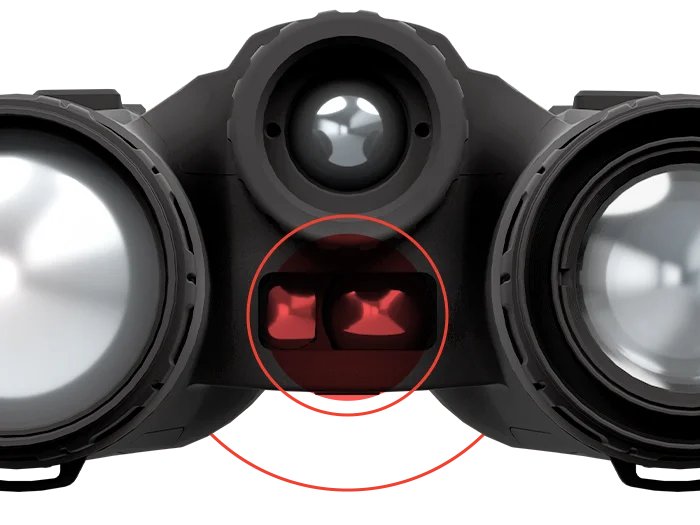
Best all-setup value: ATN Binox-6 Dual 640x512 3-24x
The ATN Binox-6 Dual 640x512 3-24x is the value pick that flexes across every rig, and its 640x512 sensor is the reason — more pixels per hog, like standard definition stepping up to HD, so the image is honest whether you hold steady on a tripod or scan on the move.
Tripod glassing setup
On a tripod you have the stability to use the sensor's full detail. The 640 lets you park on a distant field edge, range it with the built-in laser and read a sounder at 3100 m detection without your own shake blurring the picture. That is the setup where the sharp sensor earns its tier.
Run-and-gun setup
Working on foot, the 640's wide 3x low end sweeps ground fast so you cover more field per pass and catch a moving pack sooner. The sharper sensor keeps pigs legible even as you move, so a quick handheld scan still tells you what you are looking at.
Truck-door rest setup
Picture a cheap, no-fuss rig: you roll up to a cut field, kill the engine and rest the 640 on the open truck door. That door is your tripod. The wide 3x low end lets you sweep the whole field in a couple of passes instead of tunneling in on one corner, so a sounder rooting the far edge shows up fast. Then you thumb the zoom in, range it with the 1000 m laser and read how many pigs are out there before you ever step down. Because the sensor is sharp, you are not squinting at hot blobs — you can tell a big boar from a sow with piglets and plan the stalk. The door rest costs you nothing and the 640 does the rest of the work.
Who it is for: the hunter who switches setups — tripod one night, on foot the next — and wants one binocular that never feels wrong. Who it is not for: the strictly handheld, moderate-range scanner on the tightest budget, where the 384 saves money.
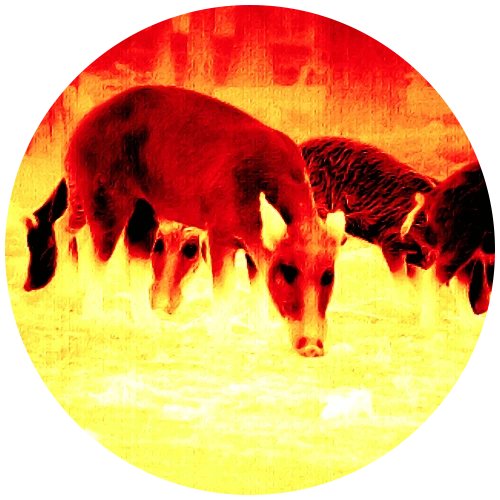
Value pick: ATN Binox-6 Dual 384x288 5.5-44x
The ATN Binox-6 Dual 384x288 5.5-44x is the value pick for the handheld, moderate-range setup. It is the lighter of the two at 720 g, and its 44x top-end zoom means when you rest against a fence post or truck door you can dwell hard on a sounder to count and confirm.
Handheld scanning setup
If your rig is simply the binocular in your hands, working field edges and plots inside a few hundred yards, the 384 identifies pigs cleanly with its <=15 mK sensor and gives you extra zoom to inspect — all for a lower outlay. That is the definition of cheap done right.
Fence-post rest at a food plot
Here is where the 384 shines on the cheap. You walk the edge of a food plot, find a fence post or a gate rail, and set the front of the binocular right on top of it. That little rest kills your hand shake, and now the 44x top end is usable — you can crank in on the pigs tearing up the plot and count heads, tails and tusks without the wobble that ruins a handheld zoom. The <=15 mK sensor still separates a warm pig from cooler brush at that distance, so you are not guessing. Move down the fence line, find the next post, glass again. It is a slow, quiet, cheap way to hunt a small property, and the light 384 is easy to carry post to post all night. You give up some raw sharpness versus the 640, but for a plot inside a few hundred yards you rarely miss it.
Who it is for: the handheld hunter at moderate range who wants the most zoom for the money. Who it is not for: the tripod glasser reading pigs at extreme distance, where the 640's sharper sensor earns its keep.
The specs behind each setup
It helps to know what each spec actually buys you before you match it to your rig, so here is the plain-English version tied to how you hunt.
Sensor resolution — how sharp the pig looks
Think of the 640x512 sensor as HD and the 384x288 as standard definition. More pixels means more detail on each hog, so a boar at the far end of a field reads as a boar, not a warm smudge. That extra sharpness matters most on a tripod or a truck-door rest, where you are steady and pushing detection out past 3000 m — the sensor has to earn that reach. Handheld inside a few hundred yards, the 384's picture is plenty; you are close enough that the pig fills the frame either way.
NETD — reading tiny heat differences
NETD is thermal sensitivity, and both variants run at <=15 mK, which is genuinely sharp. Lower is better: it means the optic can tell apart two things that are only a hair different in temperature — a bedded pig against sun-warmed dirt, a hog half-hidden in cool brush. That <=15 mK reading is why a fence-post glasser can still pick pigs out of a busy plot and why the tripod hunter sees a faint heat signature at range instead of losing it in the background clutter. Same sensitivity on both, so no setup is short-changed here.
Detection range — how far you can reach
The 640 detects out to 3100 m and the 384 to 2750 m. That gap only shows up in a long-reach setup — tripod glassing a big cut field or resting on the truck door to scan a whole bottom. If that is your rig, the 640's extra reach is real distance you can cover. For the handheld, moderate-range hunter working plots and edges, 2750 m is already far more than you glass on foot, so the 384 loses nothing you would actually use.
Refresh smoothness — tracking a moving sounder
When a whole sounder breaks and runs, a smooth refresh keeps the picture from smearing so you can follow which pig went where. That matters most run-and-gun on foot, where both you and the pigs are moving and a laggy image would leave you lost. On a tripod, with everything held still, refresh is less critical — but a clean, fluid image is still easier to glass for a long sit. Both Binox-6 variants keep up well enough that a moving pack stays readable, which is what a fast, cheap scan needs.
How to choose by your setup
Pick the variant whose strength matches how you actually run your rig most nights.
- Tripod glassing — the 640's sharp sensor uses the stability for long, detailed reads.
- Truck-window scanning — either works, but the 640's wide low end sweeps faster from a rest.
- Run-and-gun on foot — the 640's scan speed or the lighter 384 both suit moving work.
- Shared across rigs — both bring the 1000 m rangefinder, GPS and ~8-hour battery, so no setup is short-changed.
How we picked these ATN thermal binoculars
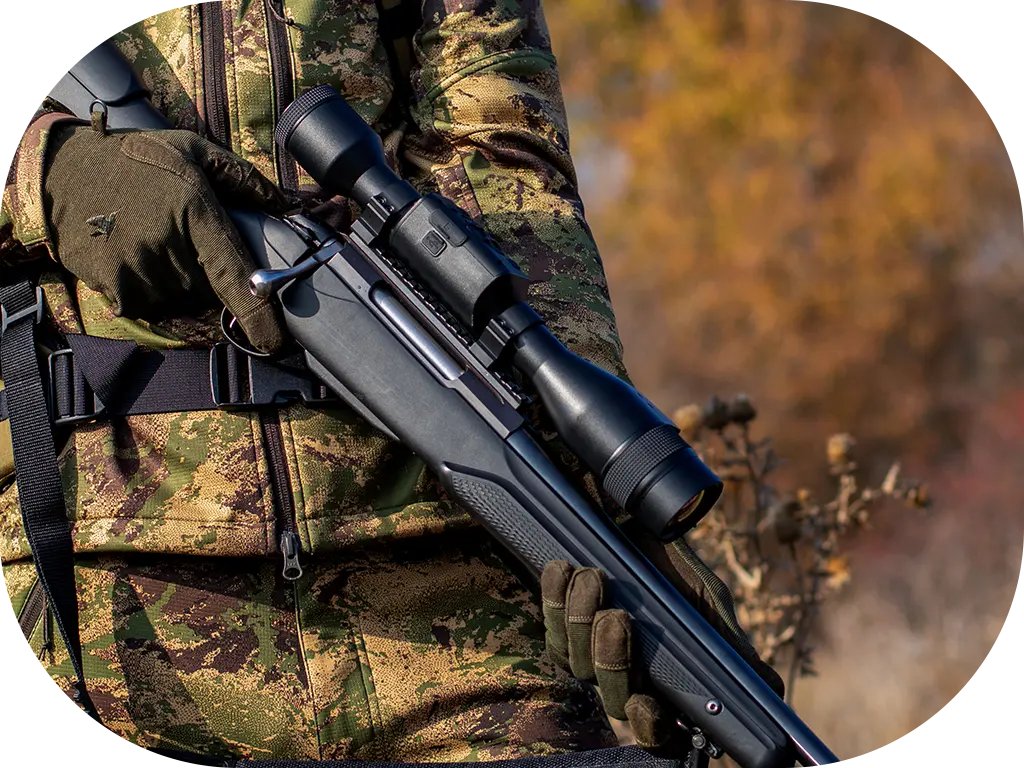
We sorted these by setup style, weighing the specs that matter in the field — sensor resolution, NETD, detection range, magnification band, weight and battery — against how hunters actually run their rigs, from tripod glassing to run-and-gun, and only within ATN's current 6th-gen Binox-6 line. The honest trade-off: the 640 flexes across every setup but costs more, while the 384 is lighter and cheaper for handheld work but yields sensor sharpness at extreme range. 'Cheap' here means the least money for the setup you run, not the flimsiest box. This is an in-house comparison of ATN's own range, not an independent lab test, so weigh it against your own rig. Who neither is for: a hunter who wants a disposable pocket spotter and will not use a rangefinder or long detection in any setup.
Frequently Asked Questions
What is the cheapest good setup for hog hunting binoculars?
A handheld rig with the Binox-6 384x288 5.5-44x. It is the lighter, lower-cost variant, identifies pigs cleanly at moderate range and still carries the 1000 m rangefinder, so it is cheap without being under-equipped.
Does my setup style really change which binocular to buy?
Yes. A tripod glasser can use the 640's full sensor detail at distance, while a handheld moderate-range scanner gets most of the value from the lighter, cheaper 384. Match the variant to the rig you run.
Is the 640 overkill for run-and-gun?
No. Its wide 3x low end actually helps you sweep ground fast on foot, and the sharp sensor keeps pigs legible while moving. It is a strong all-setup pick if the budget allows.
Can I mount these on a tripod?
Yes, both Binox-6 variants work handheld or on a tripod. On a tripod the extra stability lets the 640's sensor resolve pigs at longer range without your own shake softening the image.
Do both have the same rangefinder?
Yes, both carry the same built-in laser rangefinder good to 1000 m, so ranging a sounder is identical whether you run the value 384 or the sharper 640.
How long do they run per night?
About 8 hours each on two 18650 cells, and since the cells swap out, spares cover an all-night sit in any setup.
Do I need a tripod to make thermal binoculars worth it?
No. A truck door, a fence post or a gate rail all work as a rest and cost nothing. That steadies your hands enough to use the high zoom and read pigs at range, so you get most of a tripod's benefit for free. A real tripod just adds convenience for long glassing sits.
What does NETD mean and why should a hog hunter care?
NETD is how small a temperature difference the optic can see, and lower is better. Both Binox-6 variants run at <=15 mK, which is sharp. In the field that means a pig bedded on warm dirt or tucked in cool brush still stands out instead of blending in, so you spot and count the sounder faster.
Know how you run your rig? For a binocular that flexes across every setup, look closer at the ATN Binox-6 Dual 640x512 3-24x, or pick the lighter value 384 for handheld work by comparing both across ATN's thermal binoculars range. Cheap done right means buying the strengths your setup actually uses.
Created: August 5, 2026 · 19:53:42 UTC