Pigs move after dark, and by the time you hear them they have already worked over the food plot. That is why so many hog crews scan first and stalk second. If you want the cheapest thermal binoculars for hog hunting that still show a boar clearly across a soybean field, the honest answer in ATN's current line is the ATN Binox-6 Dual 384. It gets you real thermal reach and a laser rangefinder without paying for the top-tier sensor. This guide walks through where it shines, where the bigger 640 makes sense, and how to pick between them for pig work.
Step up for range: ATN Binox-6 Dual 640 3-24x — a sharper 640 sensor that identifies pigs deeper into the dark.
Bottom line: Start with the 384 unless you regularly need to name the animal at the very far edge of the property.
Why ATN's 6th-gen Binox-6 is the value play for hog scanning
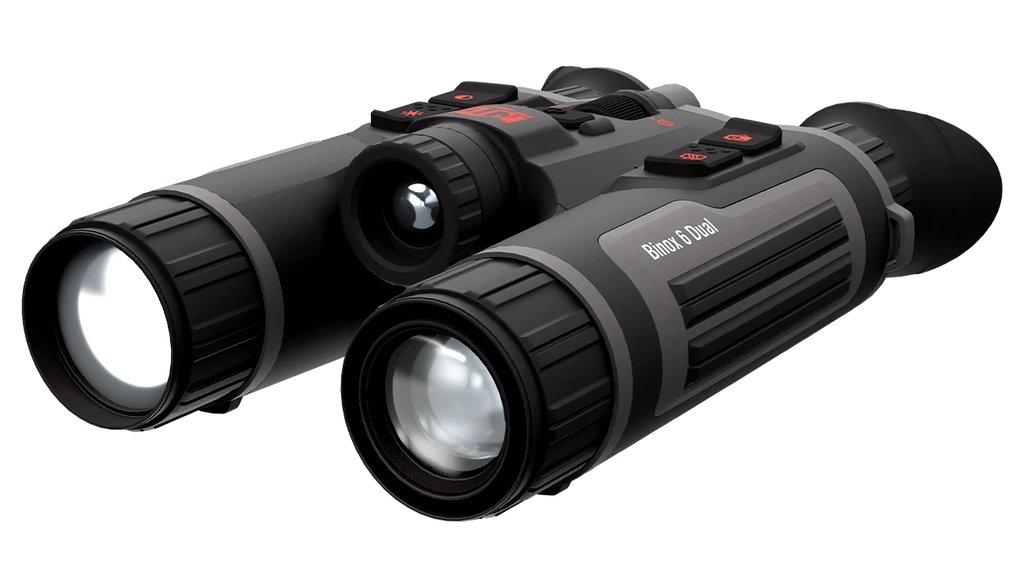
ATN's 6th-generation Binox-6 is a 4-in-1 unit: day, night, twilight, and thermal in one pair of binoculars. For a hog crew that matters, because the same tool you glass a field edge with at dusk keeps working when the sun is gone. Both variants share the same brains — a 50 Hz refresh that keeps a trotting sounder smooth instead of smeared, SharpIR image cleanup, Hot Point Tracking that flags the hottest object in frame, and a built-in laser rangefinder good to 1000 yards. What separates cheap from flagship here is the sensor and the lens. The 384 keeps the price down while still resolving a hog's outline at real hunting distance; the 640 packs more dots into the same picture so you can zoom further before it turns blocky. For most pig hunters who spot-and-stalk, the 384 is plenty of glass for the money.
Two eyes beat one for long scanning sessions
Binoculars matter for hog work because you scan for a long time. When you glass a field edge for twenty minutes, using both eyes is far less tiring than squinting through a single tube, and your brain fuses the two images so the picture feels more natural. That's why a lot of hog crews carry binoculars for the finding job and save the rifle-mounted optic for the shot. The Binox-6 leans into this with a comfortable two-eye view, plus GPS, a compass, and Picture-in-Picture so you can hold a zoomed detail in the corner while keeping the wide scan going. For a cheap pair that you'll actually hold up for a full night, that comfort is worth as much as any spec.
Best value: ATN Binox-6 Dual 384
The ATN Binox-6 Dual 384 is the cheapest Binox-6 that still does everything a hog hunter needs. Its 384x288 thermal sensor with sub-15mK sensitivity reads the small heat difference between a hog and cool dirt even in damp night air, so pigs pop as bright shapes against a dark field. The 2750-meter detection range means you will see heat long before you can tell what it is — plenty for finding a sounder rooting a fence line.
High zoom finds them, the rangefinder confirms them
The 384 leans on magnification, running 5.5x up to 44x. That top end lets you reach across a wide field to check whether that bright blob is a pig or a raccoon before you commit to a stalk. Built into the same housing is a laser rangefinder accurate to about a meter out to 1000 yards, so once you spot a boar you get the exact distance for your shot plan — no guessing, no second tool.
Who it's for and who it isn't
It's for the hunter who wants capable thermal glass without paying flagship money, and who mostly works fields and edges inside a few hundred yards. It's not for someone who needs to positively identify individual pigs at the very back of a large ranch in one look — that job wants the extra dots of the 640.
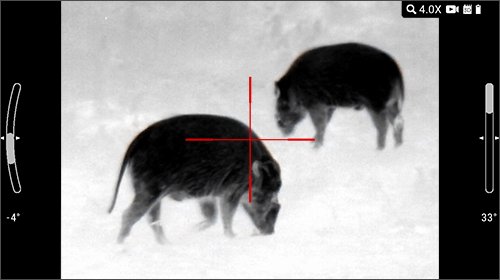
Step up for range: ATN Binox-6 Dual 640
The ATN Binox-6 Dual 640 is the pick when you routinely need to name the animal at distance, not just see that something warm is out there. Its 640x512 sensor holds more detail as you zoom, and its larger objective pushes detection to 3100 meters. On big open ground where hogs bed far off, that extra clarity is the difference between a confident stalk and a wasted walk.
Who it's for and who it isn't
It's for large-property hunters and anyone who wants the sharpest picture ATN's binoculars offer. It sits in the flagship tier, so it costs more than the 384 — if your ground is fields and food plots, the cheaper 384 gets the job done and the 640 is money you don't need to spend.
Palettes and DeFog earn their keep on wet nights
Hog country is often humid, and the Binox-6's six color palettes let you switch to whatever shows a pig best on a given night — White Hot for open contrast, Black Hot when bright hogs wash out, or a color mode to make a warm body jump off cool ground. DeFog mode cleans up the picture when a damp field throws up haze, and the Smart IR illuminator gives the day and night modes a boost in true dark. None of this is fluff for a hog hunter: the whole point of cheap thermal binoculars is to reliably tell 'pig' from 'not pig' in bad conditions, and these tools do exactly that on the value-tier 384.
A real hog scan with the Binox-6 384
Here's how a typical sit plays out. You set up downwind of a food plot at last light and start in the wide 5.5x view, sweeping the field edge slow and steady. A warm blob shows near the fence. You bump the zoom toward the top end to see the outline — long snout, low body, that unmistakable hog shape — and Hot Point Tracking keeps the brightest object flagged as it moves. Once you're sure, you tap the built-in rangefinder and it reads the distance to the meter. Now you know it's a boar at, say, a couple hundred yards, and you've got the number your shooter needs. All of that came from one cheap pair of binoculars, no extra gear, and the pig never knew you were there. That's the workflow the 384 is built for.
How to choose cheap thermal binoculars for hogs
Pick the sensor to your ground and be honest about how far you actually glass. A few things to weigh:
- Sensor resolution — 384 is the value sweet spot for field and edge work; 640 buys clarity at the far end of big ground.
- Detection vs identification — both variants detect heat far off, but the 640 lets you identify what it is sooner. Cheap means detect-and-approach; flagship means name-it-from-here.
- Magnification — the 384's 44x top end reaches out, while the 640's 3x base gives a wider view for scanning a moving sounder.
- Rangefinder — both have the built-in laser rangefinder, so either way you get exact distance before the shot.
- Weight and battery — the two are within an ounce of each other and both run about 8 hours on swappable 18650s, so a full night is covered.
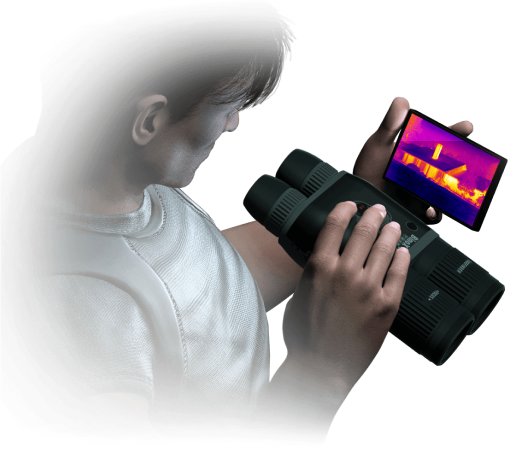
Common mistakes cheap-binocular buyers make
A few things trip people up when they shop the budget end of thermal glass for hogs. Sidestep these and the 384 will feel like more binocular than you paid for:
- Chasing detection numbers — a 2750-meter detection range sounds like you'll shoot that far, but detection just means you see heat. You confirm a hog much closer, and you shoot closer still. Don't overpay for range you'll never use on pigs.
- Ignoring weight for a night sit — you hold binoculars up far more than a scope. The Binox-6's sub-1.6-pound weight matters over hours; a heavier pair gets left in the truck.
- Forgetting spare batteries — even at 8 hours, a cold night drains cells faster. Carry a charged spare set of 18650s so you're not cut short.
- Skipping palette practice — learn to switch between White Hot and Black Hot before the hunt, not during it. The right palette can make a bedded hog obvious instead of easy to miss.
- Buying a monocular to save a few budget — one-eye scanning is tiring over a long sit. For finding pigs, two eyes on the cheap 384 beats a slightly cheaper single tube.
How we picked these ATN thermal binoculars
We judged ATN's current 6th-generation binoculars against one job: finding and confirming hogs after dark without overspending. The criteria were thermal resolution, NETD sensitivity in humid night air, detection range, refresh rate for tracking moving pigs, weight on the neck, and battery life for a full sit. Only the current Binox-6 line was considered — no older or discontinued glass. The honest trade-off is that the cheap 384 detects almost as far as the 640 but identifies at distance a step later, and the 640 costs more for clarity many field hunters never miss. This is an in-house comparison of ATN's own range, not an independent lab test, so check these specs against your own ground and how far you really glass before you buy.
Frequently Asked Questions
Are cheap thermal binoculars good enough for hog hunting?
Yes. The value-tier ATN Binox-6 384 detects hogs out to 2750 meters and its 5.5-44x zoom plus built-in rangefinder is plenty for field and edge hunting. You only need the pricier 640 if you must identify individual pigs at the far edge of large ground.
What is the cheapest ATN thermal binocular for hogs?
In the current 6th-gen line it's the ATN Binox-6 Dual 384. It keeps costs down with a 384x288 sensor while still giving you a laser rangefinder, 50 Hz refresh, and 4-in-1 day/night/twilight/thermal viewing.
What's the difference between the Binox-6 384 and 640?
The 640 has a higher-resolution 640x512 sensor, so it holds detail as you zoom and reaches a bit farther for detection. The 384 relies on higher magnification and costs less, making it the value pick for most hog hunters.
How far can the Binox-6 spot a hog?
Detection range is about 2750 meters on the 384 and 3100 meters on the 640. That is how far you'll pick up heat; you'll be able to confirm it's a hog well before that, sooner on the sharper 640.
Do the Binox-6 binoculars have a rangefinder?
Yes, both the 384 and 640 include a built-in laser rangefinder accurate to about a meter out to 1000 yards. You spot the hog and get an exact distance from the same device before you plan the shot.
Will thermal binoculars work in fog or rain?
They handle damp air well. The sub-15mK sensitivity reads small heat differences even in humid conditions, and DeFog mode helps clean up the picture. Heavy rain and thick fog still shorten range for any thermal device.
How long does the battery last for a night of hog hunting?
Both variants run about 8 hours on dual replaceable 18650 batteries, which covers a full night. Carrying a charged spare set means you never have to cut a hunt short.
Ready to stop guessing and start seeing pigs before they see you? The ATN Binox-6 Dual 384 is the affordable way into serious hog scanning, and if you hunt bigger ground the 640 is a short step up. Compare both, plus the rest of ATN's lineup, on the thermal binoculars page and match the sensor to the way you actually hunt. Get the glass on your neck before the next new moon and let the hogs show themselves.
Created: July 7, 2026 · 14:32:46 UTC