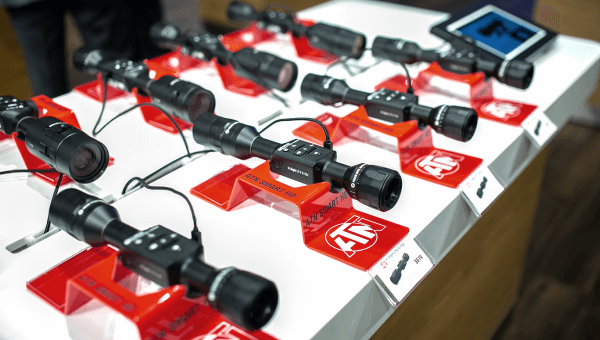
The single question that separates these two scopes is how far your hogs sit when you pull the trigger. Both are current ATN X-Sight 5 digital day/night scopes with the same 4K+ sensor and the same 5-25x magnification, so the choice comes down to one thing: does your shot distance vary enough that you need a built-in rangefinder doing the math for you? This comparison sorts them by range band — the LRF model for hunters whose shots stretch and change, the standard model for those working a more consistent, closer distance.
How the ATN X-Sight 5 LRF 5-25x works
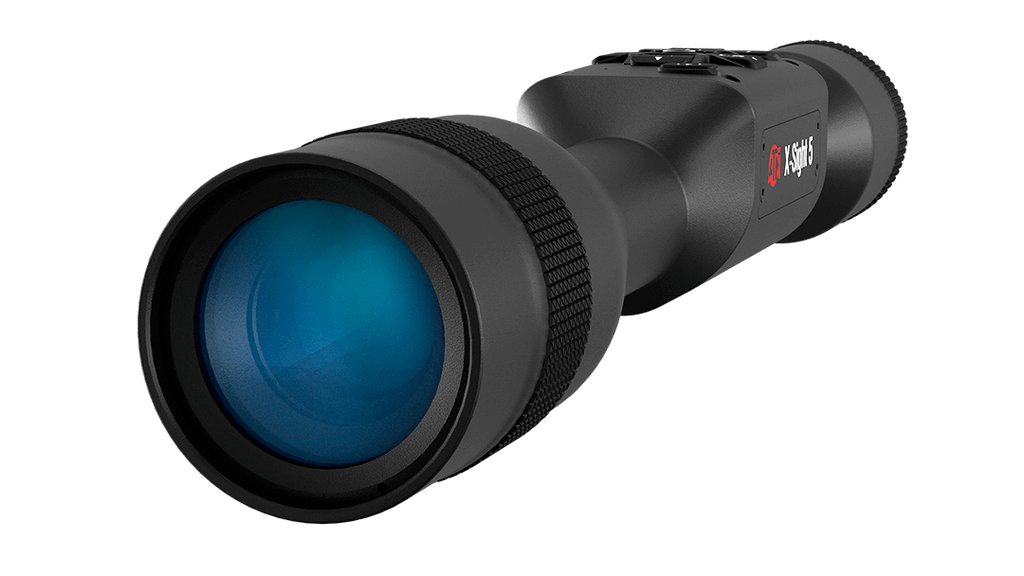
The X-Sight 5 LRF 5-25x works by pairing a digital day/night scope with a built-in laser rangefinder that hands the measured distance straight to the onboard ballistic calculator. You range the hog, the solver factors in the drop for your entered load, and your point of aim is corrected on the spot — no ranging card, no guessing while the pig moves. The 4K+ sensor delivers a huge pixel count, so even zoomed toward the top of the 5-25x band the animal stays detailed enough to read size and shot placement. Enhanced Night Vision Mode plus IR keep that image bright after full dark. On top of the ranging, you get Recoil Activated Video, the Reticle Editor with Smart Mil Dot, Wi-Fi and Bluetooth, and up to 14 hours of battery. At 2.2 lb it is the heavier of the two, the cost of carrying the rangefinder hardware.
How the ATN X-Sight 5 5-25x works
The standard X-Sight 5 5-25x works exactly like the LRF model minus the rangefinder — you supply the distance yourself and let the ballistic calculator correct from there. It runs the same 4K+ sensor and the same 5-25x band, so the picture and the reach are identical; the only missing piece is the automatic ranging. That means when a hog appears, you estimate or pre-range the distance, dial or hold accordingly, and shoot. The same Enhanced Night Vision Mode, RAV, ballistic calculator, slow-motion video, and up to 14-hour battery are all here. At 2.1 lb it is slightly lighter than the LRF, and it steps down a notch in price, so you keep the flagship image and magnification while trimming the hardware you may not need.
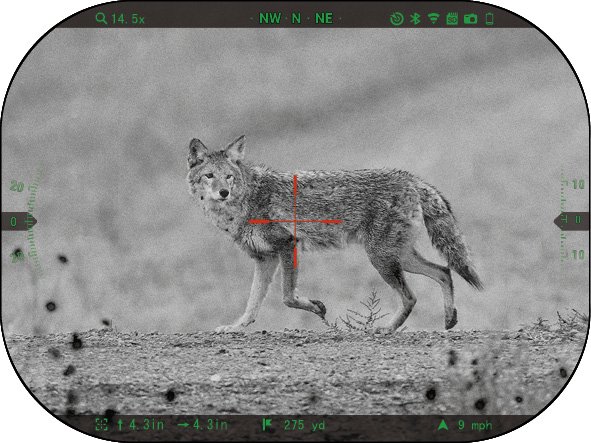
When to choose the ATN X-Sight 5 LRF 5-25x
Choose the LRF model when your shot distance varies and stretches, because that is exactly when built-in ranging stops a miss. On open ground a wary boar might stand at one distance one night and much farther the next, and estimating drop under those conditions in the dark is where errors creep in. With the LRF you range it, the solver corrects, and you break the shot before the pig relocates. If you manage hog pressure across fields and pastures and take longer shots often, the rangefinder pays for its extra ounces and its step up in price every time distance changes on you.
When to choose the ATN X-Sight 5 5-25x
Choose the standard 5-25x when your shots stay short and consistent, because at a known, repeatable distance the rangefinder simply is not doing much work. If you hunt the same feeders or trails where the hogs show up at roughly the same range every time, you can pre-range once and hold with confidence, and the manual approach costs you nothing in the dark. You keep the identical 4K+ image and 5-25x reach, shed a bit of weight, and save money you can put toward IR, mounts or ammunition. For a leaner, more affordable rig where distance rarely surprises you, this is the sensible pick.

Our recommendation
For most hog hunters, we recommend the ATN X-Sight 5 LRF 5-25x. Hogs rarely cooperate by standing at the same distance, and the built-in rangefinder removes the one variable that most often turns a good setup into a clean miss — correcting your aim for drop the instant you range the animal. You give up a little weight and step up slightly in price, but for anyone whose shots vary at all, that buys real confidence in the dark. If your hunting is genuinely fixed to one short, known distance, the standard 5-25x is a fine, lighter, more affordable choice with the same image. Either way you can compare both against the rest of the family in the ATN Smart HD day/night weapon sight lineup to confirm the magnification and weight suit your rifle.
How we compared them
We compared these two head to head on the one axis that actually separates them — shot distance — since they share the same 4K+ sensor, 5-25x magnification, Enhanced Night Vision Mode, battery life and ballistic calculator. Our criteria were night-vision performance after dark, the value of built-in ranging versus manual distance, weight on the rifle, and how each fits a real hog-hunting range band rather than a spec sheet. Only ATN's current 6th-generation X-Sight 5 line was considered, so neither is an older, discontinued model. Honest trade-offs: both are digital day/night optics, not thermal, so they need some ambient or IR light and cannot see a hog fully screened by brush; and the LRF's rangefinder adds weight and cost you will not lean on if your shots never change distance. This is an in-house comparison of ATN's own scopes, not an independent lab test, so measure the ranging benefit against your own typical shot distances before you commit.
Frequently Asked Questions
What is the real difference between the X-Sight 5 LRF 5-25x and the X-Sight 5 5-25x?
The only meaningful difference is the built-in laser rangefinder on the LRF model. It ranges the hog and feeds that distance into the ballistic calculator so your aim is corrected automatically. Both scopes share the same 4K+ sensor, 5-25x magnification, Enhanced Night Vision Mode, battery life and toolset, so the image and reach are identical.
Do I need a rangefinder scope for hog hunting?
Only if your shot distance varies. If hogs show up at changing or longer distances, the X-Sight 5 LRF 5-25x removes drop guesswork by ranging and correcting your aim for you. If you hunt a fixed, known distance like a set feeder, the standard 5-25x lets you pre-range once and hold, so the rangefinder adds little.
Which is cheaper, the LRF or the standard 5-25x?
The standard ATN X-Sight 5 5-25x steps down a notch in price from the LRF model because it leaves out the rangefinder hardware. Both are part of the affordable X-Sight 5 line and carry the same 4K+ sensor, so choosing the standard model saves money without costing you image quality or magnification.
Are these scopes thermal or digital night vision?
Both are digital day/night vision, not thermal. They use a 4K+ sensor with an Enhanced Night Vision Mode and IR to build a detailed, readable image after dark, and they also work as full daytime scopes. A hog appears as a clear animal rather than a heat blob, but they do need some ambient or IR light.
Is the LRF model much heavier?
Only slightly. The LRF 5-25x weighs 2.2 lb versus 2.1 lb for the standard 5-25x, the small penalty for the added rangefinder hardware. On a hog rifle that difference is barely noticeable, especially since these higher-magnification scopes are usually fired off a rest or bipod.
Will the battery last a full night hunt on either scope?
Yes. Both the X-Sight 5 LRF 5-25x and the standard 5-25x run up to 14 hours on their internal Li-ion battery, enough for a full night sit. Heavy IR use, cold weather and constant ranging or recording will shorten that, so carry a backup power source for long outings.
Let your typical shot distance make the call. If hogs show up at ranges that shift from night to night, the ATN X-Sight 5 LRF 5-25x ranges and corrects for you, so you can trust your hold in the dark. If your distance is fixed and known, the standard 5-25x gives you the same 4K+ image for a little less weight and money. Compare both, plus the rest of the line, in the ATN Smart HD day/night weapon sight range, and match the magnification, weight and ranging to the way you actually hunt hogs.
Created: August 5, 2026 · 19:53:42 UTC