Short answer: yes, you can use thermal binoculars for hunting, and once you try it you rarely go back. Thermal binoculars read the heat coming off an animal, so a coyote in tall grass or a hog in a dark tree line lights up even when your eyes see nothing. You use them to find game and to identify it before you ever raise a rifle. The ATN Binox-6 takes that idea further by packing day optics, night vision, thermal, and a laser rangefinder into one two-eyed unit. This guide walks through what these tools do, where they shine, where the rules matter, and how the Binox-6 fits a real night of hunting.
Yes, thermal binoculars are excellent for hunting. They spot heat that the eye and daylight glass miss, so you locate and identify animals in the dark, in brush, and in fog. Use them to scout and confirm the target, then aim with your legal, sighted-in weapon optic. The ATN Binox-6 adds day, night, thermal, and ranging in one two-eye unit.
What does it mean to hunt with thermal binoculars?
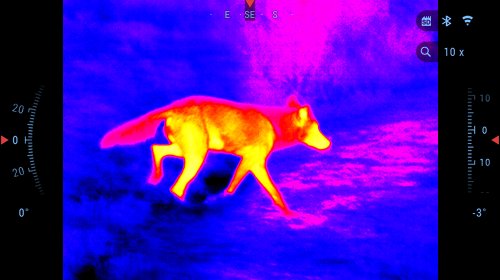
Hunting with thermal binoculars means using a heat-sensing optic to detect and identify game, usually before and between shots, rather than as your aiming device. Every animal gives off heat, and a thermal sensor turns that heat into a bright shape against a cooler background. That is why a bedded coyote or a hog rooting in shadow shows up clearly at distances where regular binoculars show only darkness. You scan a field, pick up a warm blob, zoom in to confirm what it is, and then decide. The binoculars do the finding and the sorting; your weapon optic does the aiming. On the Binox-6 you also get a day channel and a laser rangefinder, so the same unit reads distance and doubles as normal glass in daylight.
How do thermal hunting binoculars work?
- Every warm object radiates infrared energy. A living animal is warmer than the ground, trees, or air around it.
- The germanium objective lens gathers that infrared energy and focuses it onto a thermal sensor. On the Binox-6 the sensor is 640x512, which simply means more dots in the picture, so the animal stays a clean shape as you zoom.
- The sensor turns each point of heat into a brightness value, and the processor builds a live image at a 50 Hz refresh rate, so a running animal looks smooth instead of smeared.
- You pick a color palette. White Hot shows heat as white, Black Hot flips it, and Iron Red paints the hottest spots in warm colors that many hunters find easiest to read.
- You range the animal with the built-in laser rangefinder, confirm the species with a zoom, and make your call.
- Because it reads heat and not light, none of this needs any ambient light at all. Total dark is fine.
What can you use thermal binoculars for on a hunt?
- Scouting a property — sweep fields and edges at last light to see how many animals are moving and where.
- Locating predators — coyotes and hogs are most active after dark, and their heat gives them away long before your ears do.
- Counting and patterning game — watch deer or hogs from a distance without spooking them, night after night.
- Confirming a target — zoom in to tell a legal animal from a non-target before you commit.
- Recovery — a downed animal still holds heat for a while, which helps you find it in thick cover.
- General observation — the Binox-6 also works in daylight through its 4K day channel, so it earns its keep around the clock.
Are thermal binoculars legal for hunting?
It depends entirely on where you hunt and what you hunt, so check your state's rules before you go. Many states allow thermal for non-game species like coyotes and hogs, especially at night, while restricting or banning it for big game such as deer. Some allow detection with thermal but require a conventional or approved optic for the actual shot. Rules also change by season and by public versus private land. The safe habit is simple: read your current state regulations, and if you are unsure, use the thermal for finding and identifying only. That role never gets you in trouble and is exactly where binoculars like the Binox-6 shine.
Key features to understand
- Resolution (640x512) — more dots in the picture, so you can zoom in to confirm a target before the image turns blocky.
- NETD (thermal sensitivity) — a low NETD of 15mK or under means the picture stays clean in humid, foggy, or rainy air, when heat differences get subtle.
- Detection range — how far off you can pick up a heat signature. The Binox-6 reaches out to 3100 m, so you spot movement across big country.
- Refresh rate — 50 Hz keeps moving animals smooth instead of smeared, which matters for running coyotes and hogs.
- Laser rangefinder — a built-in rangefinder gives you the exact distance so you hold correctly for the shot.
- Two eyes vs one — a binocular lets both eyes stay open, which is far more comfortable and steadier over a long night than a single-eye monocular.
What to look for before buying thermal hunting binoculars
- Enough resolution for your ranges — a 640 sensor gives you room to zoom and still identify the animal.
- Good sensitivity for your climate — a low NETD helps in the damp, foggy conditions when game moves.
- Battery that lasts the sit — look for a full night of runtime, ideally with swappable cells so you never go dark.
- Real weatherproofing — an IP67 rating means dew, rain, and a dropped unit in wet grass are not a problem.
- Extra tools that earn their place — a rangefinder, day channel, and recording all reduce the gear you carry.
- Comfort — two-eye viewing you can hold to your face for hours without eye strain.
Common mistakes to avoid
- Skipping the regulations — assuming thermal is legal for your species. Always verify first.
- Using thermal as your aiming device where that is not allowed — keep it in the detection and identification role unless your rules clearly permit more.
- Buying too little resolution — a tiny sensor blurs out just when you need to tell a coyote from a stray dog.
- Ignoring weather sensitivity — cheap sensors wash out in fog exactly when animals are moving.
- Forgetting the batteries — a long night eats power, so carry spares or pick a unit with swappable cells.
- Confusing detection and identification — a warm blob is not a confirmed target. Zoom in and be sure.
Example: the ATN Binox-6 for hunting
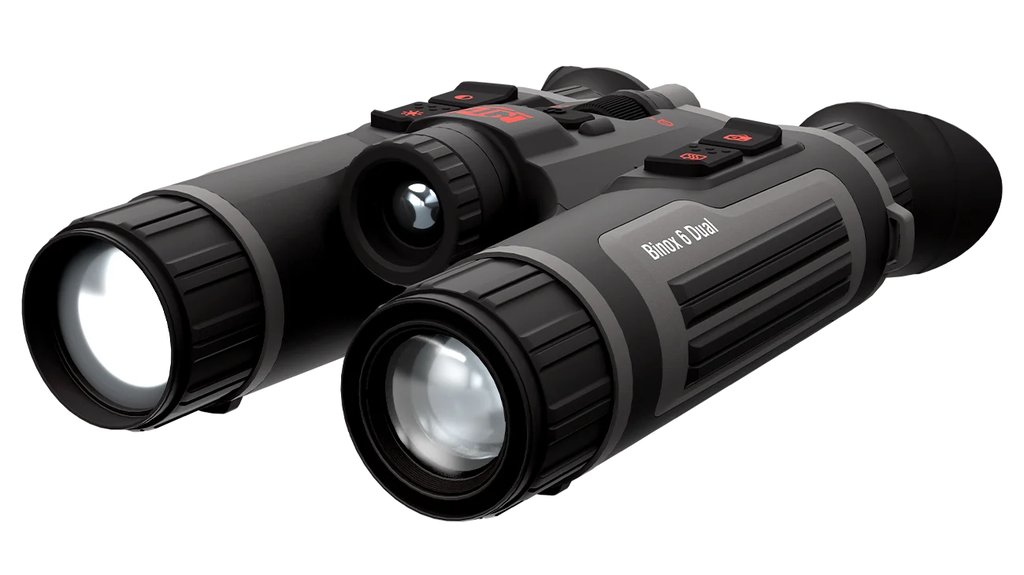
The ATN Binox-6 Dual 640x512 is a strong example of what a hunting binocular should do because it covers a whole night in one unit. The 640x512 thermal sensor with 15mK or lower NETD means clean pictures with room to zoom, even in damp air, and 3-24x magnification lets you scan wide and then reach out to identify. Its 3100 m detection range covers most open-country work, and the 50 Hz refresh keeps runners smooth. The built-in laser rangefinder reads distance to about 1000 yards so your hold is honest, and it is 4-in-1: day, night, thermal, and twilight, with a 4K day sensor for daylight glassing. Dual replaceable 18650 batteries give roughly eight hours and swap in seconds, it is IP67 waterproof, and it records to 64 GB and streams over Wi-Fi through the ATN Connect 6 app. That is a scouting and observation tool that lets you keep both eyes open all night.
Is hunting with thermal binoculars worth it?
For most predator and hog hunters, yes, it is worth it. A good thermal binocular turns a wasted, blind night into a productive one because you see what is actually out there instead of guessing. You spook less game, you confirm targets before you shoot, and you recover downed animals faster. A four-in-one unit like the Binox-6 also replaces a pile of separate tools, so it earns back its place in the pack. If you hunt after dark or work heavy cover, the answer is easy. If you only hunt bright daylight over open ground, a simpler optic may be enough. Browse the full lineup of thermal binoculars to match a unit to how you hunt.
How this guide was put together
This guide is built on ATN's published 6th-generation specifications and real field use, not marketing copy. Every spec is explained in plain terms with its practical meaning for can you use thermal binoculars for hunting, and the honest limits are flagged as clearly as the strengths. The example device is ATN's own current-line model, shown to make the numbers concrete — treat it as an in-house reference, and compare the specs against your own needs before buying.
Frequently Asked Questions
Can you use thermal binoculars for hunting at night?
Yes, and night is where they shine. Thermal reads heat, not light, so total darkness is no problem. You can find and identify animals in the dark long before you could with the naked eye or regular binoculars.
Are thermal binoculars legal for hunting?
It depends on your state and the species. Many states allow thermal for coyotes and hogs, especially at night, while restricting it for big game like deer. Always check your current local regulations before you hunt, and when in doubt use thermal only for detection and identification.
Can thermal binoculars see through brush and grass?
They see the heat that leaks through gaps in cover, so a warm animal in light brush usually shows up as a glowing shape. They cannot see through solid objects like a tree trunk or a hill, and dense foliage will block part of the signature.
Do thermal binoculars work in fog and rain?
They work better than the naked eye, but heavy moisture reduces range. A sensor with low NETD, like the 15mK or lower rating on the Binox-6, holds a cleaner picture in humid and foggy air than a less sensitive unit.
What is the difference between thermal binoculars and a thermal scope?
Binoculars are a handheld tool for finding and identifying game with both eyes open, and they never mount on your rifle. A thermal scope is your aiming device and mounts on the gun. Many hunters carry binoculars to scan and a scope to shoot.
Why choose the ATN Binox-6 for hunting?
It combines day optics, night vision, thermal, and a laser rangefinder in one two-eye unit, with a 640x512 sensor for clean, zoomable images and about eight hours of swappable battery life. That covers scouting, identifying, and ranging around the clock without carrying separate tools.
Quick reference specsQuick reference — ATN Binox-6 Dual 640x512 3-24x: 640x512 sensor; <=15mK NETD; 3-24x (up to 8x digital zoom); 3100m detection; ~8 hours battery. Best for day-to-night scouting and long-range observation.
Ready to stop hunting blind? The ATN Binox-6 gives you day, night, thermal, and a laser rangefinder in one comfortable two-eye unit, so you can scout, identify, and range through an entire night without swapping gear. Whether you are running coyotes off a pasture or patterning hogs in the timber, it lets you see heat where your eyes see nothing. Compare it against the rest of the thermal binoculars lineup and pick the sensor and reach that match your ground. Your next night hunt starts with seeing what is really out there.
Created: July 7, 2026 · 08:31:01 UTC