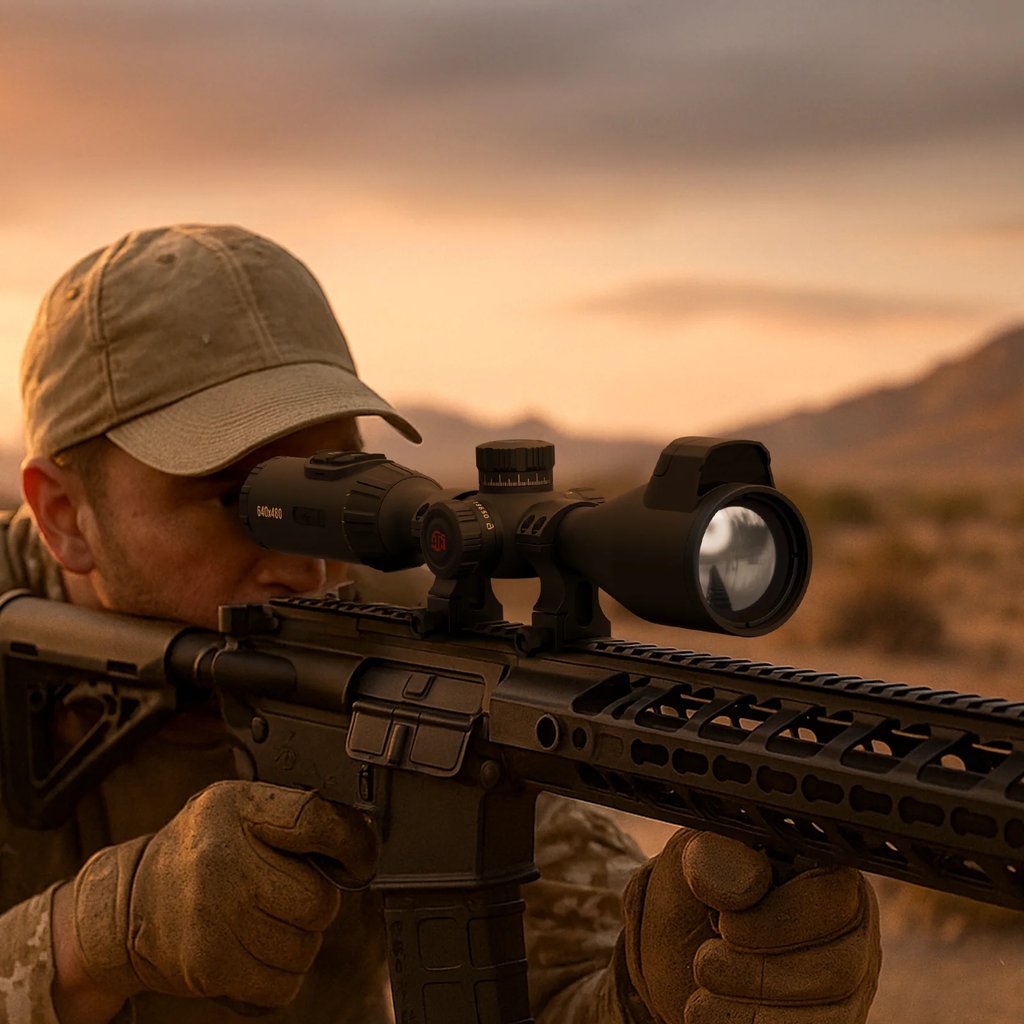
Yes, you can use a thermal scope during the day, and it will keep working the same way it does at night — because it's reading heat, not light, sunlight doesn't blind the sensor or wash out the image the way it would with an image-intensified night vision device. What changes in daylight isn't the scope's ability to form an image; it's the thermal contrast in the scene itself, and that's a function of the atmosphere, not the optic. The ATN ThOR 6 384 2.5-20x (TIWST6325A) is built around a 384×288 sensor with ≤15mK thermal sensitivity, and that sensitivity is what determines how well it holds a usable picture once the sun starts working against you.
What Actually Changes About Thermal Imaging in Daylight
A thermal sensor detects the heat objects radiate, and it does this identically whether the sun is up or down — there's no shutter to overwhelm and no light-gathering process to saturate. What changes is the background: at night, the ground, rocks, and foliage cool down and hold a stable, lower temperature, so a warm-blooded animal stands out sharply against that cooler backdrop. During the day, direct sun heats the same surfaces unevenly, and by afternoon much of the terrain radiates heat close to body temperature. That narrows the gap a thermal scope relies on for contrast. The ThOR 6 384 2.5-20x's ≤15mK NETD rating means it can still resolve very small temperature differences — down to about 0.015°C — but a smaller starting gap is still a smaller gap, no matter how sensitive the sensor is.
How Heat, Humidity, and Sun-Warmed Ground Affect Detection
Three atmospheric conditions do most of the damage to daytime thermal contrast.
- Solar loading on the ground. Direct sun heats exposed dirt, rock, and pavement well above ambient air temperature, and that heat radiates back up into the scene. A deer bedded in a sunlit field can end up close to the same apparent temperature as the ground beneath it, which erases the outline a thermal sensor depends on.
- Humidity and water vapor. Water in the air absorbs and scatters long-wave infrared radiation before it reaches the sensor, so a humid afternoon reduces effective range and softens edges compared to dry air at the same temperature.
- Rain and moisture on surfaces. Wet fur, wet ground, and standing water all conduct and evaporate heat differently than dry surfaces, which can either mute a target's signature or create confusing hot and cold patches across the same animal or field.
None of these conditions disable the scope. They shrink the temperature delta contrast is built from — a high-sensitivity sensor like the ThOR 6 384's makes the most of whatever delta is left, but it can't manufacture a gap the atmosphere has closed.
What You Can Use a Daytime Thermal Scope For
Daytime thermal use falls into a few practical categories. Scouting and pest detection still work in bad thermal conditions, since a moving animal against a static background creates a signature even when a stationary one might blend in. Sighting in and function-checking a scope is often more convenient in daylight than after dark, since the heated zeroing target that ships with the ThOR 6 line gives a clean thermal cross-hair even under full sun. Early morning and late afternoon hunts sit in a middle zone — the ground hasn't fully loaded with solar heat yet, so contrast is closer to nighttime performance. Legal hunting hours vary by state and species, so daytime thermal capability doesn't change what's legal to hunt when — it changes what the scope shows you during whatever hours you're legally in the field.
Which Color Palette Wins in Each Condition
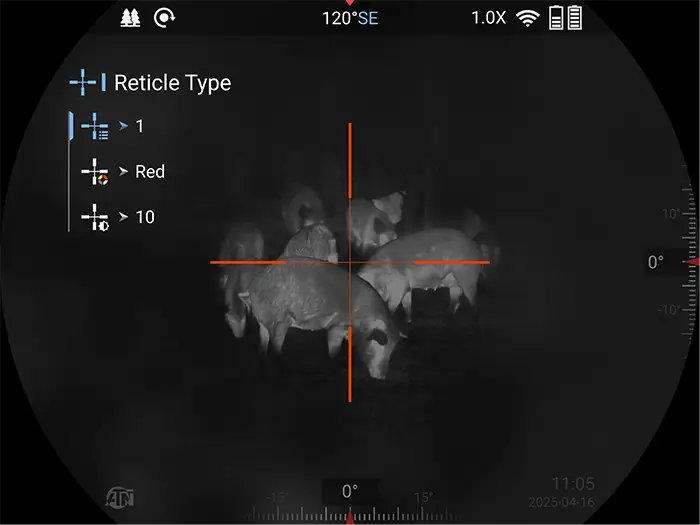
The ThOR 6 384 2.5-20x ships with White Hot, Black Hot, Iron Red, Alarm, Green Hot, and Sepia palettes, and picking the right one matters more in daylight than at night because you're working with less contrast to begin with.
- White Hot or Black Hot for sun-loaded terrain. A high-contrast monochrome palette makes it easier to separate a slightly-warmer or slightly-cooler outline from a busy background, since your eye isn't also parsing hue shifts.
- Iron Red for humid, hazy conditions. The graduated color ramp can pull out subtle mid-range temperature steps that a black-and-white palette compresses together, which helps once humidity has softened available contrast.
- Alarm palette for scanning moving subjects. Alarm mode highlights the hottest points in a contrasting color against a muted background, useful for picking a moving animal out of a field sitting at a similar baseline temperature after hours of sun.
- Green Hot for extended glassing sessions. Green is easier on the eyes over a long scanning session, which matters on a slow daytime sit watching a tree line for movement.
Switching palettes costs nothing and takes a button press, so cycling through two or three options on a tough daytime background is normal, not a sign anything is malfunctioning.
Key Features That Help in Difficult Daylight Conditions
- ≤15mK NETD. This is the sensor's ability to distinguish tiny temperature differences from each other; a lower NETD number means it can still separate a target from a background even when solar loading has closed most of the gap.
- SharpIR image processing. ATN's SharpIR sharpens edges and detail in real time, helping recover definition on a 384×288 sensor when raw thermal contrast is already reduced by heat and humidity.
- Six selectable color palettes. White Hot, Black Hot, Iron Red, Alarm, Green Hot, and Sepia let you match the palette to the specific way a scene is washing out.
- 2.5-20× magnification with digital zoom. Zooming in tighter on a low-contrast shape helps confirm what you're looking at when the outline alone isn't decisive at a distance.
- 2300 m detection range. That rating reflects favorable conditions; daytime heat and humidity reduce effective detection distance below the rated figure, worth planning around rather than expecting.
What to Look For Before Buying a Scope for Daytime Use
If you expect regular daylight use — scouting, pest work, or sighting-in — prioritize NETD sensitivity over raw resolution, since sensitivity preserves a usable image once atmospheric contrast drops. A 384×288 sensor at ≤15mK NETD, like the ThOR 6 384 2.5-20x, can outperform a higher-resolution sensor with worse sensitivity in washed-out conditions. Also check that the palette selection goes beyond White Hot and Black Hot, since color options like Iron Red give you a second tool when monochrome contrast alone isn't enough. If daytime zeroing is part of your plan, confirm a heated zeroing target is included, since a passive paper target may not read clearly under full sun.
Common Mistakes When Using Thermal in Daylight
The most common mistake is assuming a lack of contrast means the scope is broken — in most cases it's the atmosphere, and switching palettes or waiting for a lower-sun angle resolves it. A second mistake is glassing across sun-heated pavement or open dirt at midday and expecting the same detection range as shaded grass or timber, since those surfaces load with heat fastest and hold it longest. A third is ignoring humidity entirely — two days at the same air temperature can perform very differently for thermal contrast if one is dry and one is humid.
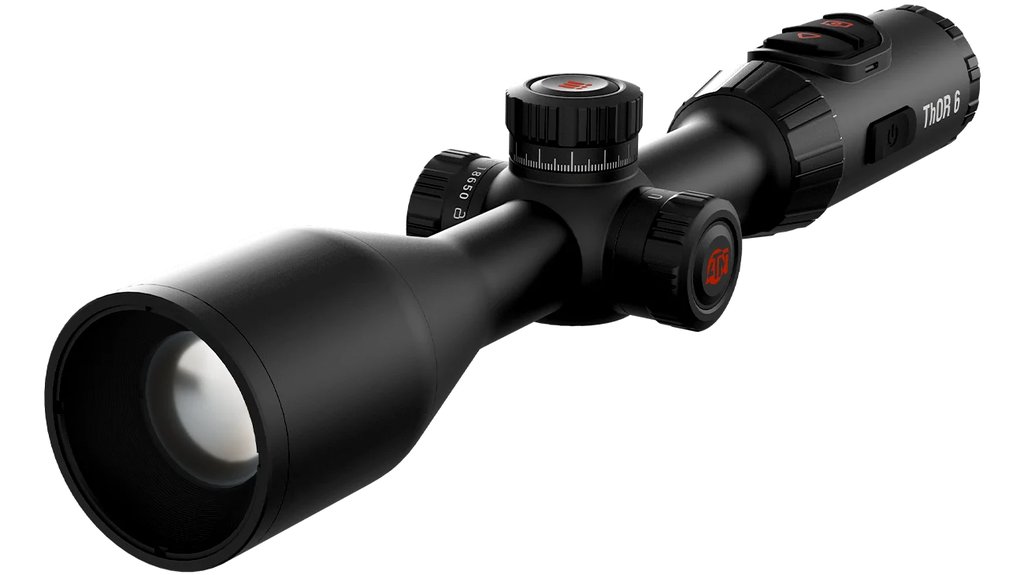
Featured Product: ATN ThOR 6 384 2.5-20x
The ThOR 6 384 2.5-20x (TIWST6325A) pairs a 384×288 12μm VOx sensor with ≤15mK NETD and a 25mm germanium lens, giving a 10.53° × 7.91° field of view at 2.5-20× optical magnification with digital zoom steps on top. Detection range is rated at 2300 m, the 0.49" OLED display runs at 1920×1080, and Zeroing Freeze pauses the image at the moment of impact for precise reticle adjustments. It runs on two swappable 18650 batteries for roughly 9 hours, weighs 790 g / 1.74 lbs, and carries an IP67 rating with a 6000-joule recoil rating. Price is $2,195.00 ($1,995.00 promo).
Is a Thermal Scope Worth It for Daytime Use?
If your use case includes any daytime work — scouting, sighting-in, pest detection, or hunts near legal shooting light — a thermal scope earns its keep, it just performs differently than after dark. If your only use case is a single midday session over sun-baked open ground with night-level contrast expectations, temper that; the physics of solar loading applies regardless of which thermal scope you're holding. For anyone splitting time between day and night use, sensitivity and palette flexibility matter more than any other spec.
FAQ
Can you use a thermal scope during the day?
Yes, a thermal scope works during the day the same way it does at night, since it reads heat rather than visible light. Daylight can reduce image contrast because sun-warmed ground narrows the temperature gap between a target and its background, but the scope itself keeps functioning normally.
Can you hunt with a thermal scope during the day?
Yes, as long as it's during your state's legal hunting hours for that species, a thermal scope can be used the same as any other optic. Detection performance may be reduced on hot, sun-loaded ground compared to a cooler night session, so palette choice and timing matter more.
Can you sight in a thermal scope during the day?
Yes, and it's often more convenient than zeroing at night. A heated zeroing target, like the one included with ThOR 6 scopes, is designed to produce a clear thermal signature regardless of ambient daylight or sun angle.
Does rain affect a thermal scope's daytime performance?
Rain can reduce contrast by changing how quickly wet surfaces lose heat compared to dry ones, sometimes muting a target's signature or creating uneven hot and cold patches. The scope still functions in rain, IP67-rated models like the ThOR 6 384 are built for wet conditions, but detection range may be shorter than on a dry day.
Why does my thermal scope look washed out at midday?
Midday sun heats the ground, rocks, and vegetation unevenly, which narrows the temperature difference between a target and its surroundings. Switching to a different color palette, such as Iron Red instead of White Hot, often recovers usable contrast without any change to the scope itself.
Is a higher-resolution thermal scope automatically better for daytime use?
No, thermal sensitivity (NETD) matters more than resolution for holding contrast in tough daylight conditions. A 384×288 sensor with ≤15mK NETD can outperform a higher-resolution sensor with worse sensitivity once solar heating has closed most of the natural temperature gap.
See How the ThOR 6 384 Handles Daylight Conditions
Daytime performance comes down to sensitivity and palette flexibility working together against whatever the atmosphere gives you that day. Explore the full ThOR HD thermal scope lineup to compare NETD ratings across models, or read our complete buyer's guide to thermal scopes for hunting for help matching a sensor to your terrain and schedule.
Quick Spec Reference: ATN ThOR 6 384 2.5-20x
| Spec | Value |
|---|---|
| Sensor Resolution | 384×288, 12μm VOx |
| Thermal Sensitivity (NETD) | ≤15mK |
| Magnification | 2.5-20× optical, 1/2/4/8× digital |
| Lens | 25mm germanium, F/1.0 |
| Detection Range | 2300 m |
| Display | 0.49" OLED, 1920×1080 |
| Battery Life | ~9 hrs (2× 18650) |
| Weight | 790 g / 1.74 lbs |
| Rating | IP67, 6000 J recoil |
| Price | $2,195.00 ($1,995.00 promo) |