Short answer: yes, and it is one of the most effective setups in the field. You use a thermal monocular in your hand to scan wide and find warm animals fast, then you shoulder the rifle and take the shot through your scope. The monocular does the finding; the scope does the aiming. This handheld-plus-mounted pairing is how a lot of experienced night hunters actually work, because sweeping the dark with a light, wide-view scanner is far quicker and safer than sweeping it with a rifle. The ATN BlazeTrek 6 is built for exactly this spotting role. This guide walks through how the workflow runs, the ways you can pair the two optics, the mistakes to avoid, and how the BlazeTrek 6 fits in.
What does it mean to use a thermal monocular with a scope?
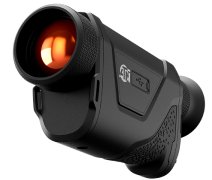
Using a thermal monocular with a scope means running two optics as a team: a handheld thermal in one hand for detection, and your rifle scope for the actual shot. The monocular is not mounted on the gun; you hold it, sweep the terrain, and pick up the heat of an animal that your eyes and a normal scope would miss in the dark. Once you have found the target and confirmed it is what you think it is, you set the monocular aside and bring the rifle up to aim through the scope. The core idea is division of labor: a small, wide-view scanner covers ground quickly, while the scope stays dedicated to precise aiming. The BlazeTrek 6, at about 0.7 lb with a wide field of view, is designed for that scanning half of the job.
How does the spot-then-shoot workflow work?
- Hold the thermal monocular and slowly sweep the field, treeline, or trail. Its wide 22.8-degree view covers a lot of ground per pass, so warm animals show up quickly as bright shapes.
- When you catch heat, zoom in with the monocular to identify the animal and confirm it is a legal, safe target and not livestock, a pet, or a person.
- Note its location relative to a landmark (a fence post, a lone tree) so you can find it again with the naked eye or through the scope.
- Lower the monocular, get into a stable shooting position, and shoulder the rifle.
- Acquire the same spot through your scope. If your scope is a day scope, you will need enough light or an aiming method that works in the dark; if it is a thermal or night scope, the animal will show directly.
- Confirm the target once more through the scope, then take the shot. Re-scan with the monocular afterward to check for other animals or to locate the downed one by its heat.
The whole cycle is fast once practiced: scan, confirm, transition, shoot. The monocular keeps your rifle pointed in a safe direction while you search, which is the biggest reason not to scan with the gun.
What ways can you pair a monocular with a scope?
- Handheld scanner plus day scope — the simplest pairing: find the animal with the thermal monocular, then aim through a standard scope at dawn, dusk, or with legal artificial light. Best when there is some light to shoot by.
- Handheld scanner plus thermal or night scope — the monocular finds the animal fast over a wide area, then you switch to a thermal or digital night scope that also shows the heat or amplified image for the shot. This is the most capable all-dark setup.
- Spotter plus shooter (two-person) — one person scans and directs with the monocular while the other stays on the rifle and scope. Common on organized hog and predator hunts.
- Scan-and-recover — even with any scope, the monocular earns its keep after the shot by finding a downed animal's heat in cover, which saves long searches.
Is a monocular-and-scope combo better than a single mounted optic?
It depends on how you hunt, and for many people the combo wins. A single thermal scope does everything through one device, but scanning the dark with a rifle means constantly pointing the muzzle wherever you look, which is slower and less safe. A separate handheld monocular lets you search freely with a light, wide optic while the rifle stays holstered or slung and safe, then commit to the scope only when you have a confirmed target. The trade-off is a second device to carry and the moment of transition from monocular to scope. If you already own a good day or night scope, adding a thermal monocular like the BlazeTrek 6 is often the most affordable way to gain thermal detection without replacing your whole rifle optic.
Key features that make a monocular good for this role
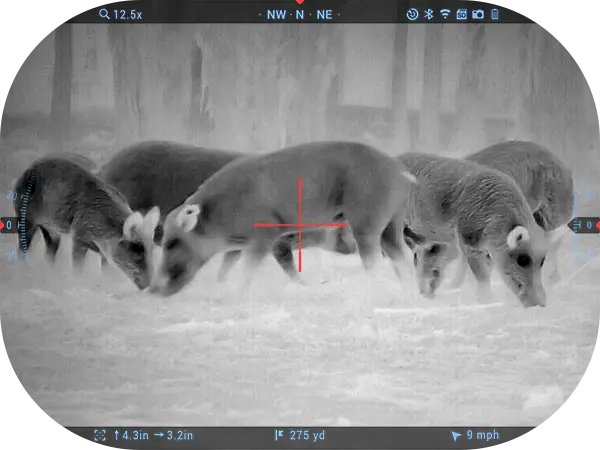
- Wide field of view — a big 22.8-degree window lets you sweep terrain fast and catch movement, which is the whole job of the scanning optic.
- Light weight — at about 0.7 lb the BlazeTrek 6 is easy to hold one-handed and quick to raise and lower during the transition to the rifle.
- Good resolution — a 640x512 sensor means more dots in the picture, so you can identify the animal before you ever touch the rifle.
- Fast refresh rate — a 50 Hz refresh keeps a moving animal smooth so you can track it while deciding on the shot.
- Quick zoom — 1.5-12x magnification lets you go from a wide scan to a closer confirmation without swapping devices.
- Instant on and simple controls — you want to raise it, see heat, and lower it fast; a fiddly menu costs you the shot.
What to look for before buying a scanning monocular
- A wide view over extreme zoom — for scanning, coverage beats reach; a narrow high-magnification unit is slow to search with.
- Enough resolution to identify — you must confirm the target with the monocular before transitioning, so 640x512 helps you avoid a bad call.
- Comfort and weight — you will hold it a lot; lighter is better for steady one-handed use.
- Battery that lasts the outing — about 6.5 hours covers a normal night, and USB-C charging keeps it simple.
- Durable, waterproof build — IP67 rating so weather does not end the hunt.
- Recording, if you want it — video and photo capture lets you review or share the scan.
Common mistakes when pairing a monocular and scope
- Scanning with the rifle instead of the monocular — this defeats the safety benefit; keep the muzzle safe and search with the handheld.
- Not marking the target's spot — losing the animal during the transition is common; note a landmark before you lower the monocular.
- Skipping target confirmation — always identify the animal through the monocular, and again through the scope, before shooting.
- Expecting a day scope to see heat — a monocular finds warm targets, but a plain day scope still needs light to aim; plan your scope choice accordingly.
- Buying a high-zoom, narrow-view monocular for scanning — it makes searching slow; pick the wide-view unit for this role.
- Fumbling the controls in the dark — practice the raise-scan-lower motion so the transition is smooth on a live animal.
Example: the ATN BlazeTrek 6 as your scanner
The ATN BlazeTrek 6 640x512 1.5-12x is a clean worked example of the scanning half of this setup. It weighs about 0.7 lb, so raising and lowering it during the transition to your rifle is effortless. Its wide 22.8 by 18.3 degree field of view is built for sweeping terrain fast, and the 640x512 sensor gives you the dots to identify an animal before you ever shoulder the gun. Magnification runs 1.5-12x with up to 8x digital zoom, so you scan wide, then zoom to confirm without switching devices. A 50 Hz refresh keeps a moving coyote or hog smooth, SharpIR AI enhancement sharpens the picture, and six color palettes help you pull detail in any conditions. It records video and photos, runs about 6.5 hours on an internal rechargeable battery over USB-C, and carries an IP67 waterproof rating. Paired with your existing scope, it turns your rifle into the dedicated shooter while it does the fast, safe finding. It sits in the mid tier of ATN's thermal monoculars range.
Is a thermal monocular worth adding to your scope setup?
If you hunt in low light or the dark and already own a scope you like, adding a thermal monocular is often the most sensible upgrade you can make. It gives you fast, safe detection without replacing your rifle optic, and it keeps earning its place after the shot by finding downed animals in cover. The main reasons not to are simple: if you never hunt in the dark, or if you would rather have a single all-in-one thermal scope and do not mind scanning with the rifle, a standalone optic may suit you better. But for the many hunters who want to search freely with a light optic and shoot precisely through a dedicated scope, a wide-view handheld like the BlazeTrek 6 is well worth it.
How this guide was put together
This explainer is an in-house look at ATN's own current 6th-generation lineup, not an independent lab test. We built it around the real question hunters ask about pairing optics, then judged the BlazeTrek 6 against the specs that matter for the scanning role: field of view, sensor resolution, NETD (thermal sensitivity), refresh rate, weight, and battery, all against the practical needs of spot-then-shoot hunting. Only the current 6th-gen line is considered; older discontinued models are left out. Honest trade-off: running two optics means carrying a second device and practicing the transition from monocular to scope, and the BlazeTrek 6 is a finder, not a shooter, so it does not replace your scope. Who it is not for: a hunter who only ever hunts in good light, or who prefers a single all-in-one thermal scope and is comfortable scanning with the rifle. We would encourage you to weigh these specs against how and where you actually hunt.
Frequently Asked Questions
Can you use a thermal monocular with a scope?
Yes. The common method is spot-then-shoot: you scan and find warm animals with a handheld thermal monocular, then aim and shoot through your rifle scope. The monocular is the finder and the scope is the shooter. It is faster and safer than searching the dark with a mounted optic.
Do you mount the monocular on the rifle?
No, in this workflow the monocular stays in your hand as a scanner, not on the gun. You hold it to sweep the terrain, confirm the target, then set it aside and shoulder the rifle to aim through the scope. Keeping it handheld is what lets your muzzle stay safely pointed while you search.
Will a thermal monocular work with a regular day scope?
Yes, for finding the animal. The monocular locates warm targets in the dark, but a plain day scope still needs some light to aim by, so this pairing works best at dawn, dusk, or with legal artificial light. For all-dark shooting, pair the monocular with a thermal or night scope.
Is a monocular-and-scope setup better than one thermal scope?
It depends on how you hunt. The combo lets you scan freely with a light optic while the rifle stays safe, then commit to the scope only on a confirmed target. A single thermal scope is simpler but means scanning with the gun. If you already own a scope, adding a monocular is often the more affordable path to thermal detection.
What makes the BlazeTrek 6 good for scanning?
It is light at about 0.7 lb, has a wide 22.8-degree field of view for fast sweeping, and uses a 640x512 sensor so you can identify animals before shouldering the rifle. A 50 Hz refresh keeps moving animals smooth, and quick 1.5-12x zoom lets you confirm a target without switching devices.
How do I avoid losing the animal when I switch to the scope?
Before you lower the monocular, note the target's position against a fixed landmark like a fence post or a lone tree. That reference lets you re-find the same spot through your scope quickly. Practicing the raise-scan-lower-and-shoulder motion also makes the transition smooth on a live animal.
Can I use the monocular to find a downed animal after the shot?
Yes, and it is one of the best uses. After the shot, re-scan the area with the monocular and the animal's body heat shows up against cooler surroundings, so you can recover game in thick cover far faster than searching by flashlight.
Sensor: 640x512, 18mK NETD
Field of view: wide 22.8 x 18.3 degrees
Magnification: 1.5-12x, up to 8x digital zoom
Detection range: about 1,000m
Refresh rate: 50 Hz
Weight: about 320 g / 0.7 lb
Battery: internal rechargeable, about 6.5 hours, USB-C
Build: IP67 waterproof, video and photo recording
Turn your rifle into the shooter and let a scanner do the finding. The ATN BlazeTrek 6 is a light 0.7 lb handheld with a wide 22.8-degree view and a sharp 640x512 sensor, built to sweep the dark, confirm a target, and hand off to your scope for the shot. It also finds downed animals in cover afterward. Explore the full range of ATN thermal monoculars and add fast, safe thermal detection to the scope you already trust.
Created: July 7, 2026 · 11:11:27 UTC