You've probably heard thermal called a night tool, so it's fair to wonder whether it's any use once the sun is up. The short version: yes, you can, and in a lot of situations it works better in daylight than you'd expect. Thermal doesn't read light — it reads heat — so noon or midnight makes little difference to whether it spots a warm animal. What changes in daylight is how much heat the sun pumps into rocks, dirt, and brush, which is the real thing to understand. This guide walks through how daytime thermal actually works, when it shines, when a plain day scope still wins, and why the ATN ThOR 6 640x512 2-16x is built to handle both ends of the clock.
Can you hunt with a thermal scope during the day?
Yes — a thermal scope works perfectly well in daylight because it senses heat rather than visible light. A living animal is warmer than most of its surroundings, and that heat difference is what the sensor draws, whether it's high noon or the middle of the night. Where a day scope needs light to show you anything, a thermal scope shows a warm body glowing against a cooler background even when that body is tucked into shade or standing behind grass your eyes would skip right over. The one thing daylight changes is the background: the sun warms the ground and vegetation, so the contrast between animal and surroundings can shrink during the hottest part of the day. It doesn't stop you hunting — it just means the picture is cleanest in the cooler hours.
How does daytime thermal work?
- The scope's sensor reads infrared energy — heat — coming off everything in view, not reflected sunlight.
- It maps temperature differences into an image, so a warm animal stands out against cooler ground, brush, or shade.
- SharpIR AI image enhancement on the ATN ThOR 6 sharpens edges and cleans up the picture, which helps most when daytime contrast is low.
- You pick a color palette — White Hot, Black Hot, or Iron Red — that best separates the animal from a sun-warmed background.
- A 50 Hz refresh keeps a moving animal smooth as you track it across a field in daylight, the same as it does at night.
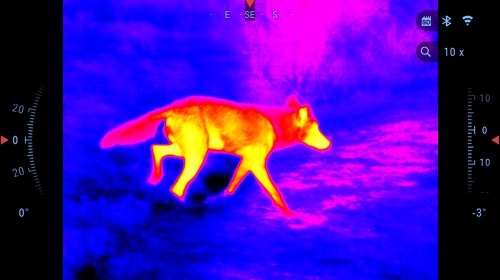
The key mental shift is that daylight adds heat to the whole scene, not just the animal. At night, the ground has cooled and a warm body stands out like a lightbulb. During the day, the sun has been loading energy into rocks, bare dirt, tree bark, and dry grass, so the background is warmer and closer to the animal's temperature. The sensor still sees the difference — it just has less contrast to work with. That's why the same coyote that pops instantly at midnight can look softer at 2 p.m., and why palette choice and a sensitive sensor matter more once the sun is up. Understand that and daytime thermal stops surprising you.
What can you use a thermal scope for in daylight?
- Spotting animals in shade or brush — a hog bedded under a cedar or a coyote in tall grass glows on thermal while your eyes see nothing.
- Cutting through camouflage cover — heat ignores the pattern of leaves and shadow that hides an animal from a day scope.
- Locating downed game and blood-trailing help — a warm carcass or a wounded animal holding heat is easier to find after the shot.
- Predator control on cloudy or dawn hunts — overcast days keep the background cool, giving thermal its cleanest daytime contrast.
- Ranch and property scanning — checking a tree line for bedded pigs at first light without alerting them.
Daytime thermal versus a day scope: which sees better?
In bright, open, midday conditions a traditional day scope gives you more true detail — real colors, fine features, and a crisp view of exactly what you're looking at. Thermal wins the moment an animal is hidden: shade, brush, tall grass, or a shadowed tree line where a day scope shows an empty field but thermal shows a glowing body. So the honest answer is that they're complementary. Thermal is the better detector in daylight; a day scope is often the better identifier once you can see clearly. Many hunters scan with thermal, then confirm and shoot — which is one reason the ThOR 6 keeps its full-HD display and multiple palettes on hand around the clock. Think of thermal as the tool that answers 'is there anything out there?' and a day scope as the tool that answers 'exactly what is it?'. In cover, the first question is the one that keeps beating a hunter, and daylight thermal answers it in a single sweep across a field that looks empty to the naked eye.
Key features to understand for daytime use
- NETD (thermal sensitivity) — the ThOR 6's <=15mK NETD means it resolves small heat differences, which matters most in daylight when the background is warm and contrast is low.
- Color palettes — six of them; Black Hot or Iron Red often separates an animal from sun-warmed ground better than White Hot at midday.
- SharpIR AI enhancement — sharpens the image so a low-contrast daytime scene stays readable.
- Resolution — 640x512 packs more dots into the picture, so you can zoom in on a distant shaded animal before it turns blocky.
- Refresh rate — 50 Hz keeps daytime tracking of running animals smooth, not smeared.
Common mistakes when hunting thermal in daylight
- Hunting the hottest hours and blaming the scope — midday sun flattens contrast; hunt dawn, dusk, or overcast for the sharpest daytime picture.
- Leaving it on White Hot all day — switch to Black Hot or Iron Red when the background heats up to keep the animal standing out.
- Expecting fine visual ID at distance — thermal detects heat, so use it to find the animal, then confirm before any shot.
- Pointing it at the sun — never aim a thermal sensor directly at the sun, which can damage it; that's a hard rule day or night.
- Forgetting it still needs a legal, ethical shot — daylight thermal makes spotting easy, but shot placement and local law still apply.
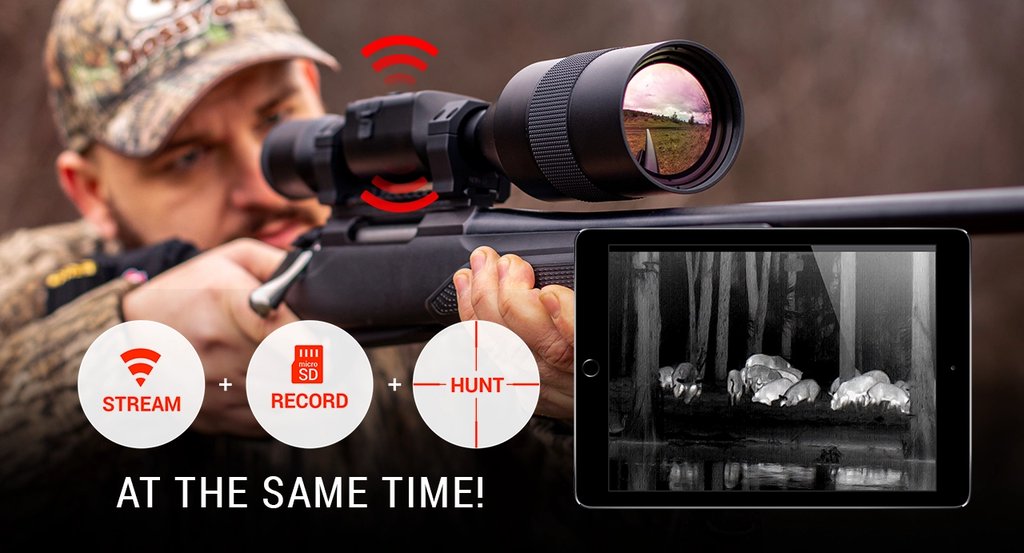
Example: the ATN ThOR 6 640x512 2-16x in daylight
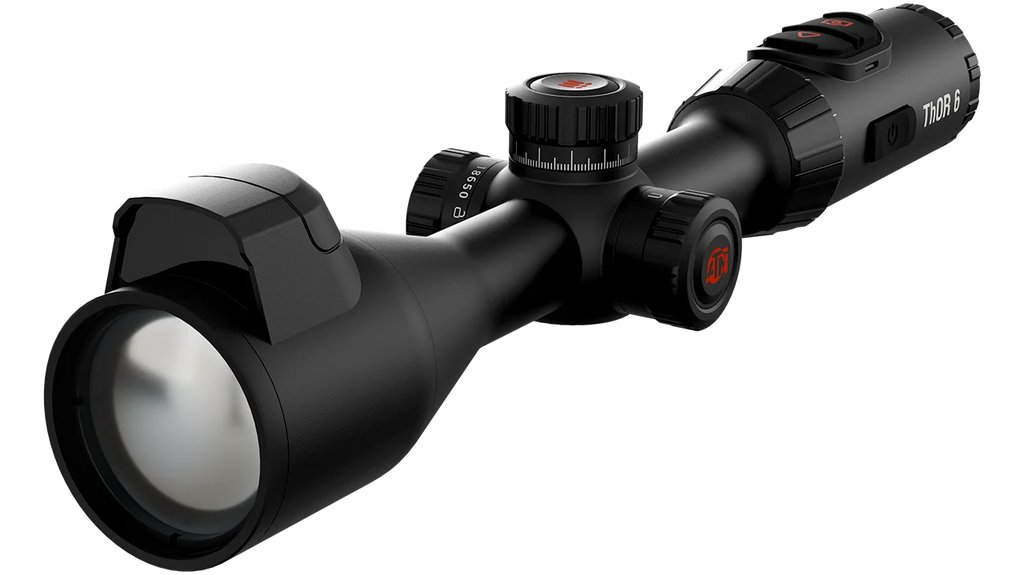
The ATN ThOR 6 640x512 2-16x is a good example of a scope built to work both ends of the day. Its <=15mK NETD picks up small heat differences, so even when the sun warms the ground it can still separate a bedded hog from the dirt behind it. The 640x512 sensor gives you a detailed picture you can zoom into — think HD instead of standard definition — out to around 3,100m of detection, and SharpIR AI cleans up the low-contrast daytime scene. Six palettes let you switch to Black Hot or Iron Red when midday washes out White Hot, and the full-HD OLED display stays readable in the field. It's IP67 waterproof and runs about 9 hours on replaceable dual 18650 batteries, so a full day of scouting and hunting doesn't leave you stranded. The support model, the ATN ThOR 6 384x288 2.5-20x, does the same job with a smaller sensor for shorter ranges.
Is a thermal scope worth it for daytime hunting?
If a lot of your hunting is in cover — brushy draws, shaded timber, tall grass — a thermal scope is genuinely worth it in daylight because it finds animals your eyes and a day scope miss. If you only ever hunt wide-open fields in bright sun and never deal with hidden game, a day scope alone may serve you fine for identification. Most hog and predator hunters land in the first camp, which is why a do-it-all thermal like the ThOR 6 earns its keep: one scope that spots warm bodies at dawn, hunts through the night, and keeps working when the sun climbs. The value case is strongest for anyone who hunts across changing light — a dawn stand that bleeds into full morning, or a cloudy afternoon push through timber — because you never have to swap optics as the sun moves. You raise the same scope at 6 a.m. and at noon and it just works, reading heat the whole time. That's the practical payoff of a heat-based optic: the clock stops mattering, and only the background temperature and your terrain do.
How this guide was put together
This guide is built around how thermal actually behaves in daylight versus dark, judged against a real hunting question rather than a spec sheet. Where we point to a specific scope, we weigh the features that matter for daytime use — thermal sensitivity (NETD), resolution, palettes, refresh rate, detection range, and battery — using only ATN's current 6th-gen ThOR 6 line. The honest trade-off is that thermal detects better than a day scope in cover but a day scope identifies better in bright open light, so daylight thermal is about finding, then confirming. It's not the right tool for someone who needs true-color visual identification at long range in full sun. This is an in-house look at ATN's own range, not an independent lab test, so match these points to how and where you hunt before deciding.
Frequently Asked Questions
Can you hunt with a thermal scope during the day?
Yes. A thermal scope detects heat, not light, so it works in daylight just as it does at night. It is especially good at spotting animals hidden in shade, brush, or tall grass. The main daytime limitation is that strong midday sun warms the background and can reduce contrast, so early morning, dusk, and overcast days give the cleanest picture.
Does sunlight damage a thermal scope?
Normal daylight does not damage a thermal scope, and you can use it safely in bright conditions. The one hard rule is never to point the sensor directly at the sun, which can damage the sensor, just as it can with any optic. Aim at the landscape and animals as normal and you will be fine.
Why does my thermal look worse at midday?
During the hottest part of the day the sun heats rocks, dirt, and brush, so the temperature difference between a warm animal and its surroundings shrinks and contrast drops. Switching to a Black Hot or Iron Red palette usually helps the animal stand out. Hunting at dawn, dusk, or on overcast days keeps the background cooler and the picture sharper.
Is a thermal scope better than a day scope in daylight?
They do different jobs. Thermal is better at detecting animals hidden in shade, brush, or cover during the day, while a traditional day scope gives more true detail and color for identifying what you see in open light. Many hunters use thermal to find the animal, then confirm before the shot.
What palette works best for daytime thermal hunting?
Black Hot and Iron Red often work better than White Hot in daylight because they separate a warm animal from sun-heated ground more clearly. The ATN ThOR 6 offers six palettes so you can switch on the fly as conditions change through the day. It is worth trying each one in your typical terrain to see what reads best.
Does the ATN ThOR 6 work in daylight?
Yes. The ATN ThOR 6 works around the clock because it reads heat, and its <=15mK thermal sensitivity plus SharpIR AI enhancement help it stay readable when daytime contrast is low. Its six color palettes and full-HD display let you adapt to changing light, and it runs about 9 hours per charge for a full day afield.
Sensor: 640x512, <=15mK NETD
Magnification: 2-16x (up to 8x digital zoom)
Detection range: ~3,100m
Display: Full-HD 1920x1080 OLED, 50 Hz
Battery: ~9 hours, replaceable dual 18650
Build: IP67 waterproof, 830 g / 1.83 lbs
If a lot of your hunting happens in shaded timber, brushy draws, or tall grass, a thermal scope earns its place in daylight, not just after dark. The ATN ThOR 6 640x512 2-16x reads heat around the clock, with the sensitivity, palettes, and full-HD display to stay sharp when the sun is up. Explore the full ATN thermal scope lineup to match a sensor and magnification to how far and where you hunt. One scope that works dawn, dusk, midday, and midnight is hard to beat.
Created: July 7, 2026 · 19:23:08 UTC