Hogs do not sneak in like a lone coyote — they roll through in a sounder, tearing up a field or a creek bottom, and they show up in different terrain almost every night. Your glass has to count heads in thick cover one week and read a whole open bean field the next. Good budget thermal binoculars for hog hunting have to do both, and ATN's Binox-6 is the family that pulls it off. For hogs, the 640 model leads, because separating pig from pig in a tight bunch is a resolution job first.
Lighter alternative: ATN Binox-6 384x288 5.5-44x — more base reach for picking apart tight timber where hogs bed.
Bottom line: Lead with the 640 for reading sounders in mixed terrain; the 384 suits close cover and reach-in work.
Why ATN's 6th-gen Binox-6 handles hogs across terrain
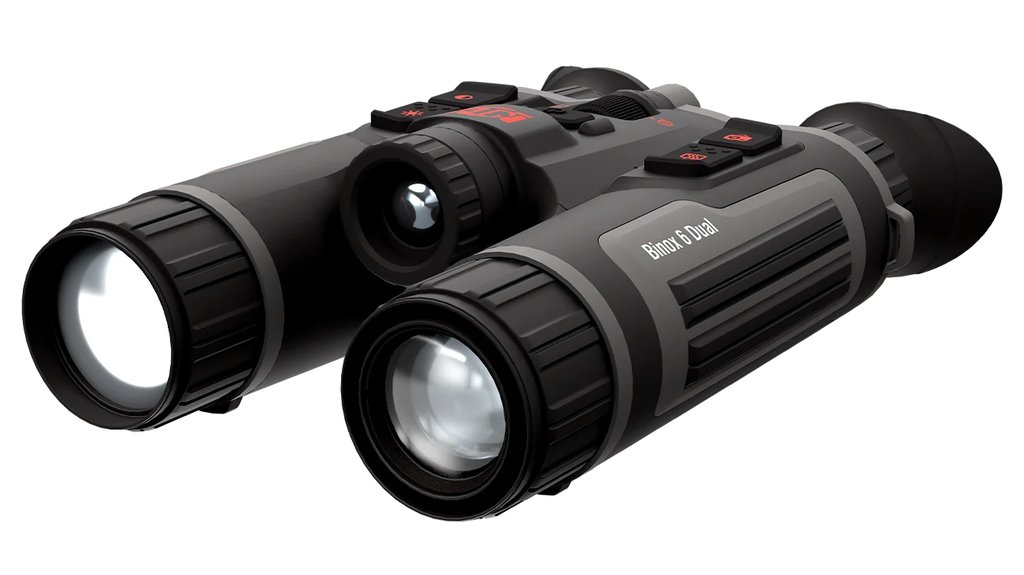
ATN's 6th-generation Binox-6 handles hogs across terrain because a hog hunt is really three different problems — timber, swamp edge, and open field — and one binocular has to solve all three in a night. In thick cover you need to make out individual pigs packed together and moving; in a swamp bottom you need sensitivity to cut through humid, warm air; in an open field you need reach to find a sounder before it finds your crop. Both current models bring 15mK sensitivity, which is what keeps hogs crisp in the damp, heavy air that hangs over a bottom at night. The wide 3x base view on the 640 lets you sweep a field fast and catch the whole group, while the rangefinder gives distance on a boar before the bunch scatters. Because we stick to the current line, you get the newest sensor tuned for exactly this kind of mixed-terrain, heat-heavy work.
Best for hogs: ATN Binox-6 640x512 3-24x
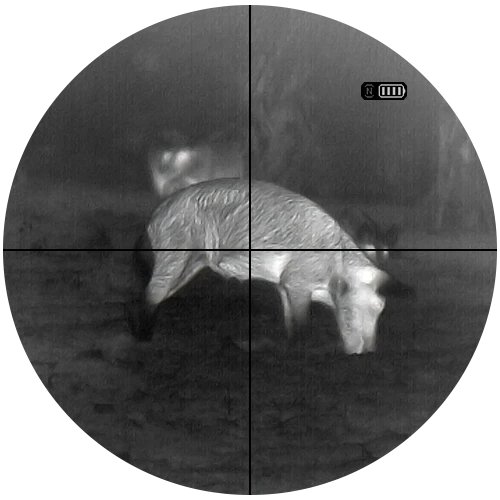
The ATN Binox-6 640x512 3-24x leads for hogs because separating one pig from another in a tight sounder is a resolution job, and the 640 sensor puts more dots in the picture so a bunched-up group reads as individual animals, not one warm blob. That matters when you are picking a boar out of a dozen milling pigs. The wide 3x base view sweeps a whole field in a couple of passes, and 3100m detection finds a sounder working a distant crop edge.
Counting heads in a sounder
When ten or fifteen hogs pour out of a treeline, the 640's clarity lets you count them, spot the piglets you might want to pass, and find the lead sow. On the 384 that same bunch can smear together at distance; the extra resolution is what keeps them distinct.
Reading swamp and field alike
The 15mK sensitivity cuts the humid haze of a swamp bottom, and the wide base view keeps an open bean field manageable. One binocular covers the two terrains hogs love most. It costs more than the 384, but the resolution is the exact feature hog work leans on.
Who it's for: the hog hunter reading whole sounders across mixed terrain who needs to separate animals at distance. Who it's not for: someone hunting only tight timber at close range who would rather have the 384's base reach and lighter body.
Lighter option: ATN Binox-6 384x288 5.5-44x
The ATN Binox-6 384x288 5.5-44x is the lighter, reach-in option because its 5.5x base magnification pulls you straight into the thick cover where hogs bed during the day and stage at night. For a hunter working tight timber and creek heads, that extra base reach beats the wider sweep. It shaves a touch of weight and comes in below the 640 in price.
Best in tight cover
In dense timber you are not sweeping wide fields — you are peering into gaps and along trails. The 384's higher base magnification is built for exactly that reach-in look, and the 384 sensor is enough to confirm a hog at the closer ranges timber hunting usually gives you.
Who it's for: the close-cover hog hunter who values base reach and a lighter carry over max resolution. Who it's not for: the field hunter counting big sounders at distance, who wants the 640's separating power.
How to choose budget hog binoculars by terrain
Choose by the ground you actually hunt hogs on, because terrain decides whether reach or resolution matters more:
- Open field or crop edge — the 640's wider base view and 3100m detection let you find and count a distant sounder fast.
- Swamp and river bottom — lean on the shared 15mK sensitivity to cut humid air; DeFog mode helps on the worst nights.
- Tight timber and bedding cover — the 384's 5.5x base reach peers into gaps and along trails where hogs stage.
- Big sounders — resolution wins when you must separate pigs and find the lead sow, so the 640 pulls ahead.
- Every terrain — both range to 1000 yards, run ~8 hours on swappable 18650 cells, and seal to IP67 for wet bottoms.
Why glassing hogs is a different job than glassing coyotes
Hog glassing and coyote glassing pull your binocular in opposite directions, and understanding that difference is why the 640 leads here instead of a higher-magnification model. A coyote hunter is usually watching for one animal at a known edge and can lean on reach to pick a single dog out of a seam. A hog hunter is doing the reverse: a sounder is many warm bodies packed tight and moving as a mass, so the hard problem is not finding heat — it is telling the pigs apart. That is a resolution task, not a magnification task. Crank the zoom on a lower-res sensor and a bunched sounder just becomes a bigger blob; add dots to the picture instead and suddenly you can count the group, spot the piglets, and pick the boar. The 640's sensor is doing exactly that separating work, which is why it out-earns the higher-base-magnification 384 for pigs even though the 384 reaches further at its base setting.
The terrain and the timeline differ too. Hogs are creatures of thick, wet cover — river bottoms, cane, standing crops — and they move on their own clock, often blowing out of a treeline in a rush and rooting a field to pieces in an hour. You need a wide base view to catch the whole group entering, sensitivity to hold them in humid bottom air, and enough clarity to make a clean pick before they scatter at the first shot. Coyotes come to you on your call; hogs make you go read the country until you cut a fresh group. That is a scanning-heavy, terrain-hopping job, and it is exactly what the wide-view, high-resolution 640 is built for. If your nights are mostly close timber and short trails, the 384's base reach still fits — but for the classic run-and-gun field-and-swamp hog hunt, resolution is king.
Reading the sounder, not just finding it
- Count before you commit — the 640's dots let you tally the group and find the boar instead of firing into a blob.
- Catch the whole group entering — the wide base view sweeps a field so no pigs slip in unseen.
- Hold them in the wet — 15mK sensitivity keeps hogs crisp in the heavy air of a bottom.
- Move and re-read — hogs make you cover ground, so a fast-scanning binocular beats a narrow, high-power one.
How we picked these ATN thermal binoculars
We ranked these for the reality of hog hunting: reading sounders across timber, swamp, and open field on a budget. The criteria were resolution for separating bunched pigs, thermal sensitivity (NETD) for humid bottoms, base magnification and field of view for the terrain you hunt, detection range, battery, and weight for handheld scanning. Only the current 6th-generation Binox-6 line was considered, so both picks are the newest generation. The honest trade-off: the 640 leads on resolution but costs more and gives up base reach, while the 384 is lighter and reaches further at base but smears a distant sounder together. Neither is ideal for someone who only wants a fixed field spotter and never moves terrain. This is an in-house comparison of ATN's own binoculars, not an independent lab test — match the pick to your ground.
Frequently Asked Questions
Which Binox-6 is best for hog hunting?
The 640x512 3-24x leads for hogs because its higher resolution separates one pig from the next in a tight sounder, and its wider base view and 3100m detection read open fields fast. The 384 is the lighter, reach-in choice for tight timber.
Why does resolution matter more for hogs than reach?
Hogs travel in sounders, so you often need to count heads, pass piglets, and pick the boar out of a milling group. More dots in the picture keep those animals distinct instead of smearing into one warm blob, which is why the 640 leads for hog work.
Do thermal binoculars work in a humid swamp bottom?
Yes. Both Binox-6 models share a low 15mK NETD, which is the spec that keeps hogs crisp in the warm, damp air that hangs over a river or swamp bottom at night. A DeFog mode helps on the worst nights.
Is the 384 model good enough for hogs?
For close cover, yes. In tight timber where shots and IDs happen at shorter range, the 384's 5.5x base reach and 15mK sensor are plenty and the lighter body is welcome. For counting big sounders in open fields, the 640's resolution is worth the step.
How does the rangefinder help on a sounder?
It gives you the distance to a boar or lead sow the instant you pick it out, before the bunch scatters at the shot. Both models range to 1000 yards, so you get that solution whichever you choose.
Can these binoculars handle a wet, all-night hog hunt?
Yes. Both are IP67 waterproof for wet bottoms and run about 8 hours per charge on replaceable 18650 cells, so a spare set covers a full night chasing sounders across terrain.
Hogs change terrain on you every night, so your glass should keep up. The ATN Binox-6 reads a whole sounder in an open field, cuts the haze in a swamp bottom, and peers into tight timber — with a rangefinder built in for the boar you pick out. Compare the 640 and 384 in ATN's thermal binoculars lineup and match the sensor to the ground you actually hunt pigs on.
Created: July 7, 2026 · 14:32:46 UTC