A black friday thermal scope sale is a great time to buy, but it is also the fastest way to talk yourself into the wrong optic. The right way to shop is to start with the ground you actually hunt, then let the sale help you afford the scope that ground demands. That is exactly how we have sorted this list: not by price tags or star ratings, but by terrain - open fields, mixed timber, and tight brush. Three current ATN ThOR 6 models, three kinds of country, and a plain answer for which one belongs on your rifle. No fake urgency, no invented deals - just the scope that fits where you set up.
The best all-around pick in a black friday thermal scope sale is the ATN ThOR 6 640x512 3-24x. Its 640 sensor and long 24x reach own open fields and long lanes, the 640x512 2-16x handles mixed timber with a wider, faster view, and the 384x288 2.5-20x keeps close brush covered on a tighter budget. Match the sensor to your terrain, then use the sale to reach it.
Quick answerBest for open fields - ATN ThOR 6 640x512 3-24x: the 640 sensor and 24x reach let you identify a heat signature at distance before you ever close in.
Best for mixed timber - ATN ThOR 6 640x512 2-16x: the same crisp 640 image with a wider 2x base view, so you find game fast when lanes are short and broken.
Best for close brush on a budget - ATN ThOR 6 384x288 2.5-20x: a full-featured 384 scope that keeps every smart tool while stretching a tight budget for close, movement-heavy nights.
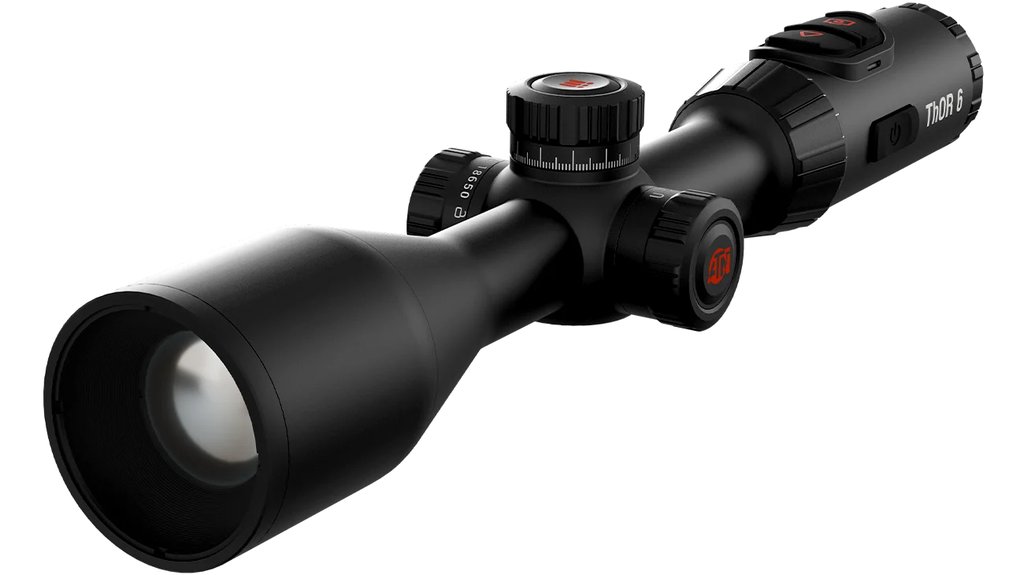
Why ATN's 6th-gen ThOR 6 leads this list
ATN's 6th-generation ThOR 6 line leads because it pairs a genuinely sensitive sensor with the on-scope tools that matter after dark, and it does that across every terrain on this list. Every model here reads at NETD 15 mK or lower, which is a way of saying the sensor separates a warm animal from a cool background even in damp, low-contrast air - a lower millikelvin number means a more sensitive sensor and a cleaner picture. On top of that you get SharpIR AI enhancement to clean up the image, a 50 Hz refresh that keeps a running hog smooth instead of stuttering, and Recoil Activated Video that records the shot for you. Those features do not care whether you are glassing an open field or picking through brush - they earn their keep everywhere.
The three scopes below share that same foundation. What sets them apart is optics: sensor size, magnification, and detection range. That is why terrain is the honest way to choose - the smart features are a wash, so the decision comes down to how far you see and how wide.
Open fields - ATN ThOR 6 640x512 3-24x
What the 640 sensor and 24x reach buy you on open ground
The ATN ThOR 6 640x512 3-24x is the pick for country where distance is the whole problem - cut ag fields, pasture, desert flats, and long shooting lanes. A 640x512 sensor packs far more heat-sensing pixels than a 384, and more pixels means a distant shape stays a recognizable animal instead of smearing into a warm blob. Picture the jump from a standard-definition TV to HD; that is roughly what the extra pixels do at range. Add the 24x top magnification and the 50 mm lens and detection stretches to 3650 m - detection meaning you can tell a heat source is out there, well before you decide whether it is worth a stalk.
How it plays on wide-open terrain
On open ground your biggest waste of a night is stalking something that turns out to be a cow, a stray dog, or a warm stump. The 3-24x fixes that by letting you resolve what a far-off signature actually is before you move a boot. You glass the field edge, dial up when something reads warm, confirm the shape, and only then commit. That is calmer, more efficient hunting - fewer blown stalks, more clean setups.
Who it's for - and who it isn't
This one is for the shooter who works long, open lanes and needs to identify before approaching. It is not the lightest or the fastest to swing, so if most of your nights are close and quick inside timber or brush, you are paying for reach you will rarely dial in - drop to the 2-16x or the 384 instead.
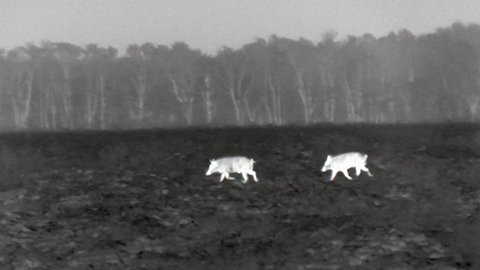
Mixed timber - ATN ThOR 6 640x512 2-16x
Same 640 clarity, a wider base view for broken ground
The ThOR 6 640x512 2-16x keeps the same sharp 640 sensor but starts at a wider 2x base, which is exactly what mixed timber asks for. Field of view is simply how much you see at once, and a wider base view means less time hunting for the animal between trunks and more time on it. With a 35 mm lens the front end stays shorter and the whole optic comes onto a moving target faster. Detection settles around 3100 m - plenty for the broken, medium distances where timber, edges, and creek bottoms actually put game in front of you.
How it plays in timber and edge country
Timber hunting is a game of quick looks and fast reactions. A hog crosses a lane, a coyote slips through a gap in the brush, and you have a second or two to find it and settle. The 2-16x wins here because the wider base view fills that second - you are not sweeping a tight, high-magnification tunnel trying to catch the animal, you already have most of the scene in the picture. When you do need reach for a longer lane, you still have 16x on tap.
Who it's for - and who it isn't
Choose it if your nights are broken and medium-range - patchy timber, field edges, creek bottoms, mixed cover. It is not the choice if you routinely need to identify targets at the far edge of a wide-open field; that reach belongs to the 3-24x.
Close brush - ATN ThOR 6 384x288 2.5-20x
Full features on a tighter budget
The ThOR 6 384x288 2.5-20x sits in the value tier without feeling stripped down, and close brush is where its numbers make the most sense. You get the same SharpIR processing, RAV, Picture-in-Picture, Hot Point Tracking, and color palettes as the flagship - just on a 384 sensor with a 2300 m detection range. In thick cover you are working at short distance anyway, so the shorter reach costs you nothing you would use, while the value price keeps the smart features within reach for a first serious thermal build.
How it plays in tight cover
In brush and heavy cover, targets appear close and fast, and you rarely need to reach out past a couple hundred yards. That plays to the 384's strengths: the sensor is more than sharp enough at the distances tight terrain hands you, and the 2.5x base still gives you a workable view for finding an animal that breaks nearby. You spend the money you save on the things that keep a night going - a spare pair of cells, a solid mount - instead of on reach the brush will never let you use.
Who it's for - and who it isn't
It suits the close-cover hunter and the first-time thermal buyer who wants the full ThOR 6 toolkit without stretching for the top sensor. It is not for the long-lane specialist who has to identify game at extreme distance - the 640 models pull clearly ahead the moment the country opens up.
How to choose your thermal scope by terrain
Start from the ground you hunt most nights, then pick the sensor and magnification to match - not the other way around. The sale should help you afford the scope your terrain needs, not push you toward numbers you will never dial in.
- Open fields and long lanes - go 640 with high magnification: the ThOR 6 640x512 3-24x reaches out and lets you identify before you approach.
- Mixed timber and broken ground - go 640 with a wide base: the ThOR 6 640x512 2-16x finds game fast in short, patchy lanes.
- Close brush and heavy cover - the ThOR 6 384x288 2.5-20x keeps the full toolkit at a value price for distances the cover keeps short.
- Battery peace of mind - all three run about 9 hours on swappable 18650 cells, so one charged spare pair carries a full night in any terrain.
What a sale really changes about your buying decision
A sale does not change which optic is right for your ground - it changes how far your budget stretches to get there. That matters, because thermal is one category where buying a size too small to save money usually backfires. If a sale lets you step from a 384 sensor up to a 640, or from the 2-16x to the 3-24x when your fields really are open, that is a smarter use of the savings than pocketing them and settling for less reach than your terrain demands. Decide on the sensor and magnification your ground actually needs first, then let the timing help you afford that model rather than talk you into a smaller one.
It also frees up budget for the gear that makes a thermal build work: a spare pair of 18650 cells so you never end a night early, a mount matched to your rifle, and a case that survives truck beds and field packs. A scope you can keep running until dawn is worth more than one that outreaches it but dies at midnight. Put the savings toward staying in the field, not toward magnification your terrain will never use.
Features that earn their keep in any terrain
Beyond the sensor, a handful of ThOR 6 features do real work no matter where you set up. SharpIR AI enhancement cleans up the image in low-contrast conditions, so a warm body in damp air still reads as a clear shape. Hot Point Tracking keeps a marker on the warmest object as it moves, which helps when an animal slips behind brush and reappears a few yards over. Picture-in-Picture floats a magnified aiming window over the wider scene, so you can hold a broad field of view for scanning and still place a precise shot. And Zeroing Freeze locks the image while you dial your zero, which makes sighting in quick even out in the field.
None of these are gimmicks; each one removes a small friction that used to cost you a shot or a target. Together they are why the current ThOR 6 line feels a generation ahead of older thermal scopes - and why the sensor and terrain match, not a features checklist, is what should decide your pick.
How we picked these ATN thermal scopes
We sorted these by the terrain hunters actually work, weighing sensor resolution for identifying game, NETD for sensitivity in poor air, detection range for how far each reaches, refresh rate for tracking movement, and battery for a full night on stand. Only ATN's current 6th-generation ThOR 6 line was considered, so nothing here is discontinued. This is an in-house comparison of our own range, not an independent lab test - and the honest trade-offs are real: the 3-24x is heavier and slower to swing than the 2-16x, and the 384 gives up sensor detail for a friendlier price. Check these numbers against the distances you truly hunt before you buy, sale or no sale.
Frequently Asked Questions
Which ATN ThOR 6 should I buy during a thermal scope sale?
Pick by the terrain you hunt most. The ATN ThOR 6 640x512 3-24x is the best all-around choice for open fields and long lanes, the 640x512 2-16x suits mixed timber, and the 384x288 2.5-20x is the value pick for close brush. Let the sale help you afford the right sensor rather than steer you to a smaller one.
What does the 640 sensor actually get me over a 384?
A 640x512 sensor has far more thermal pixels than a 384x288 one, so targets hold their recognizable shape at longer range instead of blurring into a warm smudge. It is like moving from standard definition to HD. If you regularly need to identify game far out on open ground, the 640 is worth it; in tight brush, the 384 is plenty.
How far can these thermal scopes detect?
Detection runs from about 2300 m on the 384 model up to 3650 m on the 640 3-24x. Detection means spotting that a heat source is present, not fully identifying it - positive identification happens at a shorter distance that depends on the sensor and magnification you are running.
Is a higher magnification always better?
No. High magnification narrows your field of view, which slows you down in timber and brush where game appears close and fast. Reach matters on open ground, but for broken or tight terrain a wider base view like the 2-16x or 384 helps you find animals quicker. Match magnification to distance, not the other way around.
How long does the battery last on a night out?
Each ThOR 6 here runs roughly 9 hours on its two 18650 cells. Because the batteries are replaceable, you can carry a charged spare pair and hot-swap them in the dark, which comfortably covers a full night of scanning and shooting in any terrain.
What is Recoil Activated Video?
Recoil Activated Video, or RAV, automatically starts recording a few seconds before the shot when it senses the rifle's recoil, then saves the clip. It means you capture every shot for review without fumbling for a record button in the dark, on any of these three scopes.
Ready to match a thermal scope to the ground you actually hunt? Start with the ATN ThOR 6 640x512 3-24x if your country is open and long, or browse the full ThOR 6 thermal scope lineup to compare the 640 and 384 sensors side by side for timber and brush. A sale is a good time to buy - just decide on the sensor and magnification your terrain needs first, then let the timing help you afford that model instead of the biggest number on the shelf. The right ThOR 6 is the one built for your ground.
Created: August 10, 2026 · 09:39:32 UTC