The best thermal scope predator hunting 2026 rewards is the one that solves the predator hunter's real problem: a coyote or bobcat that hangs up out at the edge, wary and wide, and never quite closes the distance. Call-shy predators park themselves in a range band where a small error in distance turns a clean kill into a clean miss. That is why this roundup organizes everything around one axis — the range the animal actually gives you — and why our top pick is built to remove the guesswork at exactly that distance. The ATN ThOR line covers that band well, and the picks below match the scope to how far your coyotes hang.
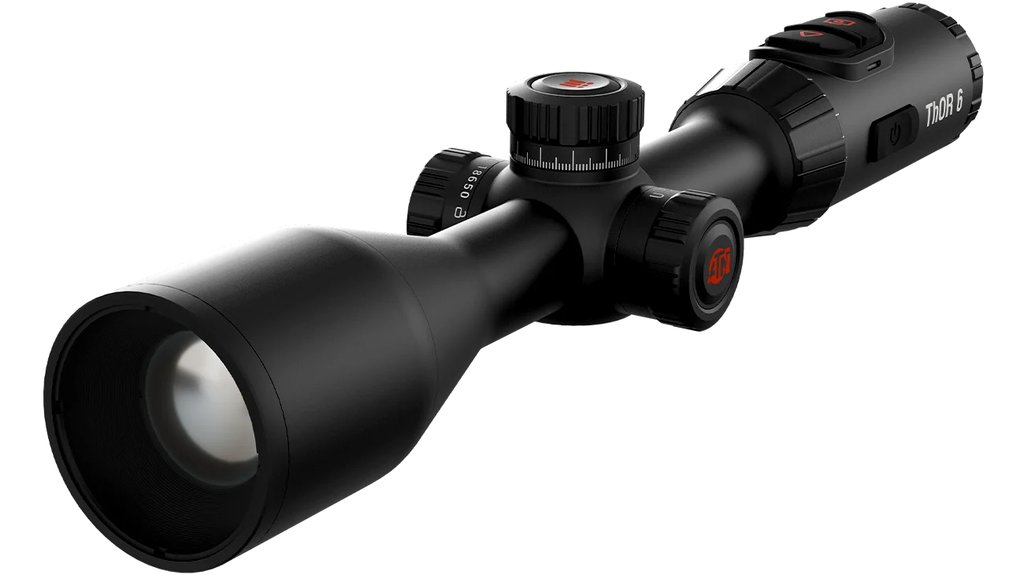
Best value for predators: ATN ThOR 6 640x512 3-24x — same sensor, reach and clarity without the laser, for hunters who range another way or shoot known distances.
Bottom line: if your predators hang up out at the range band where distance matters, the LRF earns its keep; if you already know your distances, the standard 640 saves you money.
Why ATN's 6th-gen ThOR fits ranged predators
Predator hunting is a range-band game. A responding coyote rarely walks into your lap — it circles downwind, stops at 150, 200, 280 yards, and stares. In that band the difference between a hit and a clean miss is often just knowing the true distance, and that is exactly where ATN's 6th-gen ThOR earns its spot. The ATN ThOR 6 LRF reads heat rather than light, so a coyote's warm body pops against cool ground day or night, and its 640x512 sensor with sub-15mK sensitivity holds that image together at the zoom you need to confirm the animal way out. The built-in rangefinder and ballistic calculator then turn 'somewhere around 220' into an exact hold. A 50Hz refresh keeps a trotting predator smooth, and roughly nine hours of battery covers a long stand-hopping session.
Best overall for predators: ATN ThOR 6 LRF 640x512 3-24x
The ATN ThOR 6 LRF 640x512 3-24x is the predator hunter's scope because it attacks the exact failure point of a called-in coyote: the unknown range at the edge of your stand. When the animal stops out there and gives you a two-second window, you range it, the scope hands you the hold, and you break the shot before it moves. No mil-dot math, no guessing, no hoping you dialed the right yardage.
Ranging that closes the range-band gap
The built-in laser reads distance out to 1000m with roughly one-meter accuracy and feeds a ballistic calculator holding several rifle profiles. For predators that hang up at odd, unrepeatable distances, that is the whole ballgame — you get the true number instead of splitting the difference. The 3-24x zoom and 3650m detection range mean the coyote at the far edge is still identifiable and reachable.
A sensor that confirms the animal way out
640x512 resolution packs more dots into the picture, like going from standard TV to HD, so you can zoom in on a distant heat signature and confirm it is a coyote and not someone's dog before you commit. Sub-15mK sensitivity keeps the picture clean in the humid dawn air where predators love to answer a call.
Fast enough for a coyote that will not stand still
Predators rarely give you a leisurely shot. A coyote that gets a little nervous will circle, trot, and stop for only a beat, so the scope has to keep up. The 50Hz refresh rate keeps a moving animal smooth instead of smeared, and Hot Point Tracking helps you settle on it quickly when it does pause. Combine that with the instant ranging and you can go from spotting a distant heat signature to a solved, confirmed shot in the few seconds a wary predator gives you. That speed is often the whole reason the animal ends up in the truck instead of over the next ridge.
Who it's for: the caller whose predators hang up at unknown, varying distances and who wants the range and hold solved instantly. Who it's not for: hunters who work fixed, known-distance stands and would rather put that budget toward glass or ammo.
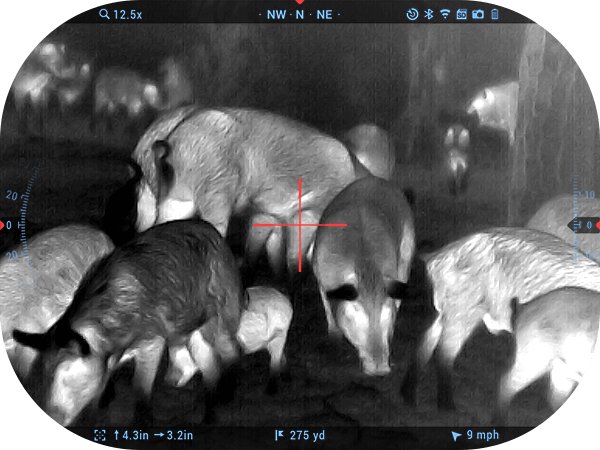
Best value for predators: ATN ThOR 6 640x512 3-24x
The ATN ThOR 6 640x512 3-24x gives you the identical 640x512 clarity, 3-24x reach and 3650m detection of our top pick without the built-in laser — which is exactly right if you hunt known distances or already carry a separate rangefinder. You keep the sensor and the reach that matter for spotting and confirming predators far out, and you spend less.
Same reach and clarity, ranging left to you
For a hunter who ranges landmarks in daylight and hunts the same stands, the value 640 does everything the LRF does at the sensor level. You still get the sub-15mK sensitivity, the Full-HD OLED display, Hot Point Tracking to lock a moving coyote, and about nine hours of battery on replaceable cells.
Built to survive a hard predator season
Predator hunting is often the coldest, wettest, most miserable hunting you will do, and the value 640 is built for it. It is IP67 waterproof, wakes fast when a caller finally works, and runs about nine hours on replaceable 18650 batteries so a long night of moving between stands does not leave you dead. It also records with Recoil Activated Video to 64 GB of storage, so you can review a stand that did not work out and figure out what the coyote saw or heard. For a hunter who already handles ranging, this scope gives up nothing that puts an animal on the ground.
Who it's for: the predator hunter on fixed, pre-ranged stands or who prefers a standalone rangefinder. Who it's not for: the run-and-gun caller who never knows the distance until the animal shows — that hunter wants the LRF.
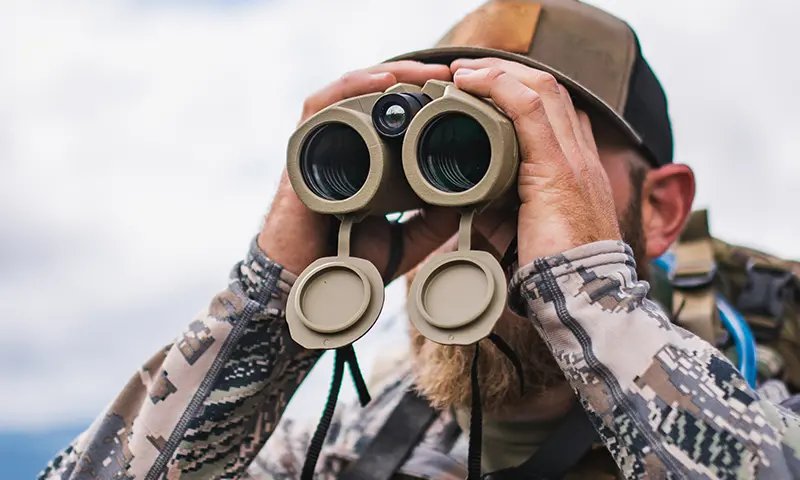
How to choose a thermal scope for predator hunting
Match the scope to the range band your predators actually give you, not to the biggest spec on the page. Predators are the hardest quarry to pin down on distance, so the choices you make here matter more than they would for a stationary target like a bedded hog. A few things decide it:
- Do your predators hang up at unknown range? If yes, a built-in rangefinder like the LRF's is the feature that closes the deal; if you hunt known distances, you can skip it.
- Sensor resolution — 640x512 means more dots in the picture, so you can zoom in and confirm a coyote versus a dog far out before you shoot.
- Thermal sensitivity (NETD) — sub-15mK keeps faint heat visible in humid dawn air, when predators most often answer a call.
- Reach vs field of view — the 3-24x zoom and 3650m detection reach the far edge of a stand; if most of your shots are close, a wider-view scope finds animals faster.
- Battery life — about nine hours covers a night of stand-hopping; carry a charged spare and you never quit early.
How we picked these ATN thermal scopes
We ranked these against the predator hunter's real problem: the wary animal that stops at an unknown distance at the edge of the stand. That put ranging and the sensor's ability to confirm a target far out at the top, followed by detection range, thermal sensitivity, refresh rate, battery, and weight. We only considered the current 6th-gen ThOR line, so there are no older models here. The honest trade-off is that the LRF's rangefinder adds a little weight and cost, and the value 640 leaves ranging to you — the right call only if you already hunt known distances. This is an in-house comparison of ATN's own range, not an independent lab review, so weigh these specs against how your predators actually behave before choosing.
Frequently Asked Questions
What is the best thermal scope for predator hunting in 2026?
The ATN ThOR 6 LRF 640x512 3-24x is our top pick for 2026 predator hunting. Its built-in laser rangefinder and ballistic calculator solve the biggest problem with wary predators — the unknown range at the edge of the stand. The standard ThOR 6 640x512 3-24x is the value pick for known-distance hunters.
Why does a rangefinder matter so much for predators?
Called-in coyotes and bobcats usually hang up at odd, unrepeatable distances instead of walking in close. In that range band, knowing the true distance is the difference between a hit and a clean miss, and the ThOR 6 LRF reads it instantly out to 1000m and hands you the hold.
Do I really need 640x512 resolution for coyotes?
For confident shots at range, yes. Higher resolution puts more dots in the picture so you can zoom in and confirm it is a coyote and not a dog before you commit. The 640x512 sensor in both picks makes that easy far out.
Can I use these scopes both day and night for predators?
Yes. Thermal reads heat, not light, so both the ThOR 6 LRF and the standard 640 work at dawn, dusk, and in total darkness. A predator's warm body pops against cool ground whenever it shows up.
How far can these scopes detect a predator?
Both the ThOR 6 LRF and the ThOR 6 640x512 3-24x detect heat out to 3650m. Detection is farther than the range at which you can positively identify or shoot an animal, but it means you will pick up a coyote's heat long before it reaches you.
Is the value ThOR 6 640 a real downgrade from the LRF?
Not at the sensor level. The value ThOR 6 640x512 3-24x has the same resolution, sensitivity, zoom, and detection range as the LRF — it just leaves out the built-in laser rangefinder. If you hunt known distances or carry a separate rangefinder, it does everything you need for less.
If your coyotes hang up right where distance decides the shot, the ATN ThOR 6 LRF ranges them and hands you the hold in the same breath. Prefer to range your own known distances? The standard ThOR 6 640 gives you the same clarity and reach for less. Compare the full ATN ThOR thermal scope lineup, pick the one that fits your stands, and stop letting the far edge of the call get away.
Created: July 7, 2026 · 11:11:27 UTC