Two scopes can share the same sensor and still look nothing alike, because what you actually stare at all night is the display, not the detector. A cheap panel washes out the shadows and smears the edges, and a faint hog against cool brush disappears into gray mush. The best thermal scope OLED display 2026 fixes that at the glass you look through: an OLED lights each pixel on its own, so blacks go truly black and a warm animal edge stays sharp. The ATN ThOR 6 640x512 pairs a Full-HD OLED with a 640 sensor, and this roundup explains why the screen is doing more work than most buyers give it credit for.
Best value: ATN ThOR 6 384x288 2.5-20x — the same OLED panel with a 384 sensor and more reach, at a lower tier.
Bottom line: both use the OLED; step up to the 640 when you want the most detail feeding that beautiful screen.
Why ATN's 6th-gen ThOR line wins on display
The display is the last thing between the sensor and your eye, and on the ThOR 6 it's a Full-HD 1920x1080 OLED. OLED matters because each pixel makes its own light and switches fully off for black — there's no backlight bleeding a dull gray across the whole scene. That's why a cool background reads as real darkness and a warm target's edge stays crisp instead of glowing into the surround. Feed that panel a 640x512 sensor — more dots in the picture, so you can zoom further before it turns blocky — and you get detail the OLED can actually show. NETD of 15mK or lower means the scope tells tiny heat differences apart, so in humid or foggy air the faint stuff still separates from the background rather than blending in. The 50Hz refresh keeps a moving animal smooth on that screen instead of leaving a smear. The sensor gathers the picture, but the OLED is what lets you see all of it.
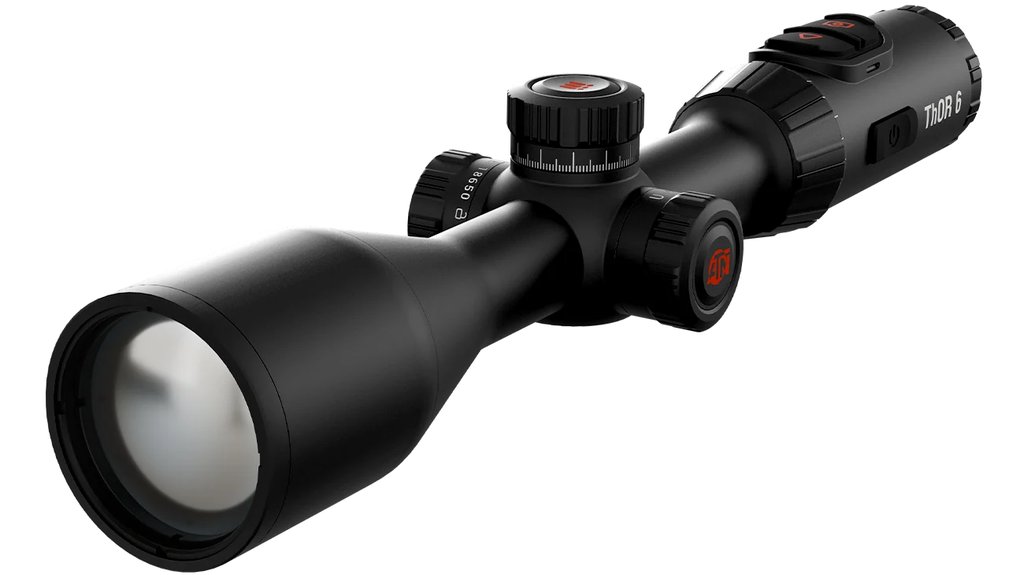
Best for display clarity: ATN ThOR 6 640x512 2-16x
The ATN ThOR 6 640x512 is the pick because it puts the most detailed picture behind the best screen in the line. The 640 sensor gives the OLED plenty to render, so when you dial up magnification the image holds together instead of falling apart into blocks.
What the OLED does for a real hunt
On a dark field, the difference shows up as contrast. A bedded coyote's warm shoulder reads clearly against cool ground because the black around it is truly black, not backlit gray. Faint edges — an ear, a leg tucked under — stay visible where a lesser panel would swallow them. That contrast is what lets you identify before you commit.
The rest of the package
You also get SharpIR image enhancement, six color palettes, Picture-in-Picture, Hot Point Tracking, Recoil Activated Video, dual replaceable 18650 batteries for about nine hours, 64GB of storage, and an IP67 body. It weighs under 2.2 lbs. Who it's for: hunters who want the clearest possible picture and identify at distance. Who it's not for: someone on a tighter budget who's happy with a slightly less detailed image.
Why the palette choice matters on an OLED
The six color palettes do more on a good screen than a cheap one. On the OLED, White Hot shows a warm animal as bright against a genuinely dark field, which is the easiest read for most people at night. Black Hot flips that, and some hunters find a dark animal on a light background easier to identify in brushy scenes. Iron Red adds a color gradient that can make a subtle heat edge — the line between a bedded coyote and cool ground — pop where a plain grayscale might blur it. Because the OLED renders true blacks and holds contrast, each palette actually looks distinct instead of washing toward the same gray. You end up switching to whatever suits the scene, and the screen rewards you for it. That's a small daily thing that adds up over a season of nights behind the scope.
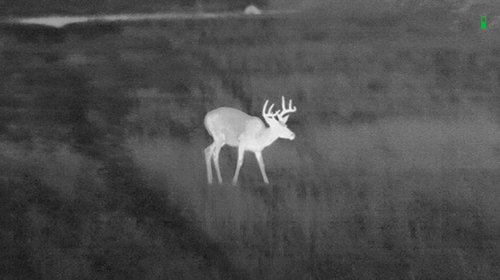
Best value: ATN ThOR 6 384x288 2.5-20x
The ATN ThOR 6 384x288 2.5-20x uses the identical Full-HD OLED, so the screen quality — the deep blacks and crisp edges — is the same. What changes is the sensor: 384x288 instead of 640, which means fewer dots feeding the display, so very fine detail at high zoom softens sooner. In trade you get a higher 2.5-20x zoom range and a lower price tier.
Where it fits
For a hunter who wants that OLED look without the flagship cost, this is the smart buy. The screen still shows contrast beautifully; you're just asking a bit less of it. Who it's for: value shooters who prize the OLED experience and extra zoom. Who it's not for: anyone chasing the last bit of detail at long range, where the 640 pulls ahead.
What the extra zoom buys you
The 384 model climbs to 2.5-20x, a hair more top-end reach than the 640's 2-16x. That sounds like an advantage, and at moderate distances it can be — you fill the frame with a far animal a touch more. The catch is that zoom and resolution work together: when you push magnification hard on the 384 sensor, the picture softens sooner than it would on the 640, because there are fewer dots to enlarge. So the extra zoom is genuinely useful for framing at moderate range, but it doesn't replace the 640's advantage when you need to identify something small at the far edge of the field. On the same beautiful OLED, both trade-offs are easy to see for yourself.
How to choose a thermal scope by its display
Judge a scope by what your eye sees, not just the sensor number on the box. An OLED panel is the baseline for contrast, and both ThOR 6 models here have it — so the real decision is how much sensor detail you want feeding that screen.
- Display type — an OLED gives true blacks and sharp edges; both scopes here use a Full-HD OLED, so start from that.
- Sensor behind the screen — 640x512 renders finer detail than 384x288 when you zoom in, so the OLED has more to show.
- NETD — 15mK or lower keeps faint heat separated from the background in bad air, which is where the display's contrast pays off.
- Refresh rate — 50Hz keeps moving animals smooth on the screen instead of smearing.
- Weight and battery — both stay under 2.2 lbs and run about nine hours on swappable cells.
How we picked these ATN thermal scopes
We judged these against the thing you actually look at all night: the picture on the display. The criteria were the ones that decide how good that picture looks — the OLED panel itself for contrast, sensor resolution for detail, NETD for separating faint heat in humid air, refresh rate for moving targets, plus weight and battery for a full night's use. We only looked at ATN's current 6th-gen ThOR line, so nothing is outdated. The honest trade-off: the same great OLED sits on both, so the 384 gives you that screen for less but shows a little less fine detail at high zoom than the 640. This is an in-house comparison of ATN's own scopes, not an independent lab review, so match the sensor to how far and how detailed you need to see.

Frequently Asked Questions
What is the best thermal scope with an OLED display in 2026?
The ATN ThOR 6 640x512 2-16x. It pairs a Full-HD 1920x1080 OLED with a 640 sensor, so the screen shows deep blacks, crisp edges, and the most detail in the line.
Why does an OLED display matter on a thermal scope?
OLED lights each pixel on its own and switches fully off for black, so there's no backlight washing the scene gray. That gives true blacks and sharp edges, which makes faint heat signatures stand out instead of blending into the background.
Does the cheaper ThOR 6 384 use the same OLED?
Yes. The ThOR 6 384x288 2.5-20x has the identical Full-HD OLED, so the contrast and black levels look the same. The difference is the sensor resolution feeding it, which affects fine detail at high zoom.
Is a 640 sensor worth it over the 384 for the display?
If you want the most detail on screen, yes — the 640 gives the OLED more dots to render, so the picture holds together when you zoom in. If budget matters more and you shoot at moderate range, the 384 still looks excellent on the same panel.
Will the OLED help in fog or humidity?
The display's contrast helps, but the real work is done by the sensor's NETD of 15mK or lower, which separates small heat differences. Together they keep a faint target visible in humid or foggy air rather than lost in gray.
How long does the ThOR 6 run on a charge?
About nine hours on dual replaceable 18650 batteries. Because the cells swap, you can carry spares and keep the OLED lit through a full night of hunting.
Does the OLED affect battery life?
An OLED can actually be efficient because black pixels draw very little power, and the ThOR 6 still runs about nine hours on swappable cells. In practice the display isn't what limits your night; carrying a spare pair of batteries covers you either way.
Which color palette looks best on the OLED?
There's no single right answer — the six palettes exist because scenes differ. White Hot is the easiest read on a dark field, Black Hot can help in brush, and Iron Red brings out subtle heat edges. The OLED's contrast keeps each one looking distinct so you can pick per scene.
If you've ever squinted at a washed-out thermal picture and wondered if the animal was really there, the display is the fix — and the ATN ThOR 6 640x512 puts a 640 sensor behind a Full-HD OLED so the faint stuff pops. Want to see the whole family and the 384 value option side by side? Explore ATN's thermal scopes and pick the sensor that suits your ranges. Let your eyes decide: it's the picture you'll live with every night out.
Created: July 7, 2026 · 11:11:27 UTC