Hogs do not stand in the open and wait. They root through creek-bottom brush, bed in cedar thickets, and pour out of a treeline in a black tide when you least expect it. The scope that wins hog country has to cut through clutter — pick a warm body out of a tangle of branches, hold the picture steady while a whole sounder mills around, and let you drop the lead pig before the rest scatter. That is the job the best thermal scope hog hunting 2026 pick has to do, and the ATN ThOR 6 640x512 3-24x is built for it: a 640 sensor and low NETD that read heat through brush where a lesser optic just sees mush. This roundup ranks the 6th-gen ThOR 6 scopes for hogs in thick cover.
Best value for hogs: ATN ThOR 6 384x288 2.5-20x — the same 6th-gen brain and full-night runtime for less, ideal for closer creek-bottom and feeder setups where reach matters less.
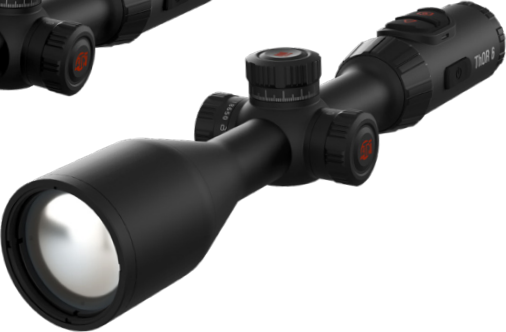
Why ATN's 6th-gen ThOR 6 cuts through hog cover
Hogs are almost always in or near clutter, so the scope's real test is separating a warm animal from the cool branches, grass and brush around it. The 6th-gen ThOR 6 640 does that with two things working together: a 640x512 sensor that packs enough dots to keep edges sharp inside a tangle, and <=15mK sensitivity that reads the small temperature gaps between a hog's hide and the vegetation it is standing in. More dots plus finer temperature resolution equals a hog that looks like a hog, not a warm blob, even half-hidden in cover. When a sounder busts out at once, Hot Point Tracking keeps you locked on your chosen pig instead of losing it in the herd, and the 50 Hz refresh keeps every running body smooth so you can swing on a second and third shot. SharpIR firms up the picture at high zoom, the 50mm lens and 3650m detection let you catch a sounder crossing a distant field, and Recoil Activated Video saves the whole encounter. It is a rig built for the messy, fast reality of hogs.
Best overall for hogs: ATN ThOR 6 640x512 3-24x
The ATN ThOR 6 640x512 3-24x is the scope for hunters who chase pigs where they live — in the brush. Its 640 sensor and low NETD give you the separation to find a hog in cover that would swallow a lesser optic's picture.
Seeing a hog inside the brush
The whole game is contrast against clutter. The 640x512 sensor keeps a hog's outline crisp inside a tangle of branches, and <=15mK sensitivity reads the fine heat difference between the animal and the cooler vegetation around it. So instead of a fuzzy warm smear you get a recognizable body, hips and snout you can aim on. Push the zoom and SharpIR keeps that edge from falling apart.
Working a sounder
Hogs run in groups and scatter fast when the shooting starts. Hot Point Tracking locks onto the pig you picked so you do not lose it in the chaos, and the 50 Hz refresh keeps every running body smooth for quick follow-ups. Recoil Activated Video records the whole thing so you can count the sounder afterward.
Who it's for, who it's not
This is for the serious hog hunter working brushy, varied ground who wants the cleanest picture in clutter and the reach to catch pigs crossing open gaps. It is not the pick if all your shots are close over a feeder and you want to save money — the 384 covers that.
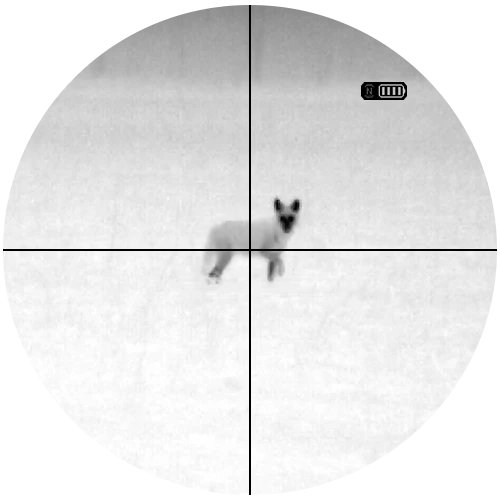
Best value for hogs: ATN ThOR 6 384x288 2.5-20x
The ThOR 6 384x288 2.5-20x brings the same 6th-gen brain to closer hog work for less. It shares the tracking, the palettes, the low NETD and the full-night runtime.
Where 384 is plenty
A lot of hog hunting happens close — over a feeder, along a creek bottom, at the edge of a field within easy range. There the 384x288 sensor and 2300m detection are more than enough, and you keep <=15mK sensitivity to separate a pig from cover and Hot Point Tracking to work the sounder. You trade the 640's long reach and its extra clarity at maximum zoom, and you save money and a few grams.
Who it's for, who it's not
Ideal for the hog hunter who mostly shoots at moderate range and wants strong value. Not the choice if you routinely reach across big open ground or want to pick pigs out of the thickest cover at distance — step up to the 640.
Why hogs are the hardest thermal target
Hogs punish weak optics in ways deer and even coyotes do not, and understanding why makes the case for a strong sensor. First, they live in the nastiest cover on the property — creek tangles, cedar breaks, briar thickets — so you are almost never looking at a hog in the clear. You are trying to separate a warm body from warm and cool clutter all mixed together, which demands both resolution and thermal sensitivity working at once. Second, they come in numbers. A sounder of a dozen pigs milling and rooting is a chaotic heat blob to a low-res optic, and picking your target out of that mess, then staying on it when the group busts, is exactly what a 640 sensor and Hot Point Tracking are for. Third, they are fast and they do not run in a straight line when the shooting starts. They scatter in every direction, so your optic has to keep a smooth picture through hard, erratic movement — the job of the 50 Hz refresh. Put those three demands together and you see why the sensor that merely gets by on a lone coyote can fall apart on a sounder in brush.
There is also the matter of shot placement on a heavy, angry animal. A hog is tough, and a marginal hit sends a wounded pig into the thickest cover on the property, at night, which is a recovery nightmare. A clear picture that lets you pick the right pig and place the shot precisely is not a luxury on hogs — it is the difference between a clean kill and a long, uncertain track. Everything the ThOR 6 640 brings, from the crisp outline in clutter to the recorded video that helps you count and confirm afterward, feeds that one goal: put the animal down the first time.
Why refresh rate matters when a sounder busts
The moment that separates a full freezer from a single pig is when the first shot goes off and the whole sounder erupts. Pigs do not run in a straight line — they scatter in every direction at once, boiling out of cover in a chaos of overlapping bodies. A slow-refreshing optic smears all of that motion into a blur, and a blur is impossible to shoot a second and third time. The ThOR 6's 50 Hz refresh redraws the picture fast enough to keep every running hog crisp and distinct through that hard, erratic movement, so you can pick a fresh target, swing onto it, and break a clean follow-up shot before the group clears the field. Paired with Hot Point Tracking holding your original pig and Recoil Activated Video capturing the whole bust so you can count afterward, the refresh rate is what turns the panic of a scattering sounder into a series of makeable shots instead of one and done.
A field scenario: a sounder in the creek bottom
Picture a warm night on a rise above a brushy creek bottom where a sounder has been tearing up a field. You are scanning with the ThOR 6 640 when a cluster of warm bodies filters out of the tangle along the creek — a dozen pigs, half of them screened by branches. This is exactly where a lesser optic fails: the pigs and the brush blur into one warm mess. But the 640 sensor and <=15mK sensitivity separate each hog's outline from the cooler vegetation, so you can count the group, spot the big boar hanging at the back, and pick him out even through the branches. You settle Hot Point Tracking on him, wait for a clear lane as the group works into the open field, and take the shot. The sounder explodes; the 50 Hz refresh keeps the runners crisp, and you swing onto a second pig quartering away and drop it too before the rest reach cover. Afterward you replay the Recoil Activated Video to confirm your count and check that no wounded pig slipped into the creek. Every piece of that outcome — reading the boar through brush, holding him in the chaos, following up on a mover — traces back to resolution, sensitivity, and refresh working together, which is why they sit at the top of the criteria for a hog rig.
How to choose a hog thermal scope for 2026
Hog country is cluttered and the action is fast. Weigh these against the cover you hunt:
- Resolution against clutter — a 640 sensor keeps a hog's outline crisp inside brush; a lower-res picture blurs into the background.
- Thermal sensitivity — <=15mK reads the small heat gap between a pig and cool vegetation, which is exactly what separates it from cover.
- Target tracking — Hot Point Tracking keeps you on your chosen pig when a sounder scatters.
- Refresh rate — 50 Hz keeps running hogs smooth for fast follow-up shots.
- Reach — a 50mm lens and 3650m detection catch pigs crossing distant openings; skip the extra reach if all your shots are close.
- Runtime — the ~9-hour dual-battery life covers a full night of waiting on a sounder to move.
How we picked these ATN thermal scopes
We judged these on the reality of hog hunting: pigs in cover, in groups, moving fast, often at night. That made sensor resolution and thermal sensitivity the top criteria, because separating a hog from surrounding brush is the whole challenge, followed by target tracking for working a sounder, refresh rate for follow-ups, detection range for pigs crossing gaps, and runtime for long sits. Only ATN's current 6th-gen ThOR 6 line was considered, so no older model made the cut. Honest trade-offs: the 640 that reads clutter best is heavier and pricier than the 384, and neither is the lightest possible AR optic if that is your priority. This is an in-house comparison of ATN's own scopes, not an independent lab review, so weigh these numbers against how thick your cover is and how far your shots reach.
Frequently Asked Questions
What is the best thermal scope for hog hunting in 2026?
The ATN ThOR 6 640x512 3-24x is the top pick, because its 640 sensor and <=15mK sensitivity separate a hog from the brush around it and its 3650m detection catches sounders crossing open ground. For closer, more budget-minded hog work the 384 version does the job for less.
Why does resolution matter so much for hogs?
Hogs almost always sit in clutter, and a higher-resolution sensor keeps the animal's outline crisp against the branches and grass around it. A 640x512 chip gives you a recognizable body to aim on instead of a warm blur, which is exactly what you need in thick cover.
How do I stay on one pig when a sounder scatters?
Hot Point Tracking locks the scope onto the specific hog you picked, so you do not lose it when the group busts and runs. Paired with the 50 Hz refresh, that keeps your target smooth and trackable for quick follow-up shots.
Is the 384 sensor enough for hog hunting?
For close and moderate ranges — feeders, creek bottoms, field edges — yes. It keeps the <=15mK sensitivity and tracking you need in cover; you only give up the 640's long reach and its extra clarity at maximum zoom.
Can these scopes record my hog hunts?
Yes. Recoil Activated Video starts the recording from the shot's recoil, and both scopes save to 64 GB of internal storage and stream to the ATN Connect 6 app. That lets you review the encounter and count the sounder afterward.
Will the ThOR 6 last a full night waiting on hogs?
It runs about nine hours on replaceable dual 18650 batteries, enough for a long night of sitting on a sounder's pattern. Carry a charged spare pair and you can stay out past dawn without a break to charge.
What color palette works best on hogs in brush?
There is no single answer, which is why the ThOR 6 gives you six palettes. White Hot is a reliable default for picking a warm pig out of cooler brush, while Black Hot or Iron Red can reveal edge detail differently when the cover is thick or the night is humid. Switch between them until the hog's outline separates cleanly from the vegetation, then take the shot.
Hunting pigs where the brush is thick and the sounders move fast? The ATN ThOR 6 640x512 3-24x pulls a hog out of the clutter and keeps you locked on the lead pig when the group breaks. Compare it and the value 384 across the full ATN thermal scope lineup to match the reach and clarity to your cover. Zero it, find the sign, and be ready when the treeline comes alive.
Created: July 7, 2026 · 11:11:27 UTC