Value in a coyote scope is not about buying the least gear or the most gear. It is about matching the scope to the ranges you actually shoot and not paying for reach you will never use. Most called coyotes die inside a couple hundred yards, where a mid-resolution sensor reads a dog cleanly and a lighter, more affordable build swings faster from stand to stand. That is why the best thermal scope for the money for coyote hunting is the ATN ThOR 6 384x288. It carries the same brain, the same features and the same 50 Hz picture as its bigger 640 sibling, but at the mid tier instead of the flagship one. This roundup is organized by value: what you get for the money at the calling ranges that matter, and when it is worth stepping up.
The best thermal scope for the money for coyote hunting is the ATN ThOR 6 384x288 2.5-20x. Its 384 sensor and 2300m detection range cover the distances most called coyotes die at, its 2.5x low end gives a wide, fast view for close breaks, and it carries the full ThOR 6 feature set at the mid tier. Step up to the 640 only if you routinely shoot long.
Quick answerBest value overall: ATN ThOR 6 384x288 2.5-20x — the wide, fast picture and full feature set that cover most calling ranges without overspending.
Step up for long shots: ATN ThOR 6 640x512 3-24x — more resolution and reach for hunters who regularly shoot across open ground, at flagship tier.
Both give you: SharpIR, six color palettes, 50 Hz refresh, Recoil Activated Video, a Full-HD OLED display, dual replaceable 18650 batteries and IP67 waterproofing.
The value question is simply how far you really shoot.
Why ATN's ThOR 6 384 is the value sweet spot
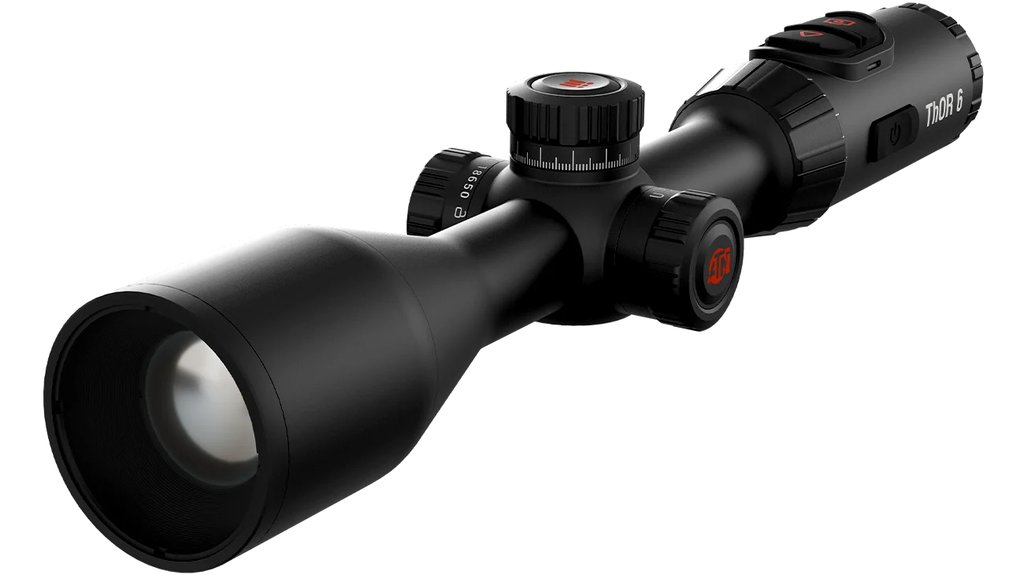
The ThOR 6 384 is the value sweet spot because it gives up almost nothing that decides a coyote stand and only sheds cost where a caller does not feel it. The sensor reads 384x288 dots, which sounds like a step below the 640, and it is, but the difference only shows when you zoom hard on a distant animal to sort it from clutter. At the ranges most coyotes actually offer, the 384 reads a dog clean and clear. Where it wins on value is everywhere else. It runs the identical 50 Hz refresh, so a trotting or circling coyote stays smooth instead of smearing into a blur, and SharpIR AI enhancement sharpens the raw picture the same as its bigger sibling. You get all six color palettes, Picture-in-Picture, Hot Point Tracking to flag the hottest thing in frame, Reticle Transparency Control so your aim point does not wash out against a bright animal, Zeroing Freeze for painless sighting, and Recoil Activated Video to confirm the hit. The Full-HD OLED display, dual replaceable 18650 batteries good for about 9 hours, 64 GB of storage and IP67 waterproofing all carry over. And at 790 g it is the lighter of the two, which means the rifle comes up faster when a dog appears. You are paying mid-tier money for flagship guts.
Best value overall: ATN ThOR 6 384x288
The ATN ThOR 6 384x288 is the best thermal scope for the money for coyote hunting because it spends your budget on the parts that end stands and skips the parts that only matter at extreme range. The 2.5-20x magnification band opens wider than the 640's 3x low end, which is a real advantage on the close, fast breaks that calling produces: when a dog pops out of a fence line at 60 yards, a wider view gets you on it before it clears the next rise. Detection runs to 2300m, well past any realistic calling shot, so you spot heat long before a coyote commits.
Where your money actually goes
Think of the 384 as the same rifle scope with a slightly smaller picture window. The megapixel-style detail count is lower, so you top out sooner when you zoom to pick apart a dog at long distance, but the color, contrast, smoothness and features are identical. For a hunter who works fields, thickets and cut country where shots land inside a couple hundred yards, the 384 leaves detail on the table only in situations that rarely happen. Who it's for: callers who want flagship features and a fast, light rifle without paying for long-range resolution. Not for: hunters who routinely reach across wide open ground and need to identify game far out.
Step up for long shots: ATN ThOR 6 640x512
The ATN ThOR 6 640x512 is worth the step up in price only when your stands regularly produce long shots. Its 640 sensor packs far more dots into the frame, so you can zoom deep to separate a coyote from a fence post at distance and still hold a crisp image. Detection reaches 3650m, past two miles, giving you the earliest possible warning across a big open field or a canyon rim where dogs hang up far out.
When the extra resolution earns its keep
The 640 shares everything else with the 384: the 50 Hz refresh, SharpIR, six palettes, Recoil Activated Video, the OLED display and IP67 sealing. It is 40 g heavier and it costs more, so it only makes sense if the extra reach and detail will actually be used. For a value-minded caller, that is the honest test. Who it's for: predator hunters who shoot open country and need to identify dogs at long range. Not for: anyone whose shots land close, who is better served by the lighter, cheaper 384.
How to get the most scope for your money
Get the most value by buying for the ranges you actually shoot, not the ranges you imagine. A coyote scope earns its keep on the fundamentals, and those are shared across the ThOR 6 line.
- Resolution vs. range — The 384 reads coyotes clean at typical calling distances; the 640's extra dots only pay off when you zoom hard on far animals. Do not buy resolution you will not use.
- Detection range — Both reach far past a realistic shot: 2300m on the 384, 3650m on the 640. Either spots heat long before a dog commits.
- Refresh rate — Both run 50 Hz, so a circling coyote stays smooth. This matters more for hitting a moving dog than a jump in resolution does.
- Magnification — The 384's wider 2.5x low end is a genuine advantage on close, fast breaks, which is where value-minded callers take most shots.
- Weight — Both stay under 2.2 lbs; the 384 is the lighter and quicker to shoulder.
- Shared features — SharpIR, six palettes, Recoil Activated Video and IP67 sealing are identical, so the cheaper scope is not a stripped-down one.
For most predator hunters the 384 is the smart-money pick, delivering the full ThOR 6 experience at real calling ranges. Step up to the 640 only if long shots are a regular part of your hunting. Compare both on ATN's ThOR thermal scopes page, and if you shoot an AR, see our take on thermal scopes for an AR-15 coyote rig.
How we picked these ATN thermal scopes
Since the question is value, here is how the picks were weighed. Only ATN's current 6th-generation ThOR line was considered, so nothing discontinued is inflating the list. Each scope was judged on what your budget buys at real calling ranges: sensor resolution against the distances coyotes are actually shot at, thermal sensitivity (NETD), detection range, the 50 Hz refresh that keeps moving dogs smooth, weight, and battery life across a night. The trade-offs are stated straight, because a value roundup that hides them is useless. These are ATN's own scopes, so treat this as an in-house comparison of the range rather than an independent lab review, and match the sensor to the ranges you really hunt before you spend.
Frequently Asked Questions
What is the best thermal scope for the money for coyote hunting?
The ATN ThOR 6 384x288 2.5-20x is the best value pick for coyote hunting. It reads a called coyote cleanly at typical shooting distances, carries the full ThOR 6 feature set, and sits at the mid tier rather than the flagship price of the 640, so you are not paying for reach most callers never use.
Is the 384 sensor good enough for coyotes?
Yes, for the vast majority of calling shots. Most coyotes are killed inside a couple hundred yards, where the 384 reads a dog clearly. The 640's extra resolution only shows an advantage when you zoom hard to identify game at long distance across open ground.
What do I give up by choosing the 384 over the 640?
Only top-end resolution and reach. The 384 detects to 2300m versus 3650m and holds a little less detail at extreme zoom. Everything else, including the 50 Hz refresh, SharpIR, six palettes, Recoil Activated Video and IP67 sealing, is identical, and the 384 is actually lighter.
Why does the 384's wider low end matter?
Its 2.5x base magnification opens a wider field of view than the 640's 3x, which helps on the close, fast shots calling produces. When a coyote breaks cover near you, a wider view gets you on the animal faster before it disappears over the next rise.
How long will the battery last on a night of calling?
About 9 hours on the dual replaceable 18650 batteries, which covers a full night of moving between stands. Because the cells are user-replaceable, you can also carry spares and swap in seconds rather than ending a hunt early.
Is a thermal scope legal for coyote hunting at night?
Night thermal hunting for coyotes is legal in many states but rules vary widely, and some regulate it by season, weapon or landowner status. Always confirm your state and local regulations before you head out, because coyote and predator rules change often.
Can I use one thermal scope for both coyotes and hogs?
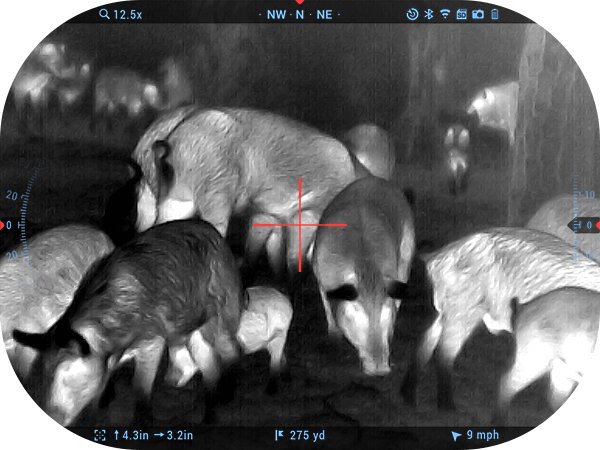
Yes. The ThOR 6 384 handles both well, since coyotes and hogs are hunted at similar ranges and both show up clearly in thermal. The same 50 Hz picture and feature set that suit called coyotes work just as well on a group of hogs in a field.
You do not need to overspend to end a coyote stand well. The ATN ThOR 6 384x288 puts the full ThOR 6 feature set on a light, fast rifle at a smart price, and the 640 is there when your shots stretch long. Compare both on ATN's ThOR thermal scopes page, match the sensor to the ranges you actually shoot, and put your money where it turns into dead coyotes.
Created: July 7, 2026 · 11:11:27 UTC