The terrain you shoot in decides which thermal monocular belongs in your pack more than any spec sheet does. Open marshland and ridgelines reward reach and detail, because the animal is often a long way off and standing still. Dense woodland and river-bottom thickets reward a wide view and a light body, because the deer appears at fifty metres and is gone in three seconds. This comparison lines up the two ATN monoculars that anchor those extremes for the best thermal monocular wildlife photography 2026: the long-range BlazeHunter XD against the wide-view BlazeTrek 6 640.
How the BlazeHunter XD LRF works
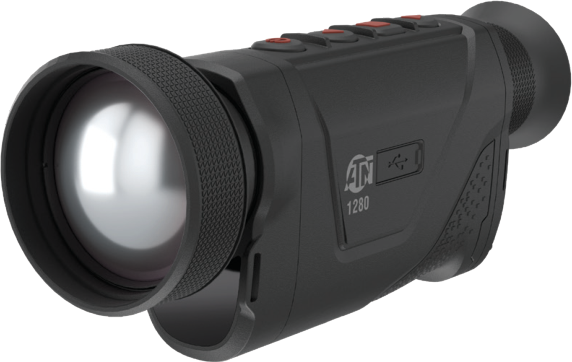
The BlazeHunter XD LRF is built for reach and detail in wide-open country. Its 1280x1024 sensor carries over a million more pixels than a 640 detector, which is the difference between a standard-definition and a high-definition thermal picture — more dots on the screen, so a distant elk or a heron on a far bank stays a recognisable shape instead of a warm smear. A 50 mm lens gathers the heat energy for that long reach, and a Full-HD OLED display shows the result. Its ≤15 mK NETD, the smallest temperature difference it can resolve, keeps contrast high when animals barely differ from cooling ground. A built-in laser rangefinder tells you how far the subject is out to 1000 m within about a metre, and it records to internal storage while streaming over Wi-Fi through ATN Connect 6.
How the BlazeTrek 6 640x512 works
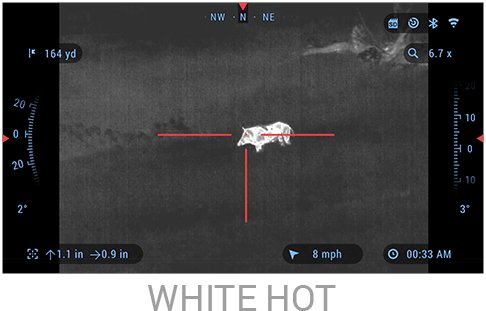
The BlazeTrek 6 640 is built for speed and mobility in tight cover. Its 640x512 sensor still delivers a clean, high-resolution image, but the story here is the 22.8° by 18.3° field of view — how much of the scene you take in at once. In thick timber where an animal flashes into a gap and out again, that wide view is like watching with both eyes open rather than through a keyhole, so you catch the movement before it is gone. At 0.7 lb with a 19 mm lens it slips into a pocket, and its six palettes, SharpIR enhancement, Hot Point Tracking, Wi-Fi and 32 GB of storage make it a quick-draw recorder for close encounters.
When to choose the BlazeHunter XD LRF
Choose the BlazeHunter XD LRF when your terrain is open and your subjects are far away. On prairie, marsh edges, ridgelines and big water, animals are often distant and relatively static, which is exactly where its extreme resolution, 3400 m detection and rangefinder pay off. Detection range here means picking up that a warm shape exists at that distance, not identifying it — but the high pixel count lets you keep zooming and cropping and still hold usable detail for a frame. The 10+ hour dual-battery system suits long, patient sits, and the extra weight is a fair trade when you are glassing a hillside rather than still-hunting through brush.
When to choose the BlazeTrek 6 640x512
Choose the BlazeTrek 6 640 when your terrain is close and cluttered and speed matters. In woodland, hedgerows, creek bottoms and backyard observation, the wide field of view finds animals faster than any amount of zoom, and the light 0.7 lb body means you carry it every outing without fatigue. You give up the rangefinder and the XD's long reach, and its ≤18 mK NETD is a shade less sensitive than the XD's ≤15 mK, so contrast in very mild weather is slightly lower. For the majority of close-range wildlife filming, though, its blend of wide view, high resolution and pocketable carry is the more practical tool.
Our recommendation
For the best thermal monocular wildlife photography 2026 in open, long-range terrain, our pick is the ATN BlazeHunter XD LRF 1280x1024. Its extreme-definition sensor and built-in ranging simply capture more usable detail across distance than anything else in the line, and that is what long-range wildlife documentation lives or dies on. If your work is mostly in dense cover or you value carrying the lightest possible body, the wide-view BlazeTrek 6 640 is the smarter buy, and the BlazeTrek 6 384 is a lighter value spotter if reach is not a priority. Compare all three side by side in ATN's range of thermal monoculars and let your usual terrain make the call.
How we compared them
We compared these two by the job of observing and recording wildlife, sorted by the terrain each one is built for rather than by shooting performance. The criteria that drove the verdict were resolution and NETD (detail and contrast for legible footage), field of view versus magnification (finding animals fast versus reaching distant ones), detection range and the rangefinder for open country, and weight plus battery life for how long and how far you carry. Refresh rate is comparable across both current models, so it was not a deciding factor here.
Only the current 6th-gen Blaze line was considered. The honest trade-offs: the BlazeHunter XD's detail and reach come with more weight and a bigger footprint, while the BlazeTrek 6 640 gives up ranging and long-distance clarity for a wider view and a lighter carry. This is an in-house comparison of ATN's own monoculars, not an independent lab test, so use it to narrow the choice and then check the specs against the distances and cover you actually shoot in.
Frequently Asked Questions
Which is better for wildlife photography, the BlazeHunter XD or the BlazeTrek 6 640?
It depends on your terrain. The BlazeHunter XD LRF wins in open, long-range country thanks to its extreme-definition sensor, 3400 m detection and built-in rangefinder. The BlazeTrek 6 640 wins in dense, close cover with its wide field of view and lighter 0.7 lb body. Match the tool to where you shoot.
Does the higher resolution of the BlazeHunter XD really matter for wildlife?
In open terrain, yes. The 1280x1024 sensor carries over a million more pixels than a 640, which is the jump from standard to high definition. That extra detail lets you crop and zoom into distant subjects and still keep a recognisable, sharp frame, which is exactly what long-range wildlife documentation needs.
Why would I pick the wider field of view over more resolution?
In thick woodland or river bottoms, animals appear briefly and close. A wide field of view lets you sweep a scene fast and catch that movement before it disappears, where a high-zoom, narrow view would miss it. The BlazeTrek 6 640's wide view finds subjects quickly, which often matters more than raw pixels up close.
Do both monoculars record and share footage?
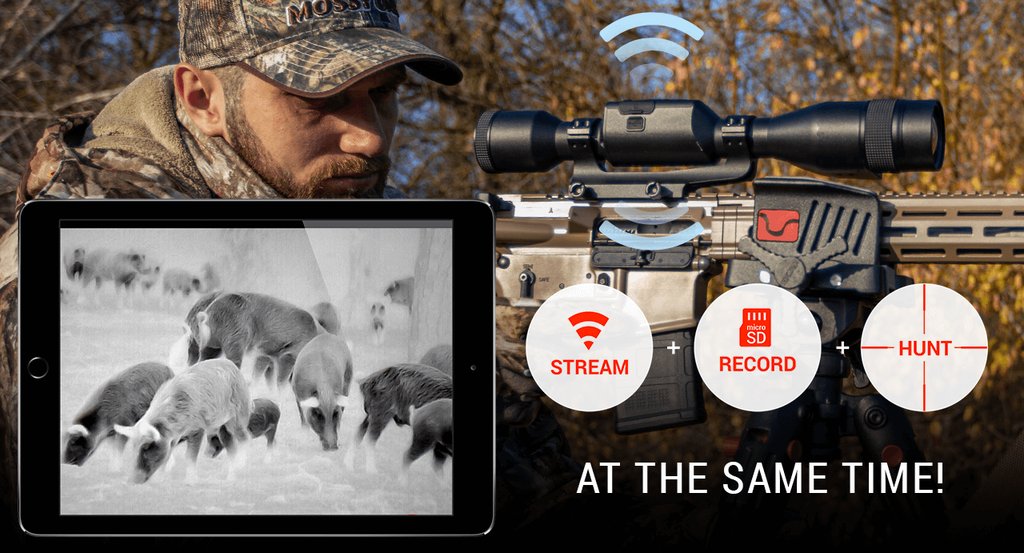
Yes. Both the BlazeHunter XD LRF and the BlazeTrek 6 640 record video and stills to internal storage and stream a live view to your phone through the ATN Connect 6 app over Wi-Fi. Both also offer six color palettes and SharpIR image enhancement so the footage you capture looks as clean as possible.
How much does weight matter between these two?
More than people expect on long outings. The BlazeTrek 6 640 is 0.7 lb and pockets easily for mobile, still-hunting-style observation. The BlazeHunter XD LRF is 1.1 lb, which is a fair trade for its reach and detail when you are glassing from one spot but heavier to carry all night through brush.
What does the built-in rangefinder add for wildlife photography?
The BlazeHunter XD's laser rangefinder tells you how far a subject is, accurate to about a metre out to 1000 m. In open terrain that helps you judge scale, plan a stalk for a closer frame, and understand just how far your footage was captured. The BlazeTrek 6 640 does not include ranging.
Are both of these current ATN models?
Yes. The BlazeHunter XD LRF and the BlazeTrek 6 640 are both part of ATN's current 6th-generation lineup, as is the BlazeTrek 6 384 mentioned alongside them. We only compared current models so the recording, Wi-Fi and image features described reflect what ships today.
Still weighing reach against a wider view? Let the ground you shoot decide: the ATN BlazeHunter XD LRF is our pick for open, long-range wildlife documentation, while the BlazeTrek 6 640 is the lighter, wide-view choice for dense cover. See how each one's resolution, field of view and weight line up across the full family of ATN thermal monoculars, then pick the monocular that fits your terrain and how you like to capture wildlife.
Created: August 10, 2026 · 09:39:32 UTC