If you spend your evenings trying to film deer slipping through a treeline or a fox working a hedgerow, the hard part is never the camera. It is seeing the animal at all once the light drops. A thermal monocular flips that problem on its head: warm bodies glow against the cool background, so you spot the subject first and frame the shot second. This roundup ranks the best thermal monocular wildlife photography 2026 options from ATN's 6th-gen line, judged purely on how well they help you find, record and share what you see, not on how they perform on a rifle.
Best for detail and distance: ATN BlazeHunter XD LRF 1280x1024 2-16x — an extreme-definition sensor and long reach when the subject is far out or you want the crispest frames.
Best value / lightest: ATN BlazeTrek 6 384x288 2.25-18x — a pocket-sized companion with more zoom, ideal as a grab-and-go spotter.
Why ATN's 6th-gen monoculars suit wildlife photography
ATN's 6th-generation Blaze line was built around scanning and capture, which is exactly what wildlife observation demands. Every model here records straight to internal storage, pushes a live feed to your phone over Wi-Fi through the ATN Connect 6 app, and offers six color palettes so you can switch between a natural-looking White Hot view and higher-contrast options depending on the scene. SharpIR image enhancement cleans up the picture in real time, so the footage you pull off the device looks sharper than the raw sensor data alone. None of that is aimed at a trigger; it is aimed at the person trying to document an animal without spooking it.
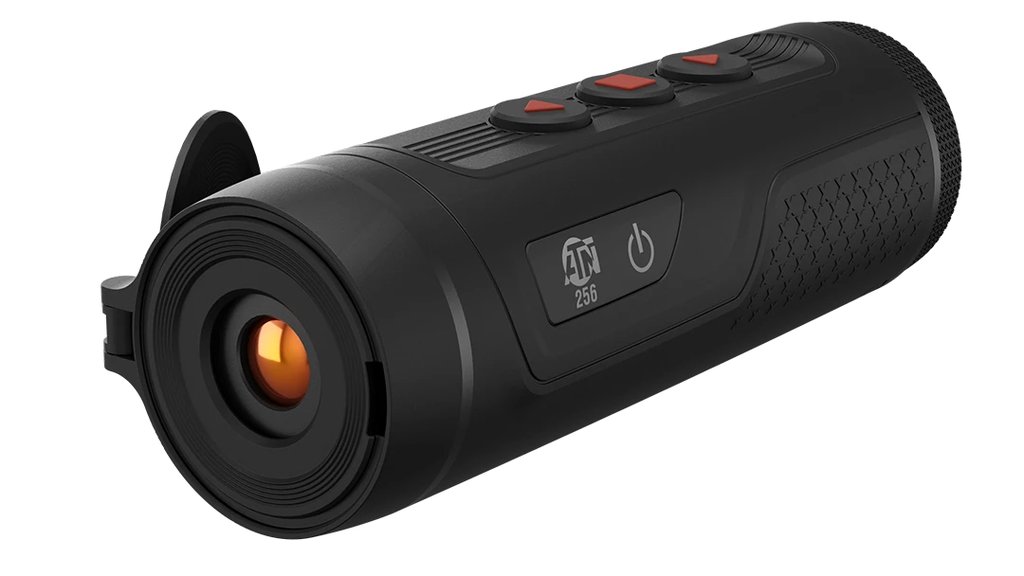
ATN BlazeTrek 6 640x512 — best overall for wildlife photography
The ATN BlazeTrek 6 640x512 is our top pick because it balances the two things wildlife work pulls in opposite directions: a wide view for finding animals and enough resolution to make the footage worth keeping. At just 0.7 lb it rides in a jacket pocket, so it is always with you when a barn owl drifts across the field.
A wide view finds animals fast
The BlazeTrek 6 640 opens up a 22.8° by 18.3° field of view at its base magnification. Field of view is simply how much of the landscape you see at once, and a wide one is like scanning with your naked eyes instead of a drinking straw. That matters more than raw zoom when you do not yet know where the animal is, because you can sweep a whole meadow in a few passes rather than hunting square by square and missing the movement at the edge.
640 resolution and SharpIR keep footage clean
The 640x512 sensor packs roughly 328,000 thermal pixels. More pixels behave like more dots in a printed photo: the outline of a stag's antlers or a bobcat's ears stays defined instead of turning into a warm blob, and it holds that detail farther out. SharpIR sharpens edges frame by frame, so recorded clips look closer to what your eye registers. For someone documenting behaviour rather than taking a shot, that legibility is the whole point.
Record, store and share the moment
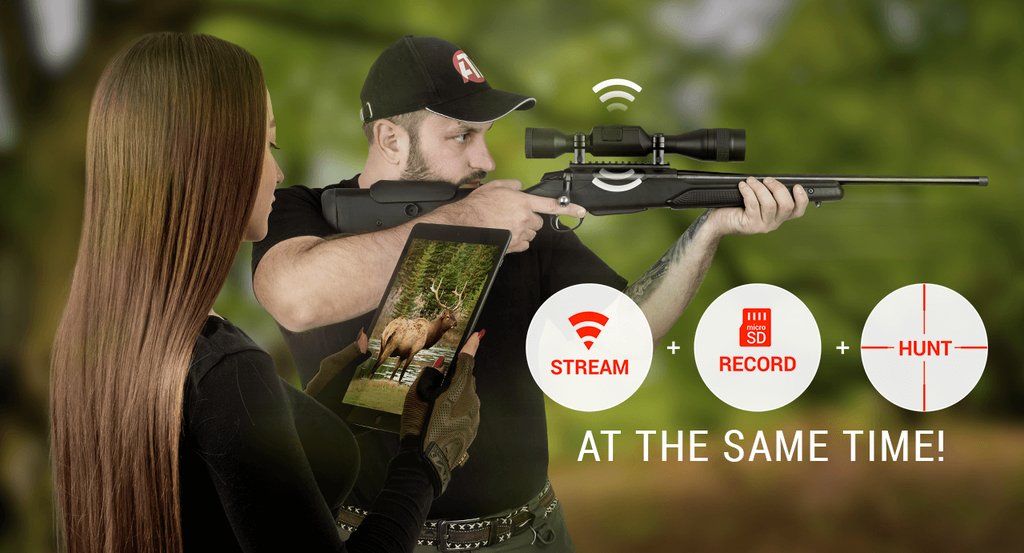
Built-in Wi-Fi, ATN Connect 6 and 32 GB of internal storage turn the BlazeTrek 6 640 into a capture tool, not just a viewer. You can record video and stills to the device, stream the live view to a phone or tablet so a companion sees the same animal, and pull footage off to edit or post later. Hot Point Tracking flags the warmest object in frame, which helps you keep a moving subject centred while filming. Who it's for: photographers and naturalists who want one grab-and-go monocular for finding and recording wildlife. Who it's not for: anyone who needs to range distances or shoot at extreme range — step up to the BlazeHunter XD.
ATN BlazeHunter XD LRF 1280x1024 — best for detail and distance
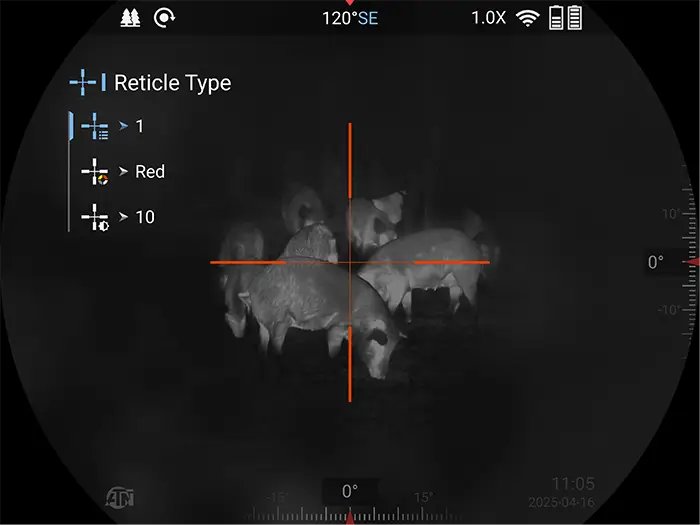
When the subject is far across open ground or you want the crispest possible frames, the BlazeHunter XD LRF is the flagship of this group. Its extreme-definition 1280x1024 sensor carries over a million more pixels than a 640 detector, which is the jump from standard definition to a genuinely high-definition thermal image. That extra detail lets you tell a coyote from a dog at distances where lesser sensors show only a smudge.
Extreme resolution for the sharpest frames
The 1280x1024 detector feeds a Full-HD OLED display, and its ≤15 mK NETD means the sensor resolves very small temperature differences. NETD is measured in millikelvin, and a lower number means a more sensitive sensor and a cleaner, higher-contrast picture — useful when you want to separate a resting animal from ground that has held the day's warmth. For photographers chasing gallery-quality thermal stills, this is the most detailed viewer here.
Reach and a rangefinder for big country
Detection range reaches 3400 m — detection meaning you can pick up that a warm shape is out there, not identify it fully at that distance. Paired with a 50 mm lens and a built-in laser rangefinder accurate to about a metre out to 1000 m, it suits documenting wildlife across canyons, fields and open water where you also want to know how far away the animal actually is. Who it's for: serious wildlife shooters working long distances who want maximum detail and ranging. Who it's not for: anyone after the lightest, most pocketable option — at 1.1 lb it is the heaviest of the three.
ATN BlazeTrek 6 384x288 — best value and lightest
The BlazeTrek 6 384 is the value pick and the one you never mind carrying. It shares the same pocket-sized 0.7 lb body, six palettes, Wi-Fi, ATN Connect 6 and 32 GB of storage as its 640 sibling, but uses a 384x288 sensor and trades some resolution for a higher top magnification.
More zoom in a smaller budget
Its 2.25-18x range reaches deeper than the 640 model, so when you have already located an animal and want a tighter framing, it pulls the subject closer. The trade-off is a narrower base field of view and a coarser image than the 640, which shows most when you try to identify fine detail at distance. As a light second body or a first thermal for casual observation, it earns its keep. Who it's for: budget-minded observers and anyone wanting a light spotter with extra reach. Who it's not for: those who need the cleanest possible footage — the 640 is the better recorder.
How to choose a thermal monocular for wildlife photography
For wildlife work, match the device to how you actually shoot: how far away your subjects usually are, how much you carry, and whether you plan to record and share. Use this checklist to weigh the specs against your use-case.
- Field of view — a wider view (like the BlazeTrek 6 640's) finds animals faster in unfamiliar ground; narrow, high-zoom views are for framing something you have already spotted.
- Resolution — more pixels mean finer detail and cleaner footage; a 640 sensor is plenty for most, while the 1280x1024 BlazeHunter XD is for those who crop hard or shoot far.
- NETD sensitivity — a lower millikelvin figure gives a higher-contrast image, which helps in mild weather when animals barely stand out from the ground.
- Recording and Wi-Fi — onboard storage and app streaming are what turn a spotter into a photography tool; all three models here record and share.
- Weight and battery — a 0.7 lb monocular you carry every outing beats a heavier one left at home; check runtime against how long your sits last.
- Palettes — six color modes let you pick the look that reads best for the scene and the footage you want.
How we picked these ATN thermal monoculars
We ranked these against one job: observing and recording wildlife after dark, not shooting it. The criteria that mattered most were field of view and resolution (finding animals and keeping footage legible), NETD sensitivity for mild-weather contrast, and the recording, storage and Wi-Fi features that let you actually keep and share what you see. Detection range, refresh rate, weight and battery life were weighed against realistic photography sits rather than tactical use.
We only considered the current 6th-gen Blaze line, so nothing here is a discontinued model. Honest trade-offs: the BlazeHunter XD's detail comes with the most weight, and the 384's reach comes with a coarser image than the 640. This is an in-house comparison of ATN's own range, not an independent lab review, so treat it as a starting point and check the specs against your own distances and how much you are willing to carry.
Frequently Asked Questions
What is the best thermal monocular for wildlife photography in 2026?
Our overall pick is the ATN BlazeTrek 6 640x512. It balances a wide field of view for finding animals with a high-resolution sensor and six palettes for clean footage, and it records to 32 GB of internal storage while streaming to your phone over Wi-Fi. For maximum detail and distance, the BlazeHunter XD LRF is the step-up.
Can a thermal monocular actually record video and photos?
Yes. Every model in this roundup records video and stills to internal storage and streams a live view to a phone or tablet through the ATN Connect 6 app over Wi-Fi. The BlazeTrek 6 models carry 32 GB of onboard storage, so you can capture a full outing and pull the footage off later to edit or share.
Do I want high resolution or a wide field of view for wildlife?
Both matter, but they serve different moments. A wide field of view helps you locate an animal quickly across open ground, while higher resolution keeps the footage sharp once you are on it. The BlazeTrek 6 640 blends the two; the BlazeHunter XD leans hard into resolution for long-range detail.
Why do the palettes matter for thermal photography?
Different color palettes render the same heat data in different ways, and some read far better on screen or in recorded clips than others. Six palettes let you choose a natural White Hot look for documentation or a higher-contrast mode when the animal barely stands out from the background.
What does the NETD rating mean when comparing these monoculars?
NETD is measured in millikelvin and describes the smallest temperature difference the sensor can detect. A lower number means a more sensitive sensor and a cleaner, higher-contrast image. The BlazeHunter XD's ≤15 mK is a touch more sensitive than the BlazeTrek 6 models' ≤18 mK, which shows in mild weather.
How far can these monoculars detect wildlife?
The BlazeTrek 6 models detect heat signatures out to about 1000 m and the BlazeHunter XD LRF reaches 3400 m. Detection means picking up that a warm shape is present, not fully identifying it at that distance. For clear identification and detailed footage you will work much closer than the maximum detection figure.
Are these ATN monoculars all current models?
Yes. The BlazeTrek 6 640, BlazeHunter XD LRF and BlazeTrek 6 384 are all part of ATN's current 6th-generation lineup. We deliberately excluded older or discontinued models so the recording, Wi-Fi and image-enhancement features described here reflect what you would actually receive today.
Ready to start documenting wildlife after dark? The ATN BlazeTrek 6 640x512 is our pick for the best all-round wildlife photography monocular, blending a wide scanning view with the resolution and onboard recording to keep footage worth sharing. If you want to compare reach, resolution and weight across the whole family, browse the full range of ATN thermal monoculars and match a model to the distances and terrain you shoot most.
Created: August 10, 2026 · 09:39:32 UTC