For the best thermal monocular wide field of view 2026, the real decision is a trade-off between raw resolution and how much ground you see at once, and getting it right depends on knowing which one your hunting actually leans on. ATN's 6th-gen lineup frames it cleanly with two units: the extreme-definition BlazeHunter XD LRF and the wide-angle BlazeTrek 6 640x512. This comparison puts them head to head on the key feature that separates them — pixel count versus field of view — so you pick by what your eyes actually need.
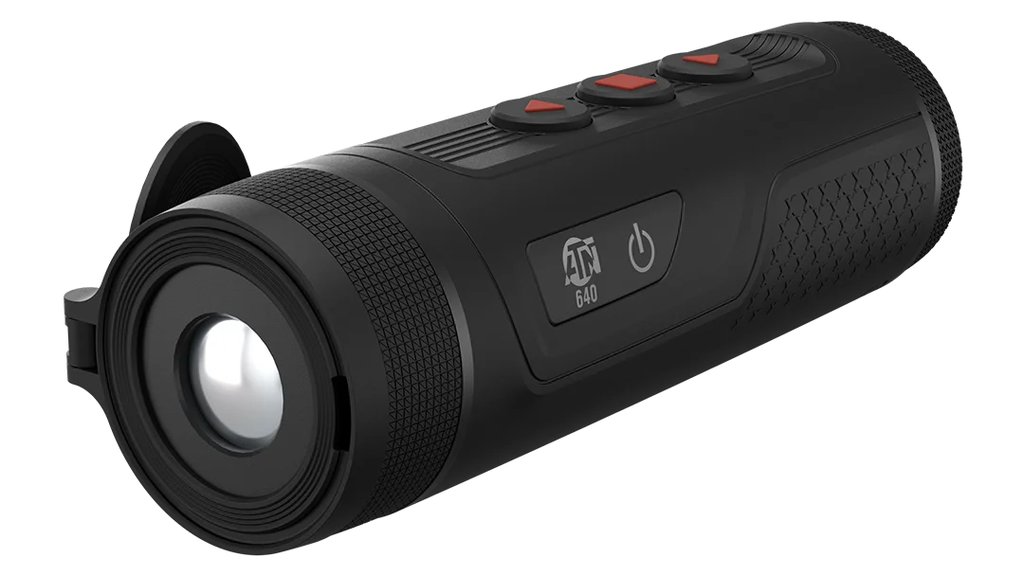
How the BlazeHunter XD LRF 1280x1024 works
The ATN BlazeHunter XD LRF 1280x1024 2-16x is built around an extreme-definition sensor with over a million more pixels than a 640. That density means an animal stays crisp deep into the zoom range, so even though its base view is narrower than the BlazeTrek's, the sheer resolution lets you crop in digitally and still identify a target. Add a 3400 m detection range and a built-in laser rangefinder, and it's the reach-and-detail tool of the pair.
How the BlazeTrek 6 640x512 1.5-12x works
The BlazeTrek 6 640x512 1.5-12x is built for the widest view. Its 1.5x base opens a 22.8°×18.3° field of view — noticeably more ground in one glance than the BlazeHunter XD's 2x base — which makes it the faster scanner in close cover. At 320 g it's lighter and more pocketable, running on an internal rechargeable pack, with a high-resolution 640 sensor that keeps the wide image sharp. That wide, light package is tuned for one job above all: sweeping cover quickly and catching movement before an animal has a chance to disappear, which is where most close-range hunts are won or lost.
When to choose the BlazeHunter XD
Choose the BlazeHunter XD when detail and distance matter more than the widest possible view. Open country, long-range identification and situations where knowing the exact range before a decision counts all favor its extreme-definition sensor and built-in rangefinder. Its higher pixel count also lets you zoom hard without the image falling apart, effectively giving you reach a wide-FOV scanner can't match. The longer 10+ hour swappable battery suits marathon nights, and being able to hot-swap a fresh cell means an all-night observation session never ends because the power ran out at the worst moment.
When to choose the BlazeTrek 6 640x512
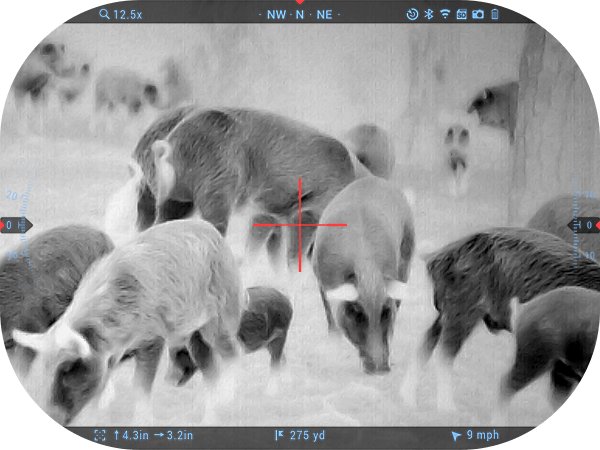
Choose the BlazeTrek 6 640x512 when the widest field of view is the priority — fast scanning of brush, timber edges and close cover where animals appear near and move quickly. Its 1.5x base shows the most ground, its light 320 g body is easy to hold up all night, and its 640 sensor keeps that wide view detailed. If your monocular's main job is catching movement fast, this is the tool.
There's also a comfort argument that's easy to overlook until you're a few hours into a night. A 320 g monocular you can hold to your eye one-handed for repeated quick scans is simply less tiring than a heavier unit, and fatigue is what makes hunters stop scanning and start missing animals. The BlazeTrek's light body plus its wide window means you can keep sweeping longer and cover more ground, which for a pure spotter often matters more than squeezing out extra resolution you don't need at close range.
Our recommendation
For hunters who value identification detail, reach and ranging, the ATN BlazeHunter XD LRF 1280x1024 2-16x is the pick — its extreme-definition sensor effectively buys back reach that a wide-FOV unit gives up. If pure scanning speed in close cover is your priority, the wide-view BlazeTrek 6 640x512 is the honest choice. Compare both, and the value 384 BlazeTrek, in the ATN thermal monocular category, and let your terrain rather than the bigger sensor number make the final call.
How we compared them
We compared these two on the single feature that divides them — resolution versus field of view — and what each buys a hunter. Our measures were sensor resolution (identification detail and digital-zoom headroom), base magnification and FOV angle (scanning width), detection range and the built-in rangefinder (reach and ranging), NETD (contrast) and battery and weight (endurance and carry). Only ATN's current 6th-gen line was considered. This is an in-house comparison of ATN's own monoculars, not an independent lab test, so weigh the numbers against how you hunt. The honest trade-off: the BlazeHunter XD gives up the widest view and adds weight; the BlazeTrek gives up long-range reach and ranging. Who neither is for: someone who wants a rifle sight rather than a handheld scanner.
Frequently Asked Questions
Which is better for a wide field of view, the BlazeHunter XD or BlazeTrek 6?
The BlazeTrek 6 640x512 has the wider field of view, thanks to its low 1.5x base and 22.8°×18.3° window. The BlazeHunter XD trades some width for an extreme-definition sensor and ranging, so choose the BlazeTrek if scanning width is your top priority.
Does the BlazeHunter XD's higher resolution replace a wide FOV?
Partly. Its 1280x1024 sensor lets you zoom in digitally without the image breaking up, so you get reach and detail a wide-FOV unit can't. But for sweeping the most ground at once in close cover, the BlazeTrek 6's wider base view is still faster.
Which monocular is better for long-range identification?
The BlazeHunter XD LRF. Its extreme-definition sensor and 3400 m detection range, plus a built-in laser rangefinder, are built for identifying and ranging animals far off, where the BlazeTrek 6's 1000 m detection runs out.
Is the BlazeTrek 6 lighter to carry?
Yes, at about 320 g versus the BlazeHunter XD's 495 g. That lighter, pocketable body makes the BlazeTrek 6 easier to hold up through a long night of scanning, which suits its role as a fast wide-view spotter.
Which has longer battery life?
The BlazeHunter XD, at 10-plus hours on swappable 18650 cells, so you can hot-swap spares for marathon nights. The BlazeTrek 6 640x512 runs about 6.5 hours on an internal rechargeable pack.
Do I need a rangefinder in a scanning monocular?
It depends on your use. For long-range decisions, the BlazeHunter XD's built-in laser removes distance guesswork. For close-cover scanning where targets are near, the BlazeTrek 6's wider view matters more and a rangefinder is less critical.
The choice is resolution versus field of view — decide which your eyes need most. For detail, reach and ranging, the ATN BlazeHunter XD LRF 1280x1024 2-16x is the pick; for the widest, fastest scanning, the BlazeTrek 6 640x512 wins. Compare them side by side in the ATN thermal monocular lineup and choose the balance that fits the ground you hunt.
Created: August 10, 2026 · 09:39:32 UTC