A wide field of view is the whole point of a scanning monocular — the more ground you see at once, the faster you catch movement. For the best thermal monocular wide field of view 2026, ATN's 6th-gen thermal monoculars lead with the wide-angle BlazeTrek 6 640x512, and this roundup ranks them by terrain, because how wide you need depends on whether you're working thick brush, timber edges or open flats.
Best for detail and reach: ATN BlazeHunter XD LRF 1280x1024 2-16x — extreme-definition sensor and a built-in rangefinder.
Best value wide-FOV: ATN BlazeTrek 6 384x288 2.25-18x — pocket-sized wide scanning at the value tier.
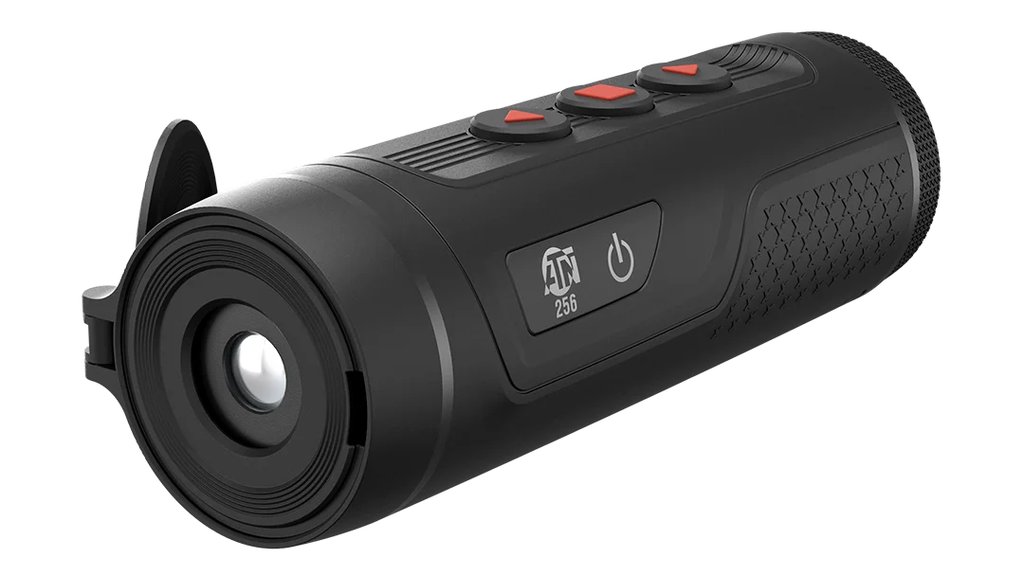
Why ATN's 6th-gen monoculars win on field of view
ATN's 6th-gen monoculars win on field of view because a low base magnification and short focal lens open up the widest possible view for scanning. The BlazeTrek 6 640x512 starts at just 1.5x for a 22.8°×18.3° field of view — that's a lot of ground in one glance, which is exactly what you want when sweeping a tree line for movement. All three carry SharpIR AI enhancement and Hot Point Tracking, so a wide view doesn't mean a soft or laggy one.
Field of view and magnification pull against each other, and understanding that trade-off is the key to buying a scanner. The more you magnify, the narrower the slice of the world you see — great for studying one animal, terrible for finding it in the first place. A low 1.5x base does the opposite: it hands you a broad window so your eye can sweep and catch the flicker of a heat signature moving through cover. For a monocular whose main job is spotting, wide beats powerful, and only after you've found the animal do you zoom in to confirm.
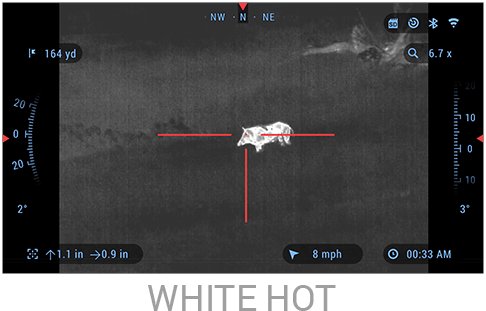
The other reason these win is that the wide view doesn't come at the cost of a soft picture. Hot Point Tracking automatically flags the warmest object in the frame, so as you pan across a field the device draws your attention to what matters. SharpIR AI enhancement sharpens the raw heat map in real time, and six selectable color palettes let you pick the look — White Hot, Black Hot or a color mode like Iron — that separates an animal from its background fastest for your eyes. A wide, sharp, well-processed image is what turns fast scanning into fast finding.
ATN BlazeTrek 6 640x512 1.5-12x — widest view overall
The 1.5x base and why it matters
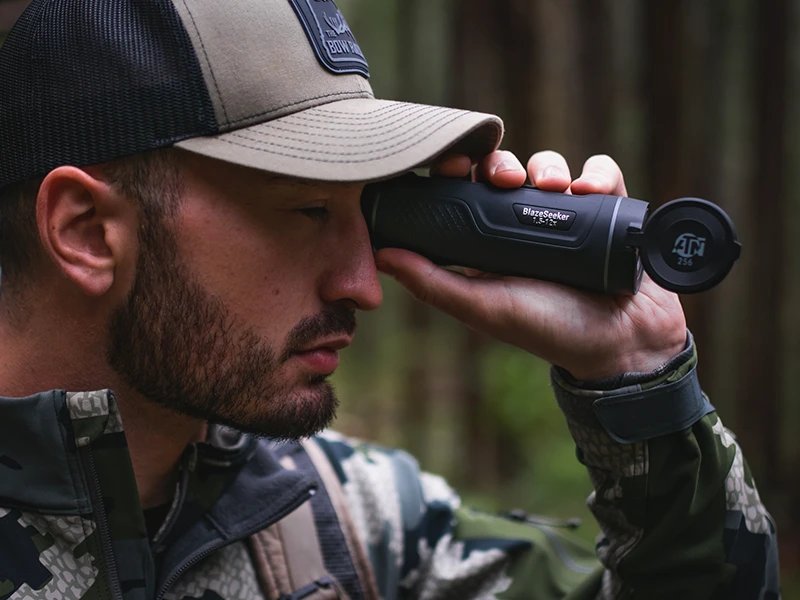
The ATN BlazeTrek 6 640x512 1.5-12x has the widest view here because of its low 1.5x base and 22.8°×18.3° field of view. In thick brush and timber, where animals appear close and move fast, that wide window lets you catch a hog slipping through cover before it's gone. You can still zoom to 12x to confirm the target, but the wide base is what makes it a scanning machine. Practically, a wider base means fewer sweeps to cover the same tree line, so you check more ground per minute and spend less time with the device glued to your eye. Over a long night that adds up to both more animals spotted and less fatigue.
A 640 sensor in a pocket-sized body
This monocular pairs that wide view with a high-resolution 640 sensor in a 320 g body you can palm all night. More pixels means detail holds as you zoom — HD versus standard definition — so a wide scan doesn't cost you clarity. Who it's for: hunters scanning close cover and timber. Who it's NOT for: long-range glassers who need reach past 1000 m, where the BlazeHunter XD is the tool.
ATN BlazeHunter XD LRF 1280x1024 2-16x — best for detail and reach
Extreme definition when you need to identify far
The BlazeHunter XD LRF steps up to an extreme-definition 1280x1024 sensor — over a million more pixels than a 640 — and a 3400 m detection range. When your terrain opens up and you need to identify an animal a long way off, this is the reach-and-detail pick. It's heavier at 495 g and trades the widest FOV for that power. The payoff of all those extra pixels is digital-zoom headroom: you can crop deep into the image to study a distant animal and it holds together instead of dissolving into blocks, which effectively extends how far you can positively identify a target.
That extreme-definition sensor changes how you work open country. Where a wide-FOV scanner finds an animal fast but then hits a wall when you try to study it far off, the BlazeHunter XD lets you keep pushing in — zooming digitally to read body posture, count a group, or confirm a hog versus a coyote at a range where lesser units give up. On big ground where the animal you find might be a quarter mile out, that ability to interrogate a distant target is worth trading some scanning width for.
Ranging built in
A built-in laser rangefinder good to 1000 m turns a distance guess into a known number, which matters when you're evaluating a distant animal. Who it's for: open-country hunters who prize detail and reach. Who it's NOT for: anyone whose main job is fast wide-angle scanning in close cover — the BlazeTrek 6's wider FOV wins there.
ATN BlazeTrek 6 384x288 2.25-18x — best value wide-FOV
Wide scanning at the value tier
The BlazeTrek 6 384x288 2.25-18x keeps the same pocket-sized, wide-scanning character in a value-tier package. Its 384 sensor is well suited to the close-to-mid ranges where a wide FOV pays off, and it climbs to 18x when you want a closer look. Who it's for: budget-minded scanners. Who it's NOT for: hunters needing 640-grade detail or long-range identification.
What you're really trading at the value tier is fine detail at the far end of the range, not the scanning experience itself. Up close and at mid range — the distances a handheld scanner actually works — the 384 shows a hog or coyote plainly, and its slightly higher 2.25x base still keeps a generous field of view. Battery life is actually a hair longer than the 640 model's, so for a hunter who mostly needs to sweep cover and confirm what's out there without chasing long-range identification, this is the sensible place to spend.
How to choose a wide-FOV thermal monocular
Choose by terrain and how you scan. The tighter and closer your ground, the more a wide field of view earns its keep, while big open country tips the balance toward resolution and reach so you can identify what you've found from a long way off.
- Thick brush and timber — go widest (BlazeTrek 6 640x512 1.5-12x) to catch fast, close movement.
- Open country and long ID — favor resolution and reach (BlazeHunter XD LRF 1280x1024).
- Budget scanning — the value 384 BlazeTrek keeps the wide view at a lower tier without dropping the core features.
- Carry weight — the BlazeTrek 6 pair is 320 g; the BlazeHunter XD is heavier for its power.
- Battery style — the BlazeTrek runs on an internal pack; the BlazeHunter XD uses swappable 18650s for longer nights, so plan spares around the way you hunt.
How we picked these ATN thermal monoculars
We ranked these by field of view first, since that's the keyword's whole intent, then by how each fits real scanning terrain. Our criteria were the base magnification and FOV angle (how much ground you see), sensor resolution (detail while scanning), NETD (contrast), detection range (reach) and battery and weight (all-night carry). Only ATN's current 6th-gen line was considered — no older models. This is an in-house comparison of ATN's own monoculars, not an independent lab review, so match the numbers to your ground. The honest trade-off: the widest-FOV BlazeTrek gives up long-range reach; the high-detail BlazeHunter XD gives up the widest view and adds weight. Who these are NOT for: someone who only needs a rifle-mounted optic rather than a handheld scanner.
Frequently Asked Questions
What is the best thermal monocular for a wide field of view in 2026?
The ATN BlazeTrek 6 640x512 1.5-12x. Its low 1.5x base and 22.8°×18.3° field of view show the most ground at once for fast scanning, and its 640 sensor keeps that wide view sharp when you zoom to confirm a target.
Why does field of view matter in a thermal monocular?
A wider field of view lets you see more ground in a single glance, so you catch movement faster when scanning brush or timber. It's the difference between spotting a hog slipping through cover and missing it entirely.
Does a wide field of view reduce image quality?
Not with a good sensor. The BlazeTrek 6 640x512 pairs its wide view with a high-resolution sensor, so detail holds when you zoom in. A wide FOV only hurts quality if the sensor is too low-resolution to support magnification.
When should I choose the BlazeHunter XD instead?
When you need long-range detail and ranging over the widest view. Its extreme-definition 1280x1024 sensor, 3400 m detection and built-in rangefinder suit open-country identification, though it gives up some field of view and adds weight.
Is the 384 BlazeTrek 6 worth it for wide-FOV scanning?
Yes, for budget-minded hunters. It keeps the pocket-sized, wide-scanning design at a value tier, and its 384 sensor is well matched to the close-to-mid ranges where a wide field of view is most useful.
How long do these monoculars run per charge?
The BlazeTrek 6 models run roughly 6.5 to 8 hours on an internal rechargeable pack, while the BlazeHunter XD runs 10-plus hours on swappable 18650 cells, making it the choice for the longest nights.
If scanning is your job, buy the widest view your terrain calls for. Start with the ATN BlazeTrek 6 640x512 1.5-12x for the widest field of view, or step to the BlazeHunter XD for detail and reach, and see the full range in the ATN thermal monocular lineup. Match the field of view to the ground you scan, and you'll catch movement others walk right past.
Created: August 10, 2026 · 09:39:32 UTC