Scanning is a numbers game: the more ground your optic shows at once, the faster you catch the animal moving through it. So the best thermal monocular wide field of view 2026 shooters keep reaching for is the ATN BlazeTrek 6 640x512. It pairs a genuinely wide 22.8-by-18.3-degree view with a high-resolution 640 sensor, so you sweep a lot of country in one look and still have the detail to confirm what you froze on. This roundup is organized around one idea — a view built for scanning and tracking — and the BlazeTrek family is built for exactly that. It lives in ATN's thermal monoculars lineup.
The best wide-field-of-view thermal monocular for 2026 is the ATN BlazeTrek 6 640x512. Its wide 22.8-by-18.3-degree view lets you scan more ground in a single sweep, while the 640 sensor keeps enough detail to identify and track a running animal without hunting for it.
Quick answerBest overall (widest usable view): ATN BlazeTrek 6 640x512 1.5-12x — the most detail behind the wide view.
Best value in the family: ATN BlazeTrek 6 384x288 2.25-18x — same wide-scanning body, lighter on the wallet, more reach at the top zoom.
Bottom line: if your nights are about catching movement fast, start wide with the 640. Step to the 384 if you want the platform at a friendlier tier and don't need the extra dots.
Why ATN's 6th-gen BlazeTrek owns the wide-view job
A wide field of view only helps if the picture behind it is good enough to act on, and that is where the 6th-gen BlazeTrek 6 pulls ahead. The 640x512 core is a much denser grid of dots than a 384 or 256 sensor — like going from standard definition to HD — so you can push the digital zoom to confirm an animal without the image falling apart into blocks. SharpIR AI enhancement cleans the frame, Hot Point Tracking tags the warmest thing you're following, and a 50 Hz refresh keeps a coyote at a dead run smooth instead of a smear. All of that rides behind a 22.8-by-18.3-degree window, so you're covering wide arcs and keeping detail at the same time. Detection reaches out to about 1000m, which means you spot heat early and have room to react. That marriage of wide view and high resolution is why it leads here.
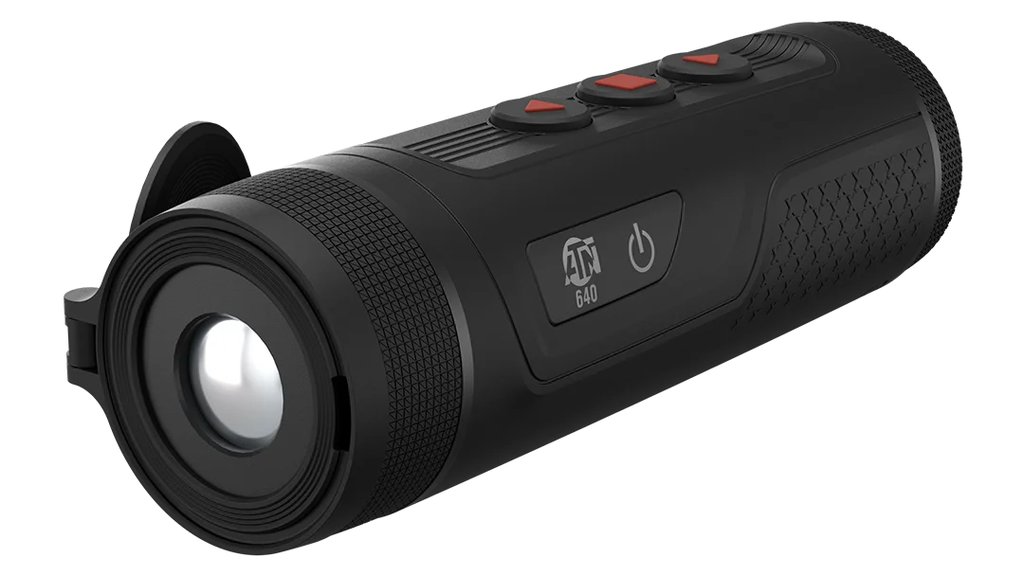
Best overall wide-view pick: ATN BlazeTrek 6 640x512 1.5-12x
The ATN BlazeTrek 6 640x512 1.5-12x is the pick when you want the widest usable view — wide enough to sweep quickly, sharp enough to trust what you see. The 1.5x base opens the frame right up, and the 640 sensor means the picture holds together as you zoom in to 12x to identify the animal you caught in the corner of the view.
Wide to catch, sharp to confirm
The workflow is simple: sit at 1.5x and let the wide view do the finding, then zoom to sort out hog from deer from stray dog. Because the 640 core has so many dots, that zoom stays clean instead of turning to mush, which is exactly what a scanner needs when a group is moving and you have seconds to decide.
Who it's for and who it's not
It's for the active scanner and tracker who covers ground and wants the best detail behind a wide window. It's not the cheapest way in — if you don't need the extra resolution and want to save, the 384 variant does the same wide job for less.
Best value in the family: ATN BlazeTrek 6 384x288 2.25-18x
The ATN BlazeTrek 6 384x288 2.25-18x keeps the wide-scanning body and drops to a 384 sensor to land at a friendlier tier. You still get the 19mm lens, ~1000m detection, and the full 6th-gen feature set, plus a slightly longer battery at about 8 hours and a higher 18x top zoom for reaching out.
Same job, lighter cost
For everyday spotting, the 384 sensor is plenty — you still catch movement fast across the wide view, and the higher top magnification helps you stretch a confirm out to distance. You give up some of the fine detail the 640 shows on a hard zoom, but for most nights you won't miss it.
Who it's for and who it's not
It's for the value-minded scanner who wants the wide BlazeTrek view without paying for the top sensor. It's not for someone who leans hard on maximum digital zoom to pick apart animals at range — that's the 640's territory.
The battery and reach edge
The 384 quietly earns two small advantages worth naming. Its longer roughly 8-hour battery outlasts the 640's 6.5, which matters on a dusk-to-dawn sit, and its higher 2.25-18x zoom range reaches a touch farther at the top end when you want to stretch a confirmation across open ground. So the value pick isn't just cheaper — for a certain kind of long, distance-leaning night it's arguably the more practical body. The 640 still wins on outright picture quality when you zoom hard, but if your priorities are stay-time and reach over pixel-peeping, the 384 makes a genuine case.
How a wide view changes the way you scan
A narrow, high-power optic makes you work in slices — pan a bit, stop, study, pan again — and every stop is a chance for an animal to move into a gap you already checked. The wide BlazeTrek view flips that. You cover a whole field edge or tree line in a couple of unhurried sweeps, and because you're seeing so much at once, movement jumps out at you rather than needing to be hunted for. Then you zoom only on the thing that caught your eye. On the 640 that zoom stays clean enough to sort hog from deer from a stray dog before you commit. The practical result is that you find more, sooner, and spend less of the night squinting through a straw. It's the difference between watching a room and peering through a keyhole.
Tracking a moving group
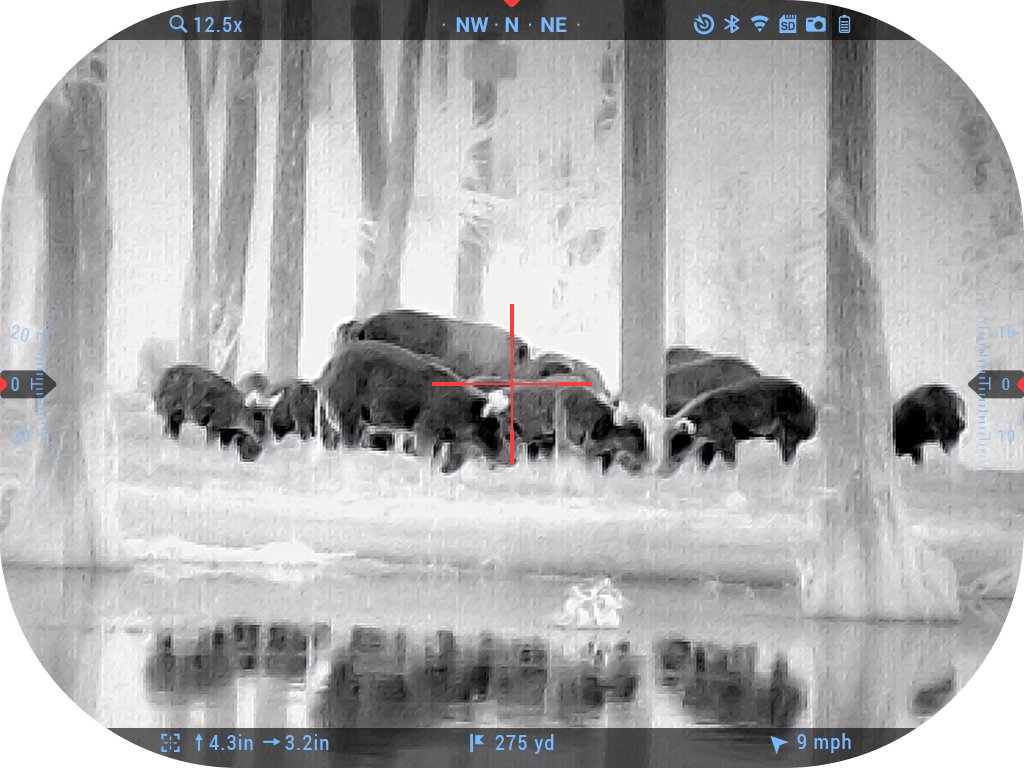
Wide view earns its keep most when a group is on the move. A sounder of hogs trotting across a field or a pair of coyotes working opposite edges will scatter out of a narrow frame in seconds; in the wide BlazeTrek window you keep the whole group in view and can pick which animal to follow. Hot Point Tracking tags the warmest object so your eye has an anchor, and the 50 Hz refresh keeps the runners from smearing into streaks. That's the exact scenario a scanning-and-tracking optic is built to win, and it's why field of view, not just magnification, belongs at the top of the spec list.
How to choose a wide-field thermal monocular
With both BlazeTrek variants sharing a body and a wide view, your decision is really about how much detail you want behind that window and how you scan.
- Field of view first — a wide 22.8-degree window is the whole reason to buy this class; it's what lets you catch movement in one sweep instead of five.
- Resolution behind the view — 640 is a denser grid of dots that holds up on zoom; 384 is the value grid that still scans great.
- Refresh rate for tracking — 50 Hz keeps a running animal smooth; a slower refresh smears fast movement, which defeats a tracking tool.
- Detection range — ~1000m on both means you pick up heat early and have time to react.
- Battery for your night — the 384 runs a bit longer at ~8 hours; the 640 sits near 6.5, so plan a top-up for marathon sessions.
How we picked these ATN thermal monoculars
Because this list is about the widest usable view, we weighted field of view heavily, then judged resolution, NETD, refresh rate, detection range, battery, and weight against real scanning and tracking — not a spec sheet in isolation. Only ATN's current 6th-gen BlazeTrek line was in the running, so nothing here is an older leftover. Honest trade-offs: the 640 shows more detail on a hard zoom but runs a shorter battery than the 384, and a wide-angle lens by design favors sweep over squeezing every last yard of reach. This isn't who it's for either — if you mostly stare down one long lane at a fixed point way out, a narrower, longer optic suits you better. This is an in-house comparison of ATN's own range, not an independent lab test, so weigh these specs against how you actually hunt.
Frequently Asked Questions
Why does a wide field of view matter on a thermal monocular?
A wider view shows more ground in a single sweep, so you catch a moving animal faster and are less likely to miss one at the edge of the frame. For scanning and tracking, that speed is worth more than raw magnification. The ATN BlazeTrek 6 gives you a wide 22.8-by-18.3-degree window for exactly this.
How wide is the ATN BlazeTrek 6 view?
The 640x512 BlazeTrek 6 has a wide 22.8-by-18.3-degree field of view. That's built for sweeping fields and tree lines quickly rather than staring down one narrow lane. You start wide, then zoom in on whatever you froze on.
Is the 640 sensor worth it over the 384?
If you lean on digital zoom to identify animals at distance, yes — the 640 is a denser grid of dots, so the picture stays clean as you zoom. If you mostly scan and confirm at moderate range, the 384 variant does the same wide job at a friendlier tier.
Can it track a running animal without smearing?
Yes. Both BlazeTrek 6 variants run a 50 Hz refresh rate, which keeps fast movement smooth instead of smeared. Combined with Hot Point Tracking tagging the warmest object, following a running coyote across the wide view stays clear.
What detection range should I expect?
Both variants detect heat out to about 1000m. Detection means noticing something warm is there; identifying exactly what it is happens closer, and the 640's extra resolution helps you confirm sooner.
How long does the battery last?
The 384x288 runs about 8 hours and the 640x512 sits near 6.5 hours on the internal battery. For long nights, plan a USB-C top-up. Both charge over USB-C and store clips to 32 GB internally.
If your nights come down to catching movement before it's gone, a wide view changes everything. The ATN BlazeTrek 6 640x512 gives you that sweep with the detail to trust it, and it's light enough to carry all night. Not sure whether the 640 or 384 fits your ground and budget? Line them up against the rest of the family in ATN's thermal monoculars and pick the sensor that matches how far you scan. Once you've caught a group crossing a field in one glance, a narrow optic feels like squinting through a straw.
Created: July 7, 2026 · 11:11:27 UTC