The mid price band is the sweet spot for a handheld thermal: enough sensor and features to hunt seriously, without paying for extreme-distance hardware you may never use. In that band, the winner is the one that is light enough to carry all night, wide enough to scan fast, and sharp enough to tell a coyote from a stump. For the best thermal monocular in this mid price band, that unit is the ATN BlazeTrek 6, a pocketable 640x512 scanner built around a wide field of view. This roundup is organized by price tier, so you can see exactly where the mid-band value lands and what stepping up to the flagship buys you.
Step up (flagship reach): ATN BlazeHunter XD LRF 1280x1024 2-16x — extreme-definition sensor with a built-in rangefinder for the longest, most detailed detection.
Both are 6th-gen ATN monoculars with SharpIR AI, 50 Hz refresh, and IP67 build. Start with the BlazeTrek 6 for value; move to the BlazeHunter XD when you need maximum range and ranging.
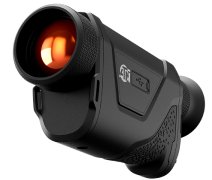
Why ATN's 6th-gen BlazeTrek 6 owns the mid tier
A mid-band handheld has to be the thing you actually reach for, and that comes down to weight, field of view, and picture. The BlazeTrek 6 nails all three. At about 0.7 lb it disappears in a jacket pocket, so you carry it every outing instead of leaving a heavier unit at home. Its wide 22.8 by 18.3 degree field of view is the real differentiator: a big window means you sweep a treeline or field fast and catch a moving animal before it clears your view, which is exactly what handheld scanning is for. Behind that sits a 640x512 sensor, so warm shapes read as identifiable animals rather than blobs, and SharpIR AI enhancement cleans up the edges. A 50 Hz refresh keeps a trotting coyote smooth, not smeared, and six color palettes let you pull detail whatever the conditions. It is current 6th-gen hardware with the ATN Connect 6 app and an AI assistant, so the value model still gets ATN's newest processing, not an old core. For the money, it is the most useful all-round handheld ATN makes.
Best value in the mid tier: ATN BlazeTrek 6 640x512 1.5-12x
The ATN BlazeTrek 6 640x512 1.5-12x is the best thermal monocular in the mid price band because it does the everyday job, finding and following warm animals by hand, better than anything at its price. It is light, it is wide, and its 640x512 sensor is sharp enough to identify what you are looking at.
Why the wide field of view wins
A 22.8-degree field of view lets you scan a large area with each sweep, so you spot movement quickly and can keep a running animal in frame instead of losing it at the edge. Low 1.5x base magnification keeps that window wide, and you can zoom to 12x (plus up to 8x digital) when you want a closer look. For scanning and tracking, this beats a narrow high-zoom unit.
Why the sensor and weight matter
The 640x512 sensor means more dots in the picture, so a coyote at the edge of a field is a recognizable animal, not a fuzzy dot. At 0.7 lb it is easy to hold steady and carry all night, and about 6.5 hours of battery covers a normal outing. An 18mK NETD keeps targets defined in the damp.
Who it's for and not for
It's for the hunter or observer who wants a light, wide-view scanner for finding and tracking animals at practical distances, at a value price. It's not the pick if your priority is spotting heat at extreme distance or you need built-in ranging; for that, step up to the flagship.
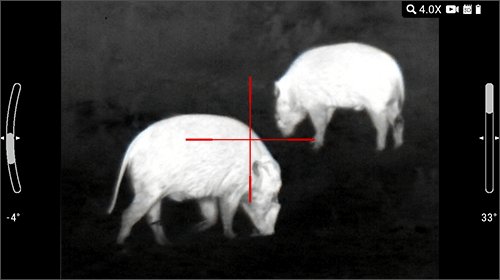
Step up for reach: ATN BlazeHunter XD LRF 1280x1024 2-16x
When you outgrow practical distance, the ATN BlazeHunter XD LRF 1280x1024 steps up in price and capability. Its extreme-definition 1280x1024 sensor carries over a million more pixels, so warm targets stay detailed far out, and a built-in laser rangefinder measures to 1000m so you can range what you detect.
Where the flagship earns it
Detection range jumps to around 3,400m, and the higher-resolution sensor lets you zoom in on a distant animal before the picture breaks down. A 15mK NETD and Full-HD OLED display sharpen the view further, and dual removable batteries push runtime past 10 hours. This is the long-range, detail-first choice.
Who it's for and not for
It's for the hunter who needs maximum detection distance, top detail, and built-in ranging and will pay flagship price for it. It's more than most handheld users need if your work is close-to-mid scanning, where the lighter, wider BlazeTrek 6 is the smarter value.
Why the mid tier is the smart-money band
The mid price band exists because most handheld thermal work does not actually need flagship hardware, and paying for reach you will not use is the most common way people overspend. Think about how a monocular really gets used: you scan a field edge, catch a warm shape, confirm what it is, and either move on it or watch it pass. Nearly all of that happens inside a few hundred yards, well within the BlazeTrek 6's comfortable range, and it is exactly the job a light, wide-view 640 sensor is built for. The extreme-distance detection and built-in ranging of a flagship only start to matter when you are routinely trying to spot and range heat beyond where you would ever close in — big agricultural ground, long pasture, open-country coyote work. For the hunter whose stands are closer and whose terrain has some cover, that flagship capability sits idle while its weight and cost do not. The BlazeTrek 6 puts the money where handheld hunting actually uses it: a sharp picture, a wide window, and a weight you will carry every outing.
There is a quiet reliability benefit to the mid tier as well. The BlazeTrek 6 runs on an internal battery you top up over USB-C, so there are no loose cells to manage or lose in the dark, and its IP67 waterproof housing means dew, frost, and light rain are non-issues. Fewer things to fumble with, fewer things to forget — on a cold pre-dawn walk to a stand, that simplicity is worth more than a spec sheet suggests.
How the wide view changes a real scan
The practical value of the 22.8-degree field of view shows up the moment an animal is moving. With a wide window you can hold the monocular still and let a trotting coyote or a walking deer travel across the frame while you read its body language, instead of constantly re-aiming a narrow tube and losing the animal at the edge. That steadier view also makes it far easier to catch the first flicker of movement at the periphery — the thing that tips you off before the animal is even fully in the open. A narrow, high-zoom monocular trades all of that away for magnification you rarely need when the real task is finding game, not counting whiskers.
A field scenario: a mid-band monocular on a mixed-cover stand
Picture an evening stand where a bean field meets a brushy fence line — the kind of mixed ground most hunters actually hunt. You settle in and start sweeping with the BlazeTrek 6. The wide field of view lets you cover the whole field edge in a few slow passes, and within minutes you catch a warm shape working the fence line at maybe a hundred and fifty yards. Because the 640 sensor keeps the outline crisp, you can tell almost immediately it is a coyote and not a deer, and you follow it in the wide window as it trots parallel to the brush. It never leaves the frame, so you read its pace, see it pause to scent-check, and have plenty of time to decide. Nothing about that sequence needed flagship reach or built-in ranging — it needed a light unit you brought along, a wide window to catch the movement, and a sharp enough picture to identify the animal. That is the mid tier doing exactly the job it is priced for.
How to choose a mid-price thermal monocular
In this band, decide what you value more: an easy, wide, carry-everywhere scanner, or maximum reach and ranging. That single question sorts the two picks.
- Field of view — a wide 22.8-degree window makes scanning and tracking far easier; narrow high-zoom views are slower to work.
- Resolution — 640x512 gives plenty of detail to identify animals at practical range; 1280x1024 adds dots for extreme distance.
- Weight and carry — at 0.7 lb the BlazeTrek 6 is genuinely pocketable, which means you actually bring it.
- Detection range and ranging — if you routinely need to spot and range past 1,000m, the flagship's rangefinder and longer reach matter; if not, they are extra cost.
- Battery — about 6.5 hours covers a normal outing on the BlazeTrek 6; the flagship runs longer on swappable cells.
- Thermal sensitivity (NETD) — both keep targets defined in humid air; the flagship's 15mK edges out the value model's 18mK.
How we picked these ATN thermal monoculars
This is an in-house comparison of ATN's current 6th-generation monocular range, not an independent lab review. Because the keyword targets a mid price band, we judged each unit on real handheld usefulness for the money: sensor resolution, NETD (thermal sensitivity), field of view, detection range, refresh rate, weight, and battery. We talk in tiers only, never exact figures. Only the current 6th-gen line is considered. Honest trade-off: the value BlazeTrek 6 keeps its price down with a shorter detection range and no built-in rangefinder, and its 18mK NETD is a touch behind the flagship's 15mK; if you need extreme reach or ranging, it is not the right tool. Who it is not for: a hunter set on the longest-range, highest-detail detection should skip straight to the BlazeHunter XD and accept the higher tier. Weigh the wide-view scanning strength against how far you actually need to detect.
Frequently Asked Questions
What is the best thermal monocular in the mid price band?
The ATN BlazeTrek 6 640x512 is the standout value pick. It weighs about 0.7 lb, uses a high-resolution 640x512 sensor, and has a wide 22.8-degree field of view that makes scanning and tracking easy. It delivers serious handheld thermal without flagship-tier pricing.
Why choose the BlazeTrek 6 over a higher-end monocular?
The BlazeTrek 6 is lighter, wider in view, and easier to carry every outing, which is what most handheld scanning needs. A step-up model like the BlazeHunter XD adds extreme range and a rangefinder, but if your work is close-to-mid detection, that is capability you pay for and may not use.
Is a 640x512 monocular good enough for hunting?
Yes. A 640x512 sensor gives more dots in the picture, so warm animals read as identifiable shapes rather than blobs at practical hunting distances. Combined with the BlazeTrek 6's wide field of view and SharpIR AI enhancement, it is well suited to finding and following game by hand.
How far can the BlazeTrek 6 detect?
The BlazeTrek 6 has a detection range around 1,000m for a large heat source, which comfortably covers finding and tracking animals at normal handheld distances. If you routinely need to spot heat much farther out, the BlazeHunter XD reaches about 3,400m.
Does the BlazeTrek 6 have a rangefinder?
No, the BlazeTrek 6 focuses on light weight, wide field of view, and a sharp picture at a value price, without a built-in laser rangefinder. If ranging is a must-have, the BlazeHunter XD LRF includes a 1000m laser rangefinder in the same 6th-gen family.
How long does the BlazeTrek 6 battery last?
About 6.5 hours on its internal rechargeable battery, which covers a typical night out. You recharge it over USB-C, so it is easy to top up between outings without handling loose cells.
Can I use the BlazeTrek 6 during the day?
Yes. Thermal reads heat rather than light, so the BlazeTrek 6 works in daylight for spotting animals in cover, recovering downed game, and general scanning. Bright sun does not harm the sensor; only the heat contrast against sun-warmed ground is a bit lower than at night.
Why not just buy the flagship if I can stretch to it?
You can, but for most handheld hunting you would be paying for extreme detection range and built-in ranging that sit idle at practical distances. The BlazeTrek 6 puts the money where scanning actually uses it: a sharp 640 picture, a wide field of view, and a light weight you will carry every outing. Step up to the flagship only if you genuinely need to spot and range heat far past normal shooting distance.
Carry a scanner you will actually bring. The ATN BlazeTrek 6 packs a sharp 640x512 sensor and a wide 22.8-degree field of view into a 0.7 lb handheld, so you sweep a treeline fast and follow a running animal without losing it. It is the value sweet spot for finding and tracking game by hand. When you need maximum range and ranging, step up inside ATN's thermal monoculars lineup to the BlazeHunter XD.
Created: July 7, 2026 · 11:11:27 UTC