Predators don't come to you across an open field — they hang back, circle the edges, and slip through the far tree line where the light dies. That's why the best thermal monocular predator hunting 2026 demands is one built for the long band: the ATN BlazeHunter XD LRF. Coyotes, bobcats, and foxes betray themselves as heat long before you'd ever see them, and this handheld picks them up out past three kilometers, then ranges them with a built-in laser so you know the distance the instant you spot the shape. Organized around long-range detection, this roundup pairs the flagship with a lighter mid-tier scanner from ATN's thermal monoculars range.
Best mid-range companion: ATN BlazeTrek 6 640x512 1.5-12x — a lighter high-res scanner for tighter stands and closer calling.
Bottom line: run the BlazeHunter XD when you're watching the far edges; carry the BlazeTrek 640 for quick, close scanning between setups.
Why ATN's 6th-gen BlazeHunter XD suits predator work
Predator hunting is won at the range band where a wary animal thinks it's safe, and that's exactly where the BlazeHunter XD is built to work. Detection reaches about 3400m, so a coyote answering a call from a distant ridge shows up as heat before it commits. The 1280x1024 sensor is a dense grid of dots — over a million more pixels than a 640 chip — so when you zoom to 16x to tell coyote from stray dog, the picture stays sharp instead of dissolving into blocks. The built-in rangefinder is the predator hunter's edge: ranging the animal the moment you spot it means you know instantly whether it's inside your comfort zone or worth waiting on. A <=15mK NETD keeps the image clean in the damp, still air common on predator nights, the 50 Hz refresh follows a trotting coyote smoothly, and dual removable batteries keep you in the stand past hour six. That's why it anchors the long band.
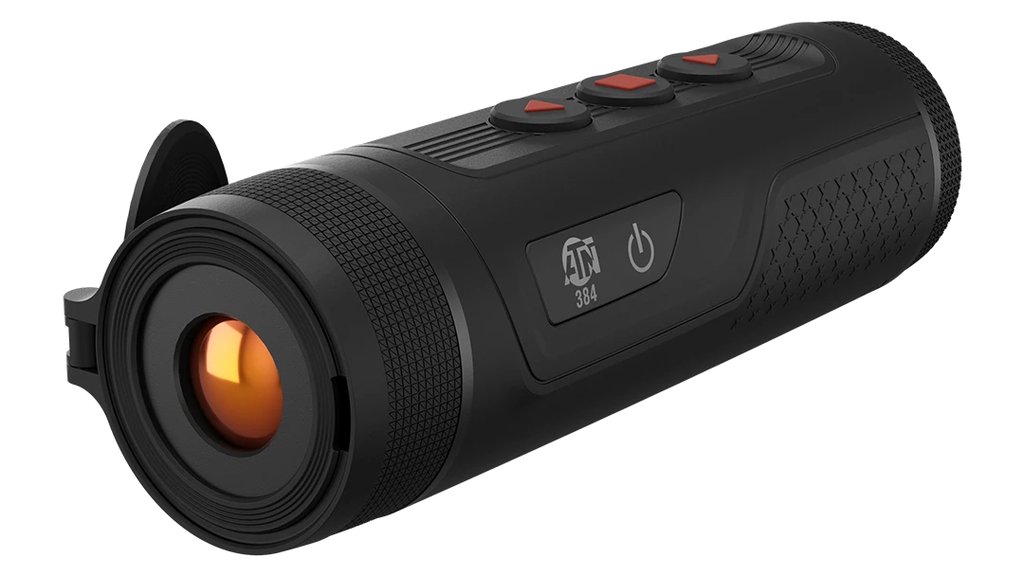
Best for long-range predators: ATN BlazeHunter XD LRF 1280x1024 2-16x
The ATN BlazeHunter XD LRF is the tool for the hunter who works the far edges. The 50mm lens and 2-16x zoom reach out to where predators hang, the extreme-definition sensor keeps the far animal readable, and the rangefinder turns a distant heat signature into a known number without you moving a muscle.
Spot early, range instantly
On a predator stand, the animal that spots you first wins. Picking up heat at long range gives you the seconds to sit still and let it work closer, and ranging it the moment it appears tells you whether to wait or make your move. That spot-early, range-instantly rhythm is what separates a filled stand from a busted one.
Who it's for and who it's not
It's for the dedicated predator hunter working open country and long sight lines who wants reach, resolution, and ranging in one hand. It's not for the caller who only works tight timber at close range — that's more optic than those stands need, and the lighter BlazeTrek fits better.
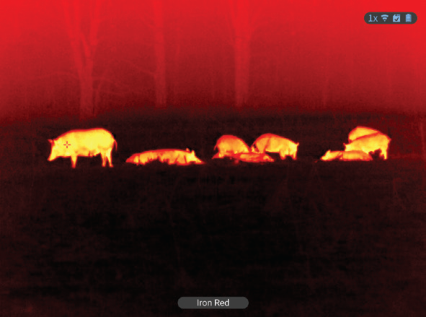
Best mid-range companion: ATN BlazeTrek 6 640x512 1.5-12x
For tight stands and quick scanning between setups, the ATN BlazeTrek 6 640x512 1.5-12x is the lighter partner. At about 0.7 lb with a wide view and ~1000m detection, it's fast to bring up when a coyote commits close and you just need to confirm and track it in.
Fast and light for close calling
Not every predator setup is a long-range affair. When you're calling tight timber or brushy draws, a wide, high-res view that snaps up quickly beats a heavier long-range tool. The 640 sensor still holds detail on zoom, so you're not guessing what answered the call.
The two-optic predator kit
A lot of serious predator hunters carry both, and the split is clean. The BlazeHunter XD is the stand tool — it goes up when you've set on open country and need to watch the far edges and range whatever shows. The BlazeTrek is the mover — light in a chest rig for scanning between setups, glassing a draw on the walk in, or handling the close, fast encounters where a coyote is suddenly right there and you just need to confirm and track. Because the BlazeTrek is barely over half the flagship's weight, it's the one that rides along without complaint on a long night of relocating. Together they cover both halves of predator work — the patient long sit and the run-and-gun scan — without asking one optic to do a job it isn't built for.
Why coyotes reward the better optic
Coyotes are educated animals. In pressured country they learn to circle downwind, hang up at the edge of the light, and leave at the first thing that feels wrong. Every advantage that lets you detect them earlier and stay stiller longer stacks in your favor, and that's exactly what the flagship sensor and long detection range buy you. Seeing a coyote a quarter mile out instead of at a hundred yards is often the whole difference, because those extra seconds are what let you avoid the movement that would have busted you. On easy, unpressured predators almost anything works; on the wary ones that make predator hunting a challenge, the optic that sees first quietly wins more nights. Over a season, those extra early spots add up to the handful of coyotes that separate a good year from a frustrating one, which is exactly the kind of edge a flagship is meant to deliver. It is not magic and it will not call for you, but it removes the two things that beat most predator hunters — the dark and the distance — and leaves the rest up to your setup and the wind.
Who it's for and who it's not
It's for the caller who works close and wants a light, quick, high-res scanner. It's not the pick for long open-country stands where ranging and maximum reach decide the night — that's the BlazeHunter XD.
How a night predator stand actually plays out
Picture a typical setup to see why the range band matters so much. You set up downwind of a draw, start a distress call, and settle in to scan. On a lesser optic you're limited to the near field, so the coyote that answered from a far ridge is invisible until it's already close and reading your position. With the BlazeHunter's roughly 3400m detection, you catch that same coyote as a warm speck the moment it crests the ridge — long before it can bust you. Now you have the luxury of time: you sit dead still, let it work the wind and the call, and watch it commit yard by yard. The extreme-definition sensor keeps it identifiable the whole way in, so you're never guessing whether that's a coyote, a fox, or the neighbor's dog. That early-detection, sit-and-wait rhythm is the entire predator game, and it only exists if your optic sees to the ridge.
Ranging a hung-up predator
Predators love to hang up — to stop just out of range and stare, deciding whether the call is a meal or a trap. That's the moment the built-in rangefinder pays for itself. One press tells you the animal is at, say, 210 yards, so you know instantly whether it's inside your comfort zone or whether patience is the play. No leaning to a separate rangefinder, no movement to give yourself away, no math in your head in the dark. Knowing the number turns a tense guess into a clear decision, and on wary predators that clarity is often the difference between a filled stand and a story about the one that circled and left.
Reading the wind and the weather
Predator nights are often still, damp, and cool — the exact conditions that trip up a weaker sensor. The BlazeHunter's <=15mK NETD reads fine temperature differences, so a coyote's body still separates cleanly from cool, wet ground when the air is heavy. Thermal also doesn't care about moonlight or the lack of it; a pitch-black new-moon night, the classic predator window, is no harder for the sensor than a bright one. You still have to play the wind the old-fashioned way, but the optic takes the darkness and the damp off the table, which is a large part of why thermal has changed predator hunting so completely.
How to choose a predator-hunting thermal monocular
Predator gear should match your ground first and your wish list second. Be honest about how far your typical stand sees, then buy the reach that fits.
- Detection range for your stands — open country wants the 3400m reach of the BlazeHunter XD; tight timber is fine with ~1000m from the BlazeTrek.
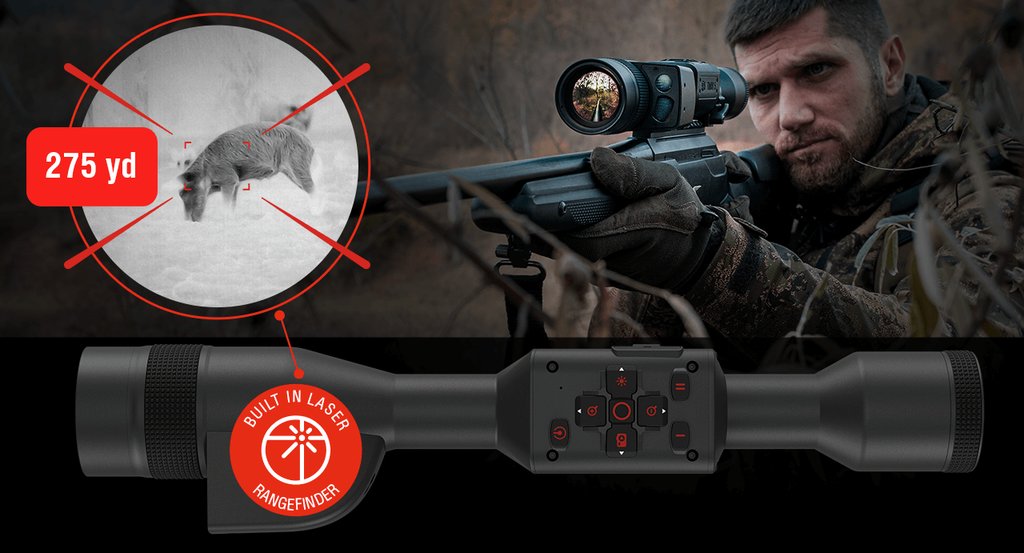
- Built-in rangefinder — ranging a predator the instant you spot it is a real edge; the BlazeHunter XD has one built in.
- Resolution for the far zoom — a 1280x1024 grid stays sharp when you crop into a distant coyote; 640 is great for closer work.
- NETD for damp nights — a lower <=15mK figure keeps the image clean in the still, humid air predator hunts often bring.
- Battery for the long sit — removable dual cells let you outlast a slow-to-commit coyote without your optic quitting first.
How we picked these ATN thermal monoculars
Predator work is a long-range, judge-the-distance game, so we weighted detection range, resolution on hard zoom, NETD, refresh rate, the built-in rangefinder, battery, and weight against real predator stands rather than a spec sheet. Only ATN's current 6th-gen line was in the running. Honest trade-offs: the flagship BlazeHunter XD is heavier and costlier, and its extreme reach is wasted if you only ever call tight timber — which is exactly why the lighter BlazeTrek 640 stays on the list. This roundup also isn't aimed at the casual close-range spotter; it's built for hunters who work distance and wariness. This is an in-house comparison of ATN's own range, not an independent lab test, so match the reach and ranging to the country you actually hunt.
Frequently Asked Questions
What makes a good thermal monocular for predator hunting?
Predators are wary and show up at distance, so reach and detail matter most. You want long detection range to spot them early, high resolution so a far coyote stays readable on zoom, and ideally a built-in rangefinder to judge distance instantly. The ATN BlazeHunter XD delivers all three.
How far can the ATN BlazeHunter XD detect a coyote?
It detects heat out to about 3400m, so a coyote working a distant ridge or answering a call from far off shows up long before it commits. Detection means noticing the warm shape; clear identification happens closer, where the 1280x1024 sensor keeps it sharp.
Why does a built-in rangefinder help on predators?
Wary predators hang up at unpredictable distances. Ranging the animal the instant you spot it tells you whether it's inside your comfort zone or worth letting work closer, without moving and giving yourself away. The BlazeHunter XD's laser rangefinder reads to 1000m with meter-level accuracy.
Can I use a lighter monocular for close calling instead?
Yes. For tight timber and close stands, the ATN BlazeTrek 6 640x512 is lighter and faster to bring up, with a wide view and ~1000m detection that suits close work. Many predator hunters carry it between setups and save the BlazeHunter XD for long open-country sits.
Does it stay clear on damp, foggy nights?
Its <=15mK NETD rating means it reads fine temperature differences, which keeps the image clean in the humid, still air common on predator nights. Thermal also beats the naked eye in darkness and light fog, though heavy fog and rain shorten how far any thermal sees.
How long can I stay out on one setup?
The BlazeHunter XD uses dual removable 18650 batteries for 10-plus hours total, so you can swap a cell and outlast a slow-to-commit predator. That removable design beats an internal battery when a stand runs long.
Predators reward the hunter who sees them first and knows the distance before they know you're there. The ATN BlazeHunter XD LRF gives you that long-range spot and instant range in one handheld, so you can sit tight and let a wary coyote make the mistake. Working closer country this season? Pair it with the lighter BlazeTrek and see how the family stacks up in ATN's thermal monoculars. The first coyote you catch slipping the far tree line will make the case for you.
Created: July 7, 2026 · 11:11:27 UTC