On patrol, the question is rarely whether something is out there — it's where, and whether it's a person. A suspect who ran into a treeline, a missing hiker off the trail, a subject hiding behind a shed: heat gives them away when a flashlight can't reach and a camera sees only dark. For duty use, a thermal monocular has to read a scene instantly, work hands-free when you need both hands free, and survive a shift in any weather. The best thermal monocular law enforcement 2026 pick has to flex across all of that. The ATN Odin MFT 640x480 1-8x leads because it works handheld, on a helmet, or on a rifle, all from one rugged unit an officer already knows how to run.
Best when distance matters: ATN Odin MFT LRF 640x480 1-8x — the same platform with a built-in laser rangefinder for instant range to a subject or scene.
Why the Odin platform fits duty use: one device, one interface and one battery system across every role, so training and kit stay simple.
Why ATN's 6th-gen line fits patrol and search work
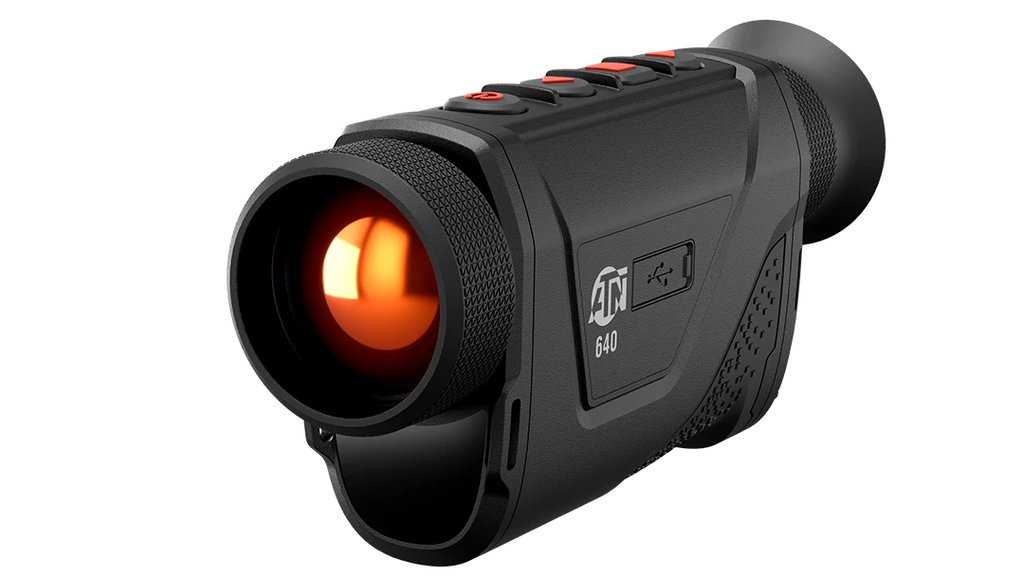
ATN's 6th-generation multi-function thermals fit law enforcement because they adapt to how a call unfolds instead of forcing one role. Both picks here are true 4-in-1 units — they mount to a Wilcox NVG shoe on a helmet for hands-free search, sit on a Picatinny rail as a clip-on or sight, or work in the hand for a quick scan of a yard or field. Heat detection means a subject cannot hide in shadow, brush or an unlit structure exterior. Both run SharpIR AI image enhancement so a figure reads as a person, six color palettes to match any ground, and Hot Point Tracking to flag the warmest object — useful when scanning a large search area. A 50 Hz refresh keeps a moving subject smooth, Picture-in-Picture and customizable reticles support tactical work, and Recoil Activated Video plus 64 GB of storage capture events. Both are IP67 waterproof, run on 18650, CR123 or USB-C power for shift flexibility, and pair with the ATN Connect 6 app. With the fundamentals shared, the duty decision is simply whether you need built-in ranging.
Best overall for law enforcement: ATN Odin MFT
The ATN Odin MFT 640x480 1-8x is the standout duty choice because it fits whatever the shift throws at it. A perimeter search, a foot pursuit into cover, a wilderness rescue, a tactical stack — the same device covers all of them, handheld or mounted, without an officer switching tools or interfaces.
One device across every role
The Odin MFT works in the hand for a fast scan, drops onto a helmet via a Wilcox NVG shoe for hands-free search when you need to move and radio at once, and mounts to a rail as a clip-on or standalone sight for tactical deployment. That single-platform approach keeps training simple and kit light — one interface to learn, one battery system to manage, one item to account for at the end of a shift. For a department, that consistency across officers has real operational value.
A sensor that reads a subject clearly
A 640x480 sensor lays down plenty of dots in the picture — solid HD-class detail — so a warm figure reads as a person with discernible posture and movement, not a vague blob. A very low <=15mK NETD keeps that picture clean in humidity, light rain and haze, exactly when visibility is worst. A 1700m detection range covers a large search area, open ground or a long perimeter, and the picture stays smooth on a moving subject thanks to the 50 Hz refresh. Around 8 hours on a swappable 18650, with CR123 or USB-C as backup, carries a shift.
Who it's for and who it isn't
It's for the officer, deputy, SAR team or tactical unit that needs one thermal to search, mount and deploy across every call. It's not the pick if your role hinges on knowing exact distance to a subject or landmark on demand — that's precisely what the Odin MFT LRF adds.
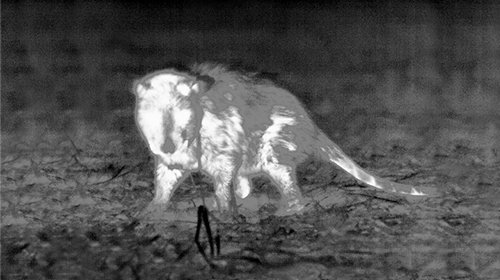
Best when distance matters: ATN Odin MFT LRF
The ATN Odin MFT LRF 640x480 1-8x takes the same duty-ready 4-in-1 platform and adds an integrated laser rangefinder. When you need to relay exactly how far a subject is, coordinate a perimeter, or feed distance into an aiming solution, having it built in removes a separate device from an already full kit.
Range on demand, same duty flexibility
A built-in laser rangefinder reads out to 1000m within about a meter, so you can call an accurate distance to a subject, a structure or a suspected hiding spot without guessing, and feed that figure into the ballistic calculator when a shot is on the table. You keep every mode the standard Odin offers — handheld, helmet, clip-on, sight — along with the same clean 640x480 sensor, <=15mK NETD and 1700m detection. It's slightly heavier at about 0.88 lb, the small cost of an integrated rangefinder.
Who it's for and who it isn't
It's for the officer or unit whose work depends on accurate, instant distance — perimeter coordination, precision roles, structured search. It's not for the department that never needs ranging on duty; that officer is better served by the lighter, simpler standard Odin MFT.
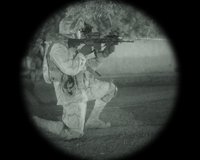
Where thermal earns its place on a shift
Thermal earns its keep on the calls where seeing first changes the outcome. Consider the situations an officer actually faces after dark and the value is obvious. A subject flees on foot into a wood line or a field of tall grass: a flashlight beam stops at the first row of cover, but thermal reads the whole area and shows the warm shape moving through it. A search-and-rescue call for a missing person in the cold: a body's heat stands out sharply against a chilled landscape, and the 1700m detection range lets a team cover ground fast. A perimeter around a structure while waiting on backup: the officer sees anyone approaching from any direction, in any shadow, without a light that gives away the position. A building exterior or a vehicle: thermal can reveal recent heat and occupants near windows and openings. In each case, the same device answers the core question — where is the person, and are they a threat — faster and more safely than the tools that came before it.
Why hands-free and multi-role matter on duty
- Hands-free search — helmet-mounted on a Wilcox shoe, an officer keeps a live thermal picture while running a radio, managing a K-9, or handling a firearm safely with both hands.
- Seamless role changes — a call that starts as a search can become a tactical situation; one device that shifts from handheld to sight to clip-on means no fumbling for a second tool at the worst moment.
- One interface to train — officers under stress default to muscle memory, so a single set of controls across every role reduces errors and shortens training.
- Documentation built in — onboard recording and Recoil Activated Video capture events for reports and evidence without a separate step.
Responsible use and department considerations
A thermal monocular is a perception tool, and using it well on duty is as much about procedure as hardware. It shows heat and location, not identity, so it complements body cameras and lights rather than replacing the recorded identification those provide — officers should treat a thermal contact as information to verify, not a conclusion. Because it works through darkness and light cover, it improves officer safety by removing the element of surprise, but it should be paired with clear agency policy on when and how it's deployed. On the equipment side, a department benefits from standardizing on one platform: shared batteries, shared spare parts, and shared training across a shift keep the fleet simple to maintain. The flexible 18650, CR123 and USB-C power on the Odin units means a device rarely goes dark mid-shift, and the IP67 sealing means weather and rough handling don't take a unit out of service. Chosen and governed well, thermal makes officers safer and searches faster without adding complexity.
How to choose a thermal monocular for duty use
The right duty thermal matches the roles you actually fill and the conditions you work in. Run through these before you outfit officers:
- Which roles must it cover? — If officers need handheld search, hands-free helmet use and rail mounting, the 4-in-1 Odin platform delivers all of it from one device.
- Do you need distance on demand? — If ranging a subject or scene is part of the job, the Odin MFT LRF integrates it; if not, the standard Odin MFT is lighter and simpler.
- How large an area do you search? — A 1700m detection range covers big open ground and long perimeters, well past most patrol distances.
- What conditions do you work? — A very low <=15mK NETD keeps the picture clean in rain, humidity and haze, which both models share.
- How long is a shift? — Swappable 18650 power plus CR123 and USB-C options keep an officer running across long deployments without a dead device.
- How simple must training be? — One shared interface and battery system across every role keeps departmental training and logistics manageable.
Compare the exact duty variants in the full thermal monoculars lineup, and if you want the broader multi-role rundown, our best military grade thermal monocular 2026 guide covers the full platform.
How we picked these ATN thermal monoculars
A straight look at how this duty shortlist was built. Only ATN's current 6th-generation line was considered — nothing older or discontinued. Each unit was judged on what patrol and search actually demand: role flexibility, sensor resolution for reading a subject clearly, thermal sensitivity (NETD) for a clean picture in bad weather, detection range across a search area, refresh rate for tracking movement, power flexibility for a shift, and rugged sealing. The one trade-off between them — the standard model lacks a rangefinder, the LRF adds slight weight to gain one — is stated plainly. These are ATN's own devices, so treat this as an honest in-house comparison of the range rather than an independent duty evaluation, and match the specs to your agency's roles and procedures.
Frequently Asked Questions
What is the best thermal monocular for law enforcement in 2026?
The ATN Odin MFT 640x480 1-8x is the top duty pick for 2026. Its 4-in-1 design covers handheld search, helmet-mounted hands-free work, clip-on and weapon-sight roles, built around a clean <=15mK 640x480 sensor with 1700m detection and IP67 durability. One device flexes across patrol, search and tactical use.
Why use thermal instead of a flashlight or night vision on patrol?
Thermal sees heat, so a subject shows up in total darkness and cannot hide in shadow, brush or an unlit corner — and unlike a flashlight, it doesn't announce your position. It works through light rain, fog and haze better than the eye, making it a strong complement to a flashlight and traditional night vision rather than a replacement.
Can an officer use the Odin MFT hands-free?
Yes. It mounts to a Wilcox NVG shoe on a helmet, so an officer can search hands-free while moving, using a radio or handling other equipment. That hands-free helmet mode is one of the four roles the single device fills, alongside handheld, clip-on and weapon-sight use.
Should a department choose the standard Odin MFT or the LRF version?
Choose the LRF version if ranging a subject, structure or scene on demand is part of the work — its built-in rangefinder reads to 1000m within about a meter. Choose the standard Odin MFT if ranging isn't needed and you want the lighter, simpler unit. Both share the same platform, sensor and interface.
How far can these detect a person?
Both detect heat out to about 1700m. Detection means picking up a person's body warmth; positive identification happens closer than that maximum. That range comfortably covers large search areas, open ground and long perimeters on most calls.
Are these durable enough for a full duty shift?
Yes. Both carry an IP67 rating for dust and immersion resistance, run on swappable 18650 cells with CR123 and USB-C as backups, and deliver around 8 hours per battery. That combination of rugged sealing and flexible power is built to survive and last a demanding shift in any weather.
Can events be recorded for reports or evidence?
Yes. Both record video and photos to 64 GB of onboard storage, and Recoil Activated Video captures automatically during weapon deployment. Footage can be reviewed on-device or streamed over Wi-Fi to the ATN Connect 6 app for documentation.
When a call can turn from a search into a pursuit into a tactical scene, one thermal that flexes across all of it keeps an officer ready, and the ATN Odin MFT does exactly that — handheld, helmet, clip-on or sight, on one rugged body. When exact distance is part of the job, the LRF version in the ATN thermal monoculars line adds ranging without a second device. Match the unit to your agency's roles, set it up, and let heat show your officers what the dark was hiding.
Created: July 7, 2026 · 11:11:27 UTC