Picking the best thermal monocular law enforcement 2026 comes down to one honest question: what will you actually use it for? A perimeter officer holding a fixed post has different needs than a K-9 handler tracking a suspect through a ravine, and a search-and-rescue volunteer covering open acreage needs something different again. This comparison sets ATN's two 4-in-1 tactical units against each other by use case, and it leads with the ATN Odin MFT LRF because ranging turns out to be the deciding feature for more police tasks than you might expect.
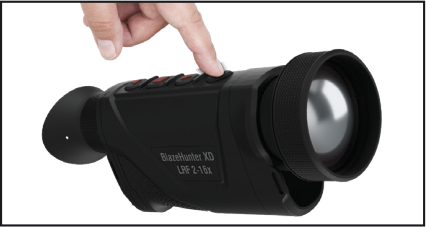
ATN Odin MFT LRF vs ATN Odin MFT by use case
Both units run the same 640x480 thermal sensor, the same ≤15 mK sensitivity, and the same 4-in-1 body, so the image you see is identical. The table below frames the two by the police tasks they suit rather than by raw numbers, because for LE work the mission drives the choice more than the spec sheet does.
The shared numbers, briefly, so they mean something. The 640x480 resolution is the sensor's pixel count; more pixels act like extra dots in a printed photo, letting you resolve a crouching person instead of a fuzzy warm shape. The ≤15 mK NETD is thermal sensitivity, the smallest temperature gap the sensor can see, where a low millikelvin figure keeps the image clean when a subject is barely warmer than the background. The 1700 m detection range is how far a heat source registers at all, which is spotting presence, not confirming identity.
How the ATN Odin MFT LRF works
The ATN Odin MFT LRF works by adding a laser rangefinder to the standard tactical core, so a single press returns the exact distance to whatever you are looking at, out to 1000 m within about a meter. For a tracking team, that number turns a vague heat blob in a treeline into an actionable distance: you know whether the subject is 80 meters off or 400, which changes how you close the gap and how you brief the officers around you. The unit also carries SharpIR AI enhancement for cleaner edges, Picture-in-Picture for a zoomed inset, and a nine-profile ballistic calculator for the rare sight role. It runs about eight hours on an 18650 and accepts a hot-swapped spare.
How the ATN Odin MFT works
The standard ATN Odin MFT works the same way minus the laser, and it trades that feature for about 40 grams of saved weight. It keeps the identical 640x480 image, ≤15 mK sensitivity, and 4-in-1 flexibility, plus a Zeroing Freeze feature that locks the reticle while you adjust it. For quick handheld scans and helmet-based patrol, where you are confirming presence rather than plotting an exact approach, you rarely reach for a rangefinder, so its absence costs you little. On a long shift the lighter body is the one your neck thanks you for.
When to choose the ATN Odin MFT LRF
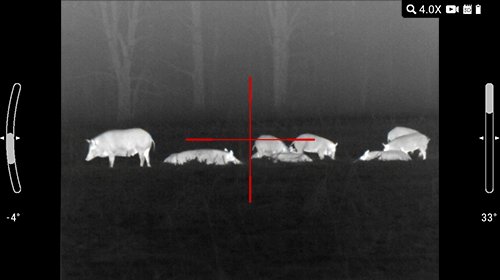
Choose the ATN Odin MFT LRF for the tasks where distance is part of the decision. Suspect tracking is the clearest case: a K-9 or foot-pursuit team that can measure the exact gap to a hidden subject moves smarter and coordinates faster. Search and rescue over open ground is another, because a stranded or injured person often shows up against featureless terrain with no landmarks to estimate range from, and a one-press distance guides how you route a team to them. Ranged perimeter work rounds it out: when you need to report exactly how far a signature sits from a fixed line, the laser removes the guesswork. The extra 40 grams buys certainty in all three.
When to choose the ATN Odin MFT
Choose the standard ATN Odin MFT for the tasks that are about speed and comfort rather than measured distance. Helmet-based patrol tops the list: worn for hours, hands free, the lighter body is the one that stays comfortable through a full shift. Quick handheld scans of a yard, an alley, or a vehicle are the same story, because you are confirming whether a person is present, not plotting an exact approach. If your officers rarely need to know a precise range and value every gram off a helmet setup, the standard model gives them the full 640x480 image without carrying a feature they will not use.
Our recommendation
Across the spread of police use cases, the ATN Odin MFT LRF is our recommendation as the best thermal monocular for law enforcement in 2026. Tracking, search and rescue, and ranged perimeter work all lean on knowing an exact distance, and the built-in rangefinder is the one capability you cannot add later. If your department's work is mostly helmet patrol and fast handheld scans, the lighter standard Odin MFT is the sharper pick. Both live in ATN's current 6th-gen line; line them up next to the rest of the family on the ATN thermal monoculars category page before you order.
How we compared them
We compared these two ATN units by mapping their capabilities onto real law enforcement tasks, using only the current 6th-gen Odin MFT line. The measuring sticks were sensor resolution and ≤15 mK NETD for whether the image reads a person cleanly, detection range for how early a subject appears, the laser rangefinder for tasks where an exact distance shapes the response, refresh smoothness for tracking movement, weight for hours of helmet carry, and battery for a full shift. Honest trade-off: since both units share the same image core, the decision is genuinely about ranging versus weight, not picture quality. Who this is NOT for: an officer who only does quick handheld scans and never needs a distance gains nothing from the LRF's extra grams, while a tracking or SAR role should not trade away the rangefinder to save weight. This is an in-house comparison of ATN's own range, not an independent lab test; check the specs against your unit's actual callouts.
Frequently Asked Questions
Which ATN monocular is the best thermal monocular for law enforcement in 2026?
For the widest range of police tasks, the ATN Odin MFT LRF is our pick. It pairs a 640x480 sensor and ≤15 mK sensitivity with a built-in laser rangefinder, which gives an exact distance to a subject during tracking, search and rescue, and ranged perimeter work. The standard Odin MFT is better only for weight-critical helmet patrol.
Why does the laser rangefinder matter for police work?
Many LE tasks turn on knowing exactly how far away a subject is, not just that one is present. In suspect tracking or a search over open ground, a one-press distance out to 1000 m tells you how to close the gap or route a team, which the standard Odin MFT cannot do because it has no built-in rangefinder.
Is the standard ATN Odin MFT ever the better choice?
Yes, for helmet-based patrol and quick handheld scans where you confirm presence rather than measure distance. It runs the same 640x480 image and ≤15 mK sensitivity but weighs about 40 grams less without a battery, which is more comfortable worn on a helmet across a long shift.
Can either unit be used for search and rescue?
Both work well for SAR because the 640x480 sensor and low ≤15 mK NETD make a warm body stand out against cold ground. The LRF has the edge on open terrain, where its laser rangefinder pins the exact distance to a stranded person when there are no landmarks to estimate range from.
Which Odin MFT sits at a higher tier?
Both belong to ATN's flagship tactical tier, so neither is a budget pick. The LRF variant steps up slightly because it adds ranging hardware. For current pricing on the Odin MFT LRF or the standard Odin MFT, check the product pages on the ATN website.
How versatile is the 4-in-1 design for a department?
Very. Each unit works as a handheld, a helmet monocular, a clip-on, or a weapon sight, so one device covers roles that would otherwise need several tools. That keeps a department's kit list short and lets an officer adapt to whatever a call turns into.
Match the unit to the mission and you will not carry weight you never use. If your work runs to suspect tracking, search and rescue, or ranged perimeter tasks, the ATN Odin MFT LRF and its built-in rangefinder are the tool to reach for. If it is mostly helmet patrol and fast scans, the lighter standard Odin MFT delivers the same image. See both, and the rest of the current 6th-gen lineup, on the ATN thermal monoculars page, and pick by how your officers really work.
Created: August 10, 2026 · 09:39:32 UTC