Hogs don't hold still and they don't stay in the open. They root through thick brush, they file along creek bottoms, and a sounder can vanish into a treeline in seconds. When you're chasing pigs in cover, the tool you scan with matters more than almost anything else — you need to sweep a wall of brush, catch the heat of a hog through the tangle, and follow it as the sounder moves. A wide, easy-to-scan thermal monocular is exactly the right hand tool for that job. The ATN BlazeTrek 6 is built around a wide field of view and a 640 sensor, which is why it's our pick for the best thermal monocular for hog hunting. This roundup walks through where it shines in thick-brush country and where the higher-detail BlazeHunter XD takes over.
Best for long-range and ranging: ATN BlazeHunter XD LRF 1280x1024 — extreme-detail sensor and a built-in rangefinder for open-country detection.
Both give you: SharpIR image enhancement, six color palettes, Hot Point Tracking, and recording.
Why ATN's 6th-gen monoculars work for hogs
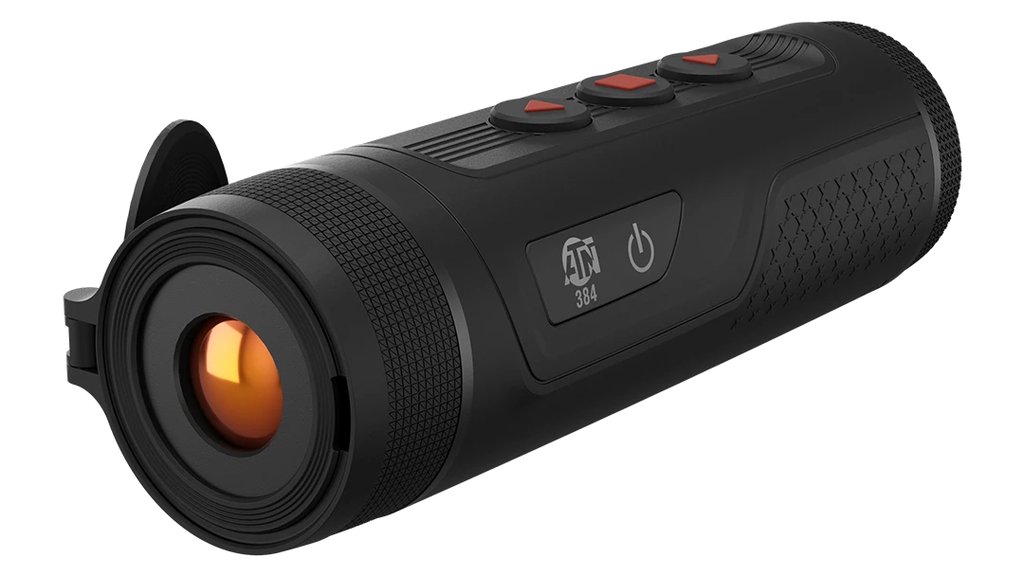
Hog hunting is a scanning game, and scanning is where a monocular's field of view and sensor do their work. A wide field of view means more of the brush line fills the eyepiece at once, so you sweep faster and you catch a hog's heat signature before the sounder slips past you. Then resolution decides how well you can tell what you're looking at. The BlazeTrek 6 runs a 640x512 sensor, and a higher resolution is simply more dots in the picture — the same jump as going from standard to high definition — so a hog half-hidden in a tangle reads as a hog and not a warm blob. SharpIR image enhancement cleans the picture up, six color palettes let you switch to whatever contrast shows a pig best against the background, and Hot Point Tracking helps you keep a lock as the animal moves. Because the monocular is handheld and light, you can scan for hours, then bring your weapon-mounted optic up only once you've found the sounder.
Best for thick-brush hogs: ATN BlazeTrek 6
The ATN BlazeTrek 6 is the pick for hunting hogs in cover because its wide field of view is exactly what thick-brush scanning demands. When a sounder is moving through a creek bottom or working a brushy field edge, a wide view lets you sweep the whole line quickly and follow the group without losing it. At about 0.7 lb it's light enough to hold up and scan for a long sit, and the 640 sensor keeps a partly-hidden hog identifiable.
Wide view for fast scanning
The wide 22.8 by 18.3 degree field of view puts more brush in front of you at once, so you catch a hog's heat sooner and track a moving sounder more easily. In thick cover, that width is worth more than raw reach.
Detail and palettes to pull a pig from the tangle
The 640x512 sensor and SharpIR enhancement give you enough detail to tell a hog from a stump, and six color palettes let you flip to the contrast that shows the pig best against warm or cool ground. Hot Point Tracking helps hold the animal once you've found it. That detail also helps you count a sounder and pick out the boar or the sow with piglets before you move, so you're making a decision about which hog to take rather than reacting to the first blob of heat you catch. On a warm night when the ground itself is holding heat, being able to switch palettes until the pig separates from the background is worth more than any single 'best' setting.
Who it's for: hog hunters working thick brush, creek bottoms, and close-to-mid range where fast, wide scanning matters most. Who it's not for: open-country hunters who need to detect and range pigs way out — that's the BlazeHunter XD's job.
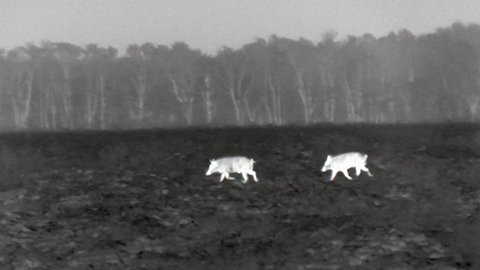
Best for long-range and ranging: ATN BlazeHunter XD LRF
The ATN BlazeHunter XD LRF is the step up when your hogs live in open country and the distances get long. Its extreme-definition 1280x1024 sensor packs over a million more pixels into the picture, so a hog far across a field stays crisp and identifiable, and its built-in laser rangefinder gives you the distance before you move on the sounder.
Extreme detail at distance
The 1280x1024 sensor and a long detection range mean you pick up hogs from much farther away and still see them clearly as you zoom. In big open fields, that reach turns a distant heat source into a positively identified sounder.
Range before you commit
The built-in rangefinder tags the hog so you know the distance before you set up the shot with your rifle. Dual removable batteries give you 10-plus hours total, so a long night of open-country scanning won't leave you dark. When hogs are raiding a big field and you're trying to decide whether to stalk closer or set up where you are, an accurate range takes the guesswork out of that call. The lower 15mK NETD also keeps the picture clean on the humid, dewy nights that are common in ag country, which is exactly when a weaker sensor starts to wash out.
Who it's for: hunters chasing hogs across open agricultural ground who need reach, detail, and ranging. Who it's not for: tight-brush hunters who value a wide scanning view and light weight over maximum distance — the BlazeTrek 6 fits them better.
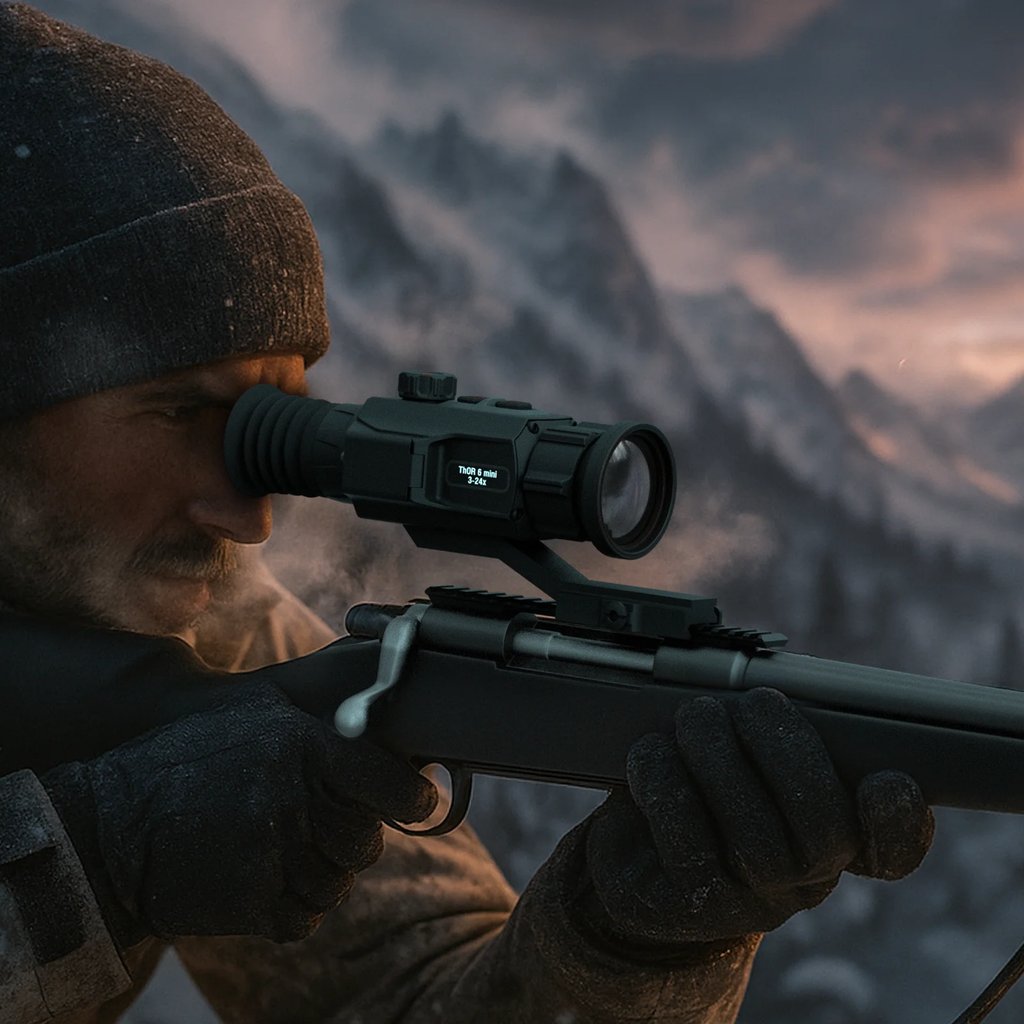
How to choose a thermal monocular for hogs
Match the monocular to the country you hunt and how the hogs use it. These factors matter most:
- Field of view — a wide view like the BlazeTrek 6's is faster for scanning brush and tracking a moving sounder; a narrower, higher-magnification unit reaches farther in the open.
- Resolution — more dots in the picture means a partly-hidden hog reads clearly instead of as a warm blob, especially as you zoom.
- Detection range — thick cover rarely needs extreme reach, but open agricultural ground rewards a long-detection sensor like the BlazeHunter XD's.
- Weight and battery — a light handheld you can scan with for hours beats a heavy one you set down; make sure the runtime covers your night.
- Ranging — a built-in rangefinder helps in the open where distances are hard to judge; in close brush it matters less.
For most brush and creek-bottom hog hunting, the BlazeTrek 6 is the right hand tool — wide, light, and detailed enough. When your ground opens up and shots get long, step to the BlazeHunter XD. Compare both in the full range of thermal monoculars.
One more thing worth planning around: how you'll actually run the monocular alongside your shooting setup. Most hog hunters scan with the handheld to find the sounder, then transition to a weapon-mounted optic to take the shot, so the two tools work as a pair rather than a replacement for each other. The BlazeTrek 6's light weight makes that hand-off easy because you're not fumbling with a heavy device every time you shoulder the rifle. Recording is useful too — being able to review a hunt afterward shows you how the hogs entered the field and where they bedded, which tightens up your next setup. Whichever model you land on, keep a spare power source in your pack so a long night in the brush doesn't end early.
How we picked these ATN thermal monoculars
A quick word on method, because "best" should mean something. The shortlist is drawn only from ATN's latest 6th-generation range, and each model was judged on the same measuring stick: resolution and NETD for image clarity, detection range and refresh rate for spotting and tracking, plus weight and battery for a full night out — all viewed through the lens of thick-brush hogs. When one pick trades sharpness for reach or price, that is stated openly. This is a manufacturer comparing its own current line, so the honest trade-offs and the "who it's not for" notes matter more than any single label.
Frequently Asked Questions
Why use a thermal monocular for hog hunting instead of a scope?
A handheld monocular lets you scan wide areas of brush quickly and comfortably without shouldering your rifle, so you find the sounder first and stay ready. The BlazeTrek 6's wide field of view and light weight make long scanning sessions easy. Once you've located hogs, you bring your weapon optic up for the shot.
Is the BlazeTrek 6 good enough for thick cover?
Yes. Its wide field of view is built for scanning brush and tracking a moving sounder, and the 640x512 sensor with SharpIR keeps a partly-hidden hog identifiable. Six color palettes let you pick the contrast that shows a pig best against the background. For thick-brush hog hunting, the wide view matters more than extreme reach.
When should I choose the BlazeHunter XD instead?
Step up to the BlazeHunter XD LRF when you hunt open agricultural ground where hogs are far off and shots are long. Its extreme 1280x1024 sensor keeps distant pigs crisp, and the built-in rangefinder gives you the distance before you commit. In tight brush, the lighter, wider BlazeTrek 6 is the better fit.
Can thermal see hogs through brush?
Thermal detects heat, so it reveals a hog's warmth through gaps in cover that would hide it from the naked eye, though solid trunks and dense foliage still block the signal. A wide field of view like the BlazeTrek 6's helps you catch that heat through the tangle as you scan. The 640 sensor then gives you the detail to confirm it's a hog.
How long will the battery last on a hog hunt?
The BlazeTrek 6 runs about 6.5 hours on its internal rechargeable battery, and you can top it off over USB-C between sits. The BlazeHunter XD uses dual removable batteries for 10-plus hours total, which suits longer open-country nights. Match the runtime to how long your typical hunt runs.
What color palette is best for hogs?
There's no single answer, which is why the BlazeTrek 6 offers six palettes. White Hot and Black Hot are the common starting points, while Iron Red can add contrast against certain backgrounds. Switch between them until a hog stands out clearest against the cover you're scanning.
If your hogs live in the brush, the tool that finds them is a wide, light thermal you can scan with all night. The ATN BlazeTrek 6 gives you a wide field of view, a sharp 640 sensor, and six palettes to cut a pig out of the tangle. When your ground opens up, the BlazeHunter XD LRF adds reach, extreme detail, and built-in ranging. Compare both in the full lineup of thermal monoculars and pick the scanner that matches your hog country.
Created: July 7, 2026 · 08:31:01 UTC