The best thermal monocular for deer tracking is the one that helps you recover a hit deer in the dark — following the warm sign, picking a bedded animal out of cover, and finding the downed buck before coyotes do. That's the ATN BlazeTrek 6. Tracking a deer after the shot is a close-range, methodical job in thick cover, so you want a light handheld with a wide, detailed view and enough sensitivity to catch the faint warmth of blood and a body cooling in the brush. This guide covers how thermal helps a recovery, what a tracking monocular actually needs, and names the BlazeTrek 6 as the pick, with the BlazeHunter XD for tracking across big, open ground.
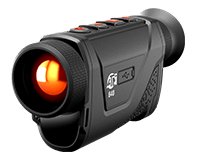
The best thermal monocular for deer tracking is the ATN BlazeTrek 6. Its 640x512 sensor and <=18mK sensitivity pick up the faint warmth of a blood trail and a deer cooling in cover, while a wide field of view lets you grid-search thick brush at close range. At 320 g it's easy to carry on a recovery, and IP67 build handles a wet night in the woods.
Quick answerBest deer-tracking monocular overall: ATN BlazeTrek 6 640x512 — sensitive, wide and light for close-range recovery.
Best for tracking across big open ground: ATN BlazeHunter XD 1280x1024 — more reach and a rangefinder.
Best at catching faint warmth: BlazeTrek 6 at <=18mK sensitivity.
Lightest for a long recovery walk: BlazeTrek 6 at 320 g / 0.7 lb.
Why ATN's 6th-gen handheld suits a recovery
Deer tracking is a job of finding faint, close warmth in cluttered cover, and the BlazeTrek 6 is built for it. After a shot, a deer often runs into thick brush before it goes down, and the recovery hinges on picking up subtle heat — the residual warmth of blood on leaves, the fading heat of a bedded or downed animal, the warm bed where it lay. That takes sensitivity more than reach. The BlazeTrek 6's <=18mK NETD measures how small a temperature difference it can resolve, and a low number is what lets it catch the weak, cooling signals that a recovery turns on.
The 640x512 sensor and wide field of view handle the search itself. Tracking is a slow, methodical grid — you work the last-known line, sweeping brush and grass for sign — and a wide 22.8 x 18.3 degree view at a low 1.5x base lets you cover a search lane in one pass instead of missing warm sign in a narrow window. Resolution is the number of dots painting the picture, four times a 384 core, so a deer half-hidden in cover shows as a recognizable body rather than an ambiguous glow you have to walk up on to confirm. SharpIR AI tightens that outline against the brush so it reads clearly.
Detection out to 1000m sounds like more than a recovery needs, and it is — tracking is close work — but the reach means you can also glass ahead to spot a deer that got up and moved, or one bedded at the edge of a field before it bolts. A 50 Hz refresh keeps the view smooth as you walk and sweep, so the picture doesn't smear with every step. And because recoveries happen after dark, in wet woods, at the end of a long day, the BlazeTrek 6's 320 g weight and IP67 build matter: it's light in the hand on a long walk-out and it survives the damp cover you're pushing through. Sensitive, wide, light: a tracker's tool.
Best for deer tracking: ATN BlazeTrek 6
The ATN BlazeTrek 6 is the recovery handheld. Its <=18mK sensitivity catches the faint warmth a blood trail and a cooling deer give off, its wide field of view lets you grid-search brush efficiently, and its 640x512 sensor turns a half-hidden animal into a readable shape. At 320 g it stays light through a long tracking walk, and IP67 build handles the wet cover a night recovery pushes through.
Following faint, fading warmth
The heart of a thermal recovery is catching heat that's weak and cooling, and that's a sensitivity job. Fresh sign — warm blood on leaves, a warm bed, a deer that went down minutes ago — shows clearly, but as time passes those signals fade toward the temperature of the ground around them. The BlazeTrek 6's <=18mK NETD is what keeps that fading warmth visible longer, so you can follow a trail that a less sensitive device would lose. Work the line slowly and let the monocular show you the next warm spot along the route the deer took.
Picking a deer out of cover
A hit deer often beds down in the thickest cover it can find, and finding it there is where resolution and field of view combine. The wide 22.8 x 18.3 degree view lets you sweep a brushy lane in one pass, and the 640x512 sensor keeps a partly hidden deer recognizable — you can tell a body from a warm stump before you push in and risk bumping a deer that isn't done. Six palettes let you pick the view that separates a warm animal from cover fastest, and Hot Point Tracking marks the warmest object so you keep a bearing on a deer that stands and moves off.
Light for the long walk-out
Recoveries come at the end of a long day and often mean a long, slow walk through cover, sometimes for hours, before you find the deer and then drag it out. A heavy monocular becomes a burden fast; the BlazeTrek 6's 320 g body rides on a strap or in a pocket without wearing on you, so you can keep it up and searching for as long as the track takes. Its internal battery runs about 6.5 hours and tops up over USB-C from a power bank, which covers a full evening recovery with margin to spare.
Who it's for and who it's not
It's for the hunter who recovers deer in timber, thickets and field edges and wants sensitive, close-range detail from a light, tough handheld. It's not for someone tracking deer across wide-open country where animals move far off — that job wants more reach. If your recoveries run across big, open ground, read on.
Best for open-ground tracking: ATN BlazeHunter XD
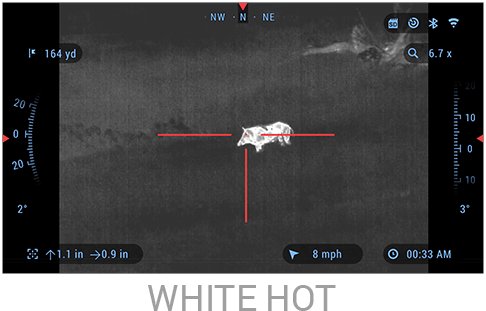
The ATN BlazeHunter XD is the tracking pick when recoveries cross big, open country and a hit deer can travel far before bedding. Its 1280x1024 extreme-definition sensor behind a 50mm lens pushes detection to 3400m, so you can glass a distant field edge or hillside for a downed or moving deer, and the resolution keeps that far-off animal identifiable when you zoom. Its built-in laser rangefinder reads to 1000m, useful for judging how far a spotted deer is across ground the dark makes deceptive.
When the track runs long
On open agricultural or ranch country, a wounded deer may cover a lot of distance and end up in a far field or draw. The BlazeHunter XD's reach and 1280x1024 detail let you scan those distances and confirm a body far off before you walk it, which saves a great deal of ground on a big recovery. Its dual 18650 batteries give 10+ hours for a long night of searching, with swappable cells so a cold recovery doesn't strand you on a dead battery.
The trade against the BlazeTrek 6
The BlazeHunter XD is heavier at 495 g and steps up in price for the extreme-definition sensor and rangefinder, and its narrower high-power view is slower for the close grid-searching most recoveries need. Who it's not for: the hunter working timber and thick cover, who will grid-search faster and carry less all night with the lighter, wider BlazeTrek 6.
How to choose a deer-tracking thermal monocular
Deer tracking is close, methodical work built on faint warmth, so judge a monocular on sensitivity and search-ability more than raw range. Match the choice to where your recoveries happen — thick timber or open country — and to the fact that you're following cooling sign, not spotting active game. Weigh these in order:
- NETD sensitivity — <=18mK is what keeps a fading blood trail and a cooling deer visible longer, which is the core of a thermal recovery.
- Wide field of view — 22.8 x 18.3 degrees lets you grid-search a brushy lane in one pass instead of missing sign in a narrow window.
- Resolution for ID — a 640x512 sensor turns a half-hidden deer into a readable body, so you confirm before you push in and risk bumping it.
- Weight — 320 g stays light through a long tracking walk and drag-out, where a heavy unit becomes a burden.
- Refresh rate — 50 Hz keeps the view smooth as you walk and sweep, so the picture doesn't smear with every step.
- Waterproof build — IP67 handles the wet cover a night recovery pushes through, from dew-soaked brush to light rain.
How we picked these ATN deer-tracking thermal monoculars
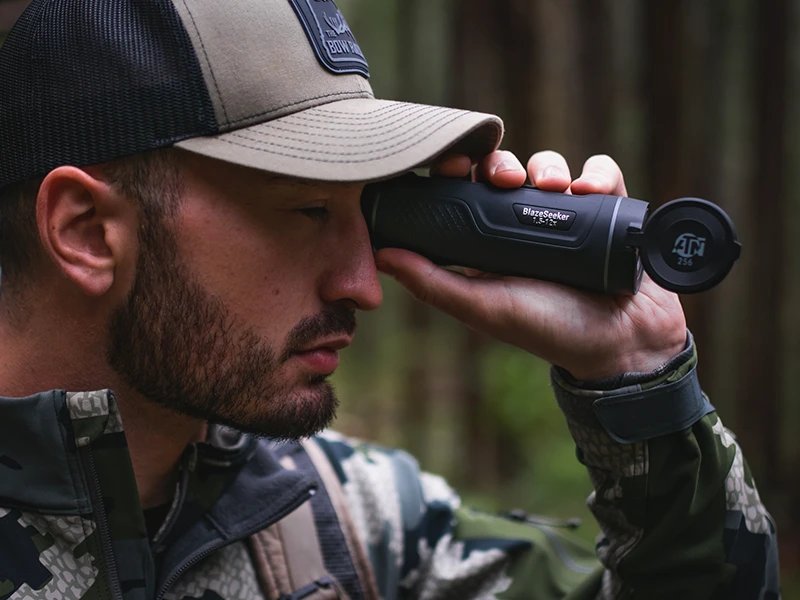
We looked only at ATN's current 6th-gen line and ranked its handhelds on what a recovery actually needs. Because tracking turns on faint, cooling warmth, we weighted sensitivity and search-ability highest — <=18mK NETD to catch a fading trail, and a wide 22.8 x 18.3 degree view to grid-search cover efficiently — then resolution, because a 640x512 sensor is what turns a half-hidden deer into a body you can confirm; then weight and build, since a light 320 g IP67 handheld is what you can carry through a long, wet walk-out.
The honest trade-off is reach. The BlazeTrek 6's 1000m detection is more than a close recovery needs but modest for tracking across wide-open country, where the BlazeHunter XD's 3400m reach and extreme-definition sensor let you glass a distant deer down at the cost of weight and price. Neither is right for every hunter. This is an in-house comparison of ATN's own handhelds rather than an independent lab test, so treat these picks as our reasoned read and match them to where you recover deer. Who the BlazeTrek 6 is not for: hunters tracking across large open ground who need to spot a downed deer far off and would prefer the BlazeHunter XD's reach and detail despite the extra weight and cost. And a fair note: thermal is a powerful aid to recovery, but always follow good tracking practice and know your local regulations on using thermal for recovery.
Frequently Asked Questions
What is the best thermal monocular for deer tracking?
The ATN BlazeTrek 6 is the best thermal monocular for deer tracking. Its <=18mK sensitivity catches the faint warmth of a blood trail and a cooling deer, its wide field of view lets you grid-search cover efficiently, and its 640x512 sensor turns a half-hidden animal into a readable shape — all in a light 320 g body.
Can a thermal monocular follow a blood trail?
It can help. Fresh blood and a recently downed deer give off warmth that a sensitive thermal picks up, and the BlazeTrek 6's <=18mK NETD keeps that fading heat visible longer. It won't replace careful ground tracking, but it's a strong aid for finding warm sign and a cooling deer in the dark.
Why does sensitivity matter for deer tracking?
Because the warmth you're following is faint and fading. As time passes, a blood trail and a downed deer cool toward the temperature of the ground, and a lower NETD like the BlazeTrek 6's <=18mK is what keeps those weak signals visible so you can stay on the track longer.
How far can the BlazeTrek 6 detect a deer?
It has a 1000m detection range, which is more than enough for close-range recovery and useful for glassing ahead to spot a deer that got up and moved. Detection means picking up heat; you'll identify a deer closer than that. For tracking across big open country, the BlazeHunter XD reaches farther.
Is the BlazeTrek 6 light enough for a long recovery?
Yes. At 320 g it's easy to hold up and search with for hours, then carry on the drag-out. Its internal battery runs about 6.5 hours and tops up over USB-C from a power bank, so a full evening recovery is covered with margin.
Is thermal legal for tracking deer at night?
It varies by state and situation, so check your local regulations before using thermal for recovery or any night activity. Many places distinguish between recovering a legally taken animal and hunting; the rules are specific, so confirm what applies where you hunt.
Is the ATN BlazeTrek 6 waterproof?
Yes, it carries an IP67 rating, so dew-soaked brush and light rain won't harm it. That matters for tracking because recoveries push through wet cover after dark, and the monocular has to keep working through it.
Need to recover a deer after dark? The ATN BlazeTrek 6 catches faint, cooling warmth, grid-searches cover fast and stays light through a long walk-out. For recoveries across big open ground, the BlazeHunter XD reaches farther and ranges too. See the full range on the ATN thermal monoculars page and match it to where you hunt.
Created: July 7, 2026 · 19:23:00 UTC