The best thermal monocular for cold weather is the one that turns winter's biggest advantage — the cold ground itself — into a razor-sharp picture. That's the ATN BlazeTrek 6. When the landscape drops near freezing, a warm-blooded animal stands out against it like a lamp in a dark room, and a 640x512 sensor with strong sensitivity makes the most of that gap. Cold weather also punishes gear, so the monocular has to shrug off snow, frost and short daylight. This guide covers why winter is prime thermal season, what a cold-weather handheld actually needs, and names the BlazeTrek 6 as the pick, with the BlazeHunter XD for hunters who want more reach across frozen open country.
Best for long, frozen open country: ATN BlazeHunter XD 1280x1024 — more detail and 3400m reach.
Best contrast in the cold: BlazeTrek 6 at <=18mK sensitivity.
Toughest in snow and frost: BlazeTrek 6, IP67 rated.
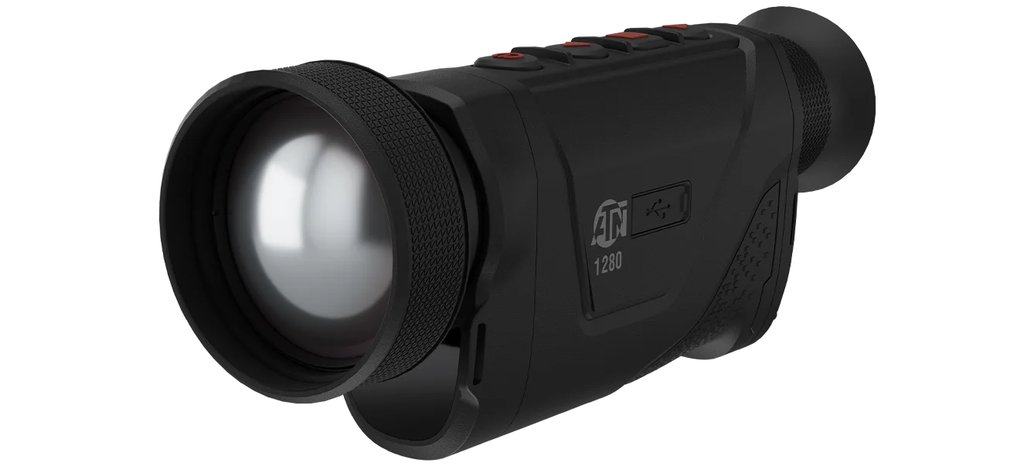
Why ATN's 6th-gen sensor thrives in the cold
Cold weather is a thermal monocular's best friend, and the BlazeTrek 6 is built to cash in. A thermal sees the temperature difference between an animal and its background, and winter widens that gap dramatically. Summer ground holds the day's heat and blurs the line between a warm deer and warm dirt; a frozen field, frost-covered brush and near-freezing air give a 100-degree animal nothing to hide behind. The result is that warm bodies almost glow against the cold, and that's exactly the condition a 640x512 sensor and good sensitivity are built to exploit.
The BlazeTrek 6's <=18mK NETD is what turns that seasonal edge into a clean picture. NETD measures the smallest temperature difference the sensor can tell apart, and a low number means finer contrast. In deep cold you rarely lack contrast, so the payoff shows in the subtle stuff: the shape of a bedded animal half-tucked behind frozen cover, or the difference between fresh warm tracks and the cold ground around them. The 640x512 resolution then carries that detail — think of it as the number of dots painting the picture, with four times the dots of a 384 core, so a distant animal keeps its outline when you zoom rather than smearing into a blob against the snow.
Winter also means short days and long dark, so scanning fast matters. The BlazeTrek 6 runs a wide 22.8 x 18.3 degree field of view at a low 1.5x base magnification, so you sweep a frozen field in a few passes instead of peering through a straw. SharpIR AI cleans the soft edges thermal footage normally has, tightening a warm shape against a cold background so it reads instantly. And detection reaches 1000m — plenty to pick up heat across an open winter pasture early, well before you close in to identify it. Cold air, wide gap, sharp sensor: the season does half the work, and the BlazeTrek 6 does the rest.
Best for cold weather: ATN BlazeTrek 6
The ATN BlazeTrek 6 is the winter handheld to reach for when the ground goes cold. Its 640x512 sensor and <=18mK sensitivity make warm game blaze against frozen fields, its wide field of view speeds scanning in short daylight, and at 320 g it's light enough to carry through a long, cold sit. Detection out to 1000m covers the open winter ground where a monocular earns its keep.
Contrast that winter hands you
The best thing a cold-weather monocular can do is use the season, and the BlazeTrek 6 does. Against a near-freezing background, a warm animal has nowhere to blend in, so it shows up bright and unmistakable even at distance. The 640 sensor keeps that bright shape detailed as you zoom, so you're not just seeing a warm blob — you can read the body of a coyote crossing a snowfield or a deer bedded at the treeline. Winter is when a mid-tier monocular punches above its price, because the physics are working for you rather than against you.
Scanning fast in short daylight
Winter days are short, so the productive hours are dawn, dusk and dark, and that's where the wide field of view pays off. At 22.8 x 18.3 degrees and a low 1.5x base, the BlazeTrek 6 lets you take in a big slice of frozen ground per pass, so you cover a pasture quickly before the light or the cold runs out. Six color palettes let you pick the view that reads best against snow — many hunters find Black Hot cleanest on a white background — and Hot Point Tracking pins a marker on a moving animal so a coyote loping across an open snowfield doesn't get lost in the glare.
Built for snow, frost and freezing damp
Cold weather is hard on electronics, and a winter monocular has to keep working when snow melts on the lens and frost forms on everything. The BlazeTrek 6 is rated IP67, so blowing snow, freezing drizzle and heavy frost won't end the outing. It draws from an internal rechargeable battery for about 6.5 hours, which comfortably covers the short productive window of a winter day, and its 50 Hz refresh keeps a running animal smooth rather than smeared even in the cold. Keep a power bank warm in an inside pocket and top up over USB-C between sits, and you have a full winter day covered.
Who it's for and who it's not
It's for the hunter or observer who works fields, pastures and edges in cold, snowy conditions and wants sharp contrast and fast scanning from a light, tough handheld. It's not for someone glassing frozen open country at very long range — that buyer should step up. And if your winter ground runs to big, distant expanses, read on.
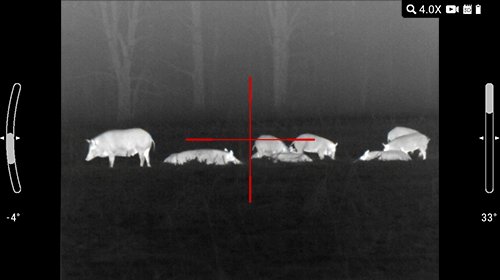
Best for long, frozen open country: ATN BlazeHunter XD
The ATN BlazeHunter XD is the cold-weather step up for wide, frozen expanses where animals show up far off. It runs a 1280x1024 extreme-definition sensor behind a 50mm lens with a built-in laser rangefinder, so detection stretches to 3400m and a distant animal on a snowfield keeps its detail when you zoom. In the cold, where contrast is already high, that resolution is what lets you identify game at real distance rather than just spot a bright shape.
When the cold ground runs long
On big winter country — frozen prairie, open ranch, snowy river bottoms — heat shows up early because the background is so cold, but you still have to identify it across a lot of ground. The BlazeHunter XD's 1280x1024 sensor keeps that far-off shape recognizable, and its rangefinder reads distance out to 1000m with +/-1m accuracy so you know how far a stalk really is across snow that fools the eye. Its removable dual 18650 batteries give 10+ hours, and swappable cells matter in the cold because batteries drain faster when they're chilled.
The trade against the BlazeTrek 6
The BlazeHunter XD is heavier at 495 g and steps up in price for the extreme-definition sensor and rangefinder. Its detail and reach are overkill on tight winter ground where the BlazeTrek 6's wide view and light weight serve you better. Who it's not for: a hunter working close, brushy cold-weather cover — they'll get more done with the lighter, wider BlazeTrek 6 and save the money.
How to choose a cold-weather thermal monocular
In winter the sensor already has contrast handed to it, so judge a cold-weather monocular on how well it scans and how tough it is more than on raw sensitivity. Match the choice to your winter ground — close fields and edges, or wide frozen expanses — and to the short daylight you actually hunt in. Weigh these in order:
- Resolution for identification — a 640x512 sensor keeps a warm shape detailed against snow when you zoom; against high winter contrast, resolution is what turns a bright blob into a readable animal.
- Wide field of view — 22.8 x 18.3 degrees lets you cover ground fast in short winter daylight, before the light or the cold runs out.
- NETD sensitivity — <=18mK sharpens the subtle differences, like fresh tracks against cold ground, even when overall contrast is already high.
- Waterproof build — IP67 is what keeps blowing snow, frost and freezing damp from ending the outing.
- Refresh rate — 50 Hz keeps a running animal smooth across a snowfield rather than smeared.
- Battery strategy — plan for the cold: chilled batteries drain faster, so a runtime that covers a short winter day plus a warm-pocket power bank keeps you going.
How we picked these ATN cold-weather thermal monoculars
We looked only at ATN's current 6th-gen line and ranked its handhelds on what actually matters when the ground is frozen. Because winter hands you contrast for free, we weighted resolution and scanning ability highest — a 640x512 sensor to keep a bright animal readable when you zoom, and a wide 22.8 x 18.3 degree field of view to cover ground fast in short daylight. Then sensitivity, because <=18mK sharpens the subtle winter details; then build, because IP67 waterproofing is what survives snow and frost; and refresh rate, because 50 Hz keeps a running animal smooth in the cold.
The honest trade-off is reach versus portability. The BlazeTrek 6's 1000m detection and light 320 g body are tuned for close-to-mid winter fields, not for glassing frozen expanses where the BlazeHunter XD's 3400m reach and extreme-definition sensor pull ahead — at the cost of weight and price. Neither is right for everyone. This is an in-house comparison of ATN's own handhelds rather than an independent lab test, so treat these picks as our reasoned read and check the numbers against your winter ground. Who the BlazeTrek 6 is not for: hunters working very long, open frozen country who need to identify game far out — they'll want the BlazeHunter XD despite the extra weight and cost.
Frequently Asked Questions
What is the best thermal monocular for cold weather?
The ATN BlazeTrek 6 is the best thermal monocular for cold weather. Its 640x512 sensor and <=18mK sensitivity exploit winter's wide temperature gap so warm game blazes against frozen ground, while a wide field of view speeds scanning and IP67 build handles snow and frost.
Do thermal monoculars work better in cold weather?
Yes, generally. Thermal sees the temperature difference between an animal and its background, and cold, frozen ground widens that gap so warm bodies stand out sharply. Winter is often prime thermal season, which is why a capable sensor like the BlazeTrek 6's makes the most of it.
Does cold weather hurt a thermal monocular's battery?
Cold does drain batteries faster, so plan for it. The BlazeTrek 6 runs about 6.5 hours from its internal cell, which covers a short winter day; keep a power bank warm in an inside pocket and top up over USB-C, and you'll comfortably cover the productive hours.
Is the ATN BlazeTrek 6 waterproof enough for snow?
Yes. It carries an IP67 rating, so blowing snow, freezing drizzle and heavy frost won't harm it. That toughness is a key reason it suits cold-weather use, where melting snow on the lens and frost on the body are constant.
Which color palette is best in the snow?
It comes down to preference, but many hunters find Black Hot reads cleanest against a bright white background, since warm animals appear dark and distinct on the snow. The BlazeTrek 6 has six palettes, so try White Hot and Iron Red too and settle on what your eye reads fastest.
Do I need higher resolution for cold-weather hunting?
Winter contrast is high, so you rarely struggle to spot heat, but resolution still matters for identifying what you see. The BlazeTrek 6's 640x512 sensor keeps a bright shape detailed when you zoom; for very long, open frozen country, the BlazeHunter XD's 1280x1024 sensor identifies game farther out.
How far can the BlazeTrek 6 detect in winter?
It has a 1000m detection range, which suits open winter fields and pastures. Detection means picking up that heat is present; you'll identify an animal closer than that. High winter contrast often helps you notice that heat toward the far end of that range.
Winter is prime thermal season — make the cold work for you. The ATN BlazeTrek 6 turns frozen ground into razor-sharp contrast, scans wide in short daylight and shrugs off snow and frost. For long, open frozen country, the BlazeHunter XD reaches farther. See the full lineup on the ATN thermal monoculars page and match it to your winter ground.
Created: July 7, 2026 · 19:23:00 UTC