Picking the best thermal monocular comes down to one honest question: how far do you need to see, and how much detail do you want when you get there? A monocular is the tool you carry in one hand to find heat in the dark, then decide whether it is a hog, a coyote, or the neighbor's cat. This guide sorts three ATN monoculars into a simple tier ladder so you can match the glass to your ground. At the top sits the ATN BlazeHunter XD flagship, then the value-priced BlazeTrek 6, then the budget BlazeSeeker 6. Same brains, same app, three different reaches. By the end you will know exactly which one belongs in your pack.
Best value: ATN BlazeTrek 6 640x512 1.5-12x — crisp 640 picture and a wide view without the flagship outlay.
Best budget: ATN BlazeSeeker 6 256x192 1.2-9.6x — the lightest, most pocketable way into 6th-gen thermal for close-range scanning.
All three share ATN's Connect 6 app, SharpIR image cleanup, six color palettes and IP67 waterproofing. The difference is sensor resolution, reach and whether you want ranging on board.
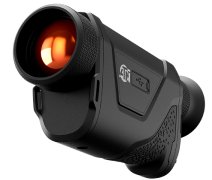
Why ATN's 6th-gen monoculars lead the pack
ATN's 6th-gen monoculars lead because they share one modern platform and then split by sensor and reach, so you pay for the range you actually need. Every unit here runs SharpIR AI image enhancement, which cleans up the raw thermal signal the way a good photo app sharpens a grainy snapshot. All three carry six color palettes, Hot Point Tracking that flags the hottest object in frame, a 50 Hz refresh rate that keeps a running coyote smooth instead of smeared, 32 GB of onboard storage, USB-C, and the ATN Connect 6 app for streaming and control from your phone. They are all IP67 waterproof, so a dunk in a creek or a night of drizzle will not end the hunt. What changes as you climb the ladder is the picture quality and how far you can trust it: the flagship sees a heat signature well past two miles, the value pick reaches a kilometer, and the budget model covers the closer distances where most walked-up scanning happens.
Best overall: ATN BlazeHunter XD LRF
The ATN BlazeHunter XD LRF is the best thermal monocular overall because it pairs an extreme-definition sensor with a laser rangefinder, so you both see farther and know the distance. Its 1280x1024 sensor carries over a million more pixels than a standard 640 unit, which means you can push the 2-16x magnification and digital zoom before the image turns blocky. Think of it as the jump from a good phone camera to a proper one: more dots in the picture, so detail survives when you reach out. Detection range runs to 3400m, comfortably past two miles for a warm animal in the open.
The rangefinder that earns its keep
The built-in laser rangefinder reads distance to 1000m with plus-or-minus one meter accuracy on an eye-safe 905nm Class 1 laser. That matters because a thermal picture flattens depth, and a coyote at 150 yards can look like one at 300. A quick range readout ends the guesswork before you ever raise a rifle. A 50mm F/1.0 objective gathers the heat, a Full-HD OLED display shows it, and dual removable 18650 batteries give 10-plus hours across two swappable cells so a dead battery is a 20-second fix, not the end of the night.
Who it's for: serious predator and hog hunters who scan big country and want detail and ranging in one hand. Not for: someone who only glasses the back forty and would rather save weight and money.
Best value: ATN BlazeTrek 6 640x512
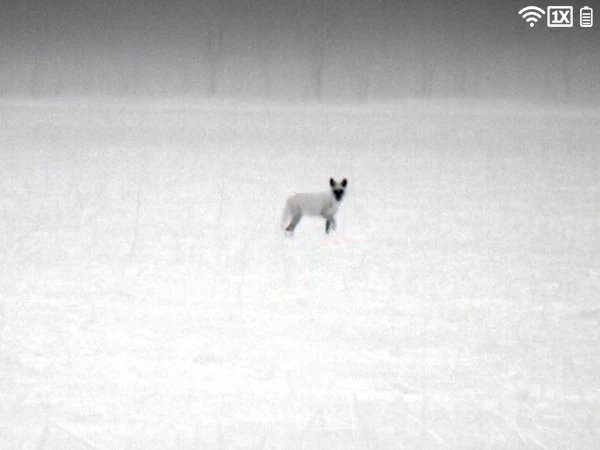
The ATN BlazeTrek 6 is the best value thermal monocular because it delivers a genuine 640x512 picture and a wide field of view without the flagship price. A 640 sensor is the sweet spot most hunters land on: sharp enough to read animals clearly at working distances, with a detection range to 1000m. Its wide 22.8 by 18.3 degree field of view makes sweeping a treeline fast, so you cover ground instead of squinting through a soda straw.
Light in the hand, long on the night
At 320 g it rides in a jacket pocket and disappears on a walk-and-stalk. The 1.5-12x magnification opens with a roomy base view for scanning and zooms in when you find something worth a second look. SharpIR keeps the image clean, six palettes let you switch between White Hot, Black Hot and Iron Red for whatever the terrain wants, and the Connect 6 app even carries an AI assistant. An internal rechargeable battery runs about 6.5 hours. Who it's for: hunters who want a crisp, wide-view scanner for most nights. Not for: anyone who needs onboard ranging or two-mile reach.
Best budget: ATN BlazeSeeker 6 256x192
The ATN BlazeSeeker 6 is the best budget thermal monocular because it puts real 6th-gen thermal in your hand at the lowest cost of entry. Its 256x192 sensor is aimed at closer work, with a 345m detection range that covers the field edges, feed lines and fence rows where a lot of scanning actually happens. At 270 g it is the lightest of the three and truly pocketable, so it is the one you always have on you.
Small sensor, full feature set
Do not mistake budget for stripped-down. The BlazeSeeker 6 still runs SharpIR, all six color palettes, Hot Point Tracking, a wide 24 by 18 degree field of view, 32 GB of storage, USB-C, IP67 waterproofing and the same Connect 6 app as its bigger siblings. The 1.2-9.6x magnification opens very wide for fast scanning up close. Battery life lands around 8 hours. Who it's for: new thermal buyers, close-range scanners, and anyone who wants a light second unit. Not for: long-range identification past a few hundred meters.
Why a monocular over binoculars or a scope
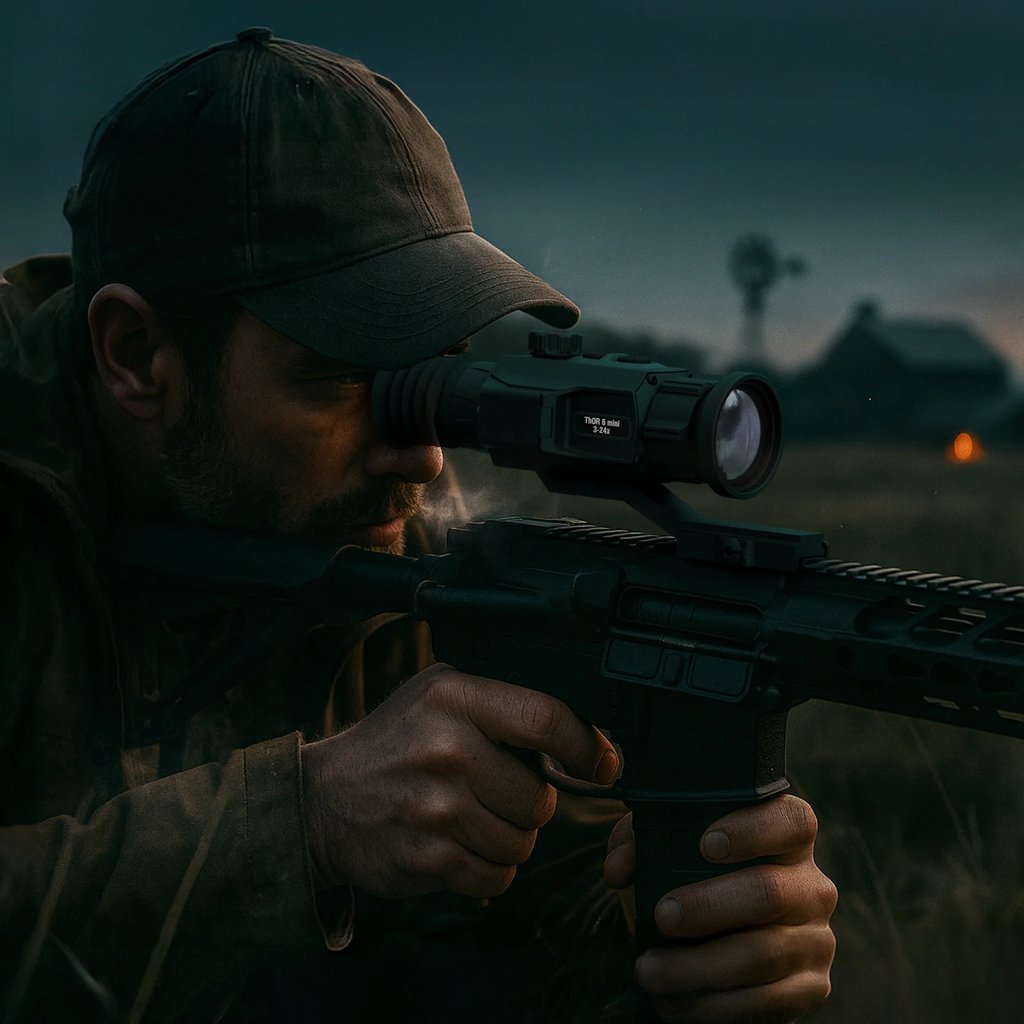
A thermal monocular earns its spot because it is the fastest, lightest way to answer the question every night hunter asks first: is anything out there, and what is it? You carry it in one hand, sweep the field in seconds, and keep your other hand free for a rifle or a call. A scope ties your looking to your aiming, which is slow for scanning and hard on the neck, and full binoculars weigh more and cost more when all you need is to locate heat. The monocular is the scout. Once it finds a target and, on the BlazeHunter XD, ranges it, you switch to your shooting optic with a plan. That division of labor is exactly why so many hunters run a monocular alongside a scope rather than trying to make one device do both jobs.
How to choose the right thermal monocular
Choose your thermal monocular by matching sensor resolution and detection range to the distance you actually work, then decide whether you need ranging on board. Start with the ground you hunt, not the spec sheet.
- Resolution — Higher resolution (1280 vs 640 vs 256) puts more dots in the picture, so you can zoom in further before it turns blocky. Reach far, buy more resolution.
- Detection range — This is how far the unit picks up heat. Match it to your longest realistic sight line: 345m for tight cover, 1000m for mixed ground, 3400m for wide open country.
- NETD — A lower NETD (down to <=15mK on the flagship) means a cleaner picture in humid, foggy or rainy air, when heat contrast fades.
- Field of view — A wider view makes scanning and tracking running animals easier; the budget and value units open wide, the flagship trades some width for reach.
- Rangefinder — Only the BlazeHunter XD has a built-in laser rangefinder. If you shoot at distance after spotting, that readout is worth a lot.
- Weight and battery — Lighter units are the ones you carry every night; swappable dual batteries on the flagship mean no hard stop when a cell dies.
Still torn? If you can only own one and you range across open country, the flagship earns it. If most of your nights are inside a kilometer, the BlazeTrek 6 640 is the smart-money pick. And if you are new to thermal or want a light second unit for the pocket, the BlazeSeeker 6 gets you real heat vision without stretching. A useful rule of thumb: buy for the far edge of the ground you hunt, not the average, because the night you wish you had more reach is the night the big one shows up at the treeline. Browse the full lineup on ATN's thermal monoculars page to compare variants side by side.
One more practical note: all three share the ATN Connect 6 app, so whichever tier you pick, you get the same phone control, over-the-air updates and easy sharing of your recorded clips. That means a monocular you buy today keeps getting better through software, and if you later add a second ATN device it lives in the same ecosystem. Buying into the 6th-gen line is buying into a platform, not just a single tool, which is a big part of why these monoculars are our top recommendations.
How we picked these ATN thermal monoculars
A quick word on method, because "best" should mean something. The shortlist is drawn only from ATN's latest 6th-generation range, and each model was judged on the same measuring stick: resolution and NETD for image clarity, detection range and refresh rate for spotting and tracking, plus weight and battery for a full night out — all viewed through the lens of flagship vs value vs budget. When one pick trades sharpness for reach or price, that is stated openly. This is a manufacturer comparing its own current line, so the honest trade-offs and the "who it's not for" notes matter more than any single label.
Frequently Asked Questions
What is the best thermal monocular overall?
The ATN BlazeHunter XD LRF is the best thermal monocular overall. Its 1280x1024 sensor holds detail farther than a standard 640 unit, its detection range reaches 3400m, and a built-in laser rangefinder tells you the distance before you shoot. It is the pick when reach and detail matter most.
What resolution do I need in a thermal monocular?
It depends on distance. A 256x192 sensor works well inside a few hundred meters, a 640x512 sensor is the all-round sweet spot to about a kilometer, and a 1280x1024 sensor holds detail out past two miles. Higher resolution simply means more dots in the picture, so you can zoom further before it looks blocky.
How far can a thermal monocular actually see?
Detection range depends on the model and sensor. The BlazeSeeker 6 detects heat to about 345m, the BlazeTrek 6 to 1000m, and the BlazeHunter XD to 3400m. Detection means spotting a heat signature; identifying what it is happens at a shorter distance.
Do I need a rangefinder in my monocular?
Only if you plan to shoot at distance after spotting. Thermal images flatten depth, so a target can look closer or farther than it is. The BlazeHunter XD's built-in laser rangefinder reads distance to 1000m with plus-or-minus one meter accuracy, which removes the guesswork before a shot.
Is a budget thermal monocular worth it?
Yes, for close and mid-range scanning. The BlazeSeeker 6 keeps the full ATN feature set, SharpIR, six palettes, Hot Point Tracking and the Connect 6 app, at the lowest cost of entry. It just trades long-range detail and reach for a lighter, more affordable package.
Can I use a thermal monocular in rain or fog?
Yes. All three ATN monoculars here are IP67 waterproof, so rain, snow and drizzle are fine. In humid or foggy air the picture holds up better on units with a lower NETD, and the flagship's <=15mK rating gives it the cleanest image in poor conditions.
How long do these monoculars run on a charge?
The BlazeSeeker 6 runs about 8 hours, the BlazeTrek 6 about 6.5 hours on its internal battery, and the BlazeHunter XD delivers 10-plus hours across two removable 18650 cells. Because the flagship's batteries swap out, you can carry spares and never hard-stop mid-hunt.
Ready to put real heat vision in your hand? The ATN BlazeHunter XD LRF is our top pick for detail, reach and built-in ranging, but the right answer is the one that fits your ground and your budget. Compare the flagship against the value BlazeTrek 6 and the budget BlazeSeeker 6 on ATN's thermal monoculars page, match the detection range to your longest sight line, and pick the tier that suits how you hunt. Whichever you choose, you get the same 6th-gen brains, the same Connect 6 app and the same IP67 toughness built to survive a full season in the field.
Created: July 7, 2026 · 08:31:01 UTC