When you glass for hours, image quality is everything — a clean, detailed picture is the difference between confirming a coyote and squinting at a warm blob. The best thermal imaging binoculars pair a high-resolution sensor with smart processing so the view stays sharp deep into the zoom, and they let you use both eyes so long sessions do not tire you out. Our top pick is the ATN Binox-6 Dual 640x512 3-24x, chosen for its standout image quality and AI toolset. For hunters who want maximum magnification, the Binox-6 Dual 384x288 is the high-zoom companion. Both are 4-in-1 units that see in day, night, thermal, and twilight, with a built-in laser rangefinder baked in.
Best for maximum zoom: ATN Binox-6 Dual 384x288 5.5-44x — highest magnification for long-range glassing.
Who they are for: hunters and scouts who glass for long stretches and want the cleanest, most detailed two-eye thermal view, day or night.
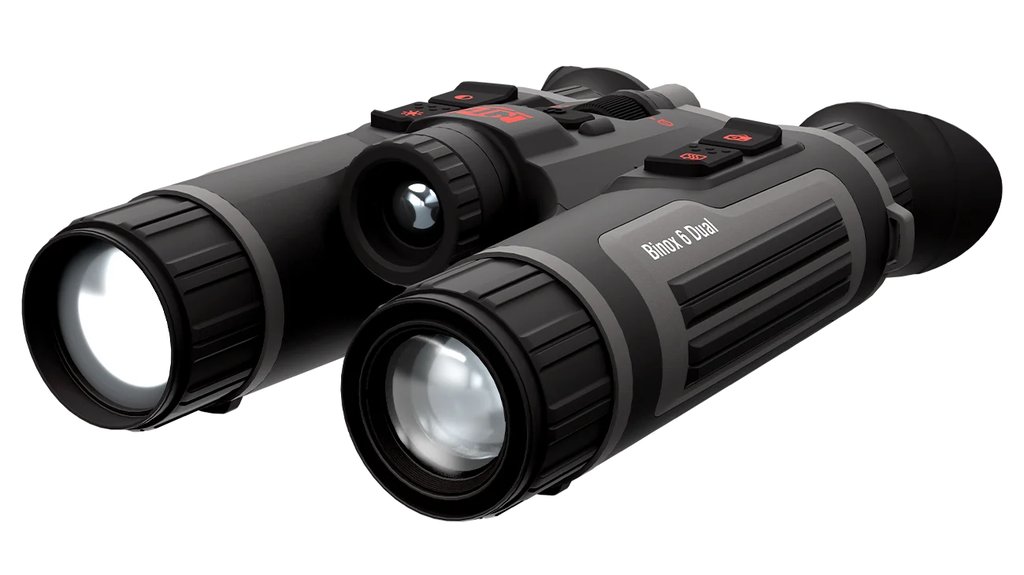
Why ATN's 6th-gen Binox-6 leads on image quality
The Binox-6 line leads because it stacks a high-grade sensor on top of ATN's smartest image processing, then adds tools no single-mode optic can match. Both picks are 4-in-1 systems that switch between day, night, thermal, and twilight vision, backed by a 4K Ultra HD day sensor for crisp daylight glassing. On the thermal side, SharpIR AI enhancement, Wide Dynamic Range, and a DeFog mode work together to pull clean detail out of tough air, while a 15mK NETD keeps the picture steady in humidity. A built-in laser rangefinder ranges targets to 1000 yards, Hot Point Tracking locks onto heat, six palettes tune the contrast, and Picture-in-Picture plus Dual View Switching let you manage magnification without losing your place. Dual replaceable 18650 batteries run about 8 hours, there is 64 GB of storage, the ATN Connect 6 app is on board, and the whole thing is IP67 waterproof. That is why, mode for mode, the Binox-6 shows a better picture than a plain thermal binocular.
Best overall: ATN Binox-6 Dual 640x512
The ATN Binox-6 Dual 640x512 3-24x is the image-quality champion of the group. If your priority is the sharpest, most detailed view you can get, this is the one.
The sharpest thermal picture
The 640x512 sensor holds far more heat-reading dots than a 384 or 256 chip, so the picture stays clean as you push the zoom — think HD versus standard TV. Paired with a 15mK NETD and SharpIR AI, it keeps that clarity even on damp, hazy nights when lesser sensors turn to mush. Detection reaches about 3100m, the farthest in this pair, so you can pick up and identify game across big country.
Four ways to see, plus ranging
This is not just a thermal. The 4-in-1 system gives you day, night, thermal, and twilight modes, with a 4K day sensor for crisp daylight scouting and a built-in laser rangefinder that ranges to 1000 yards at plus or minus a meter. Add GPS, a compass, Picture-in-Picture, and Dual View Switching, and you have a complete scouting instrument in one two-eye package.
Who it is for: hunters and scouts who want the best possible image and full day-to-night versatility. Who it is not for: buyers who only need extreme magnification and less resolution — the 384 covers that at a lower tier.
Software that keeps the image honest
Great glass is only half of image quality; the processing behind it matters just as much. On the Binox-6 640, SharpIR AI enhancement sharpens edges and lifts detail out of the raw heat data, Wide Dynamic Range balances hot and cool areas so a warm animal does not blow out against a cold sky, and DeFog mode claws back a usable picture when the air turns misty. Hot Point Tracking marks and follows the hottest object in the frame, and six palettes let you tune contrast to the conditions. All of that runs on a smooth 50 Hz refresh, so a running animal stays clean rather than smeared. This is the layer that separates a premium thermal binocular from a merely adequate one.
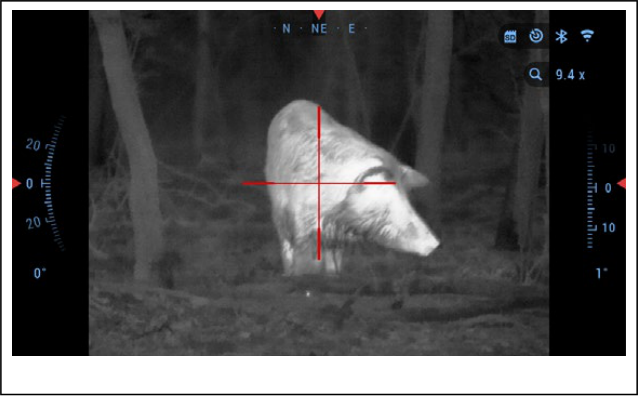
Best for maximum zoom: ATN Binox-6 Dual 384x288
The ATN Binox-6 Dual 384x288 5.5-44x is the pick when reach and magnification top your list. It trades some sensor resolution for the highest zoom in the pair and sits a tier below the 640 on price.
Highest magnification for long glassing
With a 5.5-44x range, this model pulls distant animals in closer than the 640's 3-24x, which is a real advantage when you are glassing far ridgelines or open fields and want to study detail at range. It shares the same 15mK NETD, so the picture stays sensitive despite the smaller sensor, and detection still reaches about 2750m.
Same 4-in-1 toolkit
Everything that makes the 640 versatile carries over: 4-in-1 day, night, thermal and twilight vision, the 4K day sensor, the built-in rangefinder, SharpIR AI, DeFog, GPS, Picture-in-Picture, dual 18650 batteries, 64 GB storage, and IP67 sealing. You are choosing more zoom over more resolution, not giving up capability.
Who it is for: long-range glassers who value magnification and want to spend a tier less. Who it is not for: those who want the absolute sharpest wide-view image — that is the 640's strength.
Why two eyes beat one for image quality
Part of what makes these the best imaging binoculars is simply that you use both eyes. A single-eye monocular forces your brain to fight the mismatch between an active eye and a dark one, which brings on fatigue and eye strain over a long night. A binocular feeds both eyes the same view, so your eyes relax and you can study fine detail for far longer without a headache. Combine that comfort with the sensitive 15mK sensor, and small temperature differences — the outline of an ear, the split between two animals bedded together — stay readable session after session. For serious scouting and glassing, that comfort is not a luxury; it directly affects how much you actually see.
What image quality really buys you in the field
A sharper picture is not about bragging rights — it changes what you can do in the dark. With a clean, high-resolution image you can tell a coyote from a fox at distance, count animals in a group before you commit, and judge whether that heat signature is a deer or a person on the far treeline. A muddy picture forces you to move closer to confirm, which risks spooking game; a sharp one lets you make the call from where you stand. The Binox-6 640 gives you the most of that confidence, while the 384 still delivers plenty for the money with its bigger zoom. Both back it up with a built-in rangefinder, so once you have identified the animal you can range it instantly and plan the stalk or the shot. That is the practical payoff of chasing image quality in a thermal binocular.
How to choose the best thermal imaging binoculars
Match the sensor and magnification to how you glass. If you want the cleanest, most detailed picture and full day-to-night flexibility, the higher-resolution Binox-6 640 is the buy — more dots in the picture mean you can zoom in further before it turns blocky, and it detects farthest. If you spend your time studying animals far out on ridges or fields and magnification is your priority, the Binox-6 384's 5.5-44x reach makes more sense and saves a tier.
- Resolution for image quality. The 640 sensor is the clear pick when a sharp, detailed view matters most.
- Magnification for reach. The 384's 5.5-44x zoom studies distant game more closely.
- Use the rangefinder. Both have a built-in laser rangefinder to 1000 yards — a huge help for judging distance before a shot.
- Both eyes, less fatigue. Two eyepieces make long sessions far more comfortable than a single-eye optic.
- Compare the family. See both variants and the rest of the range in ATN's thermal binoculars collection.
- Think about your whole night. The 4-in-1 modes and long swappable-battery runtime mean one device covers dusk, full dark, and dawn without a swap to another optic.
One more thing worth weighing: both models are built to last a full outing and a full life outdoors. The dual replaceable 18650 batteries give you roughly 8 hours per set and let you carry spares, so you are never tied to a charger in the field. The IP67 rating means a hard rain will not end your night. And 64 GB of onboard storage plus the ATN Connect 6 app mean every stalk you glass can be recorded, reviewed, and shared. Between the two, the choice comes down to the same simple question — do you want the sharpest image, or the longest zoom for the money — and both answers are strong.
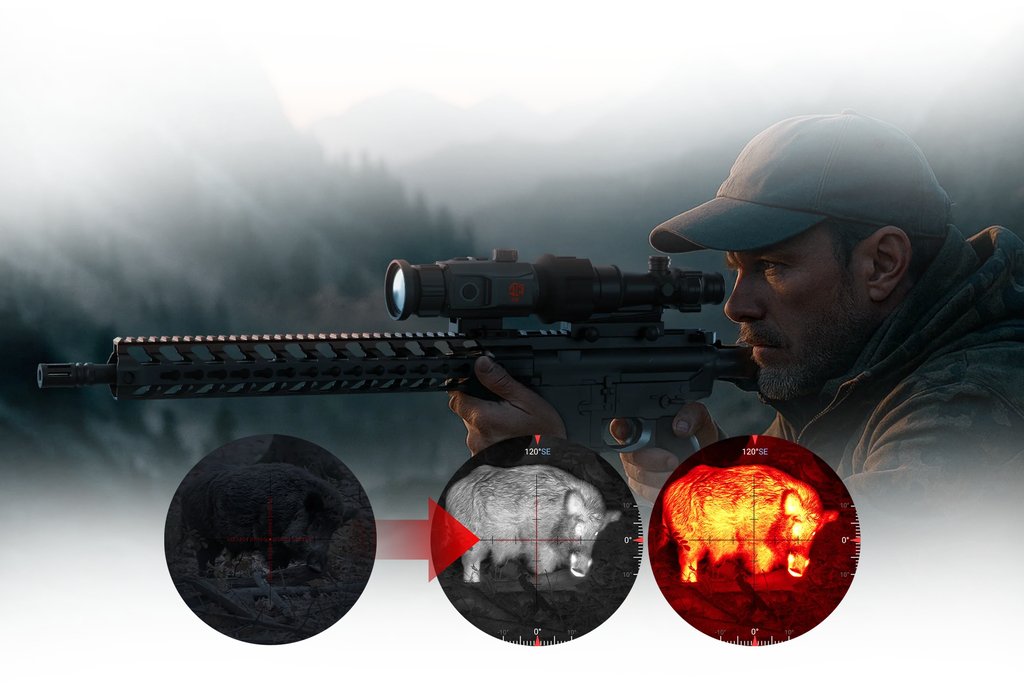
How we picked these ATN thermal binoculars
Full transparency on how this shortlist was built. Every option here is from ATN's current 6th-generation line only — no discontinued models padding the list. Each was weighed on the specs that decide a real hunt: sensor resolution, thermal sensitivity (NETD), detection range, refresh rate, and battery life, then sanity-checked against how it actually performs for image quality + AI. Where a model gives something up, that trade-off is called out plainly rather than hidden. These are the maker's own optics, so treat this as an honest in-house comparison of the range — not an independent lab review — and cross-check the specs against your own needs.
Frequently Asked Questions
What are the best thermal imaging binoculars?
The ATN Binox-6 Dual 640x512 3-24x are the best thermal imaging binoculars for overall image quality. Their sharp 640x512 sensor, 15mK sensitivity, and SharpIR AI produce the cleanest picture in the lineup, with detection to about 3100m and a built-in rangefinder. The Binox-6 Dual 384x288 is the high-magnification alternative.
Why choose binoculars over a thermal monocular?
Binoculars use both eyes, which is far more comfortable and steadier for long glassing sessions and reduces fatigue. The Binox-6 also adds a 4-in-1 day, night, thermal and twilight system and a built-in rangefinder, making it a complete scouting tool rather than a quick pocket scanner.
What does the 640x512 sensor give me over the 384?
The 640x512 sensor packs more heat-reading dots into the picture, so it stays clean and detailed as you zoom, much like HD versus standard TV. It also detects slightly farther, to about 3100m. The 384 model instead offers higher magnification for studying distant game.
Do the Binox-6 binoculars have a rangefinder?
Yes. Both the 640 and 384 versions include a built-in laser rangefinder that ranges targets to 1000 yards at plus or minus one meter. That lets you confirm distance before a shot without carrying a separate rangefinder.
Can I use the Binox-6 during the day?
Yes. Both are 4-in-1 systems with a 4K Ultra HD day sensor, so they deliver crisp daylight and twilight views in addition to thermal and night modes. That makes them useful for scouting around the clock, not just after dark.
Are the Binox-6 binoculars waterproof and long-running?
Both are IP67 waterproof and run on dual replaceable 18650 batteries for about 8 hours per set. Because the batteries swap out, you can carry spares and glass all night without being tied to a charger.
If image quality is your priority, the ATN Binox-6 Dual 640x512 is the best thermal imaging binocular to reach for: the sharpest sensor in the range, SharpIR AI, a 4-in-1 day-to-night system, and a built-in rangefinder in a rugged, two-eye body built for long sessions. Want more zoom instead? The Binox-6 384 pushes magnification further. Compare both, plus the full range, in ATN's collection of thermal binoculars and pick the view that fits your ground.
Created: July 7, 2026 · 08:31:01 UTC