The best thermal clip on for an LPVO is one that mounts in front of your day optic, holds zero, and lets you hunt after dark without touching the scope you already trust. An LPVO is built for fast, low-power daylight shooting, and it goes blind the moment the sun drops. A thermal clip-on fixes that: it clamps onto the rail ahead of the LPVO, feeds a heat image through the same glass, and turns your daytime rig into a night rig in seconds, then comes off just as fast. The ATN TICO 6 is built for exactly this pairing, and this roundup sorts its variants by how you run your LPVO so you can add thermal without rebuilding your rifle.
Best for higher-power LPVOs and longer shots: ATN TICO 6 640x512 1-15x — a sharper 640 sensor and longer detection range for hunters who run the top of their magnification.
Both clip on in front of the LPVO, double as a handheld monocular, and share SharpIR enhancement, Recoil Activated Video, a 50Hz refresh, IP67 weatherproofing and a wireless remote. The difference is sensor resolution and how far each reaches.
Why ATN's TICO 6 leads for LPVO pairing
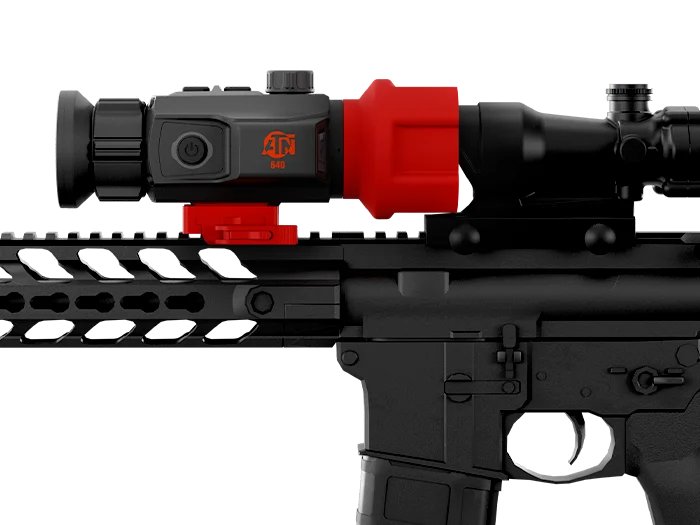
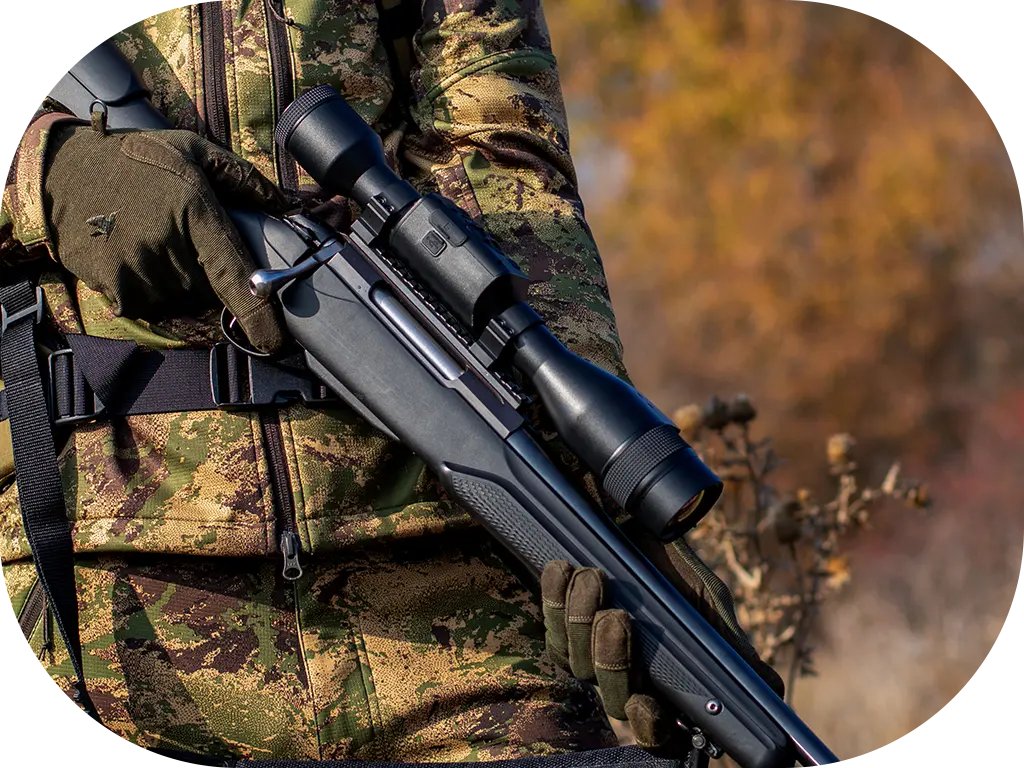
The TICO 6 leads for LPVO setups because it is a true clip-on: it mounts in front of your existing day optic and adds thermal without asking you to re-zero the rifle or learn a new reticle. Clamp it onto the rail ahead of the LPVO on the included Quick Detach Mount, and you look through your own scope at your own reticle, now painted with a heat image. Because the clip-on sits ahead of the optic, your LPVO's zero stays put; take the TICO off and your rifle is a daytime rig again in seconds. The 1x optical clip-on design is tuned to pair with day scopes across their magnification band. SharpIR AI image enhancement cleans up the picture, six color palettes let you pick White Hot, Black Hot or Iron Red for the conditions, and Hot Point Tracking flags the warmest object in the frame. A Full-HD 1920x1080 OLED display feeds a crisp image, a 50Hz refresh keeps moving game smooth, and Recoil Activated Video rolls the moment you fire. The removable eyepiece turns the same unit into a handheld scanning monocular, so you spot with it, then clip it on to shoot. A replaceable 18650 battery runs about eight hours, storage is 64 GB, a wireless remote ships in the box, and the IP67 body shrugs off rain.
Best overall for LPVOs: ATN TICO 6 384x288 1-12x
The ATN TICO 6 384x288 1-12x is the best thermal clip on for most LPVO setups because its pairing band matches the way people actually run a low-power variable optic. Most LPVO shooting after dark happens in the lower to middle of the magnification range, where fast target pickup matters more than extreme reach, and the 384 sensor keeps that picture clean while staying light on the rail. Mounted ahead of your LPVO on the Quick Detach Mount, it preserves your zero and your reticle; you simply have heat vision now. At 524 grams it is the lighter of the two, which keeps the rifle balanced.
Clip on, keep your zero, hunt
This is the whole point of a clip-on: no second scope, no re-zero, no relearning your holds. You range and aim exactly as you do in daylight, because you are looking through the same LPVO. When the hunt is over, the TICO detaches and repeatable mounts mean it goes back on next time in the same spot. Pull the eyepiece and it becomes a handheld monocular for scanning a field before you ever shoulder the rifle, so you locate game first and only clip on when it is time to shoot. Recoil Activated Video captures each shot on its own, and SharpIR enhancement keeps the heat image clean through your day glass. Because your LPVO already lives at the low end for fast target work, the 384 sensor is matched to how these rifles are actually run, which is why it is the natural first pairing. Who it's for: hunters who run a standard LPVO and want to add night capability without rebuilding the rifle. Not for: shooters who push their optic to the top end for long-range work and want the extra resolution.
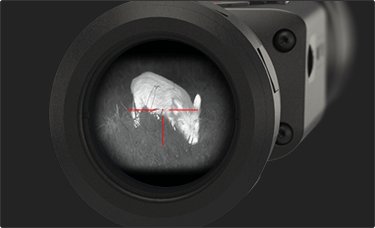
Best for high-power LPVOs: ATN TICO 6 640x512 1-15x
The ATN TICO 6 640x512 1-15x is the best clip-on for hunters who run their LPVO toward the top of its magnification because a 640 sensor gives you more dots to work with when you zoom in through the day optic. Pushing a low-resolution thermal image up to high power makes it blocky; the 640 sensor holds detail so a distant hog or coyote still reads clearly at the top of your LPVO's range. Its 50mm objective and longer detection range out to 3500 meters back that up, letting you pick up heat farther out.
More resolution for the top end
The 640 sensor is like the jump from standard definition to HD: more dots in the picture, so the image survives higher magnification through your LPVO. When you dial your day optic up to reach a distant hog, a coarse thermal image falls apart into blocks; the 640 holds the shape and detail so you can still identify and place a shot with confidence. Everything else carries over: the same clip-on mounting that preserves your zero, SharpIR enhancement, six palettes, Hot Point Tracking, Recoil Activated Video, the removable eyepiece for handheld scanning and the IP67 body. It weighs a touch more at 564 grams and runs about seven hours, a fair trade for the reach and resolution. Who it's for: hunters who run higher-magnification LPVOs and take longer shots after dark. Not for: those who want the lightest setup and mostly shoot at moderate range.
How to choose a thermal clip-on for your LPVO
Choose your TICO 6 by how high you run your LPVO and how far you shoot: the 384 pairs with day optics up to about 12x and keeps the rifle light, while the 640 suits higher-power optics and longer shots. Both mount the same way and preserve your zero, so the decision is mostly about resolution and reach.
- Match the pairing band to your LPVO — the 384 is tuned for day scopes up to about 12x; the 640 pairs cleanly up to about 15x, so pick the one that fits how high you dial.
- Weigh resolution against weight — the 640 gives more dots for a cleaner zoomed-in picture; the 384 is lighter on the rail. More dots survive higher magnification through the LPVO.
- Consider detection range — longer range means you pick up heat sooner. The 640's 50mm objective reaches farther out to 3500 meters versus 2710 for the 384.
- Check the mount and zero retention — both include a Quick Detach Mount that returns to the same spot, so your LPVO's zero holds every time you clip on.
- Think about scanning — both remove the eyepiece to become a handheld monocular, so you can spot game before you mount the clip-on.
- Battery and weather — the 384 runs about eight hours, the 640 about seven; both are IP67 waterproof and take a replaceable 18650 cell so you can carry a spare.
If you run a standard LPVO and want night capability without rebuilding the rifle, the 384 is the clean answer. If you push your optic to the top for longer shots, the 640's extra resolution and reach earn their keep. Compare both on ATN's thermal clip-ons page and match the sensor to how high you run your day glass.
How we picked these ATN thermal clip-ons
Before the picks, here is the yardstick they were measured against. The shortlist is drawn only from ATN's latest 6th-generation range, and each model was judged on the same measuring stick: resolution and NETD for image clarity, detection range and refresh rate for spotting and tracking, plus weight and battery for a full night out — all viewed through the lens of pairing with an LPVO. When one pick trades sharpness for reach or price, that is stated openly. This is a manufacturer comparing its own current line, so the honest trade-offs and the "who it's not for" notes matter more than any single label.
Frequently Asked Questions
What is the best thermal clip on for an LPVO?
The ATN TICO 6 384x288 1-12x is the best thermal clip on for most LPVOs. It mounts ahead of your low-power variable optic on a Quick Detach Mount, preserves your zero and reticle, and adds heat vision after dark. If you run your LPVO at higher magnification for longer shots, the 640x512 variant gives more resolution and reach.
Do I have to re-zero my LPVO when I add a clip-on?
No. A clip-on mounts in front of the LPVO, so it does not change your scope's zero. You look through your own optic at your own reticle, now with a thermal image. When you remove the TICO 6, your rifle is a daytime rig again, and the repeatable mount returns it to the same spot next time.
Which TICO 6 pairs best with my magnification?
The 384x288 1-12x is tuned for day optics up to about 12x, which covers how most LPVOs are run after dark. The 640x512 1-15x pairs cleanly up to about 15x and holds more detail when you zoom, so pick it if you dial your LPVO toward the top for longer shots.
Can the TICO 6 be used on its own to scan?
Yes. The eyepiece removes so the same unit works as a handheld thermal monocular. You can scan a field, spot game by its heat signature, then clip the TICO 6 onto the rail in front of your LPVO to make the shot, without carrying a second device.
Why does resolution matter through an LPVO?
When you zoom in through the day optic, a low-resolution thermal image turns blocky. A 640 sensor packs more dots into the picture, like moving from standard definition to HD, so a distant animal still reads clearly at the top of your LPVO's range. The 384 is plenty at lower to moderate magnification.
Is the TICO 6 weatherproof enough for night hunting?
Yes. Both variants carry an IP67 waterproof rating, so rain and heavy dew are not a problem on a night hunt. They also take a replaceable 18650 battery, so you can carry a charged spare and keep hunting when the runtime, about seven to eight hours, starts to fade.
Already trust your LPVO in daylight? Keep it and add the night. The ATN TICO 6 384x288 clips on in front of your day optic, holds your zero and turns your daytime rifle into a thermal rig in seconds, then comes right back off. Run your LPVO toward the top for longer shots and the 640x512 version adds resolution and reach. Both double as a handheld scanner and shrug off rain. Compare them on ATN's thermal clip-ons page and add heat vision to the rifle you already shoot best.
Created: July 7, 2026 · 08:31:01 UTC