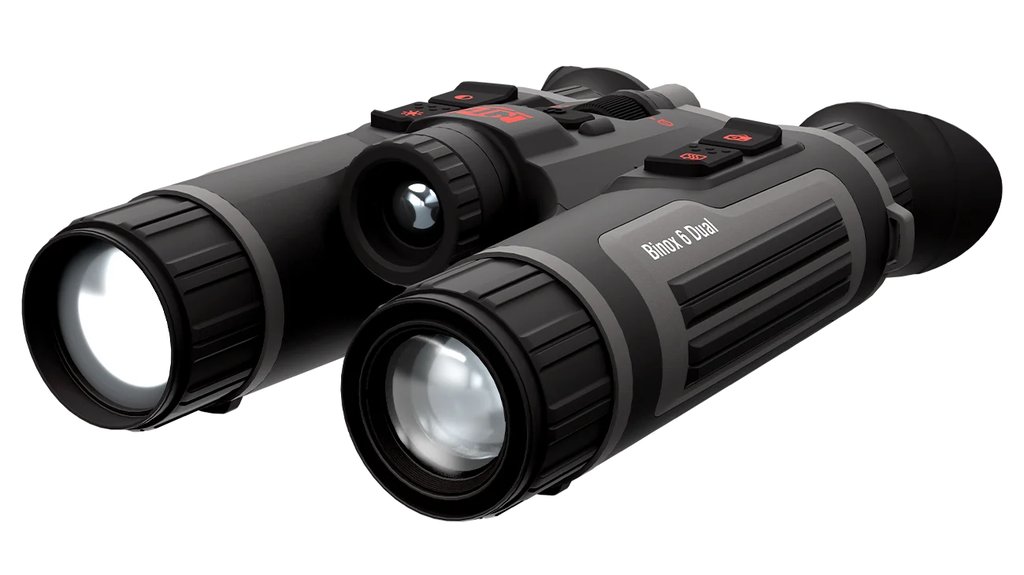
The whole point of ranging is to kill the guesswork. You spot a warm animal across a dark field, and the very next question is always the same: how far? A thermal binocular with a built-in rangefinder answers that in one button press, without dropping the glass or reaching for a separate laser unit. That single feature turns a spot into an actual shot plan. For 2026 the standout best thermal binoculars with rangefinder come from the ATN Binox-6 line, which builds a 1000-yard laser rangefinder straight into a 640x512 thermal binocular. This roundup is organized around one axis: the rangefinder and how it works with the rest of the optic, so every pick here earns its place on ranging.
Best for high-magnification ranging: ATN Binox-6 Dual 384x288 5.5-44x — the same built-in rangefinder with much higher zoom for reaching way out across open country.
Both share the same 1000-yard laser rangefinder, 4-in-1 day/night/thermal/twilight modes, and IP67 build. Pick by whether you want maximum picture detail or maximum reach.
Why ATN's 6th-gen Binox-6 leads on built-in ranging
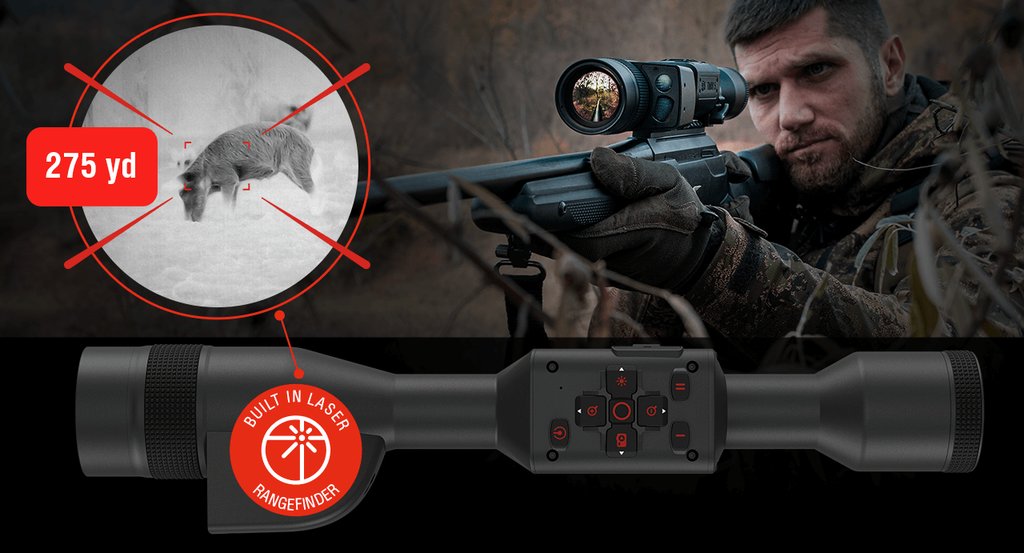
A rangefinder is only as useful as the picture you range through. Bolt-on laser units make you spot with the binocular, then lift a separate device and try to re-find the same animal in the dark. The Binox-6 removes that step: the 905nm Class 1 eye-safe laser sits inside the same body as the thermal core, ranges out to 1000 yards with plus-or-minus one-meter accuracy, and puts the distance right on the display you are already looking through. Because the thermal sensor and the laser share the same line of sight, you range exactly the warm shape you are watching. Add a 4K Ultra HD day camera, SharpIR AI enhancement, Hot Point Tracking, GPS and compass, and a 50 Hz refresh that keeps moving animals smooth, and the ranging becomes part of a full spotting-and-planning tool rather than a gimmick. It is 6th-gen hardware, so you are getting ATN's current sensor and processor, not a discontinued core.
Best overall for ranging: ATN Binox-6 Dual 640x512 3-24x
The ATN Binox-6 Dual 640x512 3-24x is the best thermal binocular with a rangefinder because it gives you the clearest possible picture to range through. The 640x512 sensor means more dots in the image, so a warm animal at distance reads as a defined target instead of a blur, which matters a lot when you are trying to put the ranging dot on the right spot.
Why the ranging is more accurate here
You can only range well what you can clearly see. With the higher-resolution sensor you can zoom in, confirm the animal, place the laser precisely, and trust the plus-or-minus one-meter reading out to 1000 yards. A 15mK NETD keeps the target sharp even in humid or foggy air, and detection range stretches past 3,000m so you are ranging real animals, not empty terrain.
Who it's for and not for
It's for the hunter or observer who wants the best picture-plus-range combination and glasses over mixed terrain where identifying the target matters as much as the number. It's not the pick if your whole game is extreme-distance reach over wide-open ground, where the higher-magnification model wins.
Best for high-magnification ranging: ATN Binox-6 Dual 384x288 5.5-44x
The ATN Binox-6 Dual 384x288 5.5-44x carries the identical 1000-yard laser rangefinder but trades some picture resolution for far more zoom, running 5.5-44x. That reach lets you pick out and range warm shapes way across open country where a lower-magnification unit would leave them tiny.
Where the extra reach pays off
On wide fields, agricultural ground, or big open pasture, the higher base magnification pulls distant animals close enough to range confidently. The 384x288 sensor still delivers a clean 15mK picture; you simply get less fine detail than the 640 at the same zoom. Detection range sits around 2,750m, and the ranging feels most at home at those longer distances.
Who it's for and not for
It's for open-country hunters who prize maximum zoom and long-distance ranging. It's not ideal in tight woods or brushy terrain where the narrow high-magnification field of view makes scanning slower; there the 640x512 model is easier to work with.
Why sharing one line of sight beats a bolt-on laser
The reason a built-in rangefinder outperforms a separate laser unit comes down to a single idea: the thermal core and the laser look at the exact same spot. When you range with a standalone device, you spot the animal through the binocular, lower the glass, raise a second unit, and try to re-acquire a warm shape you can no longer see in thermal — a genuinely hard thing to do in the dark. Any small error in where you point that second device puts the laser on a tree, a hillside, or open air instead of the animal, and you get a distance that is confidently wrong. The Binox-6 removes every step of that. The 905nm laser fires down the same optical path as the thermal sensor, so you center the warm target you are already watching, press once, and the plus-or-minus one-meter reading appears right on the display. There is no re-acquisition, no fumbling, and no mismatch between what you ranged and what you shot. On a nervous animal that will not give you a second window, that difference is the whole reason the built-in approach exists.
It also changes how confidently you can trust the number. Because the higher-resolution 640 picture lets you zoom in and place the center of the frame precisely on the animal's vitals rather than its whole silhouette, the range you get back describes the point you actually intend to hit — not the brush ten yards in front of it. That precision is exactly what a ballistic solution needs to be worth anything, and it is why we weight the picture you range through as heavily as the rangefinder itself.
A field scenario: ranging across a cut field
Picture a still, humid night glassing a picked field from a fence line. A warm shape steps out of the far treeline, and the first question is distance. With the Binox-6 640x512 you zoom in, confirm from the body shape and gait what you are looking at, center the animal, and press the range button — the reading comes back at a few hundred yards, on-screen, without you ever dropping the glass. You know instantly whether it is inside your comfortable range or whether you need to close the gap. A moment later a second animal steps out farther down the treeline; you re-center, press again, and now you have both distances and can decide which to work first. The whole sequence takes seconds and never breaks your view. That is the practical payoff of ranging through the same optic you spot with: the decision-making stays continuous, and the animal never gets a chance to slip back into cover while you fumble with a second device.
How to choose a thermal binocular with a rangefinder
Start with the range question, then the picture, then the terrain. The rangefinder itself is nearly identical across the Binox-6 pair, so the real decision is what you are ranging through and where.
- Ranging distance — both units range to 1000 yards with plus-or-minus one-meter accuracy, which covers almost any realistic shot; make sure the number lands on-screen where you glass.
- Picture to range through — 640x512 gives you more dots and a clearer target to place the laser on; 384x288 saves a little and adds huge zoom instead.
- Magnification vs. terrain — high 5.5-44x zoom is gold in open country but slow in brush; 3-24x is the easier all-rounder.
- Thermal sensitivity (NETD) — a low 15mK on both keeps targets crisp in fog and humidity so ranging stays reliable.
- Day/night flexibility — the shared 4K day camera and 4-in-1 modes mean you range around the clock, not just after dark.
- Build and battery — IP67 waterproofing and about 8 hours on dual 18650 cells for both.
How we picked these ATN thermal binoculars with rangefinders
This is an in-house comparison of ATN's own current 6th-generation Binox-6 range, not an independent lab review. Because the keyword is about ranging, we judged each unit first on its rangefinder (distance, accuracy, how the reading integrates with the display), then on the picture you range through: thermal sensor resolution, NETD (thermal sensitivity), detection range, magnification, refresh rate, weight, and battery. Only the current 6th-gen line is considered here. Honest trade-off: the two models share the exact same laser rangefinder, so neither ranges farther than the other; the real difference is resolution versus zoom, and you cannot maximize both at once. Who these are not for: if you never care about distance and only want a plain thermal viewer, the rangefinder is paying for a feature you will not use. We would encourage you to weigh the resolution-versus-reach trade against the ground you actually hunt.
Frequently Asked Questions
What are the best thermal binoculars with a rangefinder in 2026?
The ATN Binox-6 Dual 640x512 is the top overall pick, pairing a 1000-yard laser rangefinder with a high-resolution 640x512 thermal sensor and a 4K day camera. The Binox-6 384x288 is the choice if you want the same rangefinder with much higher zoom for open country. Both range to 1000 yards with plus-or-minus one-meter accuracy.
How far can the Binox-6 rangefinder measure?
The built-in laser rangefinder measures out to 1000 yards with plus-or-minus one-meter accuracy. It uses a 905nm Class 1 eye-safe laser, and the distance appears on the display you are already looking through, so you never lower the binocular to range a target.
Is a built-in rangefinder better than a separate laser unit?
For most people, yes. A built-in rangefinder shares the same line of sight as the thermal sensor, so you range exactly the warm animal you are watching without re-finding it through a second device. It also means one less item to carry and no fumbling in the dark.
Which Binox-6 should I get for long-range ranging?
The 384x288 model has the higher 5.5-44x magnification, so it reaches farther for ranging across open ground. But if picture clarity at distance matters more to you, the 640x512 lets you see and place the laser more precisely. Both range to the same 1000 yards.
Is the laser rangefinder safe for the eyes?
Yes. The Binox-6 uses a 905nm Class 1 laser, which is classified as eye-safe under normal use. It is the same class used in consumer rangefinding devices, so ranging animals or terrain poses no hazard in ordinary hunting and observation.
Does the rangefinder work in daylight too?
Yes. The laser rangefinder and the thermal core both work by day. The Binox-6 also has a 4K day camera, so you can spot in color, switch to thermal, and range a target across any hour, not only after dark.
Do I lose battery life by using the rangefinder often?
Ranging draws some power, but the Binox-6 runs on dual replaceable 18650 batteries for about 8 hours per session, and swapping in fresh cells restores a full charge. For a normal night of frequent ranging, one set will comfortably last, and spares extend it as long as you need.
Why does the thermal resolution matter if the rangefinder is the same on both?
Because you can only range accurately what you can clearly see. A 640x512 picture lets you zoom in and place the ranging point precisely on the animal rather than the brush around it, so the distance you get back matches the spot you intend to hit. The 384x288 model shares the identical laser but gives a softer target to aim it at, which is why the higher-resolution unit tends to produce more trustworthy readings at distance.
Stop guessing distance in the dark. The ATN Binox-6 builds a 1000-yard laser rangefinder into a high-resolution thermal binocular, so you spot a warm animal, press once, and get an accurate range without ever lowering the glass. Pair that with a 4K day camera and 4-in-1 modes and you have a full spot-range-plan tool for any hour. Compare both rangefinder-equipped models in ATN's thermal binoculars lineup and pick clarity or reach to match your ground.
Created: July 7, 2026 · 11:11:27 UTC