Spotting an animal is only half the problem. The other half is knowing how far away it is — and that answer changes how you move, whether you set up, and everything about the encounter. That's why the best thermal binoculars with laser rangefinder built in are so valuable: you find the heat and read the exact distance in the same breath, without ever putting the glass down to grab a second device. The ATN Binox-6 Dual 640x512 3-24x has a 1000-yard laser rangefinder baked right in, and this guide covers which ATN Binox-6 does ranging best for the way you hunt or scout.
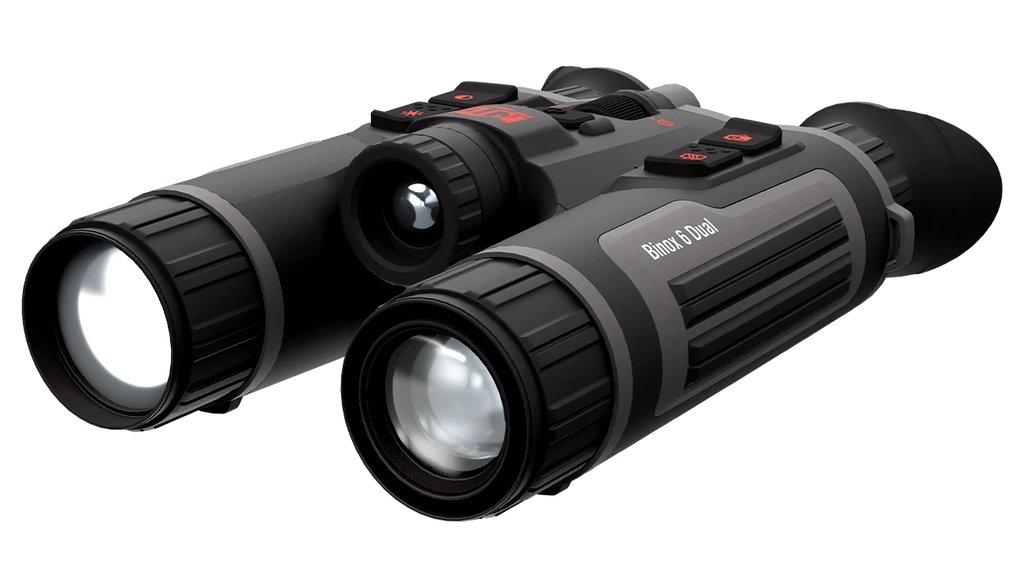
The ATN Binox-6 Dual 640x512 3-24x is the best thermal binocular with a laser rangefinder because its built-in 905nm Class 1 rangefinder reads distance to about a meter out to 1000 yards, displayed right in the eyepiece — so you spot heat and know the exact range in one motion, with no separate rangefinder to fumble for.
Quick answerBest overall ranging binocular: ATN Binox-6 Dual 640x512 3-24x — 1000-yard built-in rangefinder, sharpest sensor, widest view to find targets fast before you range them.
Best for ranging distant, small targets: ATN Binox-6 Dual 384x288 5.5-44x — same built-in rangefinder, longer zoom to put the laser on far-off shapes.
The short version: both range to 1000 yards from the eyepiece; the 640 gives the cleanest picture and widest field, the 384 gives extra zoom to place the laser at long distance.
Why ATN's 6th-gen Binox-6 nails the built-in rangefinder
Most thermal glass makes you carry a separate rangefinder, which means finding your target twice — once through the thermal and again through the rangefinder — and losing precious seconds while an animal moves. ATN's 6th-gen Binox-6 puts the two together. The built-in 905nm Class 1 laser rangefinder ranges out to 1000 yards with about one-meter accuracy, and the number appears right in your view, so the instant you spot a heat signature you know how far it is. That distance reading is only useful if you can actually see what you're ranging, which is where the 640x512 sensor and <=15mK sensitivity come in — more dots in the picture and finer heat detection mean you can place the laser on the right target with confidence. Pair the rangefinder with Hot Point Tracking to keep a marker on a moving animal, and with the 3100m detection range to pick up heat long before you need to range it. GPS, a compass, six palettes, recording, and Wi-Fi round it out, all on current 6th-gen hardware. The result is one device that answers 'what is it and how far' at the same time.
Best overall ranging binocular: ATN Binox-6 Dual 640x512 3-24x
The ATN Binox-6 Dual 640x512 3-24x is the best choice when you want the rangefinder and the sharpest possible picture working together. Its 640 sensor gives you the clearest heat image in the line, so when you settle the laser on a target you can be sure you're ranging the animal and not a warm rock beside it.
Spot and range in one motion
You sweep a field, catch a warm shape, and tap the rangefinder — the distance pops up in the eyepiece without you ever lowering the glass. On a working ranch or a wide bean field that instant number tells you whether to close the gap or hold, and it's already lined up with what you're looking at because it's the same device.
Keep the target while you range
Hot Point Tracking marks the warmest object and holds that marker as it moves, so a coyote crossing at distance stays tagged while you range it. The wide 3x base view helps you find targets fast, and you can zoom in to place the laser precisely before reading the number.
Who it's for: hunters and land managers who range constantly and want the clearest picture behind the laser. Who it's not for: someone who ranges tiny targets at extreme distance and would rather have the 384's longer zoom.
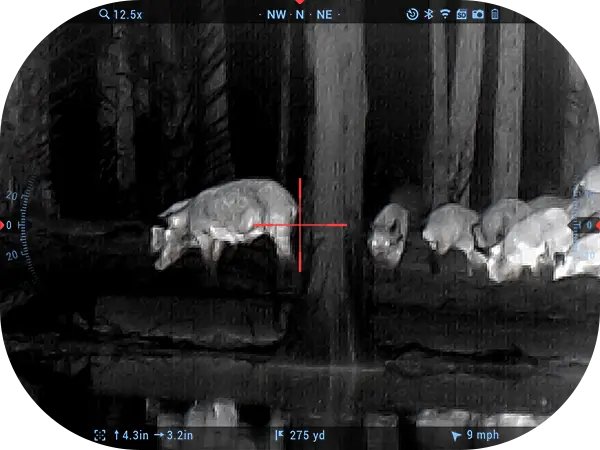
Best for long-range ranging: ATN Binox-6 Dual 384x288 5.5-44x
The ATN Binox-6 Dual 384x288 5.5-44x carries the identical built-in 1000-yard laser rangefinder but stretches the zoom to 44x. When the thing you need to range is a small shape far away, that extra magnification helps you put the laser exactly where you want it before you take the reading.
Placing the laser at distance
A precise range depends on hitting the right target with the beam, and at long distance a wider view can make that harder. The 384's high zoom lets you magnify a distant animal enough to settle the laser on its body rather than the ground behind it. Its 2750m detection range still finds heat well out, and the ranging works the same as on the 640.
Who it's for: long-range shooters and glassers who range small, distant targets. Who it's not for: anyone who wants the sharpest overall image and widest scanning view, where the 640 is stronger.
Why the distance number matters so much
It's easy to treat a rangefinder as a nice-to-have, but the distance reading quietly drives almost every decision in an encounter. Knowing an animal is at 150 yards versus 500 tells you whether to stalk closer, hold and wait, or let it walk. It tells you how the terrain between you and it will play — a creek, a rise, a fence line you'll have to work around. And on a working property, ranging landmarks as you scan builds a mental map of distances so that the next time something appears near that lone oak or the corner post, you already know how far it is. A built-in rangefinder folds all of that into the same look through the glass, instead of making you break away to a separate tool and re-find your target in the dark. That's the practical reason so many people who've hunted with a separate rangefinder never go back once they've used a binocular with one built in.
How to choose a rangefinding thermal binocular
Both Binox-6 variants range the same way, so the choice comes down to picture quality versus zoom reach and how far your targets sit:
- How far do you range? — Both reach 1000 yards with about one-meter accuracy, so either covers realistic hunting and scouting distances.
- Clear picture or long zoom? — The 640 gives the sharpest image to confirm you're ranging the right thing; the 384 gives more zoom to place the laser on distant, small targets.
- Do you range moving game? — Hot Point Tracking on both keeps a marker on a mover so it doesn't slip away before you get the number.
- Finding targets before ranging? — Detection out to 3100m (640) or 2750m (384) picks up heat well before you need the laser.
- Want distance plus location? — GPS and compass on both let you pair a range with a marked spot to return to.
- Enough runtime? — Around 8 hours on swappable 18650s covers a full outing, with spares for longer.
- Ranging in bad weather? — Both are IP67 waterproof with a DeFog mode, so rain or mist won't stop you from finding and ranging warm targets.
A quick note on expectations: a laser rangefinder gives you the straight-line distance to whatever the beam hits, so the cleaner your picture and the tighter your zoom, the more sure you can be that you ranged the animal and not the brush in front of it or the ground behind. That's why picture quality and ranging go hand in hand on the Binox-6 — the sharper sensor of the 640 and the longer zoom of the 384 each help you place the laser accurately in their own way, and both read the number right in the eyepiece the instant you press the button.
For most ranging jobs the 640 is the better all-rounder; the 384 shines when you range small targets far off. Compare both on the thermal binoculars page.
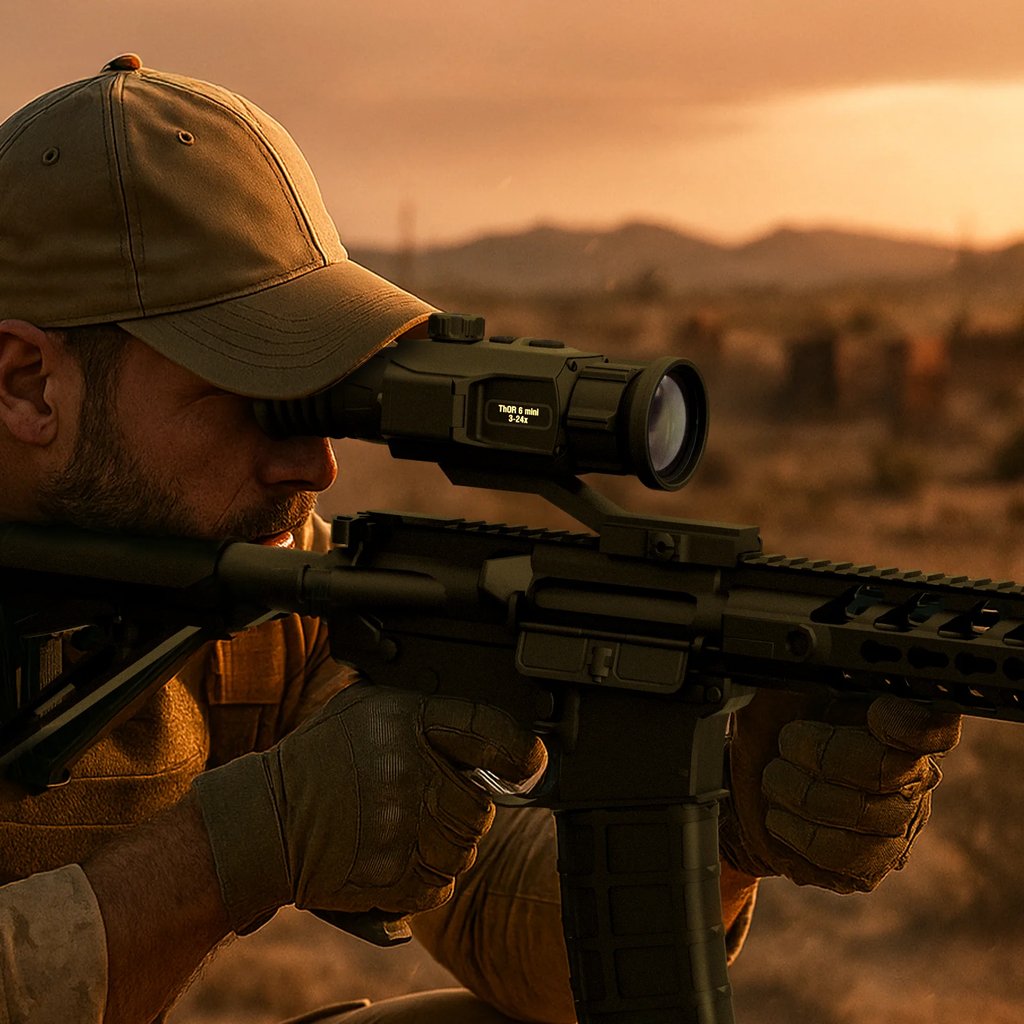
How we picked these ATN thermal binoculars
Because this comparison is about ranging, we put the built-in laser rangefinder first — its range, its accuracy, and how easily you can read the distance while still on target. We then weighted sensor resolution and NETD, since you can only range accurately what you can clearly see, followed by detection range, refresh rate, weight, and battery for real field use. Only ATN's current 6th-gen Binox-6 line was considered; older models were excluded. Honest trade-offs: the 384 gives up resolution for longer zoom, so its picture behind the laser is a touch less detailed, and neither is the smallest, lightest option if you want a pocket rangefinding monocular. Who these aren't for: someone who never needs distance and just wants to watch heat. This is an in-house comparison of ATN's own range, not an independent lab review, so check the ranging specs against the distances you actually work.
Frequently Asked Questions
How far can the ATN Binox-6 laser rangefinder reach?
Its built-in 905nm Class 1 laser rangefinder reaches out to 1000 yards with about one-meter accuracy. The distance appears right in the eyepiece, so you get the reading without lowering the glass or grabbing a second device.
Why is a built-in rangefinder better than a separate one?
A built-in rangefinder means you find your target once and range it in the same motion, instead of spotting it through the thermal and then re-acquiring it through a separate rangefinder. That saves time and keeps you on a moving animal, and it's one less thing to carry.
Is the rangefinder accurate on moving animals?
Yes, and Hot Point Tracking helps by keeping a marker on the warmest object as it moves, so you can range a walking coyote or deer without losing it. For the cleanest reading, place the laser on the animal's body while it's briefly still.
Does resolution affect ranging?
Indirectly, yes. A sharper picture, like the 640x512 variant's, lets you confirm you're placing the laser on the actual target rather than a nearby warm object. That's why the 640 pairs best with the rangefinder for most users.
Which Binox-6 is better for ranging distant targets?
The 384x288 variant, thanks to its longer zoom up to 44x, lets you magnify a small, distant target enough to settle the laser precisely on it. The 640 is better when you want the clearest image and widest view for ranging at close to mid distance.
Is the laser safe to use?
Yes. It's a 905nm Class 1 laser, the eye-safe classification used in consumer rangefinders. It emits an invisible pulse to measure distance and is designed for normal use in the field.
Can I range and record at the same time?
Yes. The Binox-6 records video and photos to 64 GB of storage and can stream over Wi-Fi, so you can capture a sighting with the ranged distance visible in the frame and review or share it later through the ATN Connect 6 app.
When knowing the distance is as important as seeing the animal, the ATN Binox-6 Dual 640x512 puts a 1000-yard laser rangefinder and a razor-sharp heat picture in a single unit, so you spot and range in one motion. If your targets sit far out and small, the longer-zoom 384 variant places the laser at distance. Compare both on the thermal binoculars page and pick the one that matches how far, and how often, you need a number.
Created: July 7, 2026 · 19:22:58 UTC