Watching wildlife is a patience game, and most of the animals worth watching move at the edges of the day — dawn, dusk, and deep night. That's the frustration the best thermal binoculars wildlife observation gear solves: instead of straining for movement in the dark, you see the animal's body heat glow against a cool background from a long way off, without a light, without spooking it. The ATN Binox-6 Dual 640x512 3-24x is built for exactly this kind of quiet, non-intrusive watching, and this guide covers which ATN Binox-6 suits the way you like to observe.
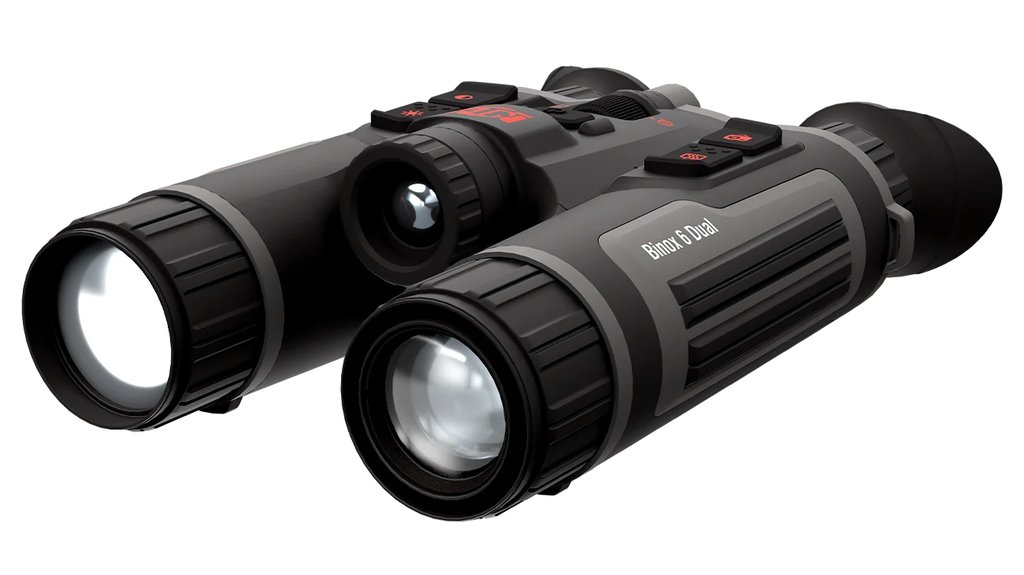
The ATN Binox-6 Dual 640x512 3-24x is the best thermal binocular for wildlife observation because it reveals warm-bodied animals by their heat at any hour without a light that would spook them, its 640 sensor renders detail clearly enough to identify species, and its 4K day sensor plus recording let you document sightings and share them.
Quick answerBest overall for observation: ATN Binox-6 Dual 640x512 3-24x — sharpest picture for identifying animals, wide view for finding them, and recording to log what you see.
Best for watching shy animals from a distance: ATN Binox-6 Dual 384x288 5.5-44x — more zoom to observe skittish wildlife without getting close enough to disturb it.
The short version: both let you watch heat instead of movement, day or night; the 640 identifies species most clearly, the 384 reaches farther to keep your distance.
Why ATN's 6th-gen Binox-6 suits wildlife watching
The thing that makes thermal special for observation is that it's completely passive and silent. You aren't shining an IR light or a flashlight that could startle an animal or change its behavior — you're just reading the heat it already gives off. On ATN's 6th-gen Binox-6 that heat picture is unusually clear thanks to the 640x512 sensor, which puts more dots into the image so a fox is recognizably a fox and not just a warm blob. Six color palettes matter more here than most people expect: White Hot and Black Hot show natural shape, while Iron Red or Alarm make a warm animal jump out of a busy scene, so you can pick whichever reveals your subject best. The 4K day sensor means when there's light, you get a true full-color view for identifying markings and coloration, then flip to thermal as it gets dark. And with 64 GB of storage, Wi-Fi, and Hot Point Tracking, you can record a sighting, follow an animal as it moves, and share the clip through the ATN Connect 6 app. Everything here is current 6th-gen hardware, not an older carryover.
Best overall for observation: ATN Binox-6 Dual 640x512 3-24x
The ATN Binox-6 Dual 640x512 3-24x is the best all-round choice for watching wildlife because it gives you the clearest picture to actually tell what you're looking at. The 640 sensor holds enough detail that you can distinguish a raccoon from an opossum or a coyote from a dog by shape and gait, even in full dark. Its wide 3x base view lets you scan a meadow or a woodline and find the warm bodies quickly, then zoom in to study them.
Watch without disturbing
Because thermal is passive, you can observe denning, feeding, or movement behavior without an animal ever knowing you're there — no light, no sound. That's the whole appeal for anyone who cares about seeing natural behavior rather than a startled tail disappearing into the brush.
Document what you see
The 64 GB of storage and Wi-Fi mean you can record a sighting to your phone and go back to it later, whether you're keeping a personal log of what visits your property or sharing a nighttime encounter. Hot Point Tracking keeps a marker on the animal so it stays framed as it moves through your view.
Range and map your sightings
The built-in laser rangefinder tells you exactly how far off an animal is, which turns a vague 'something out there' into a real observation you can note down — a fox at 180 yards, a herd bedded at 400. Paired with the GPS and compass, you can mark where and how far a sighting was and return to that spot on another night, building a picture of what uses your land and where. That kind of patterning is how casual watching turns into real knowledge of the ground.
Who it's for: naturalists, property owners, and hunters scouting who want to identify and record wildlife day or night. Who it's not for: someone whose subjects are almost always far off and who would rather have the longer zoom of the 384.
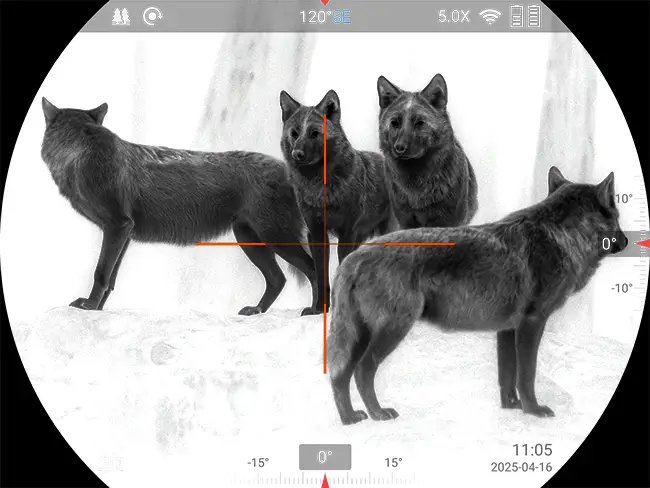
Best for distant, shy wildlife: ATN Binox-6 Dual 384x288 5.5-44x
The ATN Binox-6 Dual 384x288 5.5-44x shares the same 4K day sensor, six palettes, recording, and passive thermal watching, but its zoom reaches all the way to 44x. For skittish animals that won't tolerate you getting close, the extra magnification lets you observe from a respectful distance and still see what they're doing.
Keeping your distance
If you're watching a wary animal across a field or studying something on a far ridge, the 384's zoom pulls the scene in without you having to move closer and risk being noticed. Its 2750m detection range still finds heat at long distances, and the observation tools behave identically to the 640.
Who it's for: observers of shy or distant wildlife who value reach. Who it's not for: anyone whose priority is the crispest possible image for close-to-mid identification, where the 640 leads.
What a night of watching actually looks like
Say you want to know what moves through the back of your property after dark. You settle in at the field edge and start sweeping with the wide 3x view, and within minutes warm bodies begin to appear — a couple of deer working the tree line, a raccoon nosing along a fence, and off in the corner something smaller you can't quite place. You zoom in with the 640's sharp picture, switch to Iron Red to make it pop against the cool ground, and see it's a young fox. You range it at 220 yards, mark the spot on the GPS, and record a short clip. None of the animals ever react, because thermal is silent and lightless — you're simply reading the heat they give off. An hour of that tells you more about your ground than a week of guessing from tracks, and every bit of it is possible because the glass does the finding, ranging, and recording for you.
How to choose a thermal binocular for observation
Both Binox-6 variants watch wildlife the same passive way, so match the glass to your subjects and setting:
- Need to identify species? — The 640's higher resolution renders shape and detail more clearly; pick it when telling animals apart matters.
- Watching shy or far-off animals? — The 384's longer zoom lets you observe from a distance without disturbing wary wildlife.
- Day and night? — Both carry a 4K day sensor plus thermal, so you get true-color viewing in daylight and heat vision after dark.
- Want the animal to pop from the background? — Six palettes on both let you switch to Iron Red or Alarm to make a warm body stand out in clutter.
- Recording sightings? — 64 GB storage and Wi-Fi streaming on both let you log and share what you see.
- Long watches? — Around 8 hours on swappable 18650 batteries covers an extended session, with spares for more.
Most wildlife watchers are best served by the 640; the 384 is the tool for distant, easily-spooked subjects. Compare both on the thermal binoculars page.
How we picked these ATN thermal binoculars
For wildlife observation we weighted the things that decide how well you can find, identify, and document an animal without disturbing it: sensor resolution for detail, the range of color palettes, the 4K day sensor for true-color identification, recording and streaming, and detection range for finding heat far off. We also checked NETD, refresh rate, weight, and battery against long, patient watching sessions. Only ATN's current 6th-gen Binox-6 line was considered; older models were left out. Honest trade-offs: the 384 sacrifices resolution for longer zoom, so it identifies close subjects less sharply, and neither is the lightest option for all-day handheld use compared with a small monocular. Who these aren't for: someone who only wants to watch backyard birds in bright daylight, where thermal adds little. This is an in-house comparison of ATN's own range, not an independent lab review, so measure the specs against the wildlife and distances you actually work with.
Frequently Asked Questions
Why use thermal binoculars for wildlife observation?
Thermal reveals an animal's body heat against a cooler background, so you can find and watch wildlife at dawn, dusk, or in full dark without a light. Because it's completely passive, it doesn't spook animals the way a flashlight or IR beam can, letting you observe natural behavior.
Can I identify the species with the ATN Binox-6?
Yes, especially with the 640x512 variant. Its higher resolution renders enough shape and detail to distinguish animals by size and gait, and in daylight the 4K day sensor gives a full-color view that shows markings and coloration for positive identification.
Which color palette is best for spotting wildlife?
It depends on the scene. White Hot and Black Hot show natural shape well, while Iron Red or Alarm make a warm animal pop out of a cluttered background. The Binox-6 offers six palettes so you can switch to whichever reveals your subject best.
Can I record the animals I observe?
Yes. The Binox-6 has 64 GB of onboard storage and Wi-Fi, so you can record video and photos and stream the live view to your phone through the ATN Connect 6 app to keep a log or share your sightings.
How far can it detect an animal?
The 640 variant detects heat out to about 3100 meters and the 384 to about 2750 meters. Actual identification distance is shorter and depends on the animal's size and the conditions, but both find warm bodies at long range so you can plan your approach or keep your distance.
Will it disturb the animals I'm watching?
No. Thermal imaging is entirely passive, meaning it only reads the heat animals already give off and emits nothing they can detect. That makes it ideal for watching shy or nocturnal wildlife behave naturally.
Is it comfortable to use for long observation sessions?
The Binox-6 uses a two-eye binocular design that's easier on your eyes over long watches than a single-eyepiece device, and it runs about 8 hours on swappable 18650 batteries so you can extend a session with a spare set.
If you want to watch wildlife as it really behaves — quietly, at any hour, without a light that gives you away — the ATN Binox-6 Dual 640x512 gives you the clearest heat picture to find, identify, and record what moves in the dark. For observing wary animals from farther off, the longer-zoom 384 variant is worth a look too. Compare them side by side on the thermal binoculars page and pick the one that fits the creatures and country you like to watch.
Created: July 7, 2026 · 19:22:58 UTC